
The US-Iran peace talks present conflicting narratives! What’s next for oil prices?
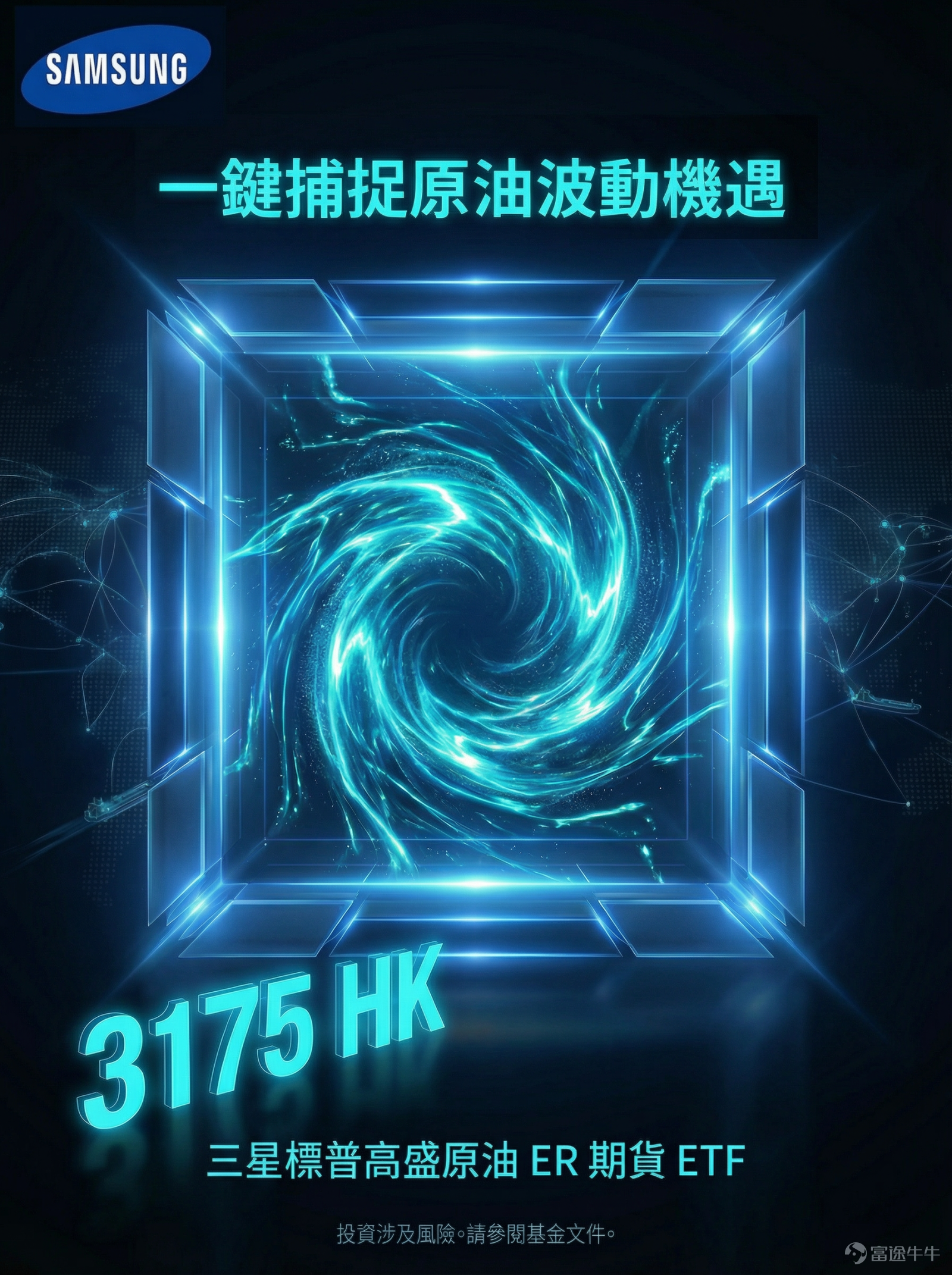
Two major shipping routes in crisis, oil prices heading towards $100 — Samsung S&P Goldman Sachs Crude Oil ER Futures ETF (3175 HK) helps you seize investment opportunities amid the energy crisis.
The Middle East conflict continues to escalate, and the global energy market is undergoing an unprecedented 'double blockade.' With the Houthis officially joining the war, the world's two most critical energy transportation chokepoints—the Strait of Hormuz and the Red Sea-Bab el-Mandeb Strait—are simultaneously under severe threat. Meanwhile, member countries of the International Energy Agency (IEA) have initiated the largest-ever release of strategic oil reserves in an attempt to stabilize the market. How will this geopolitical game evolve? And how should investors position themselves?
Both major shipping chokepoints in crisis: Global energy supply chain faces systemic challenges.
Strait of Hormuz: The lifeline for 20% of global oil flow.
The Strait of Hormuz has long carried approximately 20% of global liquid petroleum trade, with daily traffic averaging about 20 million barrels. Since the outbreak of the conflict on February 28, passage through the strait has been restricted, causing a significant drop in tanker traffic as many tankers are either stranded or forced to take alternate routes. [1] The International Energy Agency warns that the most critical factor for ensuring stable supply is the resumption of shipping through the Strait of Hormuz. [2]
Red Sea-Bab el-Mandeb Strait: The throat of Asia-Europe trade.
On March 28, Yemen's Houthi forces issued a statement claiming they had launched their first military operation by firing missiles at Israel. Analysts pointed out that if the Houthis resume attacks on ships in the Red Sea, this important commercial shipping channel will once again face a crisis. If both the Bab el-Mandeb Strait and the Strait of Hormuz are blocked simultaneously, it would mean that the world’s two most critical trade and energy strategic waterways will be cut off at the same time.
Three Major Energy Categories Hit Hardest
According to data from the U.S. Energy Information Administration (EIA) and the International Energy Agency (IEA), the three major energy categories most affected are as follows [1]:
IEA Launches Largest-Ever Reserve Release: 426 Million Barrels of Crude Oil Injected into Market
On March 11, IEA member countries reached a collective action agreement, committing to inject 426 million barrels of oil reserves into the market, marking the largest joint reserve release in the agency’s history. Below are the quantities and sources of oil reserve releases from some member countries:
United States ~ 172.2 million barrels: Entirely from public strategic petroleum reserves, all crude oil
Japan ~ 79.8 million barrels: Crude oil and refined products each account for half
Germany, the UK, France ~ 47.51 million barrels: Reduction in short-term oil consumption through energy-saving measures and demand management policies
Canada, Mexico ~ 23.6 million barrels, 3.9 million barrels: Contribution of crude oil through increased production
IEA Executive Director Fatih Birol stated that despite the unprecedented scale of this collective action, only the restoration of safe passage on maritime routes can truly bring stability back to the market. [3]
The deeper significance of reserve releases: Easing conflict but oil prices remain stubbornly high
It is worth noting that the use of strategic petroleum reserves by various countries will become a long-term factor supporting oil prices. Analysts at Goldman Sachs pointed out that the release of strategic reserves is not a 'free lunch'—once tensions ease, countries will need to replenish their inventories over several years, providing sustained demand support for oil prices. [4]
Three main reasons supporting oil prices:
Macquarie stated that if the Iran conflict continues into June and the critical Strait of Hormuz remains closed, oil prices could reach a record high of $200 per barrel. [6]
$Samsung S&P GSCI Crude Oil ER (03175.HK)$: An efficient tool for capturing fluctuations in oil prices
Currently, both the Strait of Hormuz and the Red Sea routes are under severe threat, putting the global energy supply chain through systemic tests. Although the International Energy Agency (IEA) has initiated the largest-ever reserve release in history, this itself will trigger inventory replenishment needs over the next few years, providing long-term support for oil prices.
In an environment of high oil price volatility and ongoing geopolitical risks, $Samsung S&P GSCI Crude Oil ER (03175.HK)$It provides investors with a convenient tool to capture energy market trends. Whether for short-term trading or medium-term allocation,317 $Samsung S&P GSCI Crude Oil ER (03175.HK)$it allows you to participate in the volatility opportunities of the crude oil market at the touch of a button.
![The Middle East conflict continues to escalate, and the global energy market is undergoing an unprecedented 'double blockade.' With the Houthis officially joining the war, the world's two most critical energy transportation chokepoints—the Strait of Hormuz and the Red Sea-Bab el-Mandeb Strait—are simultaneously under severe threat. Meanwhile, member countries of the International Energy Agency (IEA) have initiated the largest-ever release of strategic oil reserves in an attempt to stabilize the market. How will this geopolitical game evolve? And how should investors position themselves? Both major shipping chokepoints in crisis: Global energy supply chain faces systemic challenges. Strait of Hormuz: The lifeline for 20% of global oil flow. The Strait of Hormuz has long carried approximately 20% of global liquid petroleum trade, with daily traffic averaging about 20 million barrels. Since the outbreak of the conflict on February 28, passage through the strait has been restricted, causing a significant drop in tanker traffic as many tankers are either stranded or forced to take alternate routes. [1] The International Energy Agency warns that the most critical factor for ensuring stable supply is the resumption of shipping through the Strait of Hormuz. [2] Red Sea-Bab el-Mandeb Strait: The throat of Asia-Europe trade. On March 28, Yemen's Houthi forces issued a statement claiming they had launched their first military operation by firing missiles at Israel. Analysts noted that if the Houthis resume attacks on ships in the Red Sea, this crucial commercial shipping channel could plunge into crisis again. If both the Bab el-Mandeb Strait and the Strait of Hormuz are blocked, it would mean that the world’s two most important trade and energy...](https://nnqimage.futunn.com/sns_client_feed/40001013/20260331/web-1774942967936-9bGuFROanf.jpeg/big?area=2&is_public=true&imageMogr2/ignore-error/1/format/webp)
Source:
[1] 國際在線 (29/3/2026)
[2] 联合早报 (20/3/2026)
[3] China News Weekly (16/3/2026)
[4] AASTOCKS (20/3/2026)
[5] 中國能源網 (12/3/2026)
[6] 信報財經新聞 (27/3/2026)
Important Information
• Investment involves risks. Past performance is not indicative of future results. The price of the fund can go up as well as down, and investors may suffer all or a significant portion of their investment losses. Investors should not make any investment decisions solely based on this information.
• The Samsung S&P Goldman Sachs Crude Oil ER Futures ETF ("Sub-fund") is a sub-fund of the Samsung ETF Trust. The Sub-fund’s investment objective is to provide investment results that, before fees and expenses, closely correspond to the performance of the S&P GSCI Crude Oil Enhanced 55/30/15 1M/2M/3M Index (USD) ER ("Index"). The Sub-fund is a futures-based exchange-traded fund, subject to risks associated with derivatives and different from traditional exchange-traded funds.
• The main risk factors the Sub-fund may face include: investment risk, oil market risk, futures contract risk, WTI futures contract prices relative to WTI crude oil spot/current market prices risk, margin risk, risk related to unplanned index rollover, distribution risk, government intervention and restriction risk, passive investment risk, trading risk, risk due to different trading hours, reliance on market makers risk, tracking error risk, termination risk, past performance risk, new index risk.
• The Manager may at its discretion pay distributions out of the Sub-fund's capital or effectively out of the Sub-fund's capital, which amounts to a return or withdrawal of part of an investor's original investment or any capital gains attributable to that original investment, resulting in an immediate reduction in the net asset value per unit of the fund.
• The Sub-fund is a futures-based exchange-traded fund, subject to risks associated with derivatives and different from traditional exchange-traded funds.
• The Sub-fund is a complex product suitable only for investors who have the financial capacity to bear the risks involved in futures investments. Investors should act prudently regarding this product.
• The Sub-fund has been authorized by the Hong Kong Securities and Futures Commission ("SFC"), but authorization does not imply official endorsement of the product. This material is for reference purposes only and does not constitute an offer or solicitation to any person to buy, sell products or adopt any investment strategy.
• This document was prepared by Samsung Asset Management (Hong Kong) Limited (SAMHK) and has not been reviewed by the SFC or any other regulatory authority. Investors should determine whether any investment product or strategy is suitable based on personal financial situation, investment experience, and goals. If you have any questions about the relevant information, seek professional advice as needed.
• Some of the information contained in this content is compiled from third-party sources. SAMHK has made every effort to ensure that such information is accurate, complete, and up-to-date, and has taken verification measures to accurately reproduce the data. However, SAMHK assumes no responsibility or liability for the accuracy of such data, its use for any purpose, or reliance on it. This content may contain forward-looking statements based on SAMHK’s opinions, expectations, and projections. SAMHK has no obligation to update or revise any forward-looking statements, and actual results may differ materially from what is anticipated in forward-looking statements. All copyrights for the content herein (including all materials, images, computer codes, texts, logos, and designs) belong to SAMHK. Without SAMHK's consent, no reproduction or redistribution of the information provided in this content is permitted.
Risk Disclaimer: The above content only represents the author's view. It does not represent any position or investment advice of Futu. Futu makes no representation or warranty.Read more

Comments
to post a comment
2