
Midea Group Short-term Analysis: Earnings Stimulus Sparks Rebound, Technical Indicators Still in Weak Trend
As of March 31, Midea Group (00300) $MIDEA GROUP (00300.HK)$ closed at 83.65 yuan, surging 5.93%, with a trading volume of 598 million yuan. The stock price rebounded significantly after the earnings announcement, recovering most of the losses from the previous trading day. However, from a technical perspective, the current price is slightly above the 10-day moving average (82.51 yuan), but clearly below the 30-day moving average (86.37 yuan) and the 60-day moving average (86.67 yuan). The moving average system shows a bearish pattern, reflecting that the medium-term trend has not yet reversed.
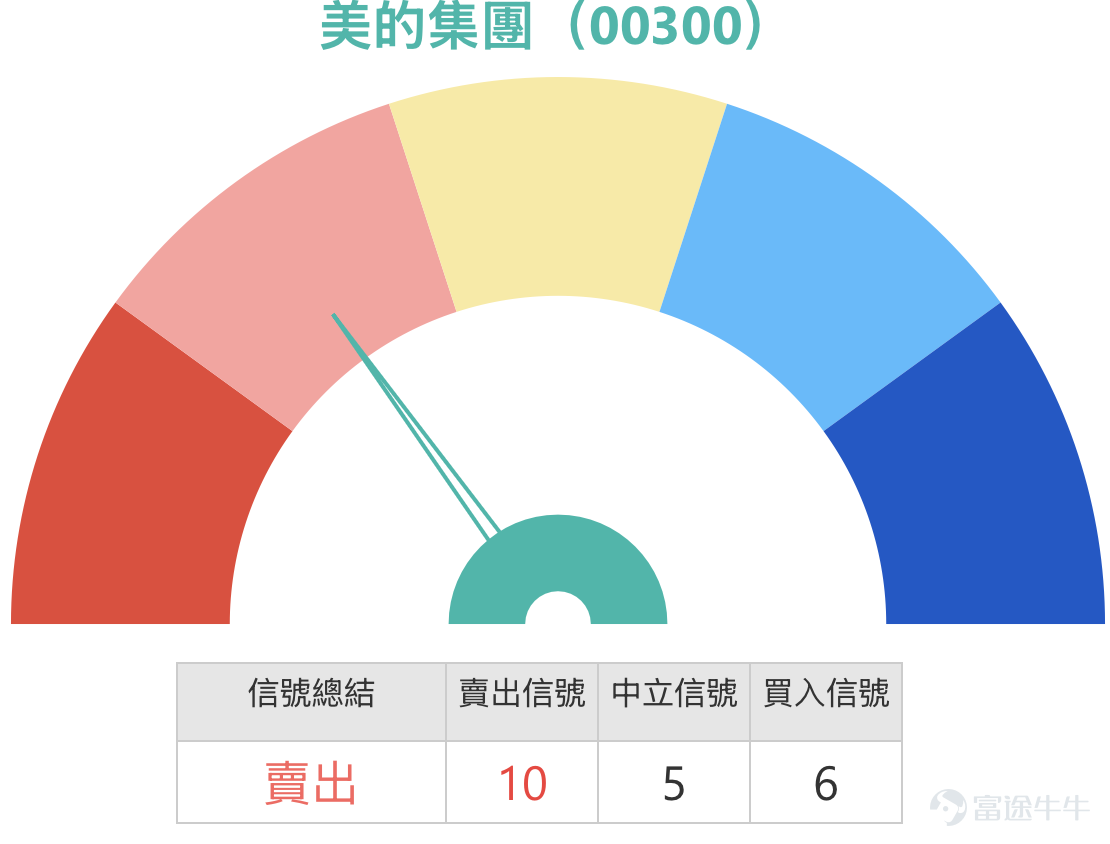
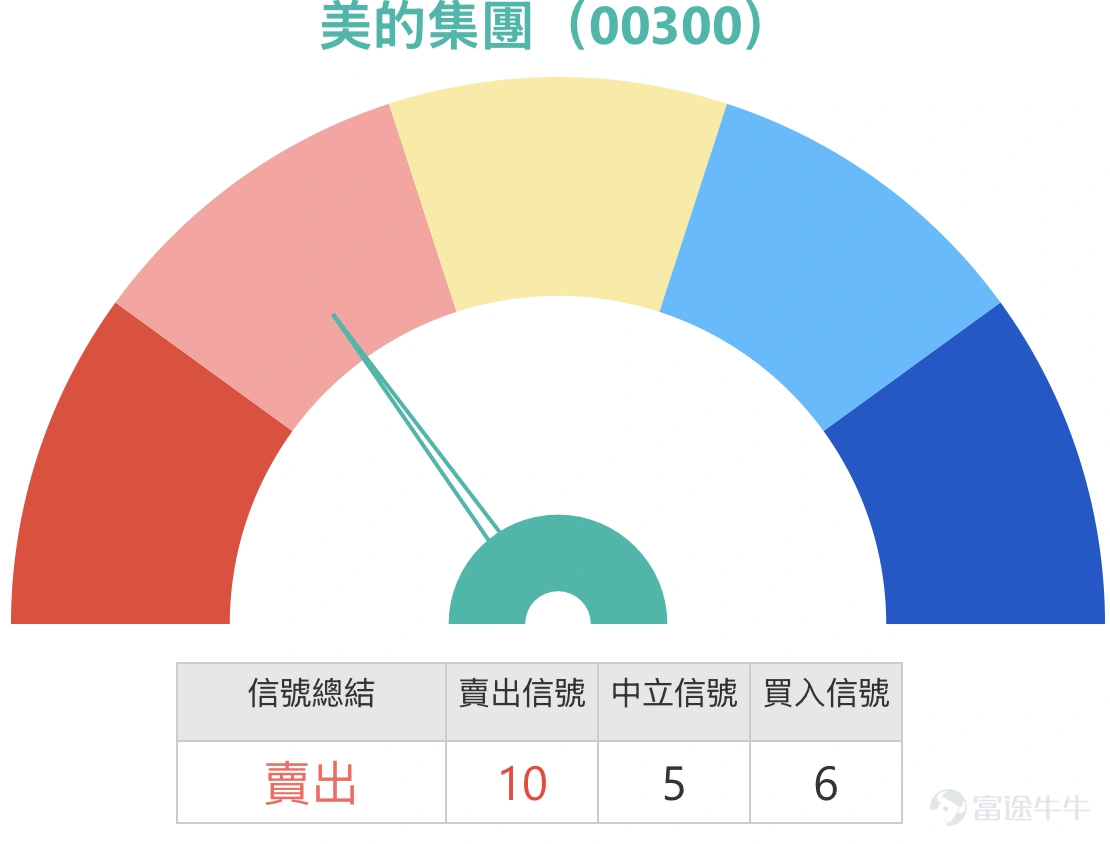
It is worth noting that the overall technical indicators remain weak, with multiple oscillation indicators such as Momentum Oscillation Index, Rate of Change, and Psychological Line all issuing 'sell' signals. The RSI is at 43, still in a weaker zone. MACD signal, Bollinger Bands, and Bull-Bear Power indicator also maintain 'sell' signals. The comprehensive technical indicator summary signal is 'sell', with a strength of 10, indicating that although the share price rebounded sharply due to the earnings stimulus, the medium-term structure remains in a weak region, and whether the short-term rebound can be sustained still requires further confirmation. Observing the Bollinger Bands, the current share price is below the midline, and the channel opening has not narrowed significantly, reflecting that volatility remains relatively high.
In terms of market news, the main catalyst for Midea Group’s surge came from its 2025 annual report released on the evening of March 30. Data showed that the company achieved total operating revenue of 458.5 billion yuan last year, an increase of 12.1% year-on-year; net profit attributable to listed company shareholders was 43.95 billion yuan, up 14% year-on-year. Both revenue and profits hit new historical highs. Overseas business performance was particularly outstanding, with last year's income reaching 195.9 billion yuan, up 16% year-on-year. Localized self-operation coverage spans 50 countries, with 29 overseas R&D centers and 43 major manufacturing bases now established. Meanwhile, the company announced that the profit distribution plan for the end of 2025 will be 38 yuan per 10 shares in cash dividends, combined with interim dividends, bringing the total annual cash dividend to 32.4 billion yuan. The board also approved a new repurchase plan with a total amount of no more than 13 billion yuan and no less than 6.5 billion yuan. Strong fundamentals, coupled with a high dividend policy, jointly support the stock’s valuation recovery.
In terms of sector performance, the home appliance sector in Hong Kong's stock market generally strengthened on March 31, becoming one of the leading sectors in the market. The Hang Seng Index$Hang Seng Index (800000.HK)$was down 0.51% at midday break, and the Hang Seng Tech Index$Hang Seng TECH Index (800700.HK)$fell 0.94%. Against this backdrop, the home appliance, banking, and food sectors recorded gains, with Midea Group rising over 6%, Bank of China (Hong Kong) climbing over 4%, and China Resources Beer increasing over 1%. The home appliance sector in A-shares also performed strongly, with Midea Group's A-shares rising 4.58%, Gree Electric Appliances gaining 0.88%, and Hisense Home Appliances up 0.19%. However, there was evident differentiation within the sector. Although Haier Smart Home followed the upward trend, Bocom International lowered its target price to HKD 30.1 after the earnings announcement, citing weaker-than-expected performance for 2025, with Q4 revenue and net profit attributable to shareholders declining 6.7% and 39.2% year-on-year, respectively. Funds were more concentrated in leading stocks like Midea Group, which had higher earnings certainty.$BOC HONG KONG (02388.HK)$From a key position analysis, initial support below is seen at HKD 80.1, a recent low area and the first technical line of defense. If it breaks down, the next level of support is at HKD 77.2, an earlier horizontal bottom with relatively strong承接力(ability to hold). Regarding resistance above, the first hurdle is at HKD 87.6, near the dense zone of the 30-day and 60-day moving averages; if broken through, it could advance toward HKD 90.9, a previous rebound high during the decline. Overall probability of increase is 45%, reflecting that although short-term earnings are supportive, before breaking through the HKD 87.6 resistance, it remains in a rebound pattern, and the medium-term weakness has not reversed.
Regarding warrant fund flows, based on statistics from the past five trading days (March 24 to March 30), the total inflow into Midea Group call warrants was HKD 4,000, with mixed daily performances: net inflow of HKD 13,000 on March 30, net inflow of HKD 4,000 on March 27, net outflow of HKD 1,000 on March 26, net inflow of HKD 1,000 on March 25, and net outflow of HKD 13,000 on March 24. There were no fund flow data for put warrants during the statistical period. The fund flows indicate that the market's deployment attitude towards Midea Group derivatives is relatively cautious, with limited and inconsistent call warrant inflows, reflecting investors' tendency to wait and see after significant stock price fluctuations, without clear one-sided bets. This aligns with the judgment of weaker technical indicators, indicating that the market still has分歧(disagreements) about the sustainability of the rebound.
In terms of product deployment, if investors believe that Midea Group can stabilize support at HKD 80.1 and gradually rebound, they can consider two call warrants. The BOCOM Call Warrant (27479)
with an exercise price of HKD 100.1 and effective leverage of 4.5 times, offers relatively ideal leverage and implied volatility levels. The exercise price is set at HKD 100.1, approximately 19.6% above the current underlying stock price, suitable for investors expecting the stock price to gradually move towards resistance levels at HKD 87.6 and HKD 90.9 driven by favorable earnings. The 4.5 times leverage provides moderate yield amplification when the underlying stock experiences a mild rebound, with relatively controllable risk, making it suitable for conservative investors deploying in a rebound scenario.$BIMIDEA@EC2702A.C (27479.HK)$The J.P. Morgan Call Warrant (27011)
with an exercise price of HKD 100 and effective leverage of 4.4 times, has the lowest implied volatility among similar products. Lower implied volatility means the product price is less affected by changes in market expectations of future volatility, resulting in relatively lower time decay pressure, allowing investors to focus more on the underlying stock price movements during the holding period. Its exercise price is close to that of the BOCOM Call Warrant, also suitable for capturing potential advances from the current level of HKD 83.65 towards resistance levels at HKD 87.6 and HKD 90.9.$JPMIDEA@EC2702A.C (27011.HK)$The exercise price is 100 yuan, with an effective leverage of 4.4 times, making it the product with the lowest implied volatility among similar products. A lower implied volatility means that the product's price is less affected by market expectations of future fluctuations, resulting in relatively lower time value decay pressure, allowing investors to focus more on the changes in the underlying stock price during the holding period. Its exercise price is close to that of the Bank of China warrants, making it suitable for capturing the market trend moving from the current level of 83.65 yuan towards the resistance zones of 87.6 yuan and 90.9 yuan.

It is important to note that Midea Group's technical indicators are still in a weak state, with multiple trend-based indicators issuing sell signals. The sustainability of the short-term rebound remains uncertain. If the stock price fails to hold above 80.1 yuan, it would indicate insufficient rebound momentum, at which point the holding pressure on the aforementioned call warrants will significantly increase. Investors should treat 80.1 yuan as a key observation point and strictly control their positions.
Overall,Midea Group is currently in a contradictory phase of 'earnings-driven rebound versus weak technical indicators.' It is not advisable to chase highs in the short term; a more ideal strategy would be to wait for confirmation that the stock price has stabilized above 80.1 yuan before deploying small positions in call warrants to bet on a rebound, with an initial target of 87.6 yuan. If the stock price cannot hold above 80.1 yuan, the rebound logic needs to be reassessed, and a wait-and-see approach should be adopted.
Interactive Q&A:
Do you think Midea Group's earnings-driven rally can break through the technical resistance at 87.6 yuan?
A. Can break through, strong earnings will drive valuation recovery
B. Difficult to break through, weak technical indicators will limit upside
C. Consolidate within the range of 80 to 87 yuan first
Disclaimer: This article does not constitute any investment advice. It is for reference only and should not be considered as investment advice. Market data, opinions, and analysis provided may change at any time without prior notice. We are not responsible for any loss or damage caused by reliance on the information in this article. Technical analysis only reflects whether certain technical conditions are met; asset performance should be evaluated comprehensively with additional information and decisions should not be based solely on this article. Past performance is not indicative of future results. Follow Jenny's Warrants for more professional insights on Hong Kong stocks.
#Midea Group# #00300# #Technical Analysis# #Support Level# #Resistance Level# #Warrants# #Call Options# #Home Appliance Sector# #Hong Kong Stock Warrants Jenny#
Risk Disclaimer: The above content only represents the author's view. It does not represent any position or investment advice of Futu. Futu makes no representation or warranty.Read more
Comments
to post a comment