Filling the 'final missing piece': Leishen Xi'an enters the core track of packaging equipment
In the long突围 battle of China's semiconductor industry, packaging and testing have consistently played the role of 'pioneers.' With advantages in scale and process accumulation, China's packaging and testing industry has already entered the top global tier, becoming the most resilient and highly globalized segment of China's chip industry chain.
However, even on what seems to be the most mature track, the hardest challenges still remain. Looking at the various processes in the backend packaging, such as slicing, die-attach, and molding, domestic equipment has made breakthroughs to varying degrees.But wire bonding machines remain the toughest nut to crack and are one of the few core pieces of equipment that have yet to achieve domestic substitution.
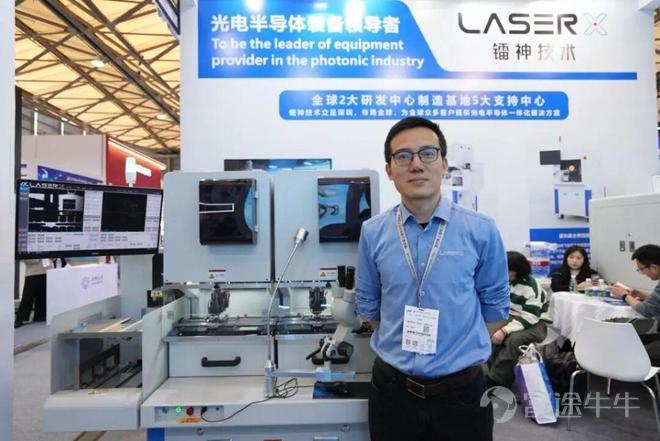
During SEMICON China 2026, an interview between 'Semiconductor Industry Review' and Li Wei, General Manager of Leishen Technology (Xi'an) Co., Ltd., revealed the real competitive logic in this niche field: This is not only a matter of equipment localization but also a long-term battle concerning process, reliability, and system capability.

Li Wei, General Manager of Leishen Technology (Xi'an) Co., Ltd.
Why is wire bonding so difficult?
For a long time, the wire bonding machine market has been dominated by overseas manufacturers, such as Kulicke & Soffa (K&S), ASMPT, and German Hesse, which hold dominant positions in high-end application areas. In terms of market data, wire bonding equipment represents a small but extremely critical segment. According to Maximize Market Research, the global wire bonding machine market size was approximately $900 million in 2024 and is expected to reach nearly $1.9 billion by 2032, maintaining an annual compound growth rate of close to 10%. Among the entire packaging interconnect technology system, wire bonding still accounts for over 50% of the market share and has long maintained a dominant position in traditional packaging scenarios.
Why has a market with a scale of only a few billion dollars become the hardest link to replace domestically?
Li Wei told me that from a technical perspective, wire bonding machines are not devices that rely on rapid iteration through economies of scale but rather a typical 'experience-driven' systems engineering project. The core difficulty does not lie in breakthroughs in single-point technology but in the long-term accumulation of complex process windows — matching processes under different materials, structures, and stress conditions requires repeated validation in numerous real production environments, and this capability cannot be quickly replicated through simple R&D investment.
Secondly, the high concentration of this market means that leading manufacturers possess extensive databases of process knowledge and customer collaboration experience accumulated over time. Once equipment enters a customer's production line, its stability and consistency are continuously magnified, creating strong path dependence, making it difficult for new entrants to displace established players, even if they can produce similar equipment.
More crucially, wire bonding machines directly impact yield and reliability, key underlying variables in manufacturing. Compared to performance metrics, yield issues tend to be non-linear: a minor fluctuation could result in exponential cost amplification. This risk makes customers extremely conservative in their equipment choices, further raising the barrier to substitution.
Based on the aforementioned characteristics, wire bonding machines have become one of the key pieces of equipment in the back-end packaging process with the highest technical barriers, strictest reliability requirements, and greatest difficulty in domestic substitution.
It is precisely because of this difficulty that breakthroughs in this field exhibit a stronger 'time window' attribute.
In recent years, with the rapid development of domestic new energy vehicles and power semiconductors, the domestic substitution of wire bonding machines has gradually entered its window period. On one hand, AI and electrification are driving the rapid growth of demand for power devices, while wire bonding remains irreplaceable in high-current and high-reliability scenarios, providing domestic equipment with a stable and continually expanding application space. On the other hand, amid growing supply chain uncertainties, the 'controllability' of equipment has evolved from being a cost option to becoming a strategic imperative, prompting downstream manufacturers to proactively introduce domestic equipment for validation. Meanwhile, domestic companies have completed the accumulation of underlying technologies such as motion control, machine vision, and ultrasonic technology, gaining the engineering capability to enter high-end application scenarios for the first time. More importantly, customer attitudes are shifting—from cautious observation in the past to proactive introduction and validation in order to diversify supply risks and optimize cost structures.
Against this industrial backdrop, a group of equipment manufacturers have begun to accelerate their entry into this sector, with Leishen being one of them.
From Optical Communications to Semiconductors: Leishen's 'Second Curve'
Leishen Technology (Shenzhen) Co., Ltd., established in 2017, has built a solid foundation in the optical communication equipment field and gained widespread recognition from top-tier domestic customers. Building on this, in February 2022, Leishen established a wholly-owned subsidiary—Leishen Technology (Xi'an) Co., Ltd.—which officially entered the semiconductor packaging equipment track, leveraging the parent company’s technological accumulation in optical module packaging and testing equipment. The main products of Leishen Xi’an include modular wire bonding machines and heavy wire bonding machines.
In the second half of 2025, an investment expansion of over 8,000 square meters of new factory space will take place, with plans for it to be officially operational by April 2026. Production capacity will increase to over 1,000 units per year. This represents not only a boost in production capacity but also a systematic upgrade in delivery and process validation capabilities. Over 1,000 units per year means that Leishen Xi’an now has the ability to deliver high-end bonding equipment at scale, indicating that it has entered a more mature phase in terms of supply chain management, quality systems, and after-sales service.
Li Wei defines the Xi'an subsidiary as the company's 'second growth curve' beyond optical communication equipment. However, from an industry perspective, the significance of this layout extends far beyond business expansion—it represents a deep dive into core semiconductor manufacturing processes. At a time when domestic substitution is entering uncharted waters, Leishen is actively taking on the role of breaking through key equipment challenges.
The choice to establish operations in Xi'an is no coincidence. On one hand, Xi'an has deep roots in semiconductor packaging, with long-term clusters of universities, research institutes, and packaging and testing enterprises forming a fertile ground of talent and technology needed for high-end equipment R&D. On the other hand, through a dual-base layout of 'Shenzhen + Xi'an' spanning north and south, Leishen is building a more resilient supply and delivery system: Shenzhen serves the global market and customer network, while Xi'an takes on R&D, manufacturing, and localization efforts. Together, these two locations enhance supply chain risk resistance and delivery flexibility, while leveraging Shenzhen’s existing global service system to accelerate equipment exports.
As geopolitical environments grow increasingly complex and industrial chains undergo accelerated restructuring, this 'distributed capability structure' is no longer just a means of optimizing efficiency—it is becoming a crucial component of equipment manufacturers’ core competitiveness.
Two types of bonding equipment open a breakthrough for domestic substitution
Compared to the relatively mature technology path of optical communication equipment, wire bonders are used in fields that demand extremely high levels of process precision, stability, and long-term reliability. For a manufacturer that has recently entered the semiconductor packaging equipment market, the real watershed lies in whether it can quickly roll out products with engineering capabilities and complete verification on customer production lines.
Against this backdrop, Leishen Xi’an has chosen a highly targeted entry path: On one hand, using high-reliability scenarios represented by automotive-grade power modules as a breakthrough to test the stability of domestically produced equipment under complex processes and extreme working conditions; on the other hand, entering the mature market for discrete devices to quickly build a customer base through efficiency and cost-effectiveness, while gradually penetrating into high-end applications.
Following this strategy, the company has launched two core products over the past two years — the WB-701A module bonding wire bonder and the WB-702A heavy wire bonding wire bonder — each corresponding to different application scenarios and market stages, forming the “dual fulcrums” for its entry into the domestic substitution market.
– WB-701A:Primarily targeting automotive-grade packaging and industrial lasers and other modular power devices, emphasizing multi-chip complex interconnections and high reliability.

WB-701A Module Bonding Wire Bonder
– WB-702A:The dual-head machine is used for wire bonding of traditional power semiconductor discrete devices, placing greater emphasis on efficiency and high stability.

WB-702A Heavy Wire Bonding Wire Bonder
The entire process can be traced through real-time data collection and analysis, and process parameters can be optimized based on the data, forming a quality closed loop of 'data collection - analysis - optimization - validation', which effectively improves yield and stability. Currently, full-process quality closed-loop management has been implemented on production lines of multiple customers.
Price advantage is a phased characteristic in the early stage of localization. In the future, competition will certainly shift to a comprehensive one involving 'performance + service + cost'. Raytheon's wire bonding machines are already accelerating towards performance competition. Price is just the entry ticket to the market, and ultimately, price advantages will give way to product stability, process capability, and delivery capacity.
These two pieces of equipment have achieved a system-level leap in high-speed, high-precision motion platforms, force control algorithms, visual recognition, and ultrasonic control. More importantly, they possess reusable process platform capabilities, laying the foundation for subsequent expansion into more advanced packaging technologies such as flip-chip bonding and hybrid bonding.
Full-line self-research, Raytheon’s confidence
In the field of semiconductor equipment, products determine whether you can enter the market, while underlying technical capabilities determine whether you can stay in the market for the long term. In this regard, Raytheon Xi'an stands out. Centering on the core process of wire bonding, it has independently developed key modules such as ultrasonic control, motion control systems, machine vision, and process databases, thus building a sustainably evolving technological system.
This full-line independent research and development brings not only greater 'technical autonomy' but also three critical capabilities: First, the ability to quickly adapt processes for different materials and package structures, shortening the introduction cycle; second, stronger customer customization capabilities to optimize according to specific production line needs; third, the ability to continuously iterate, allowing the equipment to upgrade with evolving processes rather than stagnating after a single generation of products.
Compared to some solutions relying on externally purchased module assembly, the significance of this full-stack capability is that it determines whether an equipment manufacturer can not only build a machine but also keep up with the pace of future process changes. Therefore, Raytheon Xi'an's target for this year is to deliver 300 units of equipment by 2025.
From wire bonding to advanced packaging: The technology roadmap is on the rise
Driven by AI, advanced packaging continues to gain momentum, and technologies like hybrid bonding and flip-chip packaging are widely regarded as promising. However, in Li Wei’s view, this does not change the long-term value of wire bonding.
Advanced packaging essentially addresses high bandwidth and high-density interconnection issues, but at the same time, it comes with higher costs, more complex process flows, and stricter yield management requirements, determining that its application scope mainly concentrates on high-value chip areas. In broader application scenarios, especially in power devices and cost-sensitive products, wire bonding still offers irreplaceable comprehensive advantages in current-carrying capacity, process maturity, and cost-effectiveness.
Precisely because of this,Wire bonding, hybrid bonding, and flip-chip bonding will not form a simple substitution relationship but will present a layered coexistence and complementary differentiation in technological patterns over a long period.
While solidifying its traditional strength in wire bonding machines, Leishen is also proactively extending into more advanced packaging technologies. The company continues to ramp up R&D investment and strengthen its core technology barriers through patent strategies; relying on its self-developed software platform and key technical modules, it consistently pushes forward the iterative upgrades of wire bonding equipment and enhances process integration capabilities.
According to Li Wei, the company has strategically planned for a certain advanced packaging equipment and has initiated joint R&D with customers. Currently, it is promoting process implementation through prototype validation.
It can be seen that the goal of Leishen Xi’an does not merely stop at domestic substitution but actively enters the evolution path of next-generation packaging technology. Meanwhile, based on the reusable capability of the underlying platform, the equipment can continuously iterate as processes evolve, achieving a closed-loop capability from 'equipment adapting to processes' to 'process-driven equipment evolution.'
Conclusion
Leishen Xi’an's approach represents, to some extent, a route taken by some Chinese equipment manufacturers: entering via niche scenarios, opening the market with more competitive cost-performance advantages, building trust through technology, and then extending into higher-level advanced packaging. Driven by national policy support and market demand, domestically produced optoelectronic semiconductor testing and packaging equipment are rapidly breaking through critical bottlenecks. The endgame of this competition will not be about 'who is cheaper' but rather: who can turn complex processes into controllable, stable, and replicable process capabilities. This is the true ultimate threshold for domestic substitution in packaging equipment, and Leishen Xi’an is currently crossing this threshold.
Risk Disclaimer: The above content only represents the author's view. It does not represent any position or investment advice of Futu. Futu makes no representation or warranty.Read more
Comments
to post a comment