English
Back
Open Account
The US-Iran peace talks present conflicting narratives! What’s next for oil prices?

牛牛Insights
joined discussion · Mar 30 11:52

Historically, US oil and gas stocks have still managed to hit new highs despite falling oil prices. Why?

A relatively counterintuitive situation is that although oil prices in the US fell in the years following the sharp rise in 2022, $Exxon Mobil (XOM.US)$ stock prices hit new highs year after year. This indicates that there must be factors other than oil price fluctuations playing a significant role in the crude oil market.
These factors can be summarized as follows:
1. Global crude oil supply has become increasingly concentrated. Due to geopolitical factors, Russia and Iran, two major oil-producing countries, have been excluded from the mainstream oil trading system, and their production and export capacities have gradually been constrained, affecting the global energy supply landscape. Previously, the Iraq War in 2003 and the Libyan War in 2011 also led to a gradual shift in the global oil supply structure from being dispersed to becoming more concentrated.
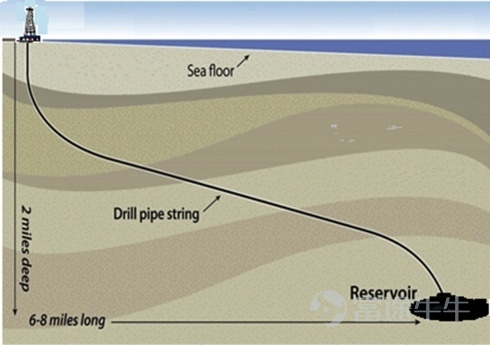
2. The efficiency of shale oil extraction in the US has been improving over the long term; the amount of shale oil produced per drilling platform has been increasing. The reason is that in recent years, US shale oil technology has advanced to include ultra-long horizontal wells, capable of extracting oil over 3km horizontally. According to the EIA (Energy Information Administration), despite a decrease in the number of drilling rigs nationwide, production has reached record highs.
A relatively counterintuitive situation is that after the surge in US oil prices in 2022, oil prices have mostly been declining in subsequent years, but $Exxon Mobil (XOM.US)$ stock prices have reached new highs year after year. This indicates that there must be factors other than oil price fluctuations playing a significant role in the crude oil market. These factors can be summarized as follows: 1. Global crude oil supply is becoming increasingly concentrated. Due to geopolitical factors, two major oil-producing countries, Russia and Iran, have been excluded from the mainstream oil trade system, gradually restricting their crude oil production and export capabilities, which has affected the global energy supply landscape. Previously, the Iraq War in 2003 and the Libyan War in 2011 also led to a gradual shift in the global oil supply structure from being dispersed to becoming more concentrated. 2. The efficiency of US shale oil extraction has been continuously improving; the amount of shale oil produced per drilling platform has been increasing. The reason is that over the past few years, US shale oil technology has advanced to include ultra-long horizontal wells, allowing for extraction over distances of more than 3 kilometers horizontally. According to the EIA (Energy Information Administration), while the number of drilling rigs nationwide has decreased, production has reached new highs. In addition, the Permian Basin in the US is the lowest-cost shale oil production area. The increase in Permian's share has resulted in cost reductions for companies operating there in recent years. 3. Domestic mergers and acquisitions in the US have also led to increased local concentration. Recent industry changes such as Exxon Mobil acquiring Pioneer Natural Resources, $Chevron (CVX.US)$ and acquiring Hess Energy have caused the CR5 of the Permian Basin to rise from...
Additionally, the Permian Basin in the US is the lowest-cost shale oil production area. The increase in Permian Basin's share has led to cost reductions for companies operating there in recent years.
A relatively counterintuitive situation is that after the surge in US oil prices in 2022, oil prices have mostly been declining in subsequent years, but $Exxon Mobil (XOM.US)$ stock prices have reached new highs year after year. This indicates that there must be factors other than oil price fluctuations playing a significant role in the crude oil market. These factors can be summarized as follows: 1. Global crude oil supply is becoming increasingly concentrated. Due to geopolitical factors, two major oil-producing countries, Russia and Iran, have been excluded from the mainstream oil trade system, gradually restricting their crude oil production and export capabilities, which has affected the global energy supply landscape. Previously, the Iraq War in 2003 and the Libyan War in 2011 also led to a gradual shift in the global oil supply structure from being dispersed to becoming more concentrated. 2. The efficiency of US shale oil extraction has been continuously improving; the amount of shale oil produced per drilling platform has been increasing. The reason is that over the past few years, US shale oil technology has advanced to include ultra-long horizontal wells, allowing for extraction over distances of more than 3 kilometers horizontally. According to the EIA (Energy Information Administration), while the number of drilling rigs nationwide has decreased, production has reached new highs. In addition, the Permian Basin in the US is the lowest-cost shale oil production area. The increase in Permian's share has resulted in cost reductions for companies operating there in recent years. 3. Domestic mergers and acquisitions in the US have also led to increased local concentration. Recent industry changes such as Exxon Mobil acquiring Pioneer Natural Resources, $Chevron (CVX.US)$ and acquiring Hess Energy have caused the CR5 of the Permian Basin to rise from...
3. Mergers and acquisitions within the US domestic industry have also increased local concentration. Recently, Exxon Mobil's acquisition of Pioneer Natural Resources, $Chevron (CVX.US)$ and the acquisition of Hess Energy, among other industry changes, have raised the CR5 (Concentration Ratio of the top 5 firms) in the Permian Basin from 30% to 55%. Scale advantages help reduce costs and maintain industry discipline.
The combined effect of these factors at the corporate level is that there are numerous companies that have continuously increased dividends for over thirty years.
In addition, midstream pipeline industries have strong earnings visibility because they can avoid oil price volatility. Representative companies include $MPLX LP (MPLX.US)$$ONEOK Inc (OKE.US)$$Williams (WMB.US)$ Currently, the Permian Basin's transportation capacity is 20 billion cubic feet per day. By 2028, to meet production growth demands, it will increase to 30 billion cubic feet. The aforementioned companies will divide up the primary new pipeline capacity. Their earnings visibility is also relatively strong.
Beyond industry factors, specifically at the company level, energy firms have stricter financial discipline. Exxon Mobil (XOM) and Chevron (CVX) have consecutively raised dividends for over 30 years. Their dividend payout ratios and dividend yields remain at high levels.
A relatively counterintuitive situation is that after the surge in US oil prices in 2022, oil prices have mostly been declining in subsequent years, but $Exxon Mobil (XOM.US)$ stock prices have reached new highs year after year. This indicates that there must be factors other than oil price fluctuations playing a significant role in the crude oil market. These factors can be summarized as follows: 1. Global crude oil supply is becoming increasingly concentrated. Due to geopolitical factors, two major oil-producing countries, Russia and Iran, have been excluded from the mainstream oil trade system, gradually restricting their crude oil production and export capabilities, which has affected the global energy supply landscape. Previously, the Iraq War in 2003 and the Libyan War in 2011 also led to a gradual shift in the global oil supply structure from being dispersed to becoming more concentrated. 2. The efficiency of US shale oil extraction has been continuously improving; the amount of shale oil produced per drilling platform has been increasing. The reason is that over the past few years, US shale oil technology has advanced to include ultra-long horizontal wells, allowing for extraction over distances of more than 3 kilometers horizontally. According to the EIA (Energy Information Administration), while the number of drilling rigs nationwide has decreased, production has reached new highs. In addition, the Permian Basin in the US is the lowest-cost shale oil production area. The increase in Permian's share has resulted in cost reductions for companies operating there in recent years. 3. Domestic mergers and acquisitions in the US have also led to increased local concentration. Recent industry changes such as Exxon Mobil acquiring Pioneer Natural Resources, $Chevron (CVX.US)$ and acquiring Hess Energy have caused the CR5 of the Permian Basin to rise from...
Risk Disclaimer: The above content only represents the author's view. It does not represent any position or investment advice of Futu. Futu makes no representation or warranty.Read more
Thumbs Up
4
83K Views
Report
Comments
Write a Comment...
4
3