
GAC Group 2025 Annual Report: 'Panyu Initiative' Shows Results, Assisting Company in Opening Growth Channels
On March 27, GAC Group (601238.SH, 02238.HK) released its 2025 annual report. During the reporting period, the group's total operating revenue was approximately RMB 96.542 billion, with annual vehicle sales reaching 1.7215 million units and terminal sales at 1.8135 million units. Among these, the proportion of energy-saving and new energy vehicles exceeded 50% for the first time, reaching 51.60%. $Guangzhou Automobile Group (601238.SH)$
GAC Group stated that in response to systemic challenges brought about by multi-dimensional restructuring in the industrial ecosystem, demand structure, and market competition, the company actively pursued transformation and reform. One year after the launch of the 'Panyu Initiative' reform, its effectiveness has drawn external attention. Data shows that the reform boosted demand decision-making efficiency by 85%, reduced new car development cycles to 18-21 months, and significantly enhanced efficiencies in multiple key business areas.

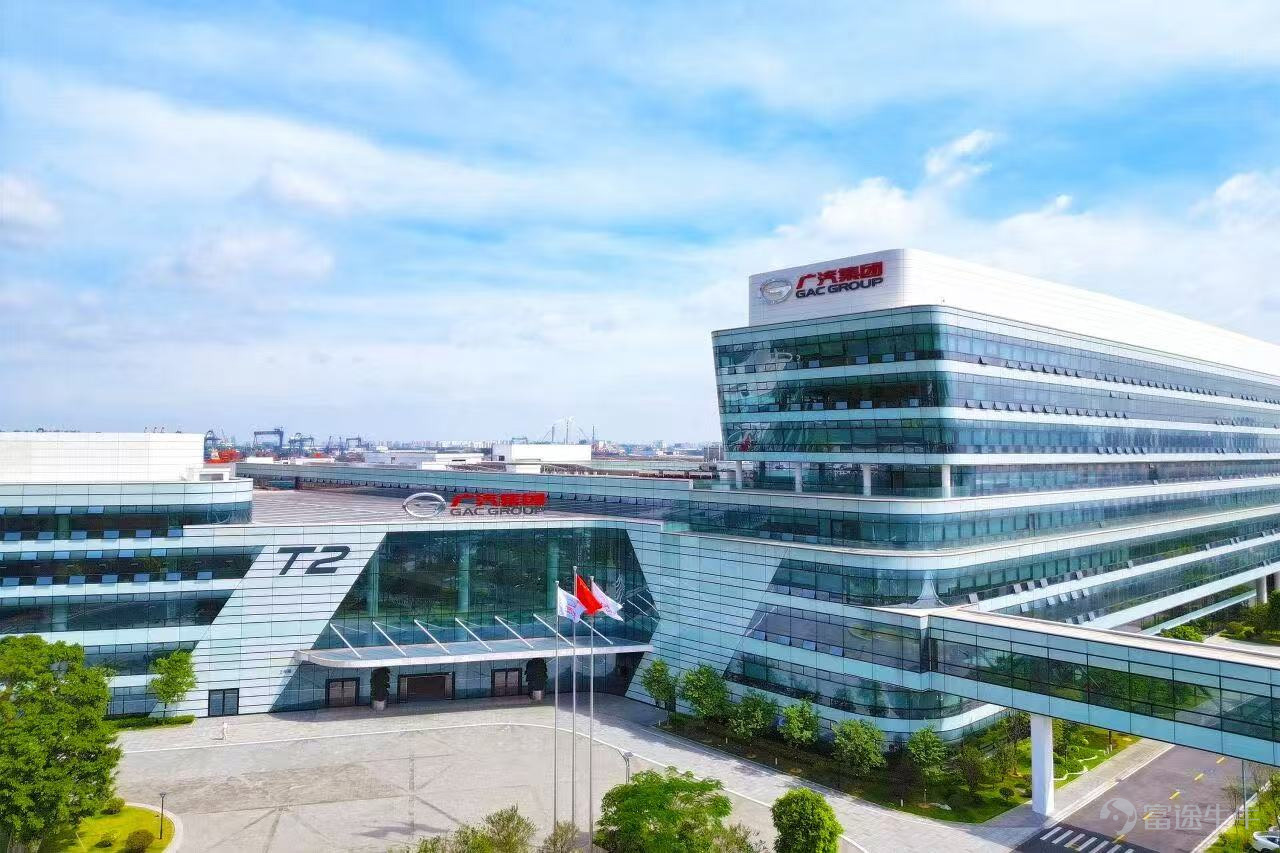
▲GAC Group Panyu Headquarters
Starting from the second quarter of 2025, GAC Group's sales have achieved positive quarter-on-quarter growth for three consecutive quarters. Meanwhile, overseas sales of GAC's self-owned brands grew by approximately 48% for the entire year, with operations covering 87 countries and regions globally and establishing a network of 630 outlets.
Proportion of energy-saving and new energy vehicle sales breaks 50% for the first time
In 2026, expand into the 'charge-and-swap' battery swapping new category
Based on its accumulation in multi-energy technology and product layout, GAC Group further optimized its product mix in 2025. According to the report, the company sold a total of 888,200 energy-saving and new energy vehicles during the year, with their sales share exceeding 50% for the first time, reaching 51.60%, an increase of about 6 percentage points compared to 2024. Among these, new energy vehicle sales reached 433,600 units, accounting for 25.19% of total sales, while energy-saving vehicle sales reached 454,600 units, growing year-on-year, representing 26.41% of total sales.
Regarding self-owned brands, GAC Trumpchi is driving electrification and intelligent transformation through a dual approach of 'self-research + collaboration.' In 2025, new energy vehicle sales exceeded 150,000 units, introducing the 'Trumpchi Aspiration' series based on the brand positioning of 'mainstream, upscale, high-quality.' The cumulative sales of Trumpchi MPV family have surpassed 800,000 units, maintaining the top position in China's luxury MPV sales and ranking first in residual value among Chinese-brand MPVs for five consecutive years since 2021. GAC Aion and GAC Hyper jointly launched several new and revamped models such as Aion UT, Aion i60, and Hyper HL, achieving synergistic development under the 'pure electric + range extender' dual technology routes. Starting from June 2025, sales have maintained positive month-on-month growth for seven consecutive months.

▲GAC Trumpchi Xiangwang S9

▲ Aion i60

▲Haobo HL
The effectiveness of smart electrification transformation in the joint venture sector has started to show. Despite ongoing pressure in the joint venture market, GAC Toyota maintained counter-trend growth, with annual sales reaching 756,000 units, increasing by 2.44% year-on-year. Sales of energy-saving and new energy models grew by 27.27% year-on-year, with their share rising to 62.2%. Platina 3X, developed primarily by the local team, achieved annual sales of over 80,000 units. To date, it has been the best-selling joint venture new energy model for six consecutive months and became the first locally developed model incorporated into Toyota's global sales system. GAC Honda achieved positive month-on-month sales growth for five consecutive months starting from August 2025. Accord full series sales exceeded 160,000 units, maintaining a leading position in the mid-to-high-end sedan market and ranking first in residual value among joint venture mid-size cars for four consecutive years.

▲GAC Toyota Platinum Smart 3x

▲GAC Honda Accord
The report mentioned that by 2026, GAC Group will focus on developing key models, accelerating the launch of new vehicles such as the QiJing GT7, Haot Platinum A800, and Aion N60, expanding into the 'chargeable and swappable' battery swapping category. The product portfolio will cover mainstream, premium, and emerging segments. Meanwhile, in response to significant demand from lower-tier automotive markets, the company will expedite the establishment of lightweight, asset-light, multi-brand authorized comprehensive store channels in county-level markets. By the first half of 2026, the plan is to add 600 full-brand experience stores, covering over 90% of county-level markets nationwide.

▲GAC Group Comprehensive Sales Service Center Zhaoqing Sihui Store
Public information shows that from January to February 2026, GAC Group’s cumulative sales increased by 3% year-over-year to 203,100 units. Among them, GAC Aion's sales increased by 48.69%, GAC Trumpchi's sales grew by 39.92%, and GAC Toyota's sales rose by 11.94%. In February, GAC Honda's sales increased by 102.3% month-over-month. Each brand performed remarkably well, showing a positive trend at the beginning of the year.
Reform drives an 85% increase in demand decision-making efficiency
Three major BUs granted high autonomy
GAC Group stated that 2025 is a critical year for the company to initiate systematic and profound changes. Since launching the three-year 'Panyu Action' reform at the end of 2024, the independent brands have achieved integrated management control over R&D, production, supply, sales, and finance. They introduced DSTE (Strategy to Execution), IPD (Integrated Product Development), and IPMS (Integrated Product Marketing and Sales) to reconstruct business processes, forming a 'market + technology' dual-driven product development model.
Since the reform began, the company’s product planning efficiency has increased by 30%, product project approval efficiency has risen by 67%, demand decision-making efficiency has improved by 85%, and the new vehicle development cycle has been shortened to 18-21 months.
At the same time, GAC Group initiated a pilot program for its independent brand BU in December 2025 to create an agile organization with clear responsibilities, rapid response capabilities, and full accountability for commercial outcomes. As of March 2026, the three major BUs—Haot Platinum Aion, Trumpchi, and Powertrain—have been established, operating with a high degree of autonomy and independently integrating key links such as R&D, manufacturing, and sales.
Information shows that the Haot Platinum Aion BU, as the earliest formed BU, saw sales surge by 171.63% year-over-year to 21,600 units in January 2026, the month following its establishment. The dual-brand channel integration was quickly completed across 254 stores in 147 cities nationwide. By the first quarter of 2026, it had formed a network of over 1,000 sales outlets, fully covering fourth-tier and higher cities.
The report mentioned that in 2026, GAC Group will further deepen reforms such as IPD and independent brand BUs and implement comprehensive cost control without reducing perceived user value or sacrificing product quality to build sustainable cost advantages.
Overseas terminal sales of proprietary brands increased by 48% year-on-year
Aiming for a sales target of 250,000 units in 2026
In the highly anticipated international segment, the report mentioned that GAC Group is leveraging the full strength of the group to support the development of its international business, initiating a new chapter in globalization from product export to system-based overseas expansion, creating a new growth pole.
In 2025, GAC's proprietary brand overseas terminal sales will approach 130,000 units, representing an increase of about 48% year-on-year. Throughout the year, five all-new models and four mid-cycle facelift models were launched, while new markets such as Brazil, Poland, and Australia were tapped, with over 280 outlets established. In March 2025, GAC unveiled its 'One GAC 2.0' global strategy, and by the end of 2025, the company's operations had expanded to 87 countries and regions globally, with a cumulative total of 630 outlets built. The report highlighted Thailand, Brazil, and the European market as key focus areas, deepening localized strategies. GAC has set up five overseas KD factories worldwide, covering Nigeria, Thailand, Malaysia, Indonesia, and Austria, with Aion V commencing mass production in Austria in 2025.

▲GAC Group unveils the upgraded global strategy 'One GAC 2.0'
GAC is also actively promoting the overseas expansion of its ecosystem. By 2025, nine major global parts warehouses have been established, covering core regions including Southeast Asia, Europe, the Americas, the Middle East, and Australia. At the same time, efforts are being expedited to develop overseas warehousing and store networks, local logistics, parts exports, and energy replenishment services. In June of the same year, GAC completed its first battery service center in Thailand, and by the end of the year, it had installed 58 charging stations, with plans to build a supercharging network comprising 200 stations and 1,000 charging piles by 2027, thereby establishing an integrated 'sales + energy services' collaborative ecosystem locally.
Regarding the 2026 plan, GAC Group stated it would aim for overseas sales of 250,000 units of proprietary brands, focusing on the mainstream A0 and A segments. Resources will be concentrated to create regional blockbusters, with localized operational strategies tailored for each country ('one country, one policy'). The 'Thousand-Network Plan' will be implemented to expand the network scale, and smart mobility solutions will be rapidly deployed to break into the B-end market.
Cumulative R&D investment exceeds 62 billion yuan
Acceleration of 'land-air integration' layout, humanoid robots with embodied intelligence nearing mass production
In terms of R&D investment, GAC Group focuses on the core tracks of electrification and intelligent technology. By the end of 2025, cumulative independent R&D investment has exceeded 62 billion yuan, with over 24,900 patent applications filed, including more than 11,200 invention patent applications. GAC is continuously increasing its technological input and industrial chain construction, accelerating the application of innovative achievements.
In the field of electrification, GAC has launched the industry-leading 'Stellar Range Extender' technology, achieving industry-first key metrics such as a fuel-to-electricity conversion efficiency of 3.73kWh/L. It has been awarded the title of 'World's Top Ten Range Extender Systems' by the Automotive Evaluation Research Institute and has been applied to the recently launched Haot Platinum HL and Aion i60 models. Self-developed key technologies such as the cartridge battery and Quark electric drive have achieved industry-leading performance in multiple areas. The all-solid-state battery is expected to be installed in small batches by 2026.

▲GAC Stellar Range Extender Technology Awarded 'World's Top Ten Range Extender Systems' Title
In terms of intelligentization, GAC has introduced the 'Stellar Intelligence Mobility' smart technology brand and the 'Stellar Safety Guardian System,' creating an end-to-end intelligent mobility safety assurance system. To date, the Stellar Safety Guardian System has served nearly two million users and prevented 5.51 million potential accidents.

▲GAC Stellar Safety Guardian System
In its autonomous driving strategy, GAC has achieved multi-scenario coverage ranging from L2 integrated driving assistance to L4 high-level autonomous driving. It has become one of the first automakers to obtain the license for 'L3-level specific-scenario autonomous driving road testing' at speeds of up to 120 km/h. L4 Robotaxis have entered demonstration operations. Currently, Ruqi Mobility operates approximately 600 Robotaxis in the Guangdong-Hong Kong-Macao Greater Bay Area, covering Guangzhou, Shenzhen, and the Hengqin Guangdong-Macau Deep Cooperation Zone. In January this year, R2, the new generation of Robotaxi co-developed by GAC Aion and DiDi Autonomous Driving, was officially delivered, marking the completion of the full commercial loop from 'technology development - smart manufacturing - commercial operation'.

▲Ruqi Mobility Launches 'Robotaxi+' Strategy to Accelerate Large-Scale Commercial Deployment of Robotaxis
At the same time, GAC’s 'Integrated Road and Air' strategy is accelerating significantly. The flying car brand, High Domain, has completed construction of its Guangzhou factory and established a full-scenario product lineup covering short-range multi-rotor flying cars and intercity compound-wing flying cars. Among these, the multi-rotor flying car GOVY AirCab has received nearly 2,000 intent orders and successfully completed its first core urban area flight demonstration in Guangzhou this March. Mass production and delivery are expected by the end of the year.

▲GOVY AirCab Completes Its First Flight Demonstration at Haixinsha, Guangzhou
The commercialization process of intelligent robotics business is also speeding up. GAC has incubated and established the intelligent robotics company Huilun Technology, successfully developing four generations of embodied humanoid robot products. The fourth-generation product, GoMate Mini, focused on security scenarios, has already been applied in demonstrations, with plans for small-batch production by 2026.

▲GoMate Mini Enters Service at Guangzhou Metro Stations
The report mentioned that GAC Group will be driven by the 'AI+' strategy to systematically build a digital and intelligent GAC, promoting the deep integration of AI technology into R&D, management, services, ecosystems, and other fields. By 2026, the company will accelerate the mass production and implementation of core technologies such as the 3.0 Blade Battery, 3.0 Quark Electric Drive, and the 2.0 End-to-End Cloud Integration Large Model, strengthening its technological advantages.
A powerful collaboration between two major companies will lead to the successive launch of multiple models under the Qijing brand.
Cultivating its ecosystem enterprises to create new independent profit engines.
With 'open cooperation' at its core, GAC Group is accelerating the construction of an ecosystem covering energy, intelligence, and business models. The report mentioned that the company continues to expand its 'ecosystem circle,' deepening collaborations with strategic partners like Huawei and CATL in intelligentization, electrification, and digitization. Meanwhile, it promotes synergy between its ecosystem enterprises and vehicle manufacturing operations, ensuring smooth internal and external 'dual circulation.' Following a model of 'external capability expansion and neutral development,' it aims to grow these entities into independently profitable profit engines.
Among these efforts, GAC and Huawei collaborated in March 2025 to create the high-end intelligent electric vehicle brand Qijing. In March 2026, Qijing's first model, the next-generation intelligent shooting brake GT7, positioned in the 300,000-yuan price range, made its global debut and initiated blind pre-orders. It is scheduled for release in June, with plans to introduce a second mid-to-large-sized SUV within the year. Additionally, its channel network will cover 300 stores across 76 cities by the end of May. Public information indicates that Qijing will roll out multiple models over the next three years.

▲ Qijing New Generation Intelligent Hunting Suit GT7
In the battery swapping sector, GAC has entered into an in-depth partnership with CATL, becoming the first automaker to fully adopt CATL’s chocolate battery swapping ecosystem, further enhancing the layout of its new energy infrastructure. Moreover, GAC has partnered with JD.com and CATL to launch the 'People-Friendly Car' Aion UT Super and teamed up with Alibaba Cloud to accelerate the development of AI infrastructure in the automotive industry.
As a crucial ecological segment of GAC, the energy ecosystem demonstrated strong synergies with its main business in 2025. Notably, the capacity of Yin湃 batteries significantly increased, with annual sales exceeding 150,000 sets of power batteries. The charging network continues to expand, with GAC's self-operated charging stations surpassing 24,000 units, covering 211 cities across 31 provinces nationwide, ranking among the top in the industry. The largest V2G microgrid in the country was completed, with cumulative discharge exceeding 1.35 million kWh in 2025.

▲GAC Energy's National Charging Network Layout
The year 2026 marks the beginning of the '15th Five-Year Plan' and is also a critical year for GAC Group to overcome challenges and achieve a decisive recovery. With the determination of being in 'wartime status,' the courage to 'turn the blade inward,' and the passion of a 'second entrepreneurial journey,' GAC Group will rely on four major drivers—new technologies, new products, new services, and a new ecosystem—to decisively win every battle and strive to reinvent a new GAC!
Disclaimer
This article contains content related to listed companies, reflecting the author's personal analysis and judgment based on information disclosed by these companies in accordance with their legal obligations (including but not limited to interim announcements, annual reports, and official interactive platforms). The information or opinions presented in this article do not constitute any form of investment or other business advice. Market Value Observer assumes no responsibility for any actions taken as a result of adopting the content of this article.
——END——
Risk Disclaimer: The above content only represents the author's view. It does not represent any position or investment advice of Futu. Futu makes no representation or warranty.Read more

Comments
to post a comment
1