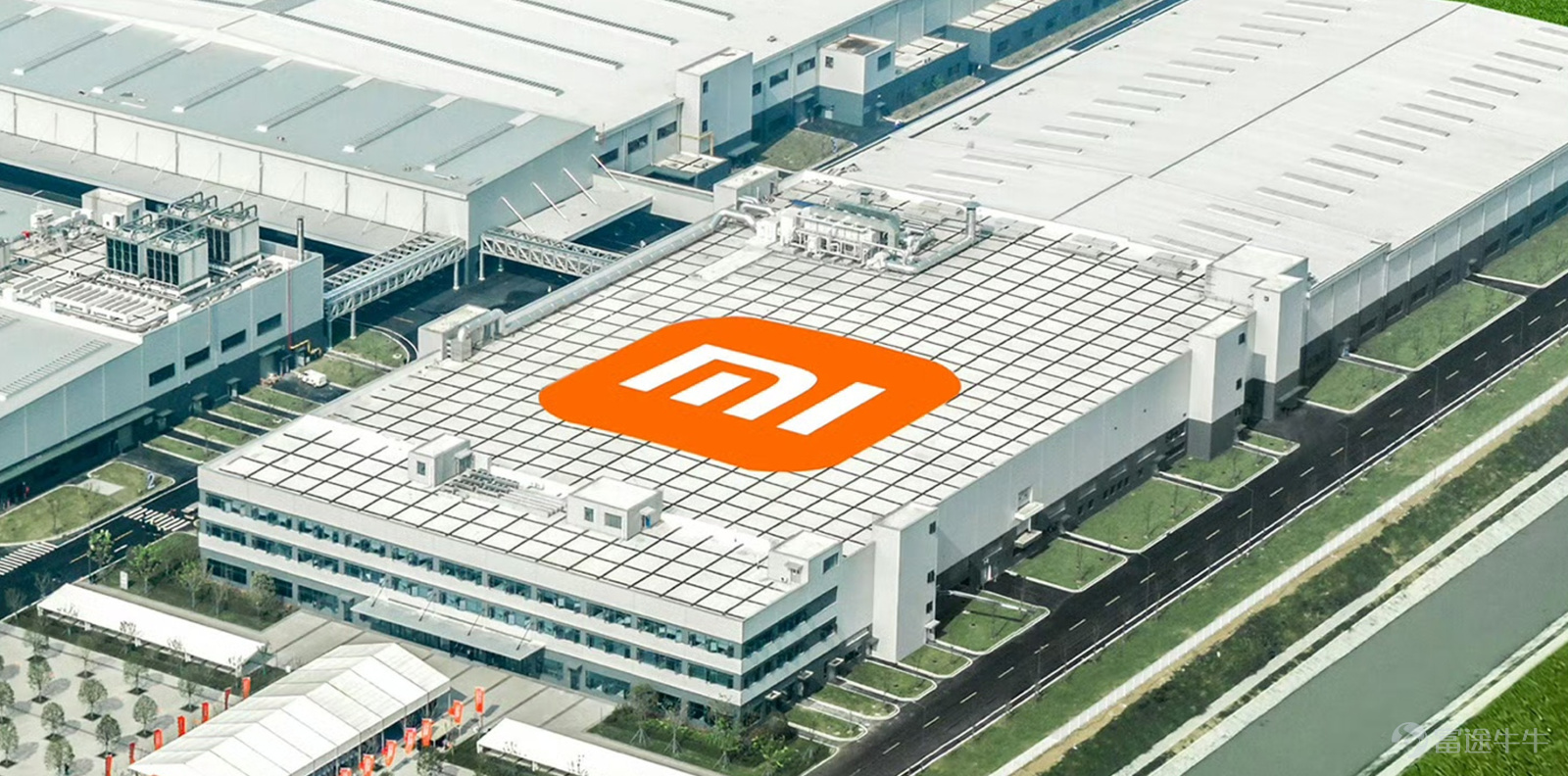

Xiaomi announces a new HK$20 billion share buyback program—will the stock price get a boost?

Do not jump to conclusions about Xiaomi too early
When a company completes the reconstruction of its foundational logic, when its four major business segments have achieved economies of scale, and when its AI capabilities begin to transition from quantitative to qualitative changes — then, grant it a little patience, and what awaits is a future that far exceeds expectations.

Zhang Lei, founder of Hillhouse Capital, in his book 'Value,' regards long-termism as an essential value for practicing value investing: 'On the road of long-termism, walk alongside those with great vision, and befriend time.' Today, this philosophy is being vividly demonstrated by a Chinese technology company.
Recently, Xiaomi $XIAOMI-W (01810.HK)$released its 2025 report card: total group revenue reached 457.3 billion yuan, a year-on-year increase of 25%, while adjusted net profit hit 39.2 billion yuan, up 43.8% year-on-year, both setting new historical records.

However, the significance of these figures goes far beyond the achievement of 'setting new highs.' More worthy of exploration are the deep-seated changes behind them: a fundamental shift in growth drivers, the full implementation of a premiumization strategy, and the systematic breakout of AI technology moving from concept to application.
This kind of growth model, continuously evolving at a structural level, we call the victory of long-termism, and it is becoming Xiaomi's new normal.
01 Gear Shift in Mid-Flight
The most crucial highlight of Xiaomi's 2025 financial report lies in the comprehensive shift of its growth engine. The rise of the automotive business marks Xiaomi's successful evolution from a leader in a single product category to an ecosystem giant with multiple business synergies and strong risk resistance. Furthermore, the 'people-car-home full ecosystem' business model demonstrates its expected resilience at the financial data level.
The most compelling evidence of this transformation comes from the explosive growth of innovative businesses like automobiles. According to the earnings report, revenue from the intelligent electric vehicle and AI-related innovative business segment surpassed the 100 billion yuan mark for the first time, reaching 106.1 billion yuan, a year-on-year surge of 223.8%. More importantly, this segment achieved positive annual operating income for the first time, amounting to 900 million yuan, with an overall gross margin of 24.3%, improving by 5.8 percentage points year-on-year. Its gross profit contribution has now surpassed that of the smartphone business.

If we zoom in on the fourth quarter, this switch in growth momentum becomes even more apparent. In this quarter alone, revenue from this segment surged to 37.2 billion yuan, growing over 123% year-on-year, with its revenue share climbing to 32%, gradually approaching that of the smartphone business. This set of data vividly illustrates the moment when growth momentum is passed from smartphones to automobiles. And Xiaomi, in less than two years, has created a brand-new growth driver in the capital-intensive and long-cycle automotive industry that can rival its traditional core business.
If the automotive business represents Xiaomi's future growth vanguard, then the three traditional core businesses have demonstrated a robust 'ballast' effect at this moment. Specifically, the smartphone × AIoT division generated revenue of RMB 351.2 billion, representing a year-on-year increase of 5.4%. Of this, smartphone business revenue reached RMB 186.4 billion, with shipment volumes ranking among the top three globally for five consecutive years; IoT and lifestyle products business revenue amounted to RMB 123.2 billion, up 18.3% year-on-year, with both domestic and overseas revenues reaching record highs; internet services revenue hit RMB 37.4 billion, growing by 9.7% year-on-year, also setting a new record.
The three core businesses collectively reaching new historical heights has strengthened the group’s overall resilience and risk resistance during the investment period in the automotive sector, providing solid backing for sustained momentum in the automotive business.
The capital markets have clearly understood the logic behind this financial report. Several leading brokerages unanimously expressed optimism about Xiaomi's long-term growth potential, focusing on the dual drivers of value release from automobiles and AI. CITIC Securities believes that Xiaomi’s valuation restructuring as it transitions from consumer electronics to the automotive business is gradually being recognized by the market. On the AI front, rapid advancements are underway, and in the future, as the company intensifies R&D investments in large models, autonomous driving, and smartphone chips, Xiaomi is expected to become one of China’s most representative AI and hardcore technology enterprises.
02 Multiple Lines Advancing Together
Today, Xiaomi's premium strategy is no longer just about breakthroughs in individual products but rather the synergistic resonance across its two core businesses—smartphones and automobiles—in terms of technology, market positioning, and brand perception. From leading in domestic high-end markets to competing on the global stage alongside top-tier brands, Xiaomi's brand image is undergoing a profound qualitative transformation.
First, let’s examine the premium smartphone segment. In the domestic market, Xiaomi’s performance in the high-end smartphone space has been impressive. Xiaomi’s smartphones are accelerating their penetration into higher price brackets.According to third-party data, in 2025, Xiaomi's share of smartphone sales in mainland China priced at RMB 3,000 and above reached 27.1%, up 3.8 percentage points year-on-year, setting a new record. In the RMB 4,000–6,000 price range, Xiaomi achieved a market share of 17.3%.

The steady growth in the mid-to-high-end market reflects the strength of Xiaomi's core business, while breakthroughs in the ultra-high-end market directly indicate an elevation in its brand ceiling. Thanks to the strong performance of ultra-premium models such as the Xiaomi 15 Ultra, Xiaomi 17 Pro Max, and Xiaomi 17 Ultra, Xiaomi's market share in the RMB 6,000–10,000 price range increased by 2.3 percentage points year-on-year to 4.5%, nearly doubling. The foundation of the domestic high-end market is now firmly established.
More strategically significant is the breakthrough in overseas premium markets. In Western Europe, the core battleground for global high-end smartphones, Xiaomi’s premium phone sales grew by approximately 40% year-on-year, with the Xiaomi T series Pro versions accounting for over 55% of sales. The most compelling evidence comes from the Xiaomi 17 Ultra Leica Edition, which was priced higher than the 1TB version of the iPhone 17 Pro Max in Europe yet remained highly popular.
This marks a qualitative change in Xiaomi's brand premium capability. When a domestically produced smartphone dares to price itself higher than Apple’s top-tier model abroad and still garners market acceptance, it signifies comprehensive recognition by users of the product’s capabilities, brand strength, and ecosystem value.
The premiumization of the automotive business is equally remarkable. In 2025, Xiaomi Auto delivered a total of 411,082 vehicles for the year, a significant increase of 200.4% year-on-year, with an average price of 250,000 yuan, maintaining year-on-year growth. The SU7 has cumulatively sold 246,000 units, becoming the sales champion in the domestic sedan market priced above 200,000 yuan. As of February 2026, the YU7 has ranked first in sales among midsize and large SUVs for seven consecutive months. The newly launched next-generation SU7 achieved over 15,000 orders within 34 minutes of its release, surpassing 30,000 orders within three days.

The leap in brand positioning has drawn even more attention from the industry. Xiaomi's debut of its first supercar concept, the Xiaomi Vision GT, at MWC marked the first time a Chinese brand was invited to unveil a supercar concept. This is not just a breakthrough at the product level but also a strategic declaration. Xiaomi Auto’s innovative strength is now on par with global top-tier brands such as Porsche and Ferrari.
Market feedback supports this assessment. Data shows that an increasing number of users who previously opted for 'BBAT' (Mercedes-Benz, BMW, Audi, Tesla) are now choosing Xiaomi Auto. The perception of automotive premiumization has shifted from being about 'cost-performance' to recognition of 'technology and quality,' a key indicator of a brand truly entering the high-end segment.
When the ultra-high pricing power of smartphones converges with the prestige of supercar-level branding, Xiaomi has become synonymous with a 'technology-driven premium brand.' And perhaps this is the story about Xiaomi that will be most remembered beyond the 2025 financial report.
AI Builds a High Barrier Across Human-Vehicle-Home Ecosystem
Jim Collins discussed a classic concept in his book 'Built to Last': the growth flywheel. Once it starts spinning on its own, every rotation accumulates new momentum, eventually transforming heavy progress into nimble acceleration.
Xiaomi’s flywheel is now approaching its most critical phase of acceleration.
Relying on the world's richest ecosystem entry points, Xiaomi’s AI is transitioning from 'dialogue capability' to 'execution in the physical world.' The resulting flywheel effect will build an ultimate moat that competitors will find difficult to replicate.
Supporting all of this is Xiaomi’s steadfast commitment to long-term investment. In 2025, the company invested 33.1 billion yuan in R&D, nearly equal to its annual profit, representing a year-on-year increase of 37.8%. The total number of R&D personnel reached 25,457, growing by 20.1% year-on-year. Over the past five years (2021-2025), Xiaomi has cumulatively invested 105.5 billion yuan in R&D. This intense investment is now translating into tangible results.
From stronger large model capabilities to faster application deployment, Xiaomi’s progress in the AI field has notably accelerated. Currently, its foundational model capabilities rank among the industry’s top tier, and AI applications across the 'human-vehicle-home full ecosystem' are rapidly being implemented.

Recently, Xiaomi launched three large self-developed models designed for the Agent era — the flagship foundational model Xiaomi MiMo-V2-Pro, the full-modal large model Xiaomi MiMo-V2-Omni, and the voice large model Xiaomi MiMo-V2-TTS. Among them,Xiaomi MiMo-V2-Pro is the first trillion-parameter MoE model introduced by Xiaomi, specifically tailored for the Agent era. Less than a week after its deployment on the global API platform OpenRouter, the model ranked first in weekly usage.
Demonstrating technical prowess is only one aspect. The real pressing question is, what is Xiaomi AI’s unique advantage? The answer points to Physical AI. Looking globally, there are hardly any other companies that can simultaneously implement Physical AI across the three domains of smartphones, IoT, and automotive. When AI truly integrates into the physical world, the flywheel effect brought by this ecosystem begins to emerge.
In the smartphone sector, Xiaomi's mobile Agent product Xiaomi Miclaw was officially released in March this year, initiating a small-scale closed beta test to explore the transition of the model from 'dialogue capability' to 'system-level execution capability'.

In the smart home domain, Xiaomi Miloco was comprehensively showcased at MWC in February this year, driving AI from screens into living spaces. As AI begins to understand and proactively respond to various needs within the home environment, smart homes will evolve from 'connection and control' to 'understanding and service', completely unlocking the potential of IoT businesses.
In the automotive field, last week’s release of Xiaomi's end-to-end assisted driving (HAD) system marked a significant architectural upgrade with the introduction of Xiaomi XLA Cognitive Large Model. Featuring multi-modality, higher efficiency, and greater controllability, it signifies Xiaomi's intelligent assisted driving moving from a 'data-driven' approach to a new paradigm of 'cognitive-driven'.
The simultaneous implementation across these three scenarios is itself a rare capability.
Another invaluable asset is the ecosystem itself. XiaoAI's 160 million monthly active users provide Xiaomi with a solid foundation for the Agent era. This not only serves as a traffic entry point but also represents deep user behavior and interaction data. Once AI Agents mature, such a vast user base will create disruptive experiences.
Even more exciting is Xiaomi’s forward-thinking layout in integrating AI with the physical world.
Currently, Xiaomi's robot has entered factory 'internships', achieving continuous autonomous operation for 3 hours at the self-tapping nut workstation, with a bilateral installation success rate of 90.2%, while meeting the fastest production line cycle time requirement of 76 seconds. Though this step may seem ordinary, it hints at a grander vision: AI, robotics, automobiles, and intelligent manufacturing are rapidly converging.
In this integration, Xiaomi holds multiple advantages: it possesses AI algorithm capabilities, robot manufacturing capabilities, as well as automotive production capabilities, and has accumulated deep experience in intelligent manufacturing. This cross-domain, systematic collaboration ability is something that most competitors in single fields lack. When these elements achieve deep integration and continuous iteration, the breakthroughs they could bring might far exceed today's imagination.
04 Written at the End
A clear picture is emerging from Xiaomi's 2025 annual report: this company has completed its transformation from a 'mobile phone manufacturer' to an 'ecosystem technology giant,' fully switching its growth drivers. The high-end strategy has yielded significant results, and its AI capabilities are rapidly building an insurmountable competitive barrier.
However, we must also recognize that the full release of these changes will take time. The deep integration of AI with the physical world, the scaled application of robotics technology, and the continued expansion of the automotive business—none of these things happen overnight.
As Xiaomi demonstrates, true innovation requires a long-term commitment. For investors, what is needed now may be this understanding: when a company completes the reconstruction of its underlying logic, when all four of its business segments have achieved economies of scale, and when its AI capabilities begin to shift from quantitative to qualitative changes—then, give it a little patience, and what awaits will be a future far beyond expectations.
Give Xiaomi a little more time, and there will be even bigger surprises ahead.
Risk Disclaimer: The above content only represents the author's view. It does not represent any position or investment advice of Futu. Futu makes no representation or warranty.Read more

Comments (2)
to post a comment
4