
Capital distribution observation: AAC Technologies' call warrant positioning is relatively high; the market is waiting for a breakout rather than chasing upward momentum.
AAC Technologies (02018) is trading at HKD 35.18. Following a rebound from its recent low of HKD 31.20, the stock remains in the lower-middle range consolidation phase. From a technical perspective, the short-term moving average MA10 stands at HKD 33.12 and has stabilized preliminarily, while MA30 and MA60 are located at HKD 34.92 and HKD 36.66 respectively, forming overhead resistance. The overall downward trend in moving averages suggests that the broader direction has not yet fully escaped weakness.
In terms of market news, as of March 25th, AAC Technologies has benefited from expectations of inventory preparation in the Apple supply chain and demand for upgrades in Android camp acoustic components, recently drawing attention from multiple brokerages. According to mainland media reports, the group has continued to make progress in precision structural components and optical businesses, with automotive acoustic products starting to contribute revenue. The Hong Kong-listed mobile device sector showed mixed performance today: Sunny Optical (02382) rose 2.84% to HKD 54.4, and GoerTek (01415) increased by 4.55% to HKD 25.28.
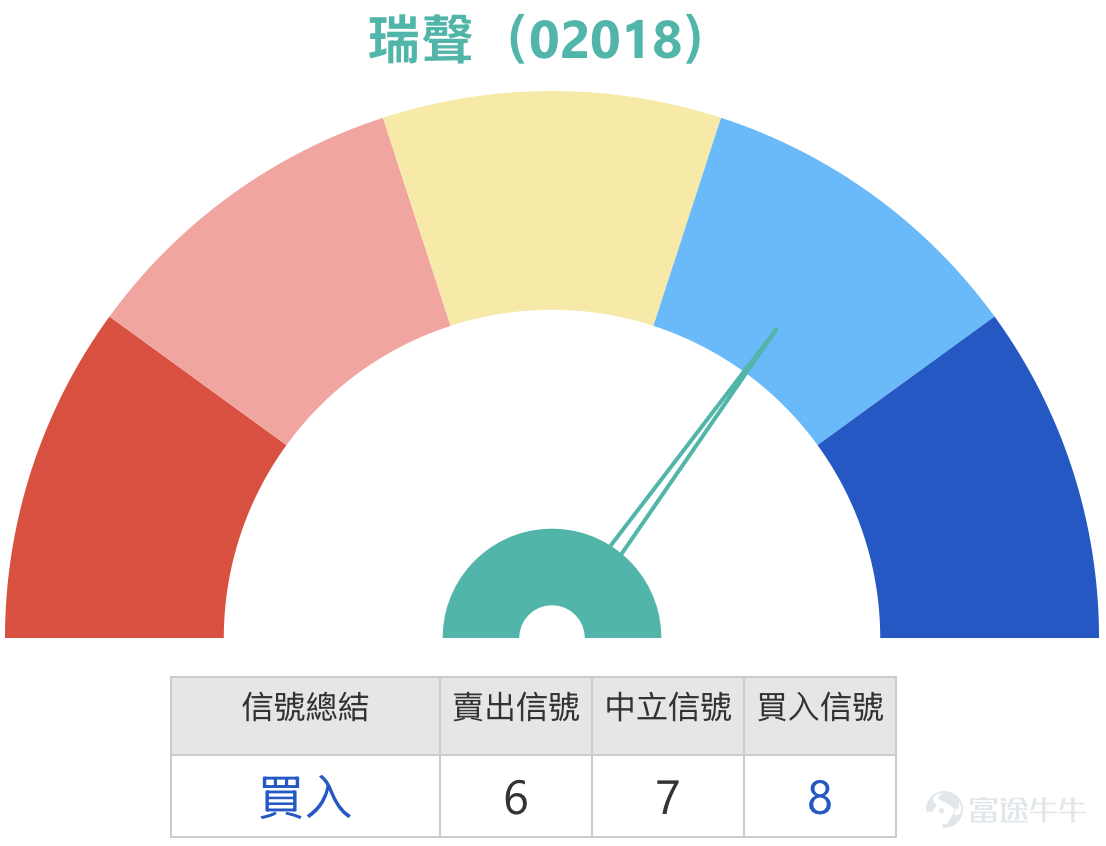
Based on a synthesis of various technical indicators, the system has issued a “Buy” signal with a strength of 8. Multiple oscillators such as the Stochastic Oscillator have issued a “Buy Signal,” while the CCI indicator and Rate of Change indicator both show “Oversold, possible bottoming out, Buy,” indicating that short-term rebound momentum still exists. However, the RSI is at a neutral level of 45, and the Williams %R indicator shows an “Overbought status, Neutral Signal,” suggesting that the stock price has stabilized from its lows but lacks clear signals of strong continuation. Based on technical analysis data, near-term support lies at HKD 32.4, while resistance levels stand at HKD 36.6 and HKD 37.5. The probability of an upward move is 46%, and the 5-day volatility is 10.9%, indicating relatively high stock price fluctuations.

Reviewing the March 24th [HK Stocks Podcast] viewpoint, the program’s analysis suggested that for further upside, the stock price must first stabilize effectively within the resistance zone of HKD 35 to HKD 35.90, before attempting to reclaim the vicinity of HKD 37. Only then would the market have the conditions to push the short-term target towards HKD 40. If the price rises only slightly above HKD 35 and quickly retreats, this movement would still be considered a rebound within the range. Currently, the stock price is at HKD 34.78, close to the lower edge of the mentioned HKD 35 resistance, placing it in the 'observation period for whether the rebound can continue.'
Regarding warrant capital distribution, there are 34 products available in the market, including 26 call warrants and 8 put warrants, clearly favoring call warrants in terms of product count. The most traded call warrants have strike prices ranging between HKD 46 to HKD 46.99, while put warrants concentrate around HKD 40 to HKD 40.99. This reflects that although more capital is positioned for a rebound, call warrant positions are set relatively higher, reflecting a more aggressive bullish outlook; bearish capital is concentrated closer to the upper resistance zone, carrying a defensive tone. In terms of street holdings, call warrants are mainly clustered around HKD 45 to HKD 45.99, while put warrants are centered at HKD 31 to HKD 31.99. The overall structure indicates a one-sided concentration, as the market's position clearly favors calls. In other words, market sentiment is not uniformly bearish; instead, more funds remain inclined to wait for a rebound, though their positioning is relatively high, meaning investors are anticipating upside but are also awaiting clearer confirmation of a breakout.
As for holding call warrants with a strike price of 42.08 yuan, this deployment itself is relatively aggressive because 42.08 yuan is already higher than the investor's original target of 40 yuan. In other words, even if the stock price rises to 40 yuan, these types of products may not directly reflect short-term upward momentum, as the strike price remains relatively high. Simply put, while the bullish direction can be understood, in terms of short-term reward-to-risk ratio, holding call warrants with a higher strike price like 42.08 yuan offers only average value unless the stock price first breaks through the range of 35 yuan to 37 yuan and continues its upward trend. At this stage, it’s more reasonable to consider 40 yuan as a later-stage target rather than an immediate or very short-term goal.
Reviewing the performance of the warrant market, based on the product review from March 19, the two put warrants mentioned on that day recorded significant gains over the following two days (up until March 21), successfully capturing the decline in the underlying stocks. Specifically, the J.P. Morgan put warrant (16602) rose by 17%, while the BNP Paribas put warrant (15967) gained 15%. During the same period, the underlying stocks fell by 6.71%, demonstrating that these put warrants effectively fulfilled their hedging and downside-capturing functions. This highlights that in a clear downtrend, appropriate derivatives can significantly amplify returns.

Based on technical analysis, market conditions, and Podcast insights, AAC Technologies is currently in a short-term rebound observation phase. Investors should use 32.4 yuan as a short-term defensive level and closely monitor the breakout situation in the resistance zone of 35 yuan to 35.90 yuan. If the stock price can stabilize above 35 yuan with corresponding trading volume, it has the potential to further challenge resistances at 36.6 yuan and 37.5 yuan; if the breakout fails and the price falls back, support levels at 32.4 yuan and 31.20 yuan should be noted. Below is an analysis of selected warrant and bull/bear certificate products with clearer terms, whose recovery prices and strike prices are closely related to technical support and resistance levels.
For bullish deployments, consider the Bank of China call warrant (26567) $BI-AAC @EC2609A.C (26567.HK)$ and the UBS Group call warrant (26876) $UB-AAC @EC2609A.C (26876.HK)$ . Both have a strike price of 50.93 yuan, which is significantly higher than the second resistance level of 37.5 yuan, representing deep out-of-the-money structures. The advantage of the Bank of China call warrant (26567) lies in its relatively lower implied volatility (55.21%) and leverage of 5.27 times; the UBS Group call warrant (26876) offers similar leverage (5.26 times) and implied volatility (55.34%). These are suitable for investors expecting the stock price to break through the 37.5 yuan resistance and advance toward 40 yuan or higher targets. Due to the high strike price, these strategies represent a more aggressive upward outlook and require attention to time decay and the risk of failed breakouts.
For bearish deployments, consider the BNP Paribas put warrant (21494) $CI-AAC @EP2609A.P (21494.HK)$ and the J.P. Morgan put warrant (21033) $JP-AAC @EP2609A.P (21033.HK)$ . Their strike prices are 40.9 yuan and 40.86 yuan respectively, both higher than the first resistance level of 36.6 yuan, making them out-of-the-money structures. The advantage of the BNP Paribas put warrant (21494) lies in its lowest premium and implied volatility, with leverage at 2.4 times; the J.P. Morgan put warrant (21033) stands out with its ideal leverage and implied volatility, offering leverage of 2.2 times. These are suitable for investors expecting the stock price to encounter resistance and retreat within the 35 yuan to 36.6 yuan resistance zone, providing a larger margin of safety due to strike prices set near the upper resistance zone.
In summary, AAC Technologies is at a critical juncture where the short-term rebound may either continue or reverse. Investors should treat 32.4 yuan as a short-term dividing line between bullish and bearish sentiment. If the stock price can effectively break through the resistance zone of 35 yuan to 35.90 yuan, it has the potential to further challenge resistances at 36.6 yuan and 37.5 yuan; if it fails to hold and falls back, support levels at 32.4 yuan and 31.20 yuan should be monitored. When choosing derivative products, investors should balance leverage and the distance to strike prices based on their judgment of market direction and strength, while keeping in mind the Podcast's mention of '35 yuan to 35.90 yuan as the first resistance.'

Interactive Questions
Do you think AAC Technologies (02018) can break through the resistance zone between $35 and $35.90 in the short term?
A. Yes, the rebound is expected to continue with a potential challenge at $37.
B. No, range-bound fluctuations will lead to a retest of the support at $32.40.
Friendly reminder: This article does not constitute any investment advice. It is for reference only and does not constitute any form of investment recommendation. The market data, opinions, and analysis contained herein may change at any time without prior notice. We assume no responsibility for any loss or damage caused by reliance on the information in this article. Technical analysis only shows whether certain technical conditions are met; a comprehensive evaluation of asset performance should be conducted using additional data. Trading decisions should not be made solely based on this article. Please note that past performance is not indicative of future results. Follow Jenny's Warrants HKEX column for more professional insights.
#AAC Technologies #02018 #Technical Analysis #Support Level #Resistance Level #Warrants #Call Options #Put Options #Mobile Device Stocks #Hong Kong Stock Warrants Jenny
Risk Disclaimer: The above content only represents the author's view. It does not represent any position or investment advice of Futu. Futu makes no representation or warranty.Read more

Comment (1)
to post a comment
1