
Following the failed launch of the ASTS satellite, where do space-related stocks go from here?

NVIDIA: Geopolitical headwinds prompt reevaluation of demand expectations, with the 200-day moving average as a key defense line!
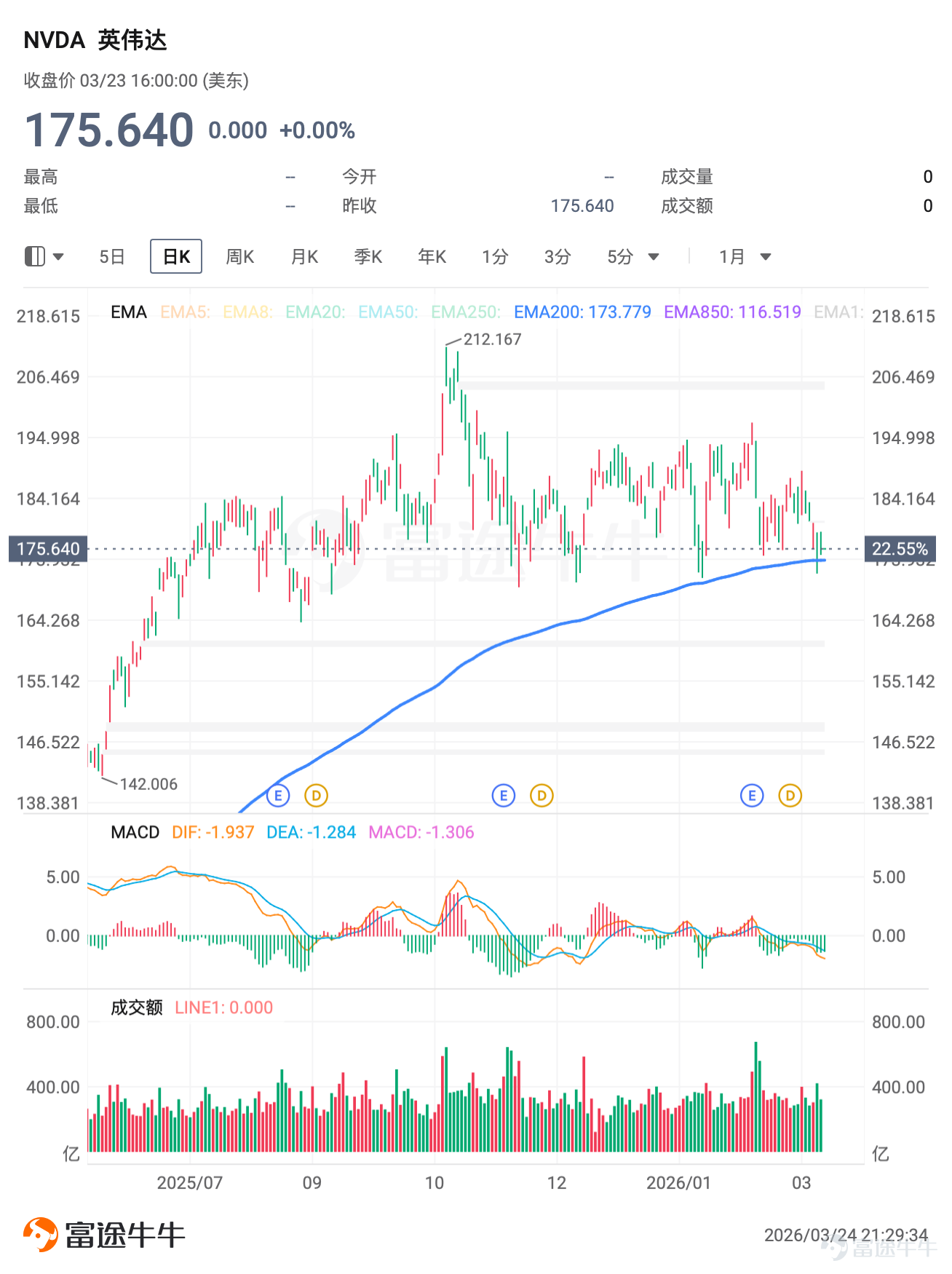
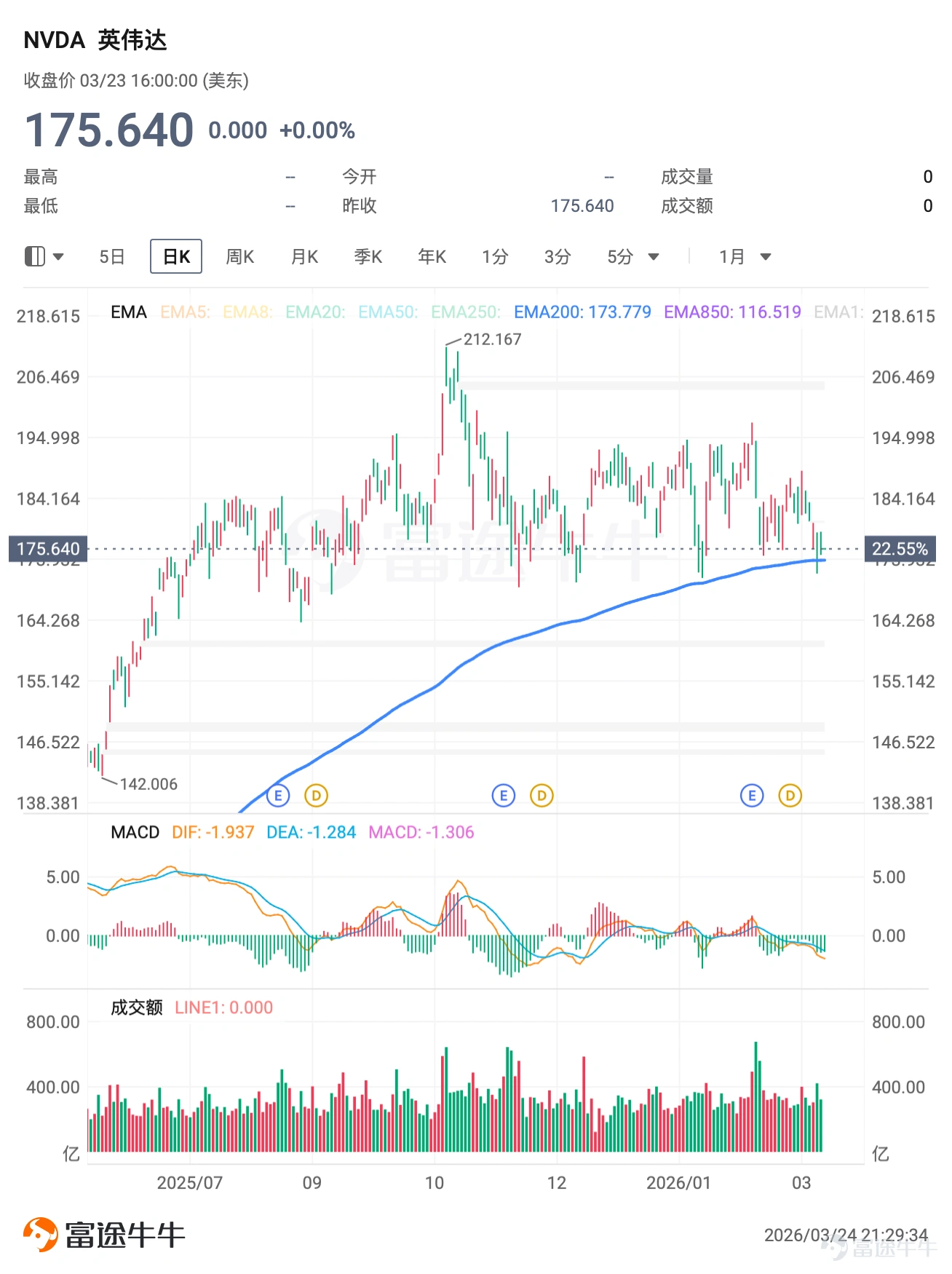
Last Friday, $NVIDIA (NVDA.US)$ it followed the decline in market risk appetite and officially broke below the 200-day moving average.
Yesterday, following Trump's announcement to delay the strike plan on Iran's energy infrastructure, global risk assets rebounded significantly, with the Nasdaq rising 1.38%, and NVIDIA showing a strong rebound back above the 200-day moving average. Technically, the 200-day moving average and the $170 bottom of the trading range have become critical defense lines for NVIDIA’s stock price.
Valuation compression
The core of this round of adjustment, on the surface, is the loss of technical support, but in essence, it is still macro variables repricing AI assets. In the past few trading sessions, the surge in oil prices once again pushed market concerns about inflation and interest rate paths to the forefront. On March 19, Reuters cited FedWatch saying thattraders have almost stopped pricing in rate cuts before mid-2027; On March 20, Reuters further pointed out thatby the end of 2026, the market even leaned more toward expecting the Federal Reserve to raise rates rather than cut them.For NVIDIA and most tech stocks, this means pressure on the denominator first: a rise in discount rates, reduced tolerance for valuations, and even if the earnings logic remains temporarily unchanged, share prices will still experience a round of multiple compression.
Reevaluation of demand growth
More concerning is that the market has begun to reassess the pace of AI demand diffusion.
At NVIDIA's GTC conference, NVIDIA divided the revenue from the Blackwell and Rubin chips as follows: 60% from hyperscalers. ,40%IncludingNCP、SCC、Sovereign AI、Industry andA more diversified group of buyers, including enterprise chips.

Hyperscalers, due to their strategic CapEx and robust cash flow, are less affected by macro shocks; the potential issues lie with the marginal demand within the 40% that relies more on external financing and is more vulnerable to high oil prices and fiscal constraints.
For example:
- NCP (NVIDIA Cloud Partners): Mainly highly sensitive to the cost of capital,“Neoclouds”。
- Sovereign AI: A significant portion driven byThe Middle East, as current oil export restrictions impact revenue, while fiscal priorities shift towards security and reconstruction, making AI investments likely face potential delays or scaled-back plans.
In other words, the risk NVIDIA faces right now is not necessarily the sudden disappearance of core orders, but rather that the second- and third-tier demand previously priced based on extremely optimistic assumptions may not expand as quickly as expected. This change won't immediately lead to a revenue cliff in the short term, but it could very well result in a valuation discount first.
Therefore, Monday's price action resembles more of a 'counterattack after a breakdown' than a 'recapturing of the trend.' It indicates that funds haven't abandoned NVIDIA; once oil prices and interest rate expectations retreat, leading AI companies will still be among the first targets for recovery.
However, it also reflects that the market is not yet ready to assign a higher trend premium in the current macro environment. If fluctuations in oil prices and interest rates return, and stock prices fail to recover above the long-term moving average, this round of correction has not yet ended.
Risk Disclaimer: The above content only represents the author's view. It does not represent any position or investment advice of Futu. Futu makes no representation or warranty.Read more

Comments
to post a comment
1