
With the launch of the 18-fold smartphone and the Pengcheng N70, can Xiaomi stage a rebound?

March 23 [HK Stocks Podcast] Part 2 - COSCO Shipping Energy, Xiaomi, CNOOC
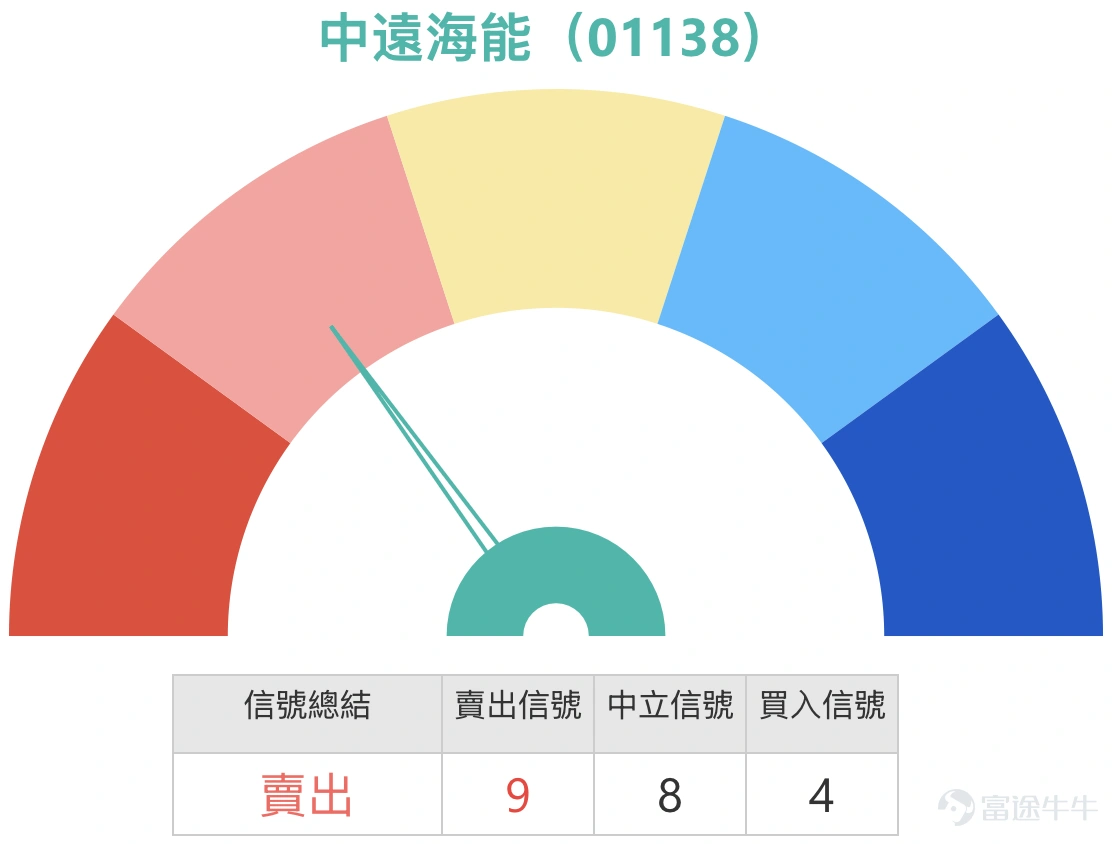
1. COSCO Shipping Energy (01138.HK): Investors ask when the historical high of HKD 26 will be broken? Focus on call warrants with an exercise price of HKD 26.3.
COSCO Shipping Energy (01138.HK) is currently trading around HKD 19.70, remaining in a consolidation phase at elevated levels within a medium-term uptrend. Recently, the price surged from a low of HKD 9.38 to a high of HKD 22.24 before pulling back, consolidating repeatedly within the range of HKD 17 to HKD 20. The current short-term trading range primarily falls between HKD 18 and HKD 20.5, with volatility around 12% to 14%. Support is evident around HKD 18, while resistance lies between HKD 20.5 and HKD 21. Until broken, the structure remains sideways but slightly bullish.
In terms of moving averages, the overall upward arrangement persists, reflecting that the medium-term uptrend remains intact. Short-term moving averages are gradually converging toward the price, showing that the uptrend is entering a consolidation phase. The Relative Strength Index (RSI) remains in a moderately strong region, hovering around 60, indicating no significant capital outflow but some slowing of momentum. The Bollinger Bands have notably narrowed, with the price running between the middle and upper bands, representing compressed volatility, as the market awaits the next directional move.
On the upside, it is essential to monitor the breakout situation at the resistance zone of 20.5 to 21 yuan. A confirmation of a new round of upward momentum will only occur if trading volume expands and the price stabilizes above 21 yuan. At that point, there may be an opportunity to re-challenge 22 yuan or even higher levels. If the price fails to break through and falls back again, once the support at 18 yuan is broken, the stock will weaken and could test 17 yuan or even lower levels.
Observing the capital structure, the market is almost entirely concentrated in call warrants, with noticeable trading focused on the strike price range of about 26.8 to 26.9 yuan, which represents a clearly out-of-the-money deployment. This reflects that investors generally expect medium-term upside potential. However, the open interest is concentrated around the higher strike price of approximately 29.9 yuan, indicating that the market's accumulated positions are leaning towards a more aggressive level. The overall structure is one-sided bullish, but this also means that if the upward trend cannot continue, latent selling pressure will gradually emerge.
Regarding investor concerns about when the historical high of 26 yuan will be broken and holding call warrants with a strike price of 26.3 yuan, this expectation represents a medium-term optimistic view. However, from the current structural perspective, the stock price is still over 30% away from 26 yuan, and in the short term, it remains in a consolidation zone around 20 yuan without signs of accelerated upward movement. It is premature to talk about challenging 26 yuan before breaking through 21 yuan and sustaining the upward trend.
In terms of short-term betting ratios, the current phase is characterized by 'high-level consolidation, waiting for a breakout.' Without clear breakout signals, holding out-of-the-money call warrants will face time value erosion risks, resulting in less than ideal betting ratios. Only when the stock price effectively breaks out and enters a trend acceleration phase will such positioning become reasonable. Therefore, while this investor’s directional view is not wrong, the timing is premature. The risk-reward ratio for short-term holdings is asymmetrical, necessitating cautious management of positions. $CTCSHIP@EC2609A.C (25840.HK)$

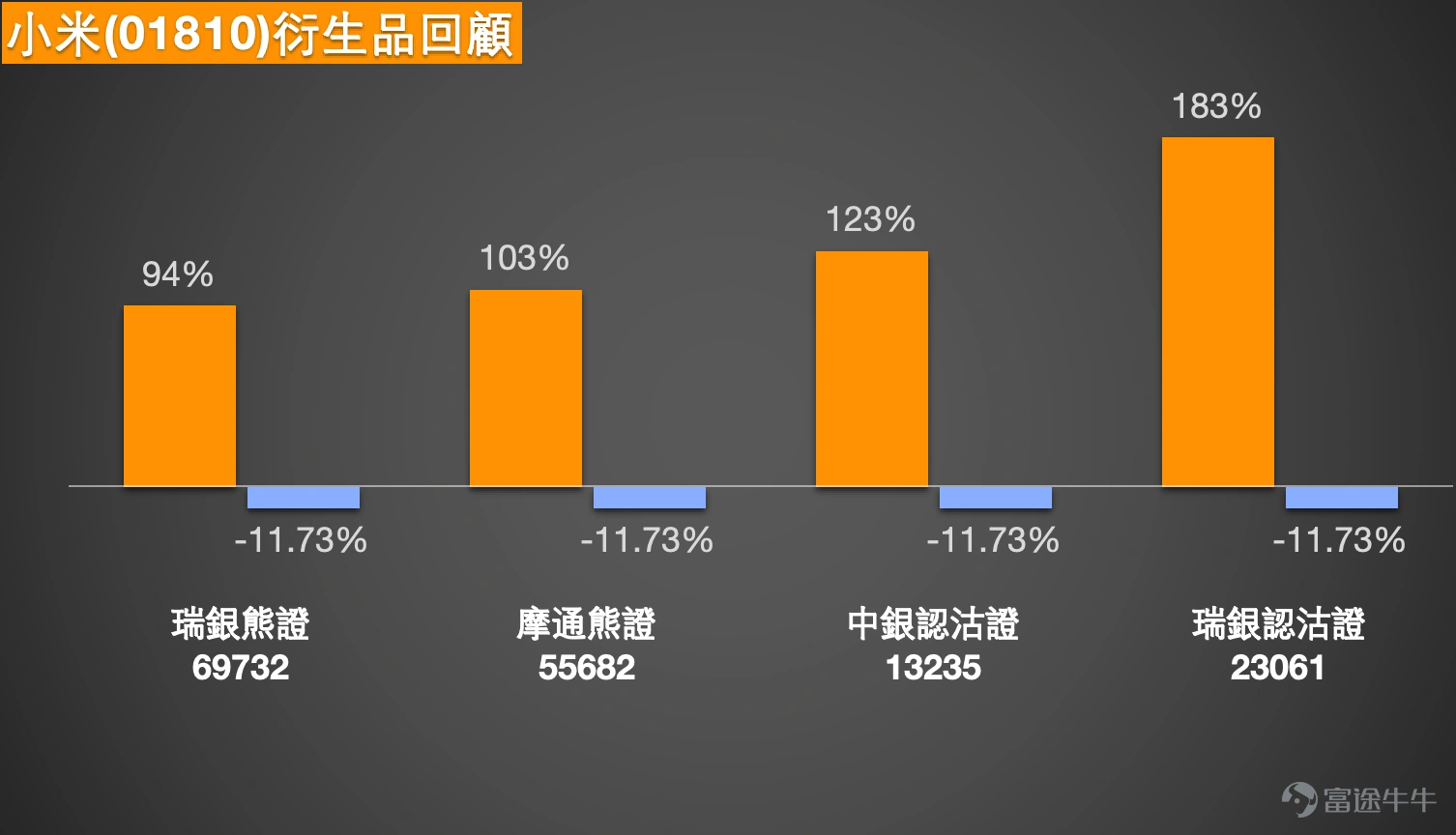
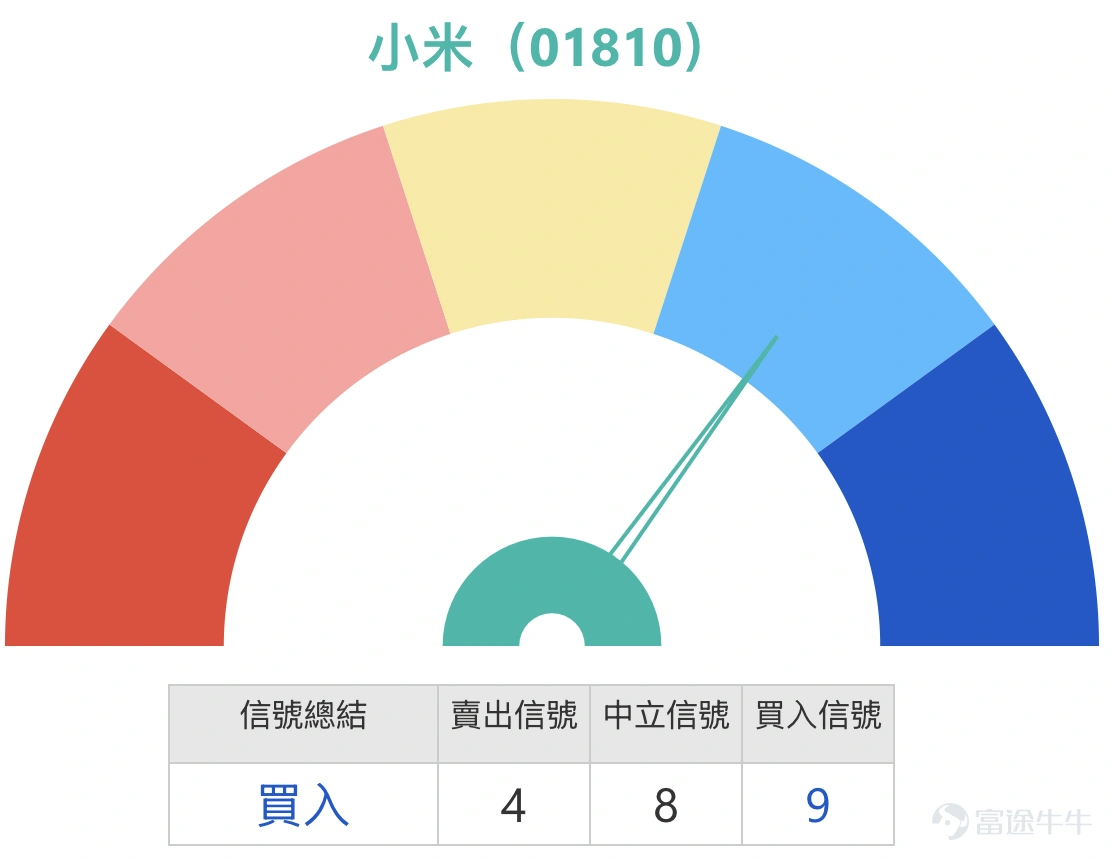
1. Xiaomi Group-W (01810.HK): The company will announce its earnings on Tuesday. Will it break HKD 30? In the warrant market, investors say they are buying Puts as a hedge, focusing on put warrants with an exercise price of HKD 22.88.
Xiaomi Group-W is currently trading at 32.06 yuan, with the short-term trading range clearly between 31.20 yuan and 36.60 yuan, fluctuating by about 17.3%. The nearest support level at this stage is at 31.20 yuan, which is a recent obvious low, and also close to the lower Bollinger Band near 31.16 yuan. If this support is broken, the market will start directly testing the psychological level of 30 yuan. The first resistance above is not a single price point but the moving average dense area between 33.9 yuan and 34.6 yuan because the 5-day, 10-day, 20-day, and 30-day moving averages are all currently hovering around this range. Beyond that lies the recent rebound high of 36.60 yuan.
Technically, the short to medium-term moving averages are still trending downward, with the stock price remaining below several key moving averages, indicating the trend has not yet shaken off weakness. The Relative Strength Index (RSI) is in a weaker region without showing clear strengthening signals. Regarding the Bollinger Bands, the price is hugging the lower band, reflecting continued short-term selling pressure, but also suggesting the stock is nearing the edge of short-term oversold conditions, making it highly susceptible to significant directional moves driven by earnings news.
The conditions for an upside are clear: the price must first stabilize above 31.20 yuan and then further break through the moving average resistance zone of 33.9 yuan to 34.6 yuan to truly transition from a weak rebound to a more sustainable recovery trend. Without achieving this step, any rebound is more likely to be a technical pullback. Only when the price effectively rises and stabilizes above 34 yuan will the market have the conditions to challenge 36.60 yuan, at which point short-term sentiment will significantly improve.
Downside risks are equally clear. If 31.20 yuan is breached and not quickly recovered, the market will immediately focus on the 30-yuan level. Once 30 yuan is broken, it indicates that what was initially just a weak consolidation pattern will deteriorate further. At that point, short-term selling pressure could accelerate, and volatility around earnings could amplify. In other words, 31.20 yuan is the first line of short-term defense, while 30 yuan is an important psychological threshold.
In terms of warrant capital distribution, trading remains dominated by call warrants, with a total of 247 call warrants versus 57 put warrants. The most concentrated trading in call warrants occurs within the strike price range of 37.00 yuan to 37.99 yuan, reflecting that considerable capital is still positioned for a rebound at higher levels. Meanwhile, put warrant trading is most concentrated in the 31.00 yuan to 31.99 yuan range, which is close to the current price, showing increased hedging demand for testing short-term support or even the 30-yuan level. In terms of open interest, call warrants are most concentrated in the 60.00 yuan to 60.99 yuan range, while put warrants are concentrated in the 46.00 yuan to 46.99 yuan range. The overall open interest distribution is heavily skewed toward call warrants, indicating a one-sided concentration. This suggests that the overall market positioning is not uniformly bearish; rather, it resembles a structure originally biased toward expecting a rebound, with some defensive put deployments added ahead of earnings recently. Thus, the market has not formed a completely unified downward direction but instead exhibits a divergent pattern where 'call open interest is dominant, but short-term put trading is heating up.'
Regarding whether the stock will fall below HKD 30 after the earnings announcement on Tuesday, this possibility cannot be ruled out. The current price is already close to the lower Bollinger Band, and the support at HKD 31.20 is not strong. If the earnings disappoint the market, HKD 30 could indeed become a direct test target. However, looking purely at short-term strategies, buying Puts as a hedge is a reasonable idea since the market is indeed increasing its defense against downside risks. But focusing on put warrants with an exercise price of HKD 22.88 is a more aggressive choice, as this strike price is too far from the current price. Unless there is a very sharp and deep decline after the earnings release, the short-term sensitivity may not be optimal. In other words, while the hedging direction is reasonable, using put warrants with distant strikes like HKD 22.88 to bet on a drop below HKD 30 results in just moderate or even low short-term betting ratios. The key issue is not whether the market might slightly weaken, but whether there will be a sufficiently rapid decline to make these products respond effectively. $UB#XIAMIRP2812A.P (69732.HK)$$JP#XIAMIRP2810D.P (55682.HK)$$BIXIAMI@EP2606B.P (13235.HK)$$UBXIAMI@EP2605A.P (23061.HK)$
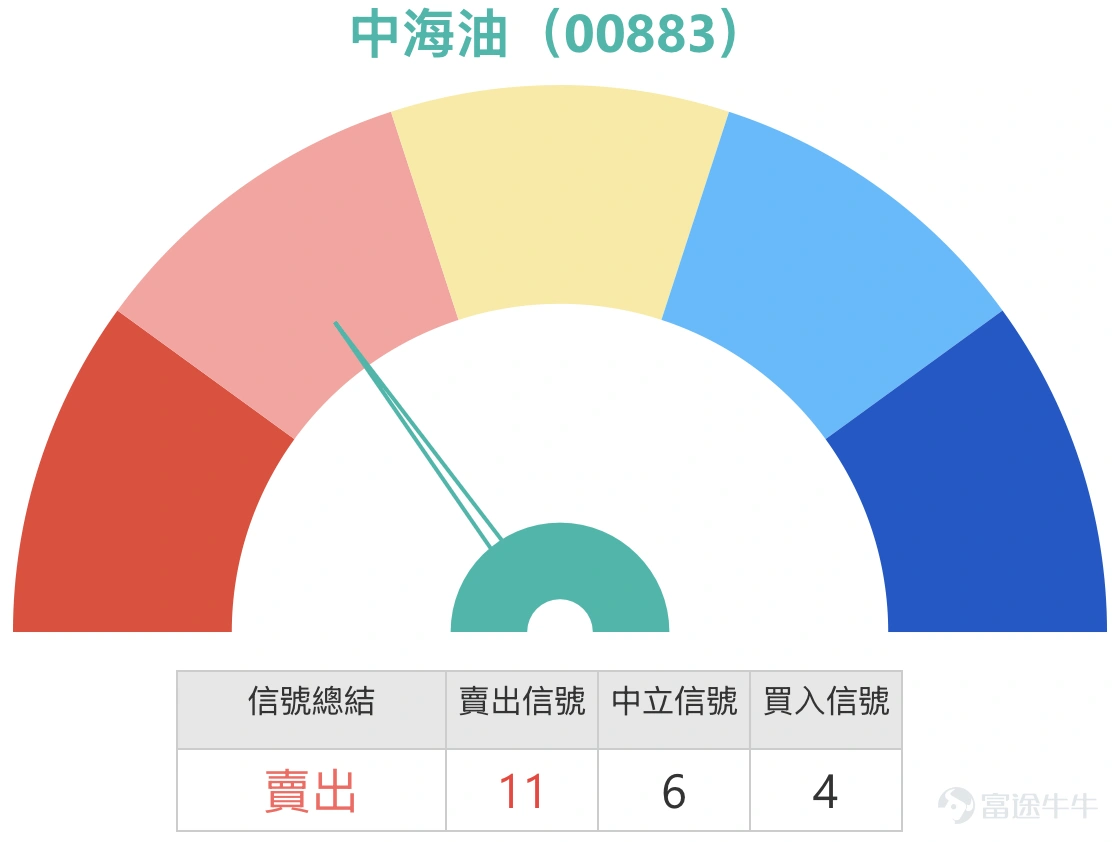
1. CNOOC (00883.HK) Investors ask: Will it return to HKD 26 or test HKD 32? In the warrant market, some investors have taken bearish positions, with a stop-loss level set at HKD 31.
CNOOC's current price is 30.50 yuan, with a clear recent trading range between 20.54 yuan and 30.98 yuan, accumulating a total fluctuation of approximately 50.8%. The current price is already near the top of this range. For the short term, the most immediate support level is around 29.80 to 29.50 yuan, which is close to the intraday low of 29.82 yuan and also near the 5-day moving average of 29.51 yuan. Below that, the 10-day moving average is around 29.10 yuan; if that breaks, the adjustment could expand further. On the upside, resistance is first seen at the recent high of 30.98 yuan, followed by the 31 to 31.11 yuan area, which is near both the round-number level and the upper Bollinger Band. The next higher target zone is 32 yuan.
The technical setup is quite clear: the moving averages remain in an upward alignment, with the 5-day, 10-day, 20-day, and 30-day lines clearly ordered from top to bottom, indicating that the trend remains strong. The Relative Strength Index (RSI) is in a strong region and has reached around 70 or even higher, showing that buying interest persists, though the short term is beginning to enter a more overheated phase. Regarding the Bollinger Bands, the stock price is approaching the upper band, which typically indicates strength, but also suggests that chasing prices now requires better timing, as failure to break through often results in short-term pullbacks near the upper band.
The conditions for upside movement aren’t complex: the key is that the resistance zone between 30.98 yuan and 31.11 yuan must be effectively broken, and the breakout should not just result in a brief spike but must hold steady. Only then does the market have a better chance to test 32 yuan smoothly. If the price repeatedly approaches 31 yuan without breaking through, the uptrend may not reverse immediately, but short-term upward space would be significantly compressed.
Downside risk also has clear triggers: if the stock first breaks below 29.80 yuan, then drops below 29.50 yuan and the 10-day moving average at 29.10 yuan, it indicates that the short-term uptrend is weakening. At that point, it wouldn’t just be consolidation at highs but could signal a deeper technical correction. However, returning directly to 26 yuan isn’t something that would occur with just a slight weakening, as there are multiple supports in between, such as the 20-day moving average at 27.72 yuan and the 30-day moving average at 26.72 yuan. In other words, 26 yuan isn’t the first step down but rather a target that might emerge after a clear breakdown in the short-term structure.
Regarding warrant fund distribution, there are a total of 60 products, of which 44 are call warrants and 16 are put warrants, indicating that call warrants still outnumber puts. The most concentrated trading region for call warrants is in the strike price range of 35.00 to 35.99 yuan, while for put warrants, it’s concentrated in the 22.00 to 22.99 yuan range. This reflects that the market mainstream is still positioned for upside potential at higher levels, though some funds are using deep out-of-the-money put warrants for defensive purposes. On the street-level holdings, call warrants are most concentrated around the 28.00 to 28.99 yuan strike price, while put warrants cluster around the 18.00 to 18.99 yuan strike price. Overall, there isn’t significant one-sided concentration, indicating that the market isn’t completely aligned in one direction and retains some divergence despite a generally bullish bias.
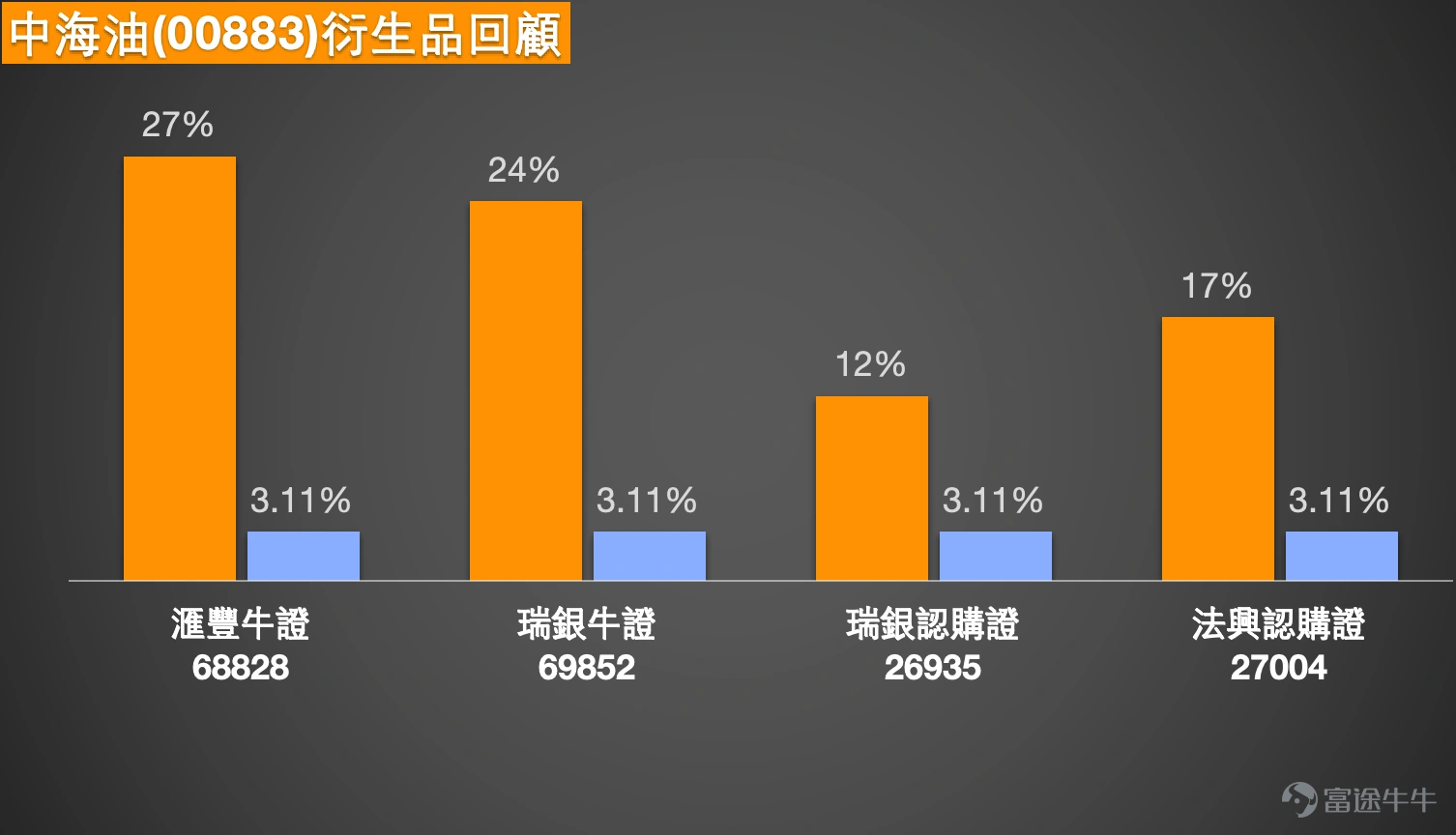
As for whether the stock will return to HKD 26 or test HKD 32, based on the current short-term structure, the likelihood of first testing HKD 32 is clearly higher than returning directly to HKD 26, as the trend remains upward, with well-arranged moving averages and prices still operating near the high zone. Of course, the resistance around HKD 31 is significant, and a breakthrough may not happen in one attempt. However, as long as the support range between HKD 29.50 and HKD 29.10 holds, the trend should primarily consolidate at highs before attempting another upward move. As for taking a bearish position with a stop-loss level set at HKD 31, I believe the short-term betting ratio is low because the current price is HKD 30.50, with recent highs at HKD 30.98—too close to the HKD 31 stop-loss level. A slight upward movement could trigger a stop-loss, leaving little room for error. Betting on a pullback upon encountering resistance near HKD 31 is not entirely wrong in terms of direction, but using bearish certificates with a stop-loss at HKD 31 to bear the pressure of this strong stock poses risks that outweigh the rewards, making such positioning less than rational. $HS#CNOOCRC2808B.C (68828.HK)$$UB#CNOOCRC2812A.C (69852.HK)$$UBCNOOC@EC2611C.C (26935.HK)$$SGCNOOC@EC2611C.C (27004.HK)$
Reminder: This article does not constitute any investment advice.
This article is for reference only and does not constitute any investment advice. The market data, opinions, and analysis contained herein may change at any time without prior notice. We are not responsible for any loss or damage caused by reliance on the information in this article. Technical analysis only shows whether certain technical conditions are met; a comprehensive assessment of asset performance should combine other data and should not solely rely on this article to make trading decisions. Please note that past performance is not indicative of future results. Follow Jenny's insights on Hong Kong stock warrants for more professional analysis.
Risk Disclaimer: The above content only represents the author's view. It does not represent any position or investment advice of Futu. Futu makes no representation or warranty.Read more
Comments
to post a comment
12