

Earnings reports from Chinese giants raise concerns! Is it a good time to buy on dips?

March 20th [Hong Kong Stock Podcast] Part 2 - Sands China, Geely Auto, CATL
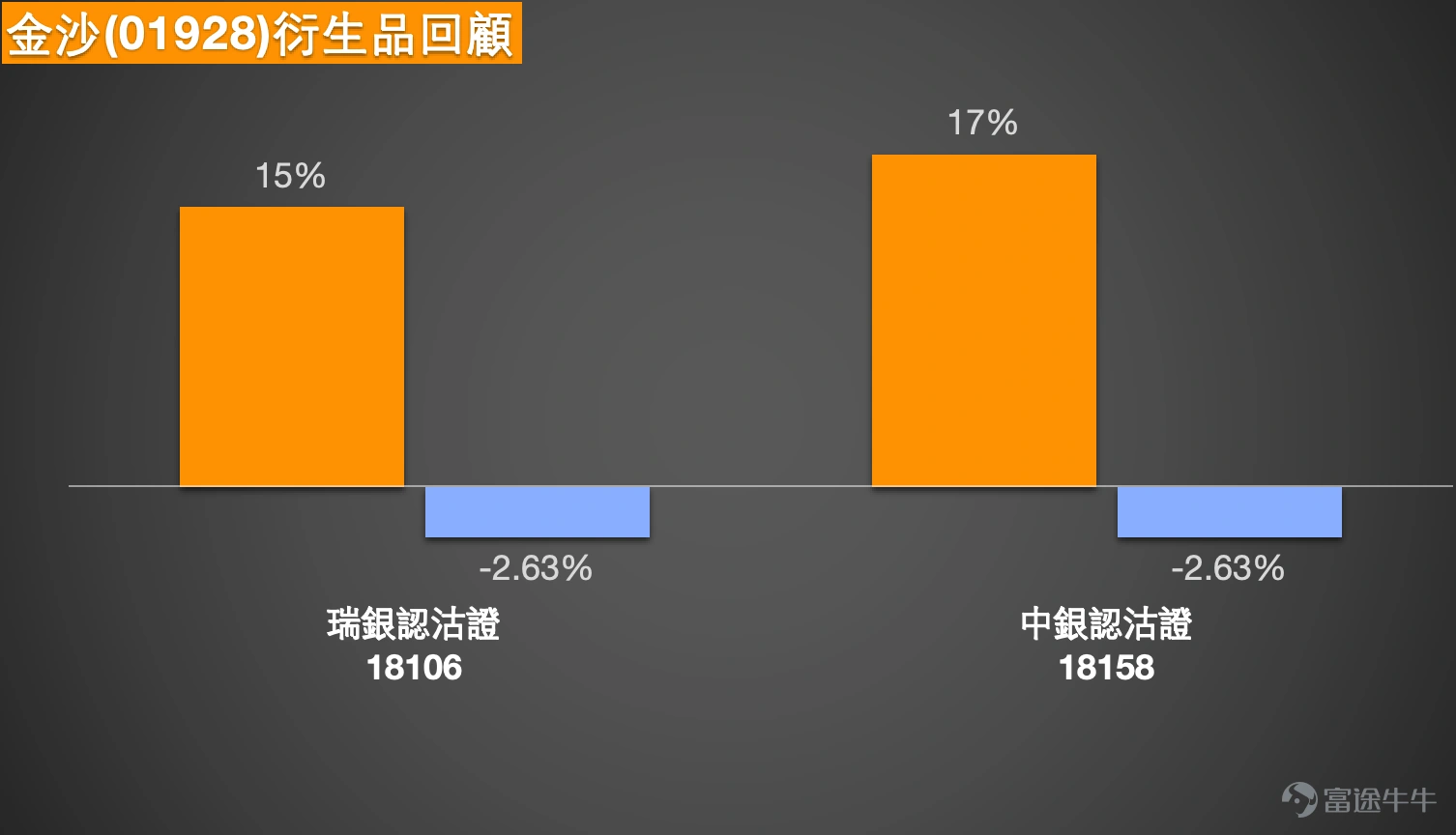
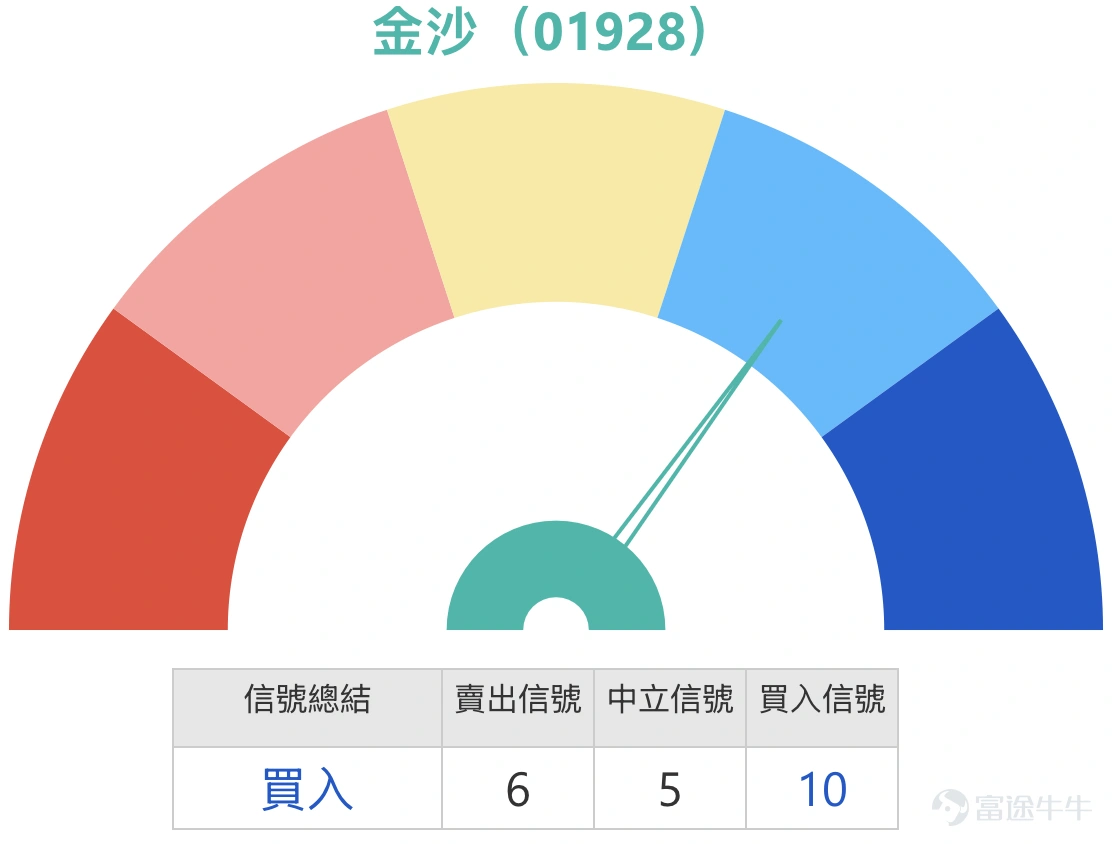
4. Sands China (01928.HK): Is 16 yuan the bottom? Are there lower support levels? Some investors are eyeing Calls with a strike price of 19 yuan.
Sands China (01928) closed at 16.63, with its share price continuing to move along a downward trajectory. Recently, it broke through multiple short- and medium-term moving averages, hitting a new phase low of 16.10, reflecting an ongoing weak downtrend structure. Although the RSI is nearing a relatively low level, no clear signs of bottoming out have emerged, indicating that the current stage remains an extension of the downtrend rather than a bottoming signal.
In terms of price structure, preliminary support has started to appear near 16 yuan, but for now, it only constitutes a 'near-support zone' and cannot be confirmed as a bottom. Due to the recent continuous lower lows, the market has yet to form a clear sideways or reversal structure. If 16 yuan is breached, the next support level will shift to a lower range, posing further downside risk in the short term. On the upside, 17.30 serves as the first rebound resistance, followed by 18.30, which represents a more significant moving average pressure area, indicating limited rebound potential.
From a short-term risk-reward perspective, the current price is close to the 16-yuan support level, theoretically offering some rebound potential, targeting the range between 17.30 and 18 yuan. However, given the overall weak trend, breaking below 16 yuan would open up further downside. Overall, this forms a structure where 'a rebound near support is possible, but the risk remains high,' without presenting a clear risk-reward advantage.
Warrant data shows that market capital is primarily concentrated on the call warrant side, with strike prices mainly distributed in the 18 to 20 yuan range. The 19-yuan strike price is particularly attracting significant investor attention. These products generally represent out-of-the-money structures, indicating that the market tends to pre-emptively position itself for a rebound. However, there is already some accumulation in related ranges, while trading volume has not shown a noticeable increase, suggesting that although funds are positioning, confidence remains divided and not strongly unified.
Meanwhile, the trading distribution of products with lower strike prices close to the current price is not prominent, reflecting that the market still lacks confidence in a short-term immediate rebound. In this situation, if the stock price fails to recover quickly, out-of-the-money call warrants will continue to face time value decay, which is not favorable for short-term holding.
The core issue for investors focusing on whether 16 yuan is the bottom and deploying call warrants with a strike price of 19 yuan lies in "premature expectations." The current trend has yet to show signs of stabilization, and 16 yuan is only a potential support level, not a confirmed bottom. Meanwhile, the 19-yuan strike price remains out-of-the-money, requiring a sustained rebound or even a breakthrough above the 17 to 18 yuan range for the product’s value to be unlocked.
Overall, the market is still in a weak downtrend phase; rebounds can occur but lack the conditions for a trend reversal. For retail investors, instead of prematurely betting on a bottom, it would be wiser to observe whether there are signs of stabilization and whether funds are concentrating again on near-price products. Otherwise, deploying out-of-the-money call warrants too early often leads to dual risks of time value decay and directional uncertainty while waiting for a rebound. $UBSANDS@EP2606A.P (18106.HK)$$BISANDS@EP2606A.P (18158.HK)$
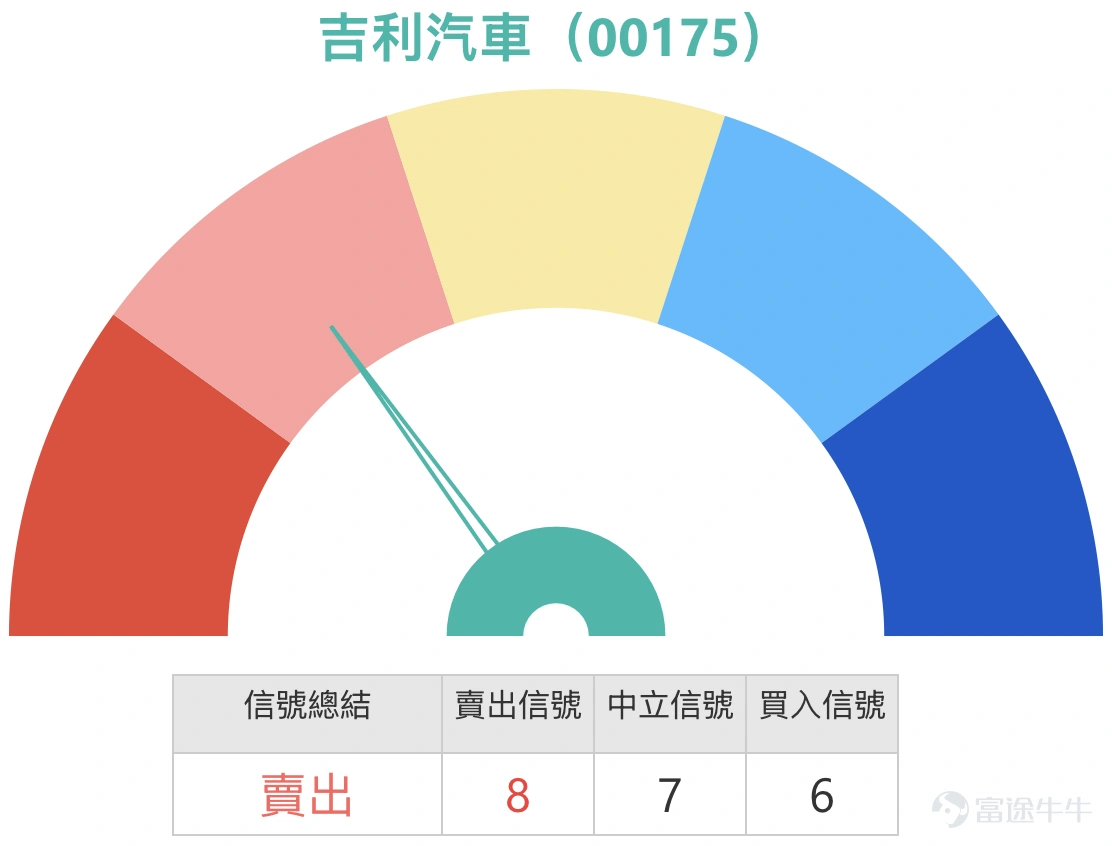
5. Geely Auto (00175.HK): Market sentiment leans bullish, with expectations that next week could see another surge; what’s the next target price? Keep an eye on bull contracts with a stop-loss price of 14.5 yuan.
Geely Auto (00175) closed at 19.52. After rebounding from the low of 14.86, the stock’s trend has shown a clear strengthening. Recently, it has been advancing with continuously higher highs and lows, gradually forming an upward structure. The price has not only moved above several short- to medium-term moving averages but also trading volume has increased in tandem, reflecting that capital is starting to actively participate, with short-term momentum showing clear improvement. However, the stock price is now approaching the previous high near 19.88, while also nearing the psychological level of 20, technically entering a short-term resistance zone.
From the perspective of price levels, 18 yuan represents a recent breakout point and also serves as short-term key support. If the price falls back to this level, the market may see buying interest emerge. Resistance is concentrated in the 19.88 to 20 yuan range, which not only marks previous highs but also acts as a psychological barrier. A successful breakout could extend upward momentum toward the 21 to 22 yuan region. Currently, the closing price at 19.52 is approaching the resistance zone, indicating that the upward trend has entered a critical stage.
In terms of short-term attractiveness, using 18 yuan as a defensive level and targeting 20 to 21 yuan still offers some upside, but since the current price is already close to the resistance area, the risk of chasing higher increases. If the price fails to break through 20 yuan and begins to pull back, it may retest the 18 to 19 yuan range in the short term, shifting the risk-reward ratio from favorable to neutral or even unfavorable for chasing higher.
Warrant data shows that market funds clearly favor call warrants, with strike prices concentrated in the 19 to 21 yuan range, reflecting investor expectations that the stock price may test levels above 20 yuan in the short term. Products with strike prices closer to the current price have recorded more trading volume and accumulated open interest, indicating that capital is focusing on deploying for a short-term breakout. However, an increase in open interest is also emerging in higher strike price ranges, suggesting the market is gradually anticipating larger gains.
Structurally speaking, when significant open interest accumulates in near-price ranges and also starts building up in out-of-the-money zones, it typically reflects bullish sentiment, but it also means that if the stock price fails to break through key resistance, related positions will face profit-taking pressure, potentially leading to short-term volatility or even a reverse movement.
Investors who believe that market sentiment leans bullish and expect further gains next week align with the current price structure, as the trend has indeed strengthened. However, the stock price is now approaching a critical resistance level, and whether it can “surge higher” depends on its ability to break through and stabilize above 20 yuan, rather than simply continuing the existing uptrend.
As for choosing bull certificates with a stop-loss level of 14.5 yuan, this level is far below the current price, providing a larger margin of safety while corresponding to the starting point of the current uptrend, offering relatively robust risk control. Such products are suitable for holding along with the trend but come with the drawback of relatively lower leverage. If the stock price fails to sustain the uptrend, returns will also be limited.
Overall, the market is indeed in a strengthening phase but is also nearing a critical resistance area, transitioning from a “trend-following” phase to one focused on “key breakout.” For retail investors, this is no longer a stage for low-position deployment but rather a time to observe whether a breakout will materialize. Otherwise, chasing higher at elevated levels risks facing a slowdown in upward momentum and subsequent pullbacks. $BIGEELY@EC2609A.C (25051.HK)$$BP#GEELYRC2607A.C (55437.HK)$$BPSDGLD@EC2605A.C (24968.HK)$

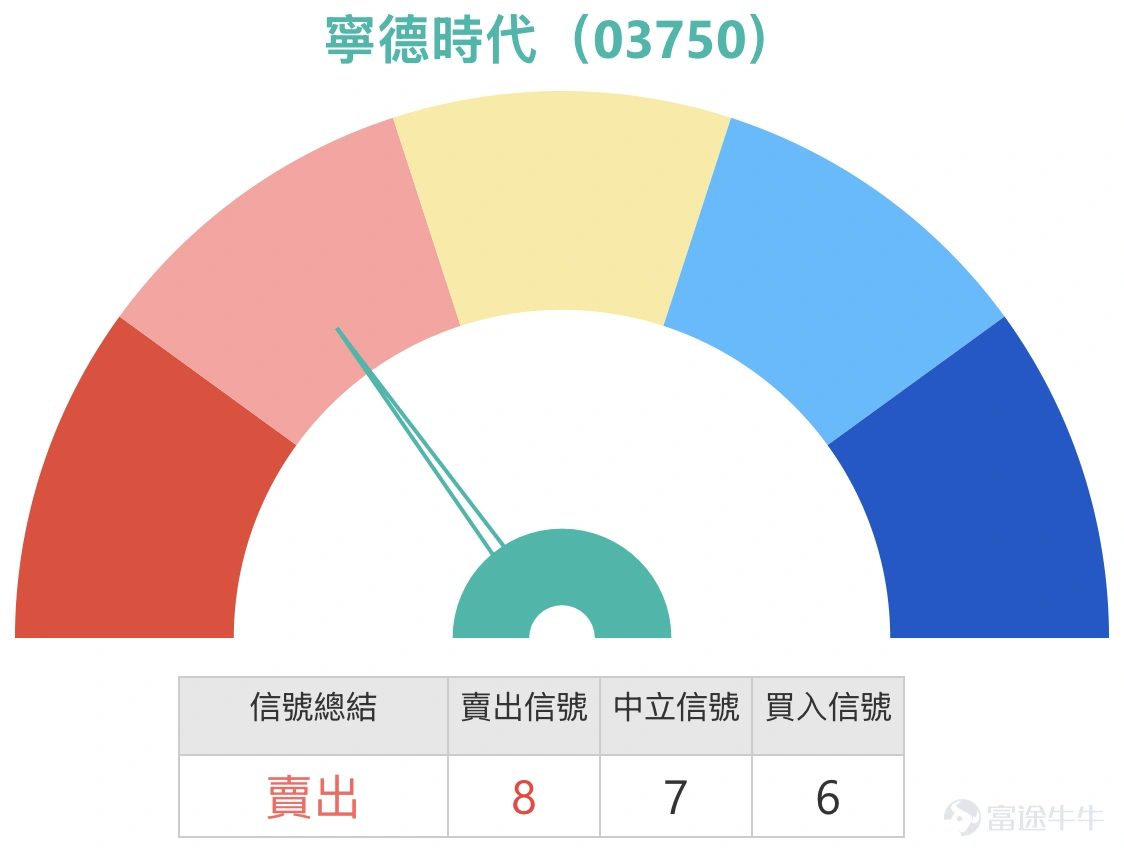
1. CATL (03750.HK): Investors are asking if the stock will continue to rise, what is the target price? In the warrant market, some observed a reduction in trading volume and chose to hold bearish certificates overnight, with a recovery price of 740 yuan.
CATL (03750) closed at 698. After rebounding from a low of 457, the recent trend has entered an accelerated upward phase, not only continuously pushing higher highs and lows but also clearly stabilizing above multiple short- to medium-term moving averages, with the overall structure indicating a strong uptrend. It recently tested 698, very close to the psychological 700 level, reflecting a clear bullish market sentiment. However, the RSI has risen above 80, placing it in an overheated region in the short term, meaning that while the uptrend is strong, it is also beginning to accumulate pressure for high-level fluctuations.
From the price structure perspective, 650 yuan has become an important support level for this round of upward movement, as well as the primary defense position after the recent breakout. As long as the stock price does not significantly fall below this range, the bullish pattern remains intact. On the resistance side, 700 yuan represents the first psychological threshold. If it can effectively break through and stabilize, subsequent targets could extend to 720 yuan or even higher levels. In other words, there is still room for further upside at this stage, but the pattern has gradually shifted from a smooth low-position rally to challenging resistance at higher levels.
Regarding short-term attractiveness, if using 650 yuan as a defensive line and aiming to challenge 700 to 720 yuan, theoretically, there is still potential for gains. However, since the closing price is already near the first resistance level, entering at this point is less ideal. The biggest variable now is not whether the trend weakens, but whether new capital will come in to support the stock after breaking through higher levels. If it fails to surpass 700 yuan effectively, the stock may consolidate or even pull back in the short term. Therefore, the attractiveness ratio is still slightly positive but not as appealing as in the early stages of the uptrend.
In the warrant market, among 107 products, call warrants account for 74, significantly outnumbering the 33 put warrants. Trading activity is also dominated by call warrants, with their turnover reaching approximately 64,230 thousand yuan compared to about 24,809 thousand yuan for put warrants, reflecting that overall capital remains on the bullish side. The focus of call warrant trading mainly concentrates around strike prices such as 629.38 yuan, 830 yuan, 837.5 yuan, and 958 yuan. Among these, the 629.38 yuan range not only has the most products but also the highest concentration of trading volume, accumulating significant street-level positions, indicating that much of the capital is deploying call warrants with relatively high intrinsic sensitivity closer to the main uptrend rather than merely betting on deep out-of-the-money options.
However, it's worth noting that there has also been substantial trading in high-strike-price call warrants, such as those around 830 yuan, 837.5 yuan, and 958 yuan, showing noticeable inflows of funds. This reflects that some investors have started adopting a more aggressive approach to chase further gains. Such a structure usually indicates overheated market sentiment, as funds are not only concentrated in at-the-money products but are beginning to extend towards higher strike prices. On the other hand, although there are fewer put warrant products, certain lower strike price ranges, such as those near 408.68 yuan, show significant accumulation of street-level positions, indicating that bearish positions are not entirely absent, though they haven't yet taken the lead at this stage.
For retail investors, the reference value of this set of warrant data lies in the fact that mainstream capital in the market is still leaning bullish, but the manner of bullishness is gradually shifting from relatively stable to more aggressive. When both at-the-money call warrants and high-strike-price call warrants are active, it often signifies that the uptrend continues, but market sentiment has also heated up. If the underlying stock cannot break through again, out-of-the-money call warrants will be the first to face time decay pressure, and related funds may become unstable. In other words, while the warrant market currently supports the continuation of the uptrend, it also reminds retail investors that this is no longer a comfortable phase for indiscriminate chasing of prices.
As for investors believing that the stock price rises as it moves higher, this direction aligns with the current trend because there are no obvious signs of weakening on the chart, and the distribution of warrant capital also favors call warrants. For short-term targets, 700 yuan is the immediate resistance. If it can effectively break through, the next target could reach around 720 yuan, which would be a reasonable area to look forward to. However, choosing to hold bearish certificates overnight simply due to reduced trading volume constitutes a fairly clear contrarian play. The underlying stock is still in an upward structure, and the warrant market has not shown enough put warrant trading to overturn the dominant trend. Setting a recovery price of 740 yuan overnight, although seemingly distant from the closing price, essentially amounts to betting against a strong stock at its highs. If there is another upward surge the next day, the risk would quickly escalate.
Overall, CATL remains a strong stock at this stage, and the short-term outlook is still biased towards bullishness. However, as the closing price is approaching key resistance levels, the attractiveness ratio has shifted from earlier accumulation during the uptrend to observing whether it can break through further. Being bullish is not without reason, but chasing higher prices requires greater attention to timing. As for taking a bearish stance overnight with bear certificates at this moment, there is insufficient data to support such a move. $BI-CATL@EC2609A.C (13229.HK)$$UB-CATL@EC2605A.C (22841.HK)$$JP#CATL RC2609D.C (57968.HK)$

Friendly Reminder: This article does not constitute any investment advice.
This article is for reference only and does not constitute any investment advice. The market data, opinions, and analysis contained herein may change at any time without prior notice. We are not responsible for any loss or damage caused by reliance on the information in this article. Technical analysis only shows whether certain technical conditions are met; a comprehensive assessment of asset performance should combine other data and should not solely rely on this article to make trading decisions. Please note that past performance is not indicative of future results. Follow Jenny's insights on Hong Kong stock warrants for more professional analysis.
Risk Disclaimer: The above content only represents the author's view. It does not represent any position or investment advice of Futu. Futu makes no representation or warranty.Read more

Comments
to post a comment
2
11