

March 19 [HK Stocks Podcast] Part 1 - Hang Seng Index, Xiaomi Group, ZhongAn Online
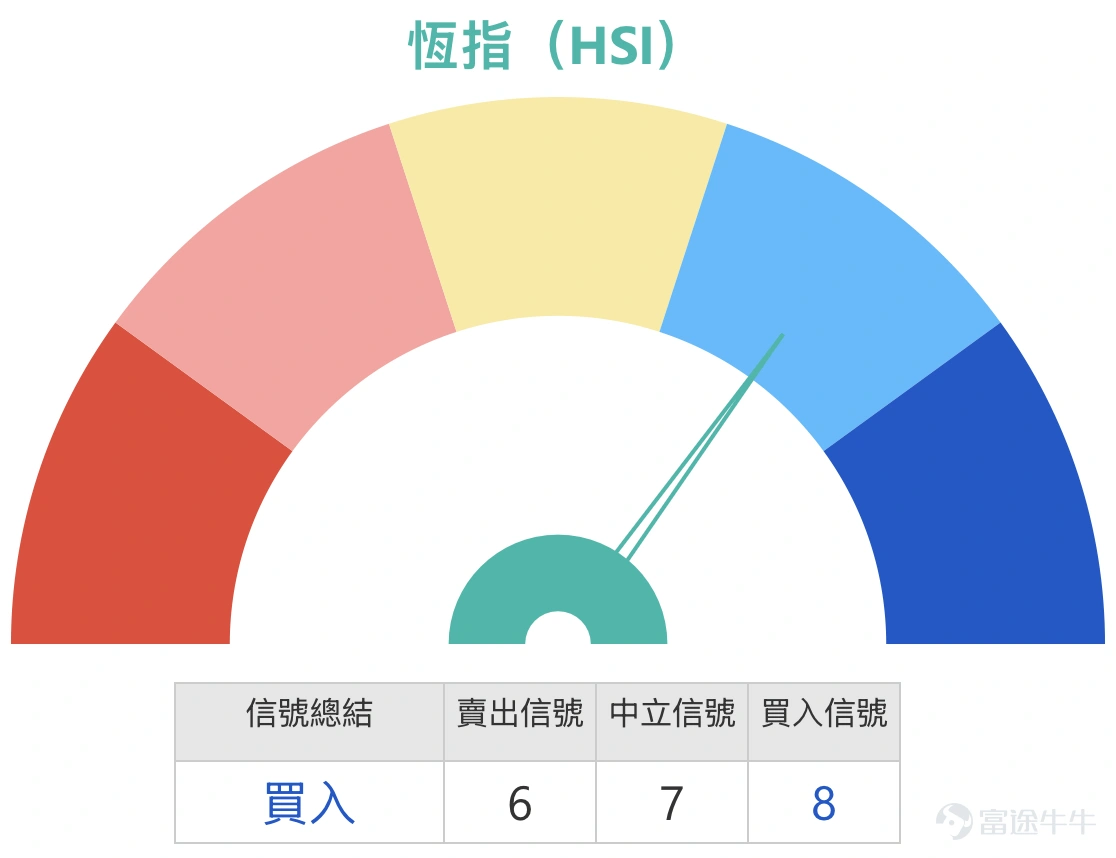
1. Hang Seng Index: Market sentiment remains weak. Investors noted a slight rebound followed by another drop, making it only suitable for intraday trading. On Friday, it broke below 25,000, with bearish warrants held overnight and a recovery price at 25,738 points.
The Hang Seng Index is currently closing around 25,500 points. Observing the overall trend, after retreating from the high of 28,056, it tested a low of 24,906, forming a clear short-term bottom area. A subsequent rebound occurred but was limited in strength, as multiple attempts failed to sustain above 26,000 points, forming a typical weak rebound structure. The current price remains below the 20-day and 30-day moving averages, which are presenting overlapping pressure, indicating that the medium- and short-term trend has not reversed.
From a short-term perspective, the range between 24,900 and 25,100 has been validated by the market as an important support zone, while 26,000 to 26,300 forms a significant resistance band. The index is currently in the lower-middle region between support and resistance, reflecting a lack of clear direction in market capital flow. If the index fails to return above 26,000 points, the overall market will remain in a weak consolidation pattern; conversely, if it approaches near 25,000 again, the market will retest the previous low for support.
In terms of short-term attractiveness, there is no clear one-sided advantage at this stage. Upside potential is constrained by moving average pressure, while downside support has not yet been breached, characteristic of a typical range-bound market. For short-term trading strategies, taking a bearish position near the resistance at 26,000 or betting on a rebound near the support at 25,000 would have more structural advantages; chasing direction in the middle of the range offers relatively lower reward potential.
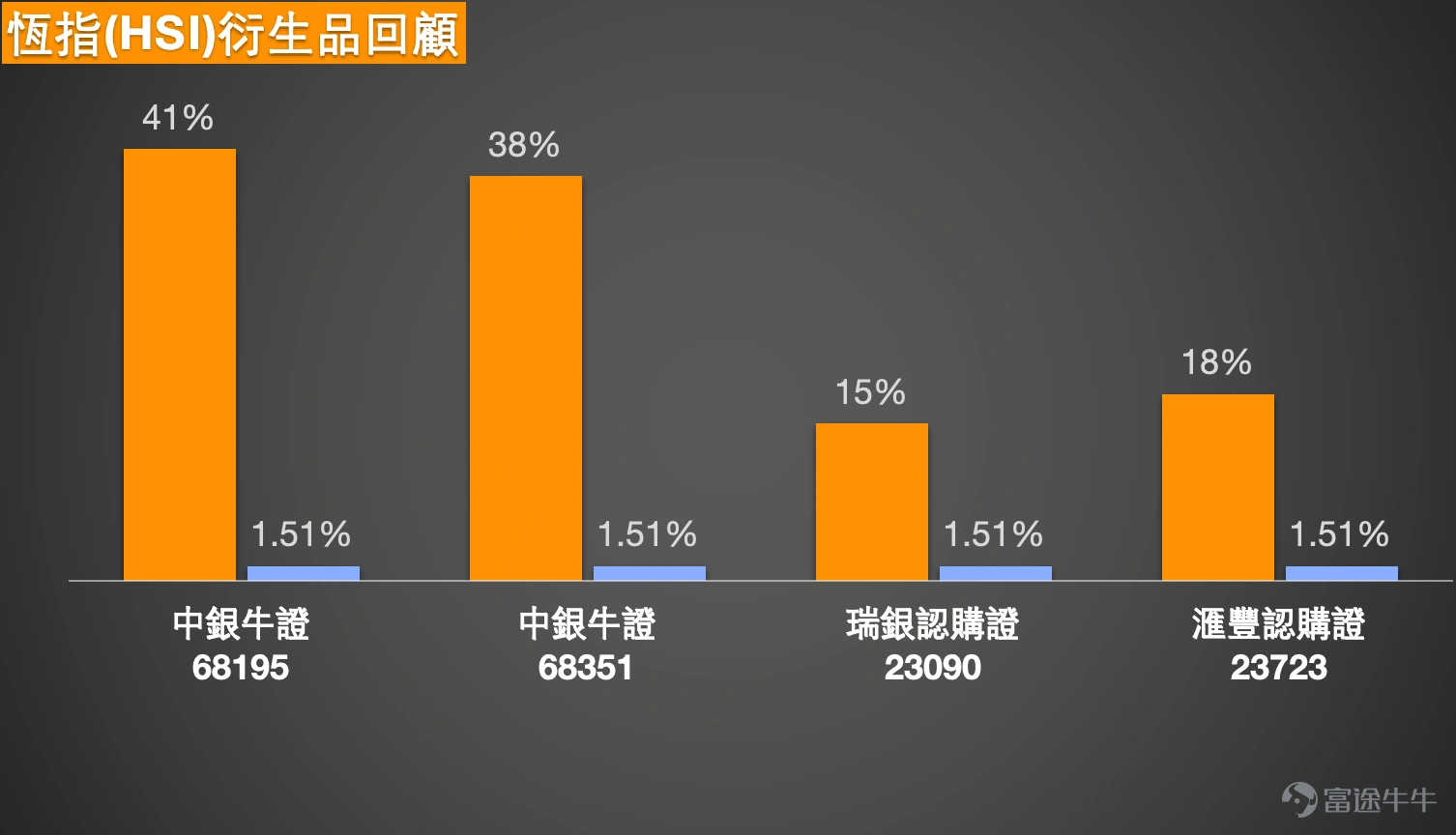
In terms of the market structure of callable bull/bear contracts (CBBCs), there are a total of 2,892 products, with approximately 1,893 bull contracts and about 999 bear contracts. The number of bull contracts significantly exceeds that of bear contracts, reflecting a certain degree of bullish or bottom-fishing sentiment in the overall market. However, this structure does not represent short-term direction, but rather requires closer observation of capital distribution.
In understanding product distribution, bull contracts are mainly concentrated in regions with lower forced-call levels, while bear contracts are focused on different intervals above the current price. This structure indicates simultaneous positioning on both sides of the market, but the key lies in the distance between the forced-call level and the current price. When the index approaches 25,000 points, low forced-call bull contracts face the risk of being called, creating potential 'long-position stop-loss pressure'; conversely, when the index rebounds to the 25,700–26,000 range, bear contracts above will gradually approach the forced-call zone, generating 'short-covering pressure.'
The value of observing turnover and outstanding positions lies in identifying crowded directions in the market. When a large amount of street inventory accumulates in a particular region and the index moves toward it, chain reactions are often triggered. For instance, if the street inventory of bull contracts concentrates near 25,000, once it breaks down, passive liquidation may occur, accelerating the decline. Conversely, if bear contracts concentrate between 25,700 and 26,000, a breakout could lead to short-squeezing rallies. Thus, the core value of CBBC data is not predicting direction but identifying 'which side is more prone to forced liquidation.'
From the investors' perspective, the idea that 'a minor rebound followed by another drop makes it suitable only for intraday trading' aligns with the current market structure. The index’s rebound lacks volume, and moving averages are capping further upside, showing no conditions for trend continuation. Short-term range trading is indeed a reasonable judgment. However, the suggestion to 'hold bear contracts overnight if the index falls below 25,000, with a forced-call level at 25,738,' requires more caution. The 25,000 mark represents a tested support area; once broken, it could trigger technical selling, but it also serves as a potential rebound zone. Holding overnight would expose positions to high uncertainty, especially since the forced-call level is set near short-term resistance. If a rebound occurs, risks would quickly escalate.
Overall, the current market is not trending in one direction but is instead locked in a range-bound tug-of-war. The key to short-term trading logic lies not in 'predicting the correct direction' but in 'choosing the right position.' Trading within support and resistance, whether going long or short, offers low reward-to-risk ratios. Instead, deploying at the edges of key ranges, aligned with CBBC forced-call structures, better matches the current market rhythm.
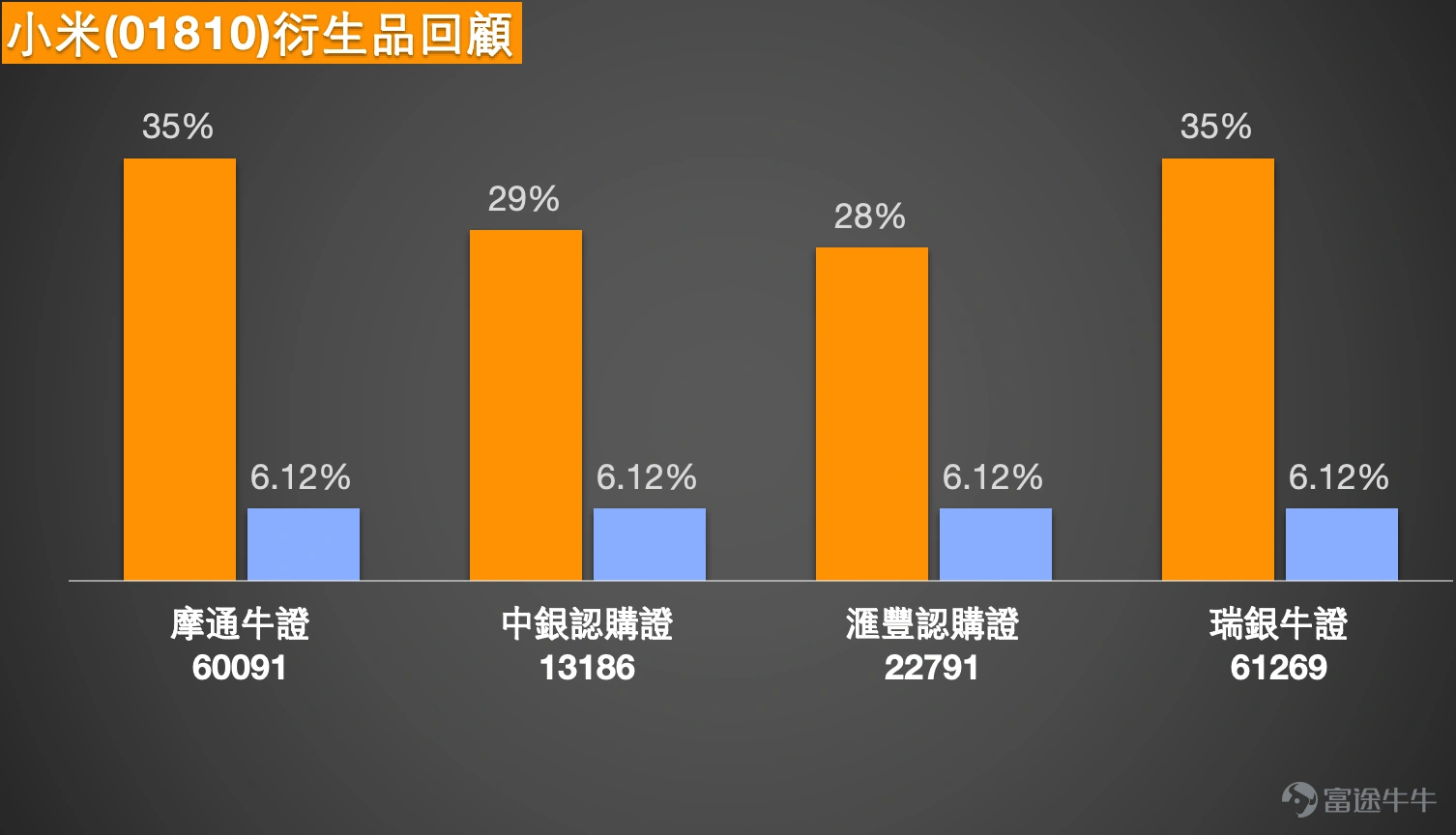
1. Xiaomi Group-W (01810.HK): Investors expressed confidence that holding above HKD 36 confirms an upward trend until earnings are announced. What is the next target? Holding call warrants with a strike price of HKD 40.
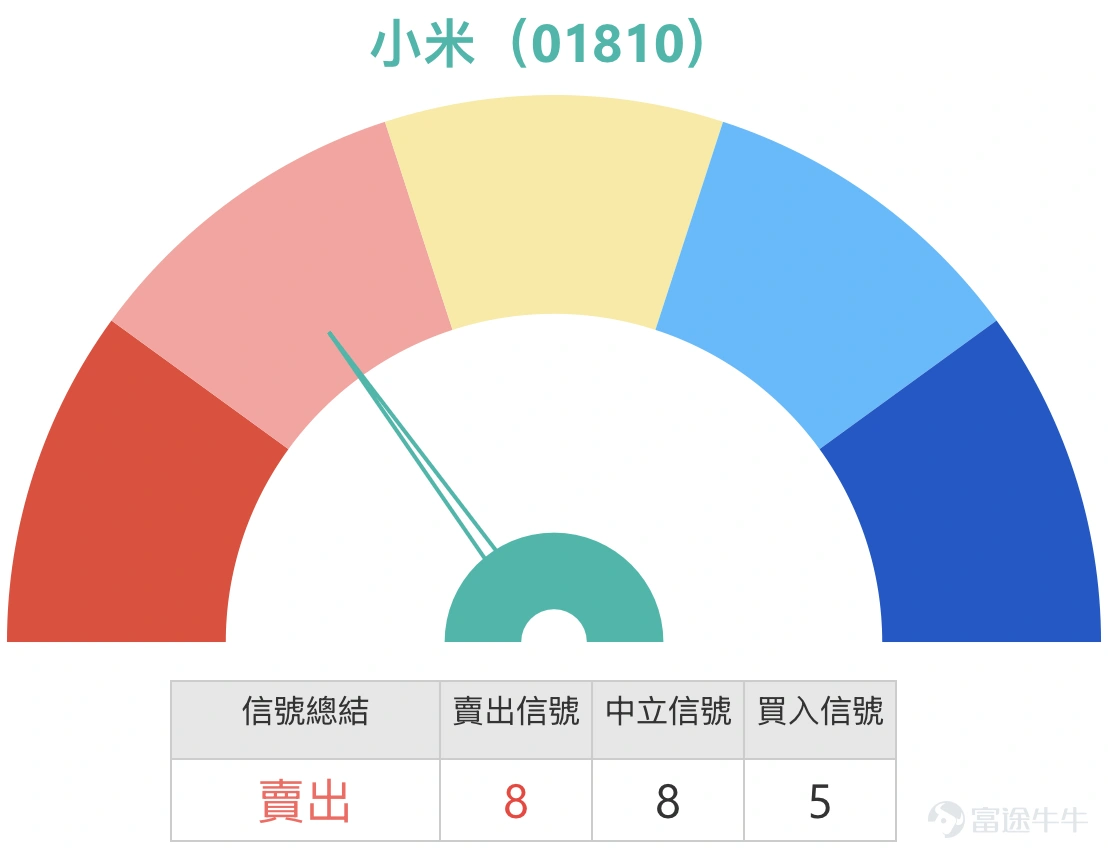
Xiaomi Group's stock price is currently around HKD 36. Observing the overall trend, the stock has rebounded from a low of HKD 31.2 and gradually climbed to establish itself in the HKD 34–35 range, showing improvement in its short-term structure. Recently, the stock has tested the HKD 36 level, indicating a shift in market sentiment from weak to stable. However, the overall movement remains in a rebound phase rather than a confirmed medium-term uptrend. While the stock is trading above short-term moving averages, the HKD 36.2 level represents a medium-term moving average and coincides with the upper Bollinger Band, forming significant resistance. This suggests that above HKD 36, the stock faces resistance and needs to absorb selling pressure before advancing further.
From a price structure perspective, the HKD 34–34.5 range has formed short-term support, while the critical support remains in the HKD 31–32 low range. As for resistance above, the HKD 36.5–37 range is the first clear pressure zone. If the stock fails to break through effectively, it is likely to retreat to the midpoint level near HKD 34. The short-term reward-to-risk ratio thus shifts: the current price is already near the edge of the resistance zone, offering limited upside while downside potential begins to open up—a classic 'late-stage rebound from highs' structure. Deploying for a rebound near HKD 34 presents a favorable risk-reward profile, but chasing the stock above HKD 36 offers significantly lower reward potential.
Observing warrant product data, among the 207 products, call warrants dominate, reflecting market expectations for a continued rebound. More noteworthy is the exercise price and trading distribution. Market turnover primarily focuses on the HKD 38–42 exercise price range, with products near HKD 40 being the most active. This shows investors generally view HKD 40 as a short-term target. However, based on the current price of HKD 36, the HKD 40 strike represents a significant out-of-the-money structure, meaning related products have limited sensitivity to stock price movements. If the stock fails to rise quickly, time decay will erode returns progressively.
Regarding the street inventory structure, products near HKD 40 have accumulated significant positions, indicating some funds have pre-positioned in this range. In this scenario, if the stock fails to sustain upward momentum and approach this zone, these products will face time decay pressures. Conversely, if the stock gradually approaches the HKD 38–40 range, it might attract inflows or trigger short-term diffusion effects, extending the rally. Therefore, the key takeaway from warrant data isn't whether the market will reach HKD 40 but revealing where the market is 'placing bets' and the 'cost structure,' thereby assessing whether the rally requires stronger momentum to continue.
Returning to the investor perspective, the view that 'a stable close above 36 suggests an upward trend extending until earnings season' has some basis in short-term structure since the price has indeed rebounded from a low and returned above the short-term moving average. However, the issue is that 36 itself lies at the edge of a resistance zone, rather than being a retest confirmation after a breakout. Until there is a valid breakout and stability above 37, the market remains in a tug-of-war between rebounds and pullbacks, rather than a one-sided uptrend. As for targeting 40, the warrant trading distribution indicates that the market expects this, but it also means this expectation has already been priced in by significant capital inflows, and is not an opportunity the market hasn't yet priced.
Overall, the current stage is closer to the top of the range rather than the start of an uptrend. From a short-term trading perspective, the key isn't just about judging direction but choosing position and timing. When prices approach resistance with widespread optimism, it’s crucial to check if there’s enough momentum to sustain further gains; otherwise, failure to break through could lead to another retreat into the support zone. For investors holding call warrants with a strike price of 40, future performance will depend not only on direction but also on time and speed. If the price doesn’t rise as expected, time decay will become the primary risk factor. $JP#XIAMIRC2610B.C (60091.HK)$$BIXIAMI@EC2612A.C (13186.HK)$$HSXIAMI@EC2612C.C (22791.HK)$$UB#XIAMIRC2610A.C (61269.HK)$
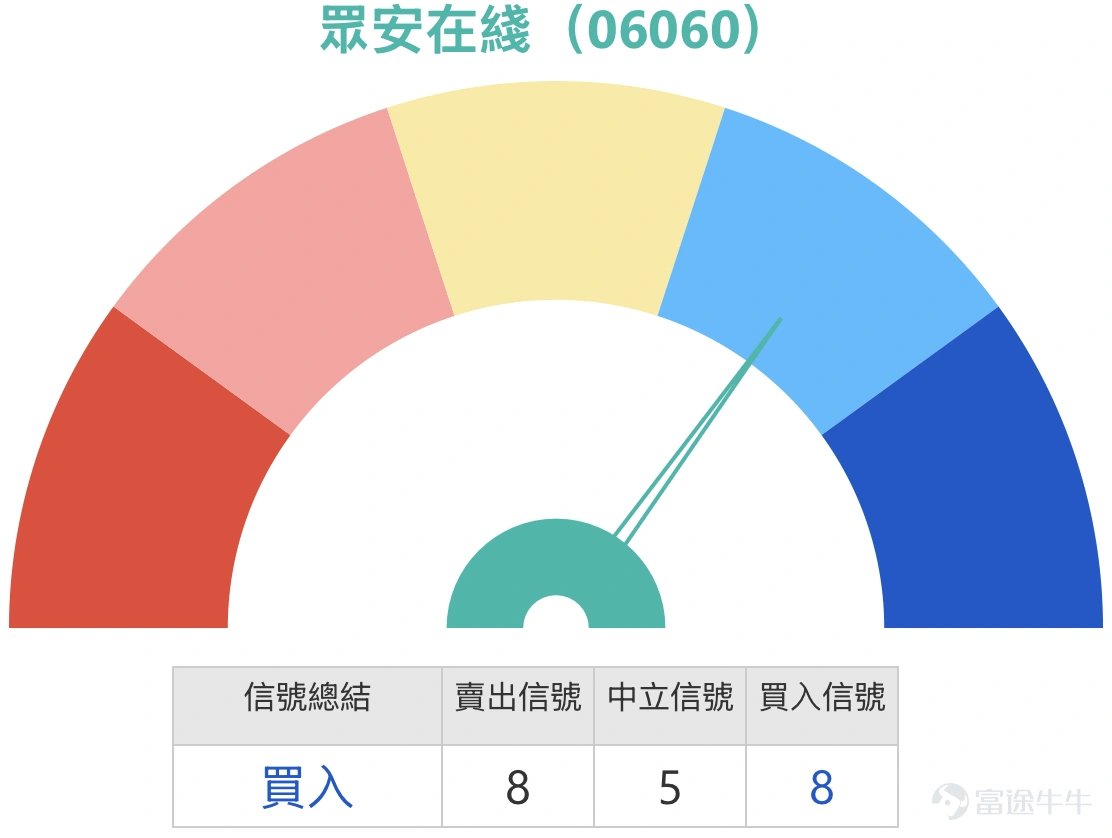
1. ZhongAn Online (06060.HK): Up for 4 consecutive days with increasing trading volume, is this a sign of a reversal? Can it reach $17?
ZhongAn Online closed at 14.51, rising for four consecutive days with increased trading volume. On the surface, this shows signs of capital inflow, but from an overall trend perspective, this rise is more of a technical recovery following the rebound from the low of 13.53, rather than a confirmed trend reversal. Although the stock price has gradually moved above short-term moving averages, improving short-term sentiment, it still hasn’t broken through the critical resistance zone around 14.7 to 15. Additionally, the medium-term moving average continues to slope downward, meaning the stock remains within a downtrend channel. This pattern of 'continuous rise + higher volume,' when occurring at lower levels, typically indicates the early stages of a rebound. But as the price approaches resistance, divergence becomes more likely.
From a price structure perspective, the 13.5 to 14 range has formed short-term support, showing willingness to buy at lower levels. However, the 14.7 to 15.2 range, which includes both the 20-day and 30-day moving averages and aligns with the middle band of the Bollinger Bands, forms multiple overlapping resistances. The stock price currently sits below this resistance area, meaning the market is in a phase of 'testing resistance' rather than 'breaking resistance.' Short-term value opportunities have thus shifted: deploying a rebound strategy near 14 offers a reasonable risk-reward ratio. But as the price rises above 14.5, nearing the resistance zone, upside potential narrows while downside risks increase—a typical late-stage rebound structure.
On the warrant market, there are only 11 products available, indicating a clear shortage of supply. Trading and open interest are highly concentrated in a few call warrants. Strike prices mainly cluster in the 15 to 18 range, with 16 to 17 being closest to market expectations. At the current price of 14.51, these products all represent out-of-the-money structures, indicating market bets on further price increases but also implying that sufficient price movement and time are needed. Otherwise, time decay will gradually erode returns.
Trading patterns show that funds are concentrated in strike price ranges closer to the current price, reflecting short-term investors’ preference for betting on continued rebounds. Open interest is similarly concentrated, suggesting a consensus in market positioning. However, due to the small number of products and high concentration, if the stock fails to advance consistently, time decay in related products will become even more pronounced, potentially causing rapid price drops. Conversely, if the stock breaks through 15 and moves toward the 16 to 17 range, it might trigger further inflows, creating short-term acceleration.
Returning to the investor's question—whether 'four consecutive days of gains with increased volume indicates a reversal'—this judgment makes sense in terms of sentiment but hasn’t yet been confirmed structurally. A true reversal should occur after breaking and stabilizing above key resistance, whereas the current price remains below the resistance zone without confirmation. Regarding whether 'it can reach 17,' the warrant strike price distribution shows the market views this level as a target, but this also means the expectation is already priced in and isn’t an unpriced opportunity.
Overall, the current stage is closer to 'a rebound testing resistance' rather than 'an established uptrend.' For retail traders focusing on short-term trades, the key isn’t determining whether a reversal will happen but choosing the right position. When prices haven’t broken through yet and market sentiment starts turning optimistic, it’s important to note that the rally may be nearing its short-term end. Without breaking through 15, the stock could easily retreat to consolidate near 14. Only when prices stabilize above resistance with sustained trading volume can they push into higher zones progressively. As for the 17 target, it’s not impossible but remains a scenario requiring conditions to align rather than an already established direction.
Reminder: This article does not constitute any investment advice.
This article is for reference only and does not constitute any investment advice. The market data, opinions, and analysis contained herein may change at any time without prior notice. We are not responsible for any loss or damage caused by reliance on the information in this article. Technical analysis only shows whether certain technical conditions are met; a comprehensive assessment of asset performance should combine other data and should not solely rely on this article to make trading decisions. Please note that past performance is not indicative of future results. Follow Jenny's insights on Hong Kong stock warrants for more professional analysis.
Risk Disclaimer: The above content only represents the author's view. It does not represent any position or investment advice of Futu. Futu makes no representation or warranty.Read more

Comments
to post a comment
2
13