OpenClaw sparks AI Agent trend, Huajian Healthcare reconstructs AI healthcare implementation path with 'data plus ecosystem'
Recently, an entity named OpenClaw unexpectedly became a hot topic of discussion within the technology and medical circles. With the rapid rise of the AI Agent (intelligent agent) concept, from Baidu Health being exposed for internally testing 'DoctorClaw,' a doctor's assistant, to internet giants and medical technology companies making intensive strategic moves, the industry widely believesthat intelligent agents will become important carriers for artificial intelligence to penetrate deeply into medical scenarios.。
According to the Zhiyao Consulting Research Institute, the market size of China’s AI Agent + healthcare sector is expected to reach41.8 billion yuan by 2031.
However, behind this technological boom, a more practical issue has gradually surfaced:Can AI agents really be implemented on a large scale in the highly complex medical system?
I. The 'five hurdles' for AI agents entering the medical system
Unlike internet scenarios, the medical system has extremely high requirements for safety, stability, and regulation. When OpenClaw-style AI agents enter the hospital environment, they first face five major practical hurdles.
First, data security.The medical system carries medical records, health insurance, and patient privacy data. Whenever external models are involved, the risk of data leakage becomes one of the most significant concerns for hospital IT departments.
Second, compliance regulation.In recent years, hospital information systems have generally been undergoing evaluation cycles and security rectification. Any new system entering the hospital environment must meet stringent compliance requirements.
Third, access control.If AI agents participate in system operations or data analysis, they often need access to databases and system logs. If access rights are improperly designed, this could become a new security entry point.
Fourth, system stability.Hospital information systems prioritize 'stability above all.' Any model upgrade or plugin update could potentially impact the operation of core business systems.
Fifth, the definition of medical liability.If AI recommendations are adopted and lead to medical consequences, the allocation of responsibility is still in the exploratory stage of institutional development.
Therefore, within the medical industry, many experts have reached a consensus:The real challenge of AI in healthcare is not the algorithm, but rather data, systems, and governance structures.
Dai Lizhong, chairman of Surging Biotech and a national people's representative, pointed out that currently, medical data is characterized by privacy and fragmentation. The mechanism for open data sharing remains underdeveloped, and the lack of large-scale training data has become a core bottleneck for the commercialization of AI in healthcare.
This also implies that whoever can control the entry point of medical data and medical information systems will be more likely to establish long-term advantages in the era of AI-driven healthcare.
II. IVD: The Undervalued Data Entry Point for AI in Healthcare
In the healthcare system, in vitro diagnostics (IVD) has long been regarded as a testing technology industry. However, in the AI era, its role is undergoing profound changes.
Each blood test, molecular test, or immunoassay essentially generates medical data. In the past, most of this data was used only for single diagnoses. However, in the age of artificial intelligence, large-scale testing data is becoming an important resource for training medical AI. Therefore,IVD is transitioning from a 'detection tool' to a 'medical data gateway'.
As the leading IVD distributor in China, Wondfo Medical (01931.HK) has deep expertise in this field.
The company's subsidiary, Wiseda, is the exclusive distributor of Sysmex coagulation products in China. As of June 2025, Wondfo Medical has installed a cumulative total of6,605 unitsof coagulation analyzers in hospitals nationwide, establishing a distribution network covering 31 provinces/municipalities/autonomous regions and1,711 tertiary hospitals.
At the same time, through the acquisition of B-Soft, $B-Soft Co.,Ltd. (300451.SZ)$ the company is further enhancing its data capabilities.
As a leading domestic medical IT company, B-Soft has implemented nearly 20,000 medical IT projects, serving over 7,000 medical institutions, with accumulated health records for 300 million residents and 100 million electronic medical records.
HuaJian Medical and BizHealth have a high overlap in customer base and decision-making chains. Both parties collaborate withresource sharing and path reuseas the core, throughbusiness integration, intelligent decision-making, and circulation empowermenta three-tiered release pathway, gradually integrating testing data with clinical data to build a closed-loop of medical data value. This collaboration not only improves operational efficiency but also opens new horizons for the valuation of AI-driven medical data assets.
III. Healthcare Information Technology: The Key Puzzle for AI Agent Implementation
If IVD provides the data entry point, then the healthcare information system is the operating environment for AI Agents to take root.
BizHealth has been deeply involved in this field for nearly 30 years, and its next-generationHI-HIS Smart Hospital Systemhas been deployed across more than 20 provinces nationwide, covering over a hundred hospitals. In January 2026, after completing full-scale implementation at the South Campus of Shanghai East Hospital, the system successfully supported registration formore than 59,000 visitsOutpatient settlement65,000 peopleHospital admission36,000 peopleInpatient settlement35,000 peopleOperations are running efficiently and orderly.
In terms of AI technology, the company has introduced several core capabilities: the self-developedBsoftGPT Medical Large Model PlatformSupports multi-scenario AI applications, with medical record generation as fast as0.258 seconds; jointly developed with Zhejiang University,Qizhen Medical Large Model,selected as one of the first discipline-specific large models on the national higher education smart education platform;the medical intelligence platform 'Yunshu Intelligence'provides comprehensive scenario-based intelligent support for medical institutions through multi-modal large model technology.
Inspired by OpenClaw's technological insights, Chuangye Huikang has further explored and launchedBsoftClaw Medical Intelligent Data Assistant. Through Skill (skill plugins), it enables agents to directly invoke functional modules of the HIS system. For example, doctors can automatically complete research data extraction, shift handover form generation, or performance analysis with just a single command. This architecture upgrades AI applications from simple Q&A to a true productivity tool in healthcare.
IV. Huajian Ecosystem: The Synergistic Hub of AI Medical Innovation Assets
On a broader strategic level, Huajian Healthcare is building an industrial system of long-term value -Huajian Ecosystem。
This ecosystem was launched in 2019 as a key vehicle for the company's transition from"Channel Value"charged "Platform Value", aiming to build a collaborative platform for global high-tech medical intellectual property.
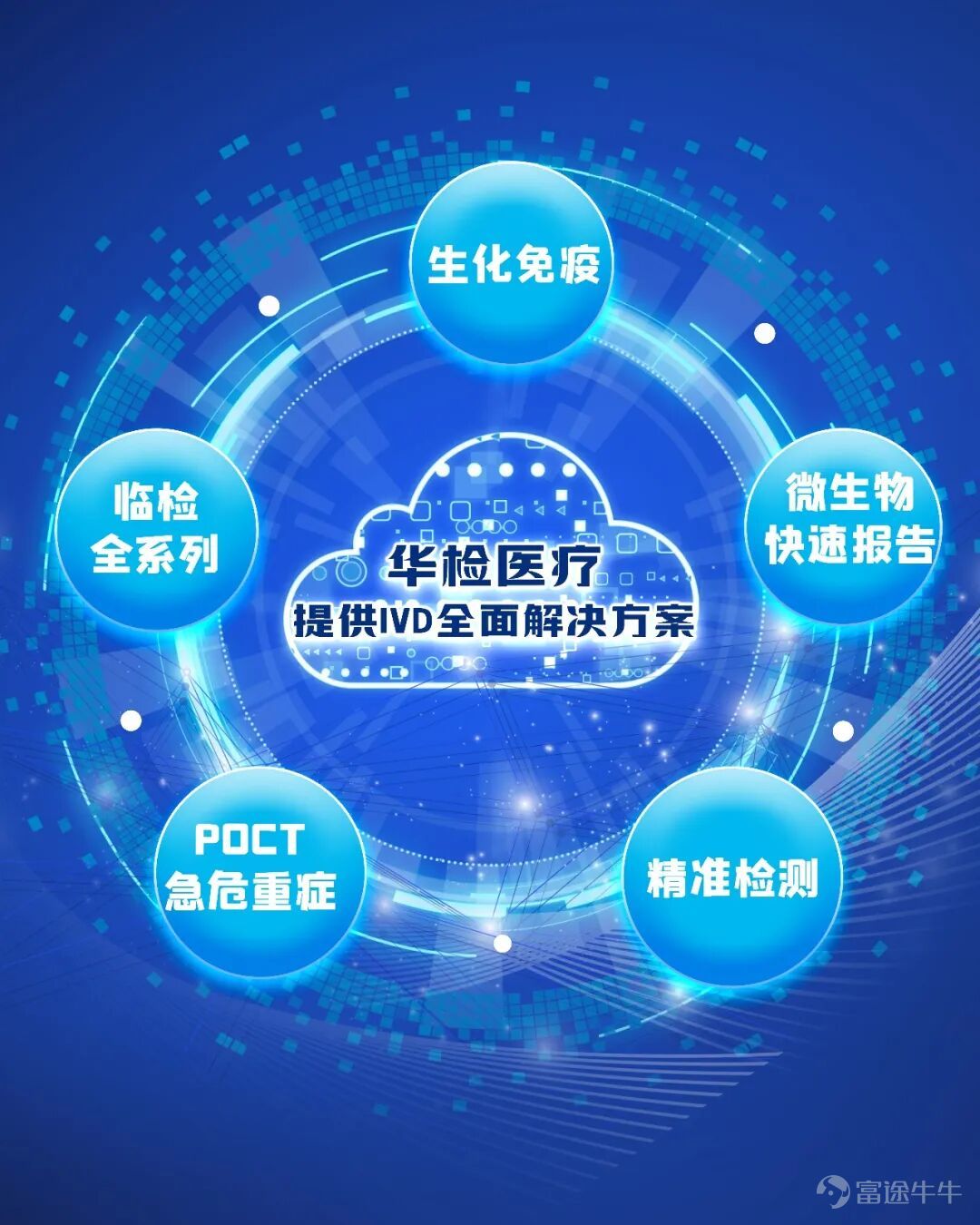
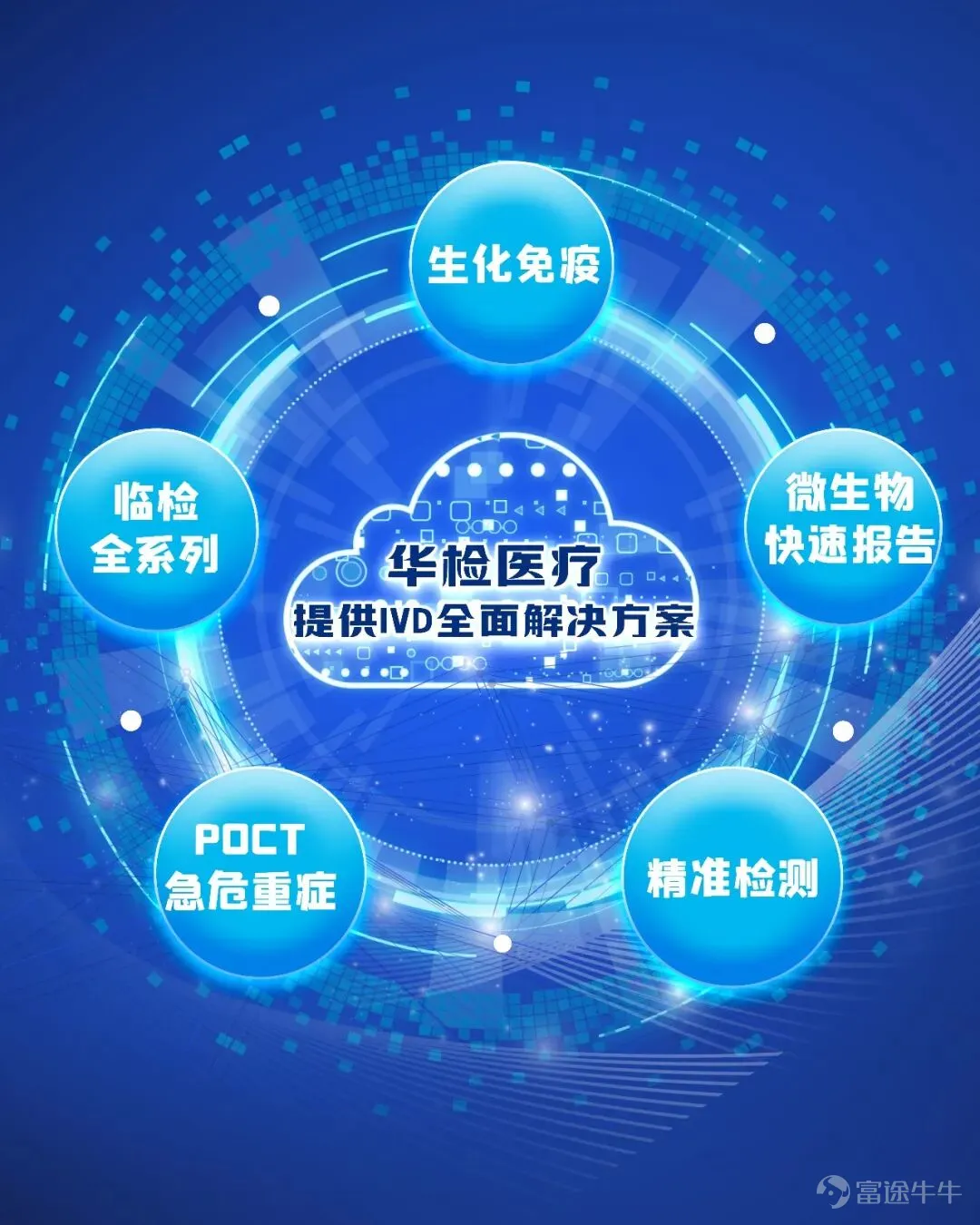
Currently, the ecosystem has connectedmore than 20 domestic IVD enterprisesandand six international brands, covering areas such as POCT, mass spectrometry, molecular diagnostics, microbiology, biochemistry, and immunoassays, providingover 500 diagnostic products。
Within this ecosystem, Huajian Medical assumes two core roles:
First, an asset integration platform.Through mergers and acquisitions as well as strategic cooperation, continuously integrate high-quality medical technology assets, including companies like Chuangye Huikang and Zecheng Bio.
Second, a collaborative innovation platform.Promote cross-disciplinary innovation through technological integration, such as combining AI algorithms with diagnostic equipment to create intelligent solutions.
In other words, the Huajian ecosystem is bothan asset reservoiranda technology reactor. It not only extends the industrial boundaries of Huajian Healthcare but also provides key scenarios for the future.a fundamental shift in the underlying logic of AI healthcare commercializationprovides critical application scenarios.
Five, Smart Laboratories: Real-world application scenarios for AI in healthcare.
The value of the industrial ecosystem must ultimately be reflected in real healthcare scenarios.
At the upcoming23rd China International Exhibition for Laboratory Medicine and Blood Transfusion Equipment & Reagents (2026 CACLP), Huajian Medical will showcase the latest achievements of its ecosystem —Smart Lab Solutions。
This system integrates key data such as laboratory specimens, testing items, results, and TAT, achieving full-process digital management: real-time monitoring of equipment operation status, automatic statistics forover 250 testing items, automatic critical value alerts, intelligent reminders for TAT overruns, and full traceability of the specimen testing process. Through the integration of biochemical, immunoassay, microbiological, and molecular diagnostic systems, laboratory testing achievesfull closed-loop smart management。
During the exhibition, the company will also display innovative products such as the POClia single-dose chemiluminescence analyzer, dry blood gas analyzer, and handheld dry electrolyte analyzer. These practices demonstrate thatAI healthcare is not停留在概念阶段, but is progressively being integrated into real-world medical system scenarios。
Conclusion: The true competition in AI healthcare
From the AI Agent boom triggered by OpenClaw to the密集布局 of global medtech giants, AI healthcare is entering a critical phase of industrialization. However, the industry is gradually realizing that:The competition in AI healthcare is not just about model capabilities, but a comprehensive contest involving data, systems, and industry ecosystems.
Under this trend, Huajian Healthcare is building future-oriented medical technology infrastructure by integrating IVD distribution networks, healthcare信息化 platforms, and AI technological capabilities. As the协同效应 between Huajian Healthcare and Chuangye Hui Kang continues to be释放, a medical data ecosystem covering testing data, clinical data, and AI applications is taking shape.
Against the backdrop of the national 'artificial intelligence + healthcare' strategy and the development of new productive forces, thisdata foundation + information hub + industry ecosystemplatform model may well be the关键路径 for the commercial落地 of AI healthcare. In the future, as AI technology continues to evolve, the healthcare system will transition from单一数字化 upgrades to a truly智能化 era.
Risk Disclaimer: The above content only represents the author's view. It does not represent any position or investment advice of Futu. Futu makes no representation or warranty.Read more
Comments (2)
to post a comment
2