
Focus on GTC 2026! What signals did Jensen Huang's speech send?

Options Weekly Strategy 0316 | With the Fed decision coinciding with geopolitical tensions, can the AI sector break through? This week, focus on NVIDIA's GTC conference, Micron’s earnings report, and the FOMC meeting.
This article is from the "Weekly Options Strategy" column, which brings fellow investors a review of last week's market, the hot topics of the week, and an analysis of potential options trading opportunities. Welcome!Click hereJoin the learning session, and you will receive notifications when new updates to the column are available.
Dear fellow investors, happy Monday~
The third week of March 2026, global financial markets are entering a 'risk resonance period.' On one side, oil prices repeatedly attempting to break the $100 mark amid the shadow of a potential shutdown in the Strait of Hormuz, along with early signs of 'stagflation'; on the other, the Federal Reserve, caught in Washington's political tug-of-war, is facing one of Powell’s most challenging FOMC decisions in his career.
Further complicating the situation is this Friday’s 'triple witching day,' when derivatives expire en masse alongside the rebalancing of the S&P 500 index. Liquidity pressures from the technical side will collide deeply with macroeconomic uncertainties. Against the backdrop of NVIDIA’s GTC conference and Micron’s earnings reports, the AI theme must be repriced within an environment of high volatility and high hedging costs.
FOMC under US-Iran tensions compounded by 'triple witching day'—how to navigate the triple storm?
This week, financial markets will operate in an uncertain environment shaped by three overlapping key events. Geopolitical conflicts pushing up oil prices and inflation, the Fed’s response to a potential 'stagflation' dilemma, and the quarterly 'triple witching day' expiration of derivatives amplifying volatility from a technical standpoint—all three resonating to create a rare environment of heightened uncertainty.
Escalation of Middle Eastern hostilities at the end of February has left the Strait of Hormuz still without effective navigation as of today, with crude oil repeatedly testing the $100 mark and boosting global inflation expectations. Meanwhile, the unexpected decline in US nonfarm payrolls in February is forming the early signs of a 'stagnant economy plus rising inflation' stagflation risk.
The Federal Open Market Committee (FOMC) meeting will be held from Tuesday to Wednesday local time, with the meeting results scheduled for release onAt 02:00 AM on Thursday, March 19th, Beijing timeThe announcement will be made, followed by a press conference with Fed Chair Powell.
In addition, 'Triple Witching Day' will also occur onthis Friday, March 20th,marking the quarterly expiration date for US stock derivatives,when index futures, index options, and stock options contracts all expire and settle simultaneously.Historically, this day is often accompanied by significantly heightened market volatility and a surge in trading volume during the closing session.
The same day also marks the effective date for $S&P 500 Index (.SPX.US)$ index constituent adjustments,requiring passive funds to complete portfolio adjustments before the market close, further amplifying abnormal price swings and trading volumes for individual stocks. This Triple Witching Day coincides with geopolitical tensions, the Fed decision, and index rebalancing, potentially leading to volatility far exceeding the norm.
Opportunity Analysis
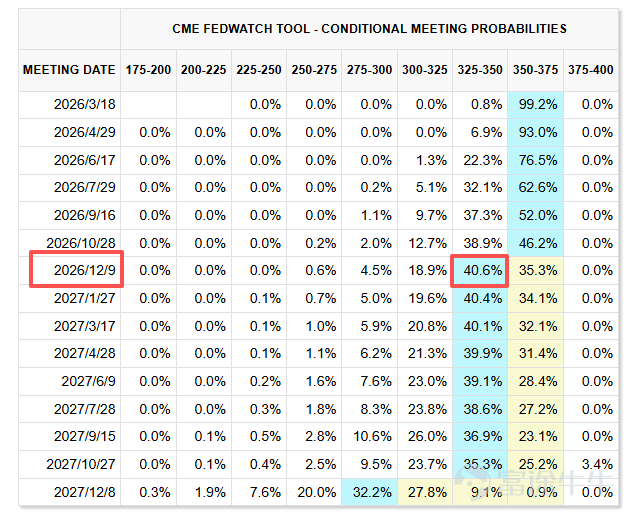
The market widely expects that the Fed will "stand pat" at this meeting, keeping the benchmark interest rate unchanged in the range of 3.50%-3.75%.Previously, the market had bet on the continuation of a "precautionary rate cut" path in the first half of the year, but now the timing of the first rate cut within the year has been significantly postponed from mid-year to the fourth quarter.Investors need to closely monitor the dot plot and economic forecasts released after the meeting to gain clearer guidance on the policy path.
![This article is from the "Weekly Options Strategy" column, which brings fellow investors a review of last week's market, the hot topics of the week, and an analysis of potential options trading opportunities. Welcome![Share Link: Click here]Join the learning session, and you will receive notifications when new updates to the column are available. Dear fellow investors, happy Monday~ The third week of March 2026, global financial markets are entering a 'risk resonance period.' On one side, oil prices repeatedly attempting to break the $100 mark amid the shadow of a potential shutdown in the Strait of Hormuz, along with early signs of 'stagflation'; on the other, the Federal Reserve, caught in Washington's political tug-of-war, is facing one of Powell’s most challenging FOMC decisions in his career. Further complicating the situation is this Friday’s 'triple witching day,' when derivatives expire en masse alongside the rebalancing of the S&P 500 index. Liquidity pressures from the technical side will collide deeply with macroeconomic uncertainties. Against the backdrop of NVIDIA’s GTC conference and Micron’s earnings reports, the AI theme must be repriced within an environment of high volatility and high hedging costs. FOMC under US-Iran tensions compounded by 'triple witching day'—how to navigate the triple storm? This week, financial markets will operate in an uncertain environment shaped by three overlapping key events. Geopolitical conflicts pushing up oil prices and inflation, the Fed’s response to a potential 'stagflation' dilemma, and the quarterly 'triple witching day' expiration of derivatives amplifying volatility from a technical standpoint—all three resonating to create a rare environment of heightened uncertainty.](https://nnqimage.futunn.com/sns_client_feed/999908/20260316/web-1773652504392-22wcNJxDUG.png/big?area=2&is_public=true&imageMogr2/ignore-error/1/format/webp)
Data source: CME FedWatch. Data as of March 16, 2026.
In addition to economic fundamentals, Fed Chair Powell is facing unprecedented political pressure, adding extra uncertainty to this meeting. In January, the Trump administration initiated a criminal investigation into Powell. Last Friday, a US federal court dismissed the subpoena against Powell, but the US Department of Justice stated it would continue its appeal.Through his lawyer, Powell has sent a strong signal that if the criminal investigation continues, he will remain on the board until 2028 after his term as chairman ends in May, which means he may potentially block Trump’s economic agenda on key decisions going forward.
Although procedurally his continued tenure is legal, there is no precedent for a former Fed chair to serve alongside the current chair.
At the press conference at the end of January, Powell avoided political questions as much as possible, attempting to shift the focus back to monetary policy and emphasizing that the current interest rate level is appropriate. The market is highly focused on whether he will address his future plans, which could determine whether the Fed remains “data-driven” or might face more administrative intervention. This meeting is one of the last few chaired by Powell amid this political storm, and every nuance of his statements will be carefully parsed by the market.
Options strategy
As of March 13, $SPDR S&P 500 ETF (SPY.US)$ and $Invesco QQQ Trust (QQQ.US)$ the historical percentile of implied volatility (IV) for options was as high as 94% and 91%, respectively. Against the backdrop of the resonance of three major sources of volatility — the FOMC decision, Triple Witching Day, and geopolitical risks — market volatility is expected to remain elevated.
(1) Trade with the trend
On days of significant economic events (such as the FOMC decision on Wednesday) or technical events (such as Triple Witching on Friday), if investors expect rapid and sharp directional breakouts in price, they may consider purchasing same-day expiry options with higher leverage for short-term trend-following trades.
For instance, if the SPY price breaks through a key resistance level with strong volume, one could buy call options slightly above the current price; conversely, one would buy put options. The contract with the highest trading volume should be chosen to ensure liquidity.
It is important to note that the capital allocated to a single trade should be relatively small (e.g., 1-2%), and a strict stop-loss should be set since the option expires on the same day and its value may quickly fall to zero.
(2) Short volatility
If it is expected that the market will not experience extreme one-sided movements but rather fluctuate within a certain range, an Iron Condor strategy can be considered. This involves simultaneously selling an out-of-the-money call option and an out-of-the-money put option while buying further out-of-the-money call and put options to limit risk, forming a four-legged combination.
(The design images displayed on screen are for illustrative purposes only and do not constitute any investment advice or guarantees; market conditions fluctuate frequently, and the option prices shown do not represent real-world values.)
![This article is from the "Weekly Options Strategy" column, which brings fellow investors a review of last week's market, the hot topics of the week, and an analysis of potential options trading opportunities. Welcome![Share Link: Click here]Join the learning session, and you will receive notifications when new updates to the column are available. Dear fellow investors, happy Monday~ The third week of March 2026, global financial markets are entering a 'risk resonance period.' On one side, oil prices repeatedly attempting to break the $100 mark amid the shadow of a potential shutdown in the Strait of Hormuz, along with early signs of 'stagflation'; on the other, the Federal Reserve, caught in Washington's political tug-of-war, is facing one of Powell’s most challenging FOMC decisions in his career. Further complicating the situation is this Friday’s 'triple witching day,' when derivatives expire en masse alongside the rebalancing of the S&P 500 index. Liquidity pressures from the technical side will collide deeply with macroeconomic uncertainties. Against the backdrop of NVIDIA’s GTC conference and Micron’s earnings reports, the AI theme must be repriced within an environment of high volatility and high hedging costs. FOMC under US-Iran tensions compounded by 'triple witching day'—how to navigate the triple storm? This week, financial markets will operate in an uncertain environment shaped by three overlapping key events. Geopolitical conflicts pushing up oil prices and inflation, the Fed’s response to a potential 'stagflation' dilemma, and the quarterly 'triple witching day' expiration of derivatives amplifying volatility from a technical standpoint—all three resonating to create a rare environment of heightened uncertainty.](https://nnqimage.futunn.com/sns_client_feed/999908/20260316/web-1773652504291-B5l21IU17d.png/big?area=2&is_public=true&imageMogr2/ignore-error/1/format/webp)
In a high implied volatility (IV) environment, selling options allows for collecting substantial premiums, betting on volatility declining after the event (IV Crush) and prices remaining within the range. The long-option legs on both sides provide protection for the entire position against significant losses should the market break out of the range in either direction.
As NVIDIA GTC approaches: How will the AI theme be repriced under macro pressure?
$NVIDIA (NVDA.US)$ NVIDIA GTC 2026 will be held from March 16 to 19 (NVIDIA's Global Technology Conference), with Jensen Huang's keynote speech scheduled for 2 AM Beijing time on March 17. The conference focuses on agentic AI, inference, physical AI, and AI factories.
In the past ten annual GTC events, the probability of NVIDIA's stock price rising was 80%.However, the biggest difference between this year's GTC and previous ones is that it is not facing a favorable macro environment — the market focus has shifted to 'geopolitical conflict + rising oil prices + recurring inflation.' With elevated macro risks, whether GTC’s positive catalysts can translate into stock price performance has become the key question.
Opportunity Analysis
The US February CPI data was acceptable, but the impact of the oil price shock caused by the escalation of Middle East conflicts in mid-March was not reflected in the data, potentially exerting volatility pressure on high-valuation AI assets. GTC remains the core industry event of the week.But it is more likely to bring structural opportunities within the AI theme rather than being a game-changer for reversing overall market risk appetite, especially as it overlaps with the FOMC meeting on March 17-18.Even if the conference releases positive news, once the macro environment deteriorates, capital will find it hard to provide smooth upward momentum.
At the industry level, GTC is still highly likely to be a positive catalyst and is expected to further strengthen NVIDIA's core position in the AI infrastructure cycle, driving high-growth sectors such as optical modules, optical components, high-speed connectivity, server systems, and liquid cooling power solutions.The probability of rotations within the main theme is higher than an overall platform uplift, with high-elasticity directions in the supply chain more prone to short-term opportunities.
Options strategy
Considering the current macro environment and the characteristics of the conference, options participation requires balancing opportunity and risk. Different types of investors may adopt differentiated strategies.
After experiencing a prior rally, NVIDIA's stock has entered a phase of high-level consolidation, showing a weaker short-term trend, though the overall structure remains intact. As of March 13, NVIDIA’s implied volatility stood at 46.79%, with an IV Rank percentile of 48%, indicating a historically moderate level. The Put/Call Ratio was 0.64, which has fluctuated between 0.64 and 0.88 recently, reflecting that bullish trades still dominate, but interest in put options is also increasing. Intense trading in short-term options has drawn market attention directly towardsthe GTC conference held in mid-March.。The massive open interest in the options market implies that regardless of whether the conference outcome meets expectations or not, it could trigger significant adjustments in options positions, thereby amplifying short-term stock price fluctuations.
(1) In terms of specific operations, investors with no positions or light positions can prioritize the bull call spread strategy.
This GTC belongs toevent-driven anticipated trading,, which is not an endlessly linear extrapolation trend. Prior to such event windows, option pricing for relevant underlying assets is usually already expensive. Directly buying naked Calls can easily lead to a situation where 'the direction is correct but the increase isn't enough and the time value is lost first,' especially for highly elastic second-order diffusion targets that rise more sharply but are also prone to quick pullbacks after expectations are realized.
The bull call spread can significantly reduce premium costs, lock in risks ahead of time, and keep overall drawdowns more controllable. This strategy can lower premium costs, lock in risks, and avoid losses from insufficient increases due to time value and volatility pullbacks. Using$Lumentum (LITE.US)$ as an example:
(The design images displayed on screen are for illustrative purposes only and do not constitute any investment advice or guarantees; market conditions fluctuate frequently, and the option prices shown do not represent real-world values.)
![This article is from the "Weekly Options Strategy" column, which brings fellow investors a review of last week's market, the hot topics of the week, and an analysis of potential options trading opportunities. Welcome![Share Link: Click here]Join the learning session, and you will receive notifications when new updates to the column are available. Dear fellow investors, happy Monday~ The third week of March 2026, global financial markets are entering a 'risk resonance period.' On one side, oil prices repeatedly attempting to break the $100 mark amid the shadow of a potential shutdown in the Strait of Hormuz, along with early signs of 'stagflation'; on the other, the Federal Reserve, caught in Washington's political tug-of-war, is facing one of Powell’s most challenging FOMC decisions in his career. Further complicating the situation is this Friday’s 'triple witching day,' when derivatives expire en masse alongside the rebalancing of the S&P 500 index. Liquidity pressures from the technical side will collide deeply with macroeconomic uncertainties. Against the backdrop of NVIDIA’s GTC conference and Micron’s earnings reports, the AI theme must be repriced within an environment of high volatility and high hedging costs. FOMC under US-Iran tensions compounded by 'triple witching day'—how to navigate the triple storm? This week, financial markets will operate in an uncertain environment shaped by three overlapping key events. Geopolitical conflicts pushing up oil prices and inflation, the Fed’s response to a potential 'stagflation' dilemma, and the quarterly 'triple witching day' expiration of derivatives amplifying volatility from a technical standpoint—all three resonating to create a rare environment of heightened uncertainty.](https://nnqimage.futunn.com/sns_client_feed/999908/20260316/web-1773652504358-PtsckWAxjU.jpeg/big?area=2&is_public=true&imageMogr2/ignore-error/1/format/webp)
(2) Investors who already hold heavier positions can adopt the Collar strategy.
While retaining their spot positions, they can buy slightly out-of-the-money Puts to guard against pullbacks after a surge and simultaneously sell Calls with higher strike prices to reduce protection costs, define drawdown boundaries, and avoid unprotected downside risks. If the stock rises, the 'sold Call' portion may be exercised, which will limit the overall profit potential. If the stock falls, the 'bought Put' portion will gain, limiting the maximum loss.
The most common risk in event trading is not 'information gaps' but rather 'the news is good, but the stock price has already reflected it in advance.' This way, if 'good news realization' occurs after the conference or the market shifts back to macro-risk trading, your positions won't be exposed to completely unprotected downside risks. Using$NVIDIA (NVDA.US)$ as an example:
(The design images displayed on screen are for illustrative purposes only and do not constitute any investment advice or guarantees; market conditions fluctuate frequently, and the option prices shown do not represent real-world values.)
![This article is from the "Weekly Options Strategy" column, which brings fellow investors a review of last week's market, the hot topics of the week, and an analysis of potential options trading opportunities. Welcome![Share Link: Click here]Join the learning session, and you will receive notifications when new updates to the column are available. Dear fellow investors, happy Monday~ The third week of March 2026, global financial markets are entering a 'risk resonance period.' On one side, oil prices repeatedly attempting to break the $100 mark amid the shadow of a potential shutdown in the Strait of Hormuz, along with early signs of 'stagflation'; on the other, the Federal Reserve, caught in Washington's political tug-of-war, is facing one of Powell’s most challenging FOMC decisions in his career. Further complicating the situation is this Friday’s 'triple witching day,' when derivatives expire en masse alongside the rebalancing of the S&P 500 index. Liquidity pressures from the technical side will collide deeply with macroeconomic uncertainties. Against the backdrop of NVIDIA’s GTC conference and Micron’s earnings reports, the AI theme must be repriced within an environment of high volatility and high hedging costs. FOMC under US-Iran tensions compounded by 'triple witching day'—how to navigate the triple storm? This week, financial markets will operate in an uncertain environment shaped by three overlapping key events. Geopolitical conflicts pushing up oil prices and inflation, the Fed’s response to a potential 'stagflation' dilemma, and the quarterly 'triple witching day' expiration of derivatives amplifying volatility from a technical standpoint—all three resonating to create a rare environment of heightened uncertainty.](https://nnqimage.futunn.com/sns_client_feed/999908/20260316/web-1773652504357-cyaEVInU3j.jpeg/big?area=2&is_public=true&imageMogr2/ignore-error/1/format/webp)
Can Micron's earnings report lead the storage sector into a new round of increases?
Market expectations$Micron Technology (MU.US)$Revenue this quarter is expected to enter a high-growth period.The consensus revenue expectation is $19.14 billion (a year-on-year increase of 138% and a quarter-on-quarter increase of 40%), while the company’s previous guidance was $18.7 billion; the consensus GAAP net profit expectation is $9.82 billion (a year-on-year increase of 520% and a quarter-on-quarter increase of 87%), with the company’s guidance at $9.34 billion.
Opportunity Analysis
(1) HBM supply and demand dynamics: Overcapacity or early achievement of targets?
Despite strong AI demand, the market is concerned that simultaneous production expansions by SK Hynix, Samsung, and Micron could lead to an oversupply by 2026. Currently driven by AI demand, HBM is in short supply, boosting SK Hynix, Samsung, and Micron to achieve both volume and price increases. The three giants are expanding production in sync, and HBM capacity is expected to double by 2026. This has raised concerns in the market about whether the logic behind ASP (average selling price) increases will be challenged if supply growth surpasses demand.
In addition, regarding rumors of 'HBM4 progress lagging,' Micron insists it has already started mass production in the first quarter. This earnings report needs to focus on management's latest response tomarket share acquisition capabilityand the actual delivery progress of HBM4.
(2) Non-data center business: Can growth driven by price increases continue?
Last quarter, the profit margin improvement for the mobile (MCBU) and embedded (AEBU) businesses far exceeded that of the data center segment, mainly due to industry-wide price hikes. Last quarter, profit margins for business segments centered on mobile and automotive/industrial soared by approximately 30 percentage points year-on-year, far outpacing the data center business.
Wall Street’s core concern currently lies in how long this seller’s market, driven by constrained supply (scarce cleanroom capacity), can be sustained? The market is closely watching whether there will be a substantial recovery on the demand side (smartphones, automobiles, industrial) to support the current high premiums.
(3) Profit margins have reached historical extremes; focus on future margin trend guidance
Micron's gross margin is approaching the peak of the 2018 supercycle. The 2018 supercycle relied on traditional memory pricing power, while the current cycle depends on structural growth from HBM products with over 60% gross margins. Management's guidance on the ceiling for future profit margins will directly determine whether the stock price can maintain its high levels.
Options strategy
Technical indicators show that Micron's stock price momentum is strengthening, but the options market is signaling caution. Although call option trading volumes dominate, a significant concentration of put options are out-of-the-money, indicating active hedging against downside risks. Meanwhile, implied volatility (IV) has risen to 79.45%, significantly above the historical average, suggesting the market is preparing for significant fluctuations after earnings (implied range approximately ±10.36%), with option prices at their highest in nearly a year.
![This article is from the "Weekly Options Strategy" column, which brings fellow investors a review of last week's market, the hot topics of the week, and an analysis of potential options trading opportunities. Welcome![Share Link: Click here]Join the learning session, and you will receive notifications when new updates to the column are available. Dear fellow investors, happy Monday~ The third week of March 2026, global financial markets are entering a 'risk resonance period.' On one side, oil prices repeatedly attempting to break the $100 mark amid the shadow of a potential shutdown in the Strait of Hormuz, along with early signs of 'stagflation'; on the other, the Federal Reserve, caught in Washington's political tug-of-war, is facing one of Powell’s most challenging FOMC decisions in his career. Further complicating the situation is this Friday’s 'triple witching day,' when derivatives expire en masse alongside the rebalancing of the S&P 500 index. Liquidity pressures from the technical side will collide deeply with macroeconomic uncertainties. Against the backdrop of NVIDIA’s GTC conference and Micron’s earnings reports, the AI theme must be repriced within an environment of high volatility and high hedging costs. FOMC under US-Iran tensions compounded by 'triple witching day'—how to navigate the triple storm? This week, financial markets will operate in an uncertain environment shaped by three overlapping key events. Geopolitical conflicts pushing up oil prices and inflation, the Fed’s response to a potential 'stagflation' dilemma, and the quarterly 'triple witching day' expiration of derivatives amplifying volatility from a technical standpoint—all three resonating to create a rare environment of heightened uncertainty.](https://nnqimage.futunn.com/sns_client_feed/999908/20260316/web-1773652504241-tHUFapXRoL.png/big?area=2&is_public=true&imageMogr2/ignore-error/1/format/webp)
(1) For investors bullish ahead of earnings: Bull Call Spread strategy
Suitable for investors optimistic about earnings performance. This strategy involves buying call options with a lower strike price and simultaneously selling the same number of call options with a higher strike price. It helps offset some premium costs, reduces the risk of volatility decline (IV Crush), lowers the breakeven point, but caps the maximum potential gain.
(The design images displayed on screen are for illustrative purposes only and do not constitute any investment advice or guarantees; market conditions fluctuate frequently, and the option prices shown do not represent real-world values.)
![This article is from the "Weekly Options Strategy" column, which brings fellow investors a review of last week's market, the hot topics of the week, and an analysis of potential options trading opportunities. Welcome![Share Link: Click here]Join the learning session, and you will receive notifications when new updates to the column are available. Dear fellow investors, happy Monday~ The third week of March 2026, global financial markets are entering a 'risk resonance period.' On one side, oil prices repeatedly attempting to break the $100 mark amid the shadow of a potential shutdown in the Strait of Hormuz, along with early signs of 'stagflation'; on the other, the Federal Reserve, caught in Washington's political tug-of-war, is facing one of Powell’s most challenging FOMC decisions in his career. Further complicating the situation is this Friday’s 'triple witching day,' when derivatives expire en masse alongside the rebalancing of the S&P 500 index. Liquidity pressures from the technical side will collide deeply with macroeconomic uncertainties. Against the backdrop of NVIDIA’s GTC conference and Micron’s earnings reports, the AI theme must be repriced within an environment of high volatility and high hedging costs. FOMC under US-Iran tensions compounded by 'triple witching day'—how to navigate the triple storm? This week, financial markets will operate in an uncertain environment shaped by three overlapping key events. Geopolitical conflicts pushing up oil prices and inflation, the Fed’s response to a potential 'stagflation' dilemma, and the quarterly 'triple witching day' expiration of derivatives amplifying volatility from a technical standpoint—all three resonating to create a rare environment of heightened uncertainty.](https://nnqimage.futunn.com/sns_client_feed/999908/20260316/web-1773652503967-oG0oW4Ge5C.png/big?area=2&is_public=true&imageMogr2/ignore-error/1/format/webp)
(2) Short Volatility: Selling an Iron Condor
1. Suitable for investors expecting post-earnings stock price movement within a wider range rather than extreme one-sided moves. The strategy involves simultaneously selling a call spread and a put spread, aiming to profit from volatility decay following the earnings event. The risk lies in significant unexpected surges or drops in share price, which could lead to losses. However, by purchasing distant options as 'insurance,' the maximum loss is capped.
(The design images displayed on screen are for illustrative purposes only and do not constitute any investment advice or guarantees; market conditions fluctuate frequently, and the option prices shown do not represent real-world values.)
![This article is from the "Weekly Options Strategy" column, which brings fellow investors a review of last week's market, the hot topics of the week, and an analysis of potential options trading opportunities. Welcome![Share Link: Click here]Join the learning session, and you will receive notifications when new updates to the column are available. Dear fellow investors, happy Monday~ The third week of March 2026, global financial markets are entering a 'risk resonance period.' On one side, oil prices repeatedly attempting to break the $100 mark amid the shadow of a potential shutdown in the Strait of Hormuz, along with early signs of 'stagflation'; on the other, the Federal Reserve, caught in Washington's political tug-of-war, is facing one of Powell’s most challenging FOMC decisions in his career. Further complicating the situation is this Friday’s 'triple witching day,' when derivatives expire en masse alongside the rebalancing of the S&P 500 index. Liquidity pressures from the technical side will collide deeply with macroeconomic uncertainties. Against the backdrop of NVIDIA’s GTC conference and Micron’s earnings reports, the AI theme must be repriced within an environment of high volatility and high hedging costs. FOMC under US-Iran tensions compounded by 'triple witching day'—how to navigate the triple storm? This week, financial markets will operate in an uncertain environment shaped by three overlapping key events. Geopolitical conflicts pushing up oil prices and inflation, the Fed’s response to a potential 'stagflation' dilemma, and the quarterly 'triple witching day' expiration of derivatives amplifying volatility from a technical standpoint—all three resonating to create a rare environment of heightened uncertainty.](https://nnqimage.futunn.com/sns_client_feed/999908/20260316/web-1773652503971-EdHg3v3QWA.png/big?area=2&is_public=true&imageMogr2/ignore-error/1/format/webp)
Futu Securities Analyst Xu Anyu
CE: BWS681
(The author is a licensed securities professional, and neither the author nor associated persons hold financial interests in the recommended stock issuer.)
Finally, here's a small perk for fellow investors—welcome to claim it!Options Beginner Pack
This event is exclusively for invited HK users, click to learn moreDetailed event rules >>
Futu's simulated trading challenge is now open for registration! Zero cost, zero risk, and you could win stock cash vouchers!For more details, click here
![This article is from the "Weekly Options Strategy" column, which brings fellow investors a review of last week's market, the hot topics of the week, and an analysis of potential options trading opportunities. Welcome![Share Link: Click here]Join the learning session, and you will receive notifications when new updates to the column are available. Dear fellow investors, happy Monday~ The third week of March 2026, global financial markets are entering a 'risk resonance period.' On one side, oil prices repeatedly attempting to break the $100 mark amid the shadow of a potential shutdown in the Strait of Hormuz, along with early signs of 'stagflation'; on the other, the Federal Reserve, caught in Washington's political tug-of-war, is facing one of Powell’s most challenging FOMC decisions in his career. Further complicating the situation is this Friday’s 'triple witching day,' when derivatives expire en masse alongside the rebalancing of the S&P 500 index. Liquidity pressures from the technical side will collide deeply with macroeconomic uncertainties. Against the backdrop of NVIDIA’s GTC conference and Micron’s earnings reports, the AI theme must be repriced within an environment of high volatility and high hedging costs. FOMC under US-Iran tensions compounded by 'triple witching day'—how to navigate the triple storm? This week, financial markets will operate in an uncertain environment shaped by three overlapping key events. Geopolitical conflicts pushing up oil prices and inflation, the Fed’s response to a potential 'stagflation' dilemma, and the quarterly 'triple witching day' expiration of derivatives amplifying volatility from a technical standpoint—all three resonating to create a rare environment of heightened uncertainty.](https://nnqimage.futunn.com/sns_client_feed/999908/20260316/web-1773652504468-Wn5JgHbEsG.webp/big?area=2&is_public=true&imageMogr2/ignore-error/1/format/webp)
Disclaimer
This content does not constitute any offer, solicitation, recommendation, opinion, or guarantee of any securities, financial products, or tools. The risk of loss in buying and selling options can be substantial. In some cases, your losses may exceed the initial margin amount deposited. Even if you set contingent orders, such as 'stop-loss' or 'limit' orders, these may not necessarily prevent losses. Market conditions may make these orders unexecutable. You might be required to deposit additional margin within a short period. If you fail to provide the required amount within the specified time, your open positions may be liquidated. However, you will still be responsible for any account deficit arising from this. Therefore, before trading, you should study and understand options and carefully consider whether such trading suits you based on your financial situation and investment objectives. If you trade options, you should be familiar with the procedures upon exercising options and at expiration, as well as your rights and obligations when exercising options and at expiration.
Risk Disclaimer: The above content only represents the author's view. It does not represent any position or investment advice of Futu. Futu makes no representation or warranty.Read more


Comments (8)
to post a comment
33
24