
SMIC Bull-Bear Certificate Deployment Strategy: Choosing Call Certificates with a Recovery Price of $55 and Put Certificates at $67
SMIC (00981.HK) has recently shown a price recovery from its lows, becoming a market focus. As of March 13, 2026, SMIC closed at $62.2, marking a daily decline of 1.43%. The stock gradually rebounded from the low of $58.30 on March 4 and entered consolidation. By the morning session of March 16, the stock further retreated to around $61, reflecting a drop of approximately 1.93%, with the market closely watching whether the recovery momentum will continue. In the semiconductor sector, Huahong Semiconductor (01347) $HUA HONG GRACE (01347.HK)$ traded at $88.75, up slightly by 0.85%. Shanghai Fudan (01385) $SHANGHAI FUDAN (01385.HK)$ Reported at HKD 40.4, down 4.9%.
Technical Analysis Summary
From a technical perspective, SMIC's stock price has rebounded after retreating from around HKD 80.10 to HKD 58.30, and is currently in the stage of bottom recovery. On the support side, the first key support is at HKD 59.7, which forms a consolidation range during the recent rebound; the second support lies at HKD 54.4, equivalent to the horizontal bottom in early February. On the resistance side, the first major resistance is at HKD 66.1, near the previous rebound high and close to the 20-day moving average. If it breaks through, the next resistance level would be HKD 70, followed by the mid-term moving average pressure zone near HKD 73.
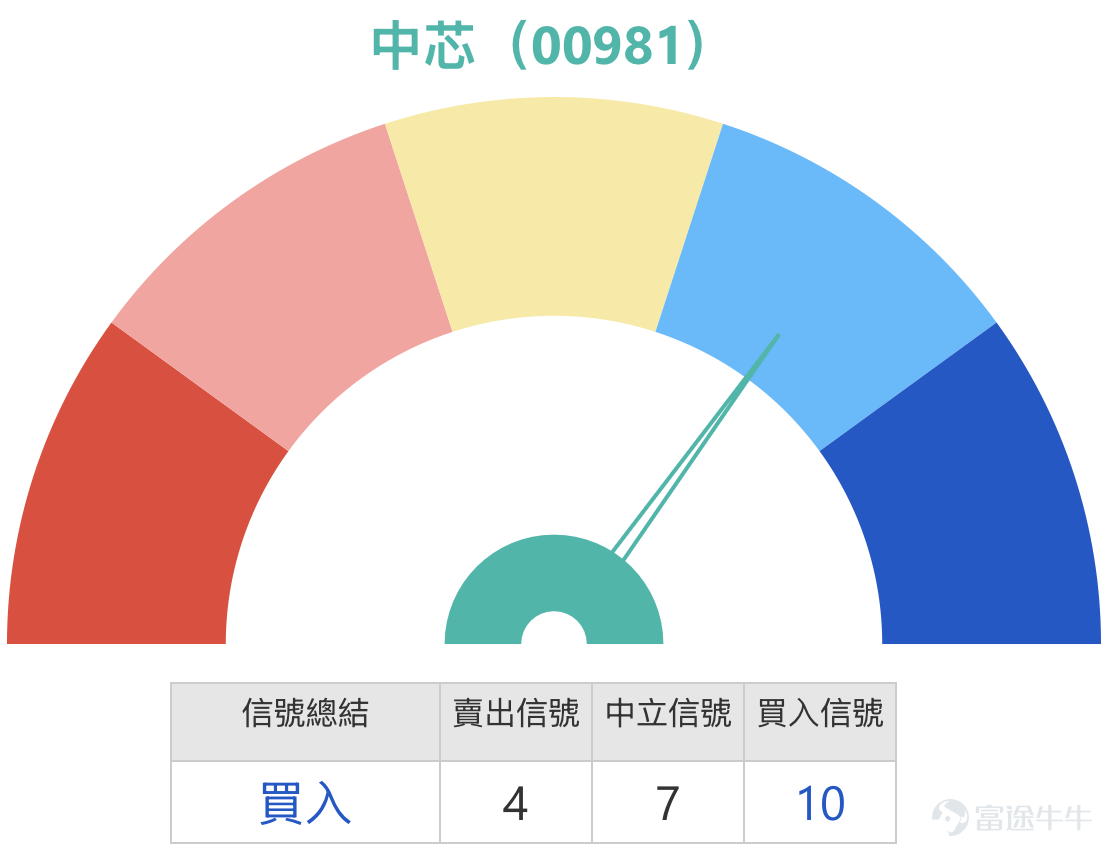
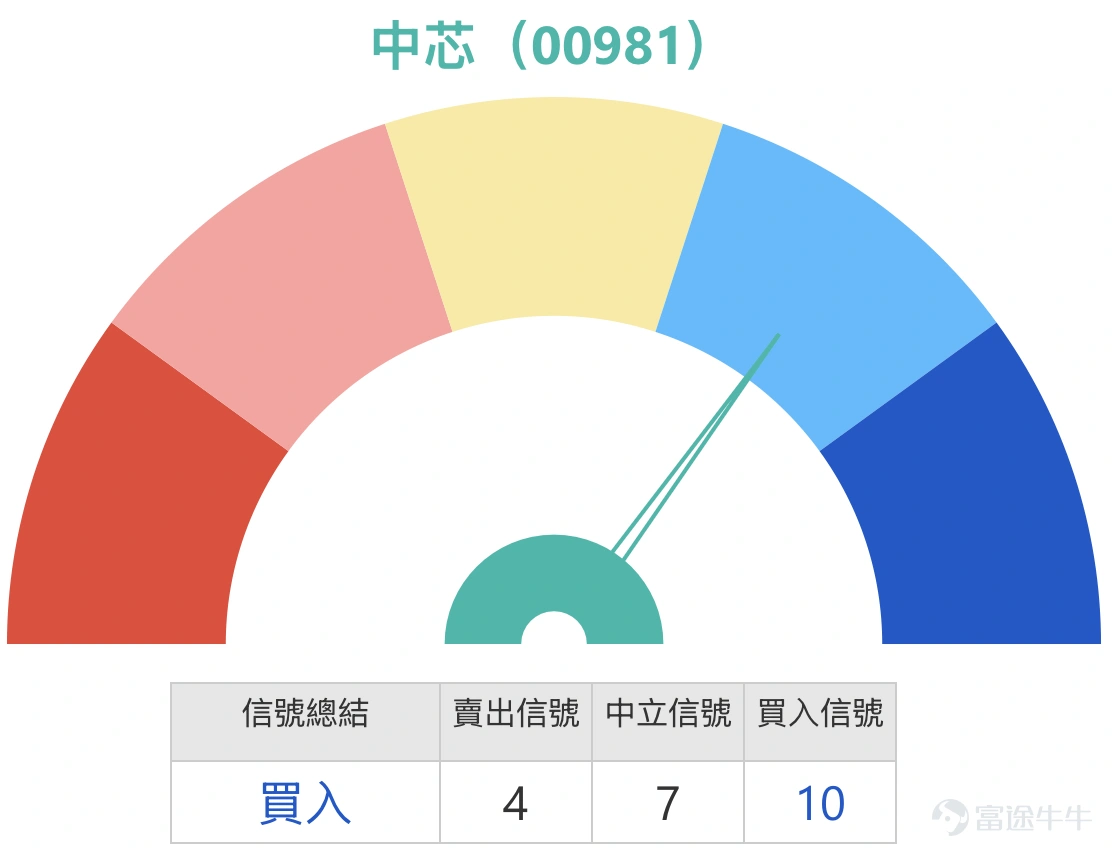
The moving average structure shows that the short-term 5-day and 10-day moving averages are gradually converging towards the stock price, reflecting an accumulation of rebound momentum. However, the 20-day and 30-day moving averages remain above the stock price, with the medium-term trend still downward, indicating that the overall trend has not yet fully reversed. Regarding technical indicators, the overall signal remains 'Buy.' The RSI is at 39, multiple oscillation indicators show neutral signals, while the Rate of Change (ROC) indicator suggests a 'severely oversold condition, possible bottoming out, buy' strong signal. Overall, this is a 'rebound after decline' phase, where a short-term technical recovery may occur. However, if the upper moving average pressure cannot be broken, the overall trend will remain weak.
Market News Summary
On the industry front, NVIDIA’s GTC 2026 Conference is scheduled for March 16-19, with expectations of unveiling a new generation of AI computing chips. In addition, SK Hynix and Samsung plan to raise prices again by 15%-30% in Q4, accelerating foundry expansion and directly boosting equipment order visibility. SMIC previously announced plans to add 40,000 wafers per month in 12-inch capacity and 240,000 wafers per month in 8-inch capacity in 2026, focusing on advanced processes of 7nm and below for AI chips. Capital expenditures are maintained at high levels, with a target to increase domestic equipment usage to over 45%. In the warrant market, trading activity in SMIC warrants remained robust, with total turnover reaching HKD 155 million, accounting for 2.255% of total warrant turnover. The call-to-put ratio stood at 79:21.
Podcast Viewpoints Consolidation
Reviewing the analysis from the [Hong Kong Stocks Podcast] on March 13, the program noted that SMIC's overall structure is still in the adjustment phase following a pullback from higher levels. The stock rebounded from the low of HKD 58.30 but failed to regain its key medium-term moving averages, placing it in a 'rebound after decline' phase rather than a complete reversal of the downtrend. Short-term support lies between HKD 60 and HKD 59; as long as this area holds, the rebound structure can be sustained. More critical support sits at HKD 58.30, clearly marked as the recent low. A break below this level could lead to the resumption of the overall downtrend. On the resistance side, initial focus is on HKD 64, near the recent rebound high and the convergence of short-term moving averages. If it can break through and stabilize above HKD 64, the next resistance zone lies between HKD 66 and HKD 67, near the 20-day moving average. The program particularly reminded listeners that the current phase is closer to the early stages of a rebound rather than a clear trend reversal. A more reasonable strategy is to monitor how well support areas hold, rather than chasing the rally midway. If the stock falls back to around HKD 60 and shows stable buying support, combined with bullish rebound signals, that would present a more technically sound deployment opportunity.
Warrant Product Review
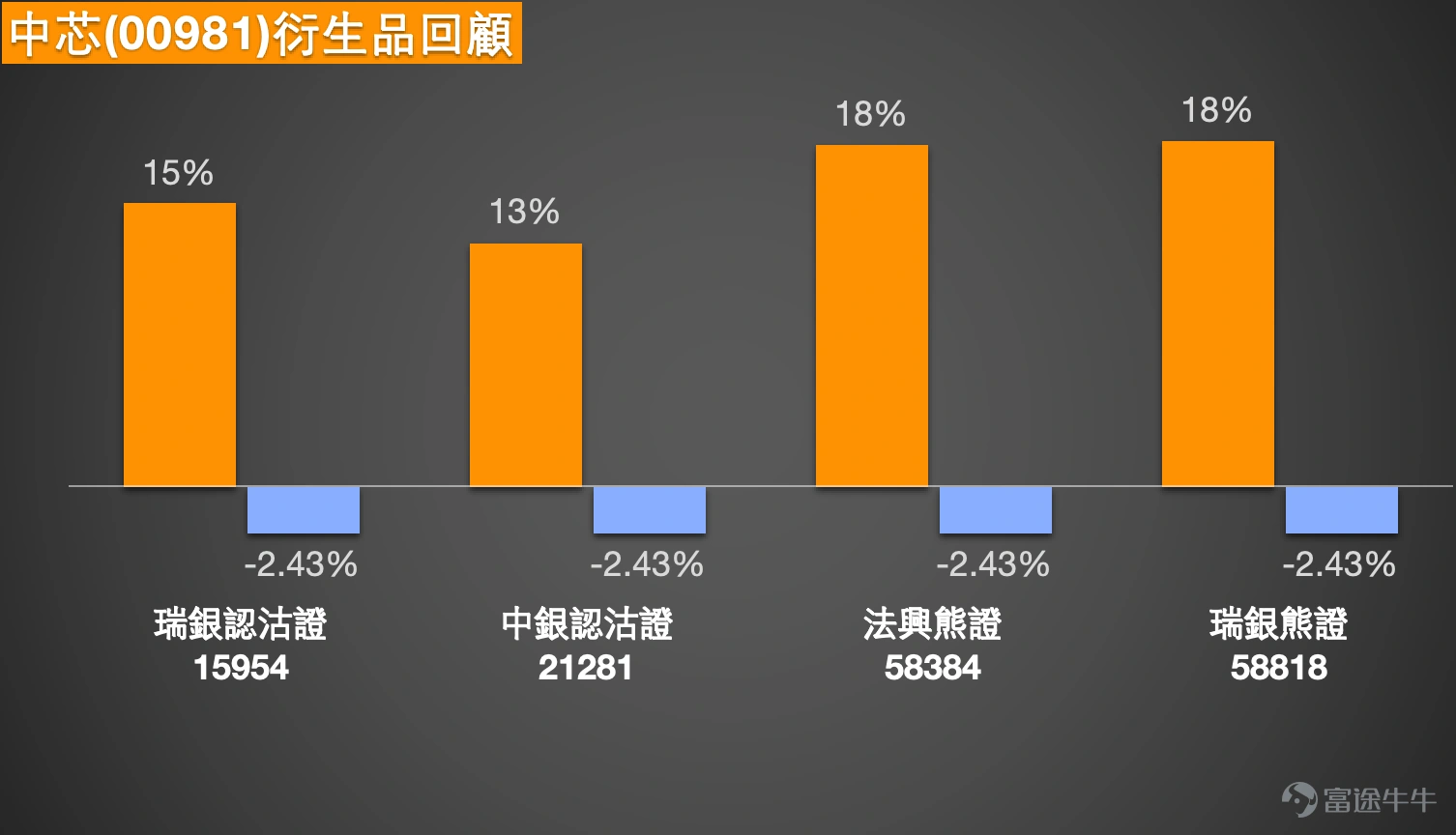
Regarding the performance of derivative products linked to SMIC, several instruments mentioned on March 11, 2026, recorded notable performances over the subsequent two trading days (up to March 13). During this period, SMIC’s underlying stock fell by 2.43%, while related bearish products demonstrated significant leverage effects. Société Générale Bear Certificate (58384) and UBS Group Bear Certificate (58818) both surged by 18%, UBS Group Put Warrant (15954) rose by 15%, and Bank of China Put Warrant (21281) climbed by 13%. The data highlights that although the underlying stock's decline was limited, the gains in these derivatives far exceeded the stock’s fall—this is a core feature of leveraged products, amplifying returns during periods of volatility. The principle behind leverage is that investors need only commit relatively small capital to establish positions equivalent to holding substantial amounts of the underlying stock. For instance, with bear certificates, investors can hedge a position worth tens of thousands using just a few thousand dollars. Hence, when the underlying stock declines, the rise in bear certificate prices naturally exceeds the stock’s drop. The 18% surge in Société Générale Bear Certificate (58384) and UBS Group Bear Certificate (58818), far exceeding the 2.43% fall in the underlying stock, vividly illustrates the leverage effect.
Given SMIC’s current stock price at around HKD 61, along with the aforementioned support levels at HKD 59.7 and HKD 54.4, as well as resistance levels at HKD 66.1 and HKD 70, investors can choose appropriate warrant and bull/bear certificate products based on their individual views.
For investors who are optimistic that SMIC can hold steady above the $60 mark and rebound upwards, they may consider two call warrant products. The BOC Call Warrant (19343) has a strike price of $69.04, offering approximately 4.2x leverage. This product has the lowest premium, with ideal implied volatility and leverage, making it suitable for cost-effective bullish strategies. Another option is the UBS Group Call Warrant (19350), also with a strike price of $69.04 and similar leverage of about 4.2x, with relatively low premium. These two products have a strike price of $69.04, which is approximately 13% out-of-the-money based on the current stock price, aligning with the view mentioned in the podcast that "after breaking through $64, the price could test $66 to $67." These products are suitable for more aggressive investors expecting the stock price to break through $66.1 and further test the resistance level at $70.
For investors who are bearish on SMIC's future performance and believe that the stock price will be capped by the resistance level at $66.1 or even retreat to the support level, they may consider the BOC Put Warrant (26417). $BI-SMIC@EP2609D.P (26417.HK)$ With a strike price of $51 and 4.2x leverage, this product has the lowest premium and is suitable for bearish strategies. When choosing put warrants, note that the strike price of $51 is below the current stock price, making it an out-of-the-money product. If the stock price falls below the support level at $59.7, such products will perform more ideally.
In terms of bull-bear certificate deployment, bullish investors may consider two bull certificate products. The UBS Group Bull Certificate (59528) $UB#SMIC RC2607M.C (59528.HK)$ has a stop-loss price of $55, actual leverage of 7.9x, and the lowest premium with relatively high actual leverage; another option is the J.P. Morgan Bull Certificate (69013) with a stop-loss price of $54, actual leverage of 6.6x, the highest actual leverage, and relatively low premium. When choosing bull certificates, ensure that the stop-loss price is below the support levels at $59.7 and $54.4 to provide sufficient safety buffer. The stop-loss prices of $55 and $54 are below both support levels, providing ample safety margin. For bearish investors, two bear certificate products are available. The Societe Generale Bear Certificate (68523) has a stop-loss price of $67, actual leverage of 12.4x, the lowest premium, and relatively high actual leverage; another option is the UBS Group Bear Certificate (69150) with a stop-loss price of $67, actual leverage of 12.2x, the highest actual leverage, and relatively low premium. When selecting bear certificates, ensure that the stop-loss price is above the resistance levels at $66.1 and $70. A stop-loss price of $67 is slightly above the first resistance level, making it a close-range choice that offers ideal leverage without reducing sensitivity due to being too far away.

Overall, SMIC’s stock price is currently in a phase of bottom recovery, with the $60 mark and $58.30 support level determining the short-term direction. Fundamentally, industry sentiment is supported by AI demand and rising memory chip prices. The company maintains high capital expenditure, with increased targets for equipment localization. However, short-term liquidity remains under pressure. Investors should strictly manage risks when deploying, choose appropriate derivatives based on key support levels at $59.7 and $54.4, as well as resistance levels at $66.1 and $70, and pay attention to how the out-of-the-money degree affects product performance and the critical role of premium levels in holding costs.
Interactive Questions:
Dear readers, do you think SMIC (00981) can hold steady above the $60 mark in the short term and rebound upwards?
A) Yes, benefiting from AI demand and industry sentiment, it will test the resistance level at $66.1.
B) No, heavy fund outflows and moving average pressures will push the stock to test the support levels at $59.7 or even $58.3.
Feel free to share your views in the comment section!
In your opinion, when choosing call warrants, which factor is more important: premium or leverage? Would you prioritize products like BOC 19343 with the lowest premium, or other products with different terms? Feel free to leave comments and share your experiences!
Follow Jenny's HK Stock Warrants for deeper analysis of the warrants and bull/bear certificates market!
Reminder: This article does not constitute any investment advice.
This article is for reference only and does not constitute any investment advice. The market data, opinions, and analysis contained herein may change at any time without prior notice. We are not responsible for any loss or damage caused by reliance on the information in this article. Technical analysis only shows whether certain technical conditions are met; a comprehensive assessment of asset performance should combine other data and should not solely rely on this article to make trading decisions. Please note that past performance is not indicative of future results. Follow Jenny's insights on Hong Kong stock warrants for more professional analysis.
#SMIC #00981 #HongKongStocks #TechnicalAnalysis #SupportResistanceLevels #Derivatives #BullBearCertificates #CallOptions #PutOptions #Premium #HongKongStockDerivativesJenny
Risk Disclaimer: The above content only represents the author's view. It does not represent any position or investment advice of Futu. Futu makes no representation or warranty.Read more
Comments
to post a comment
6