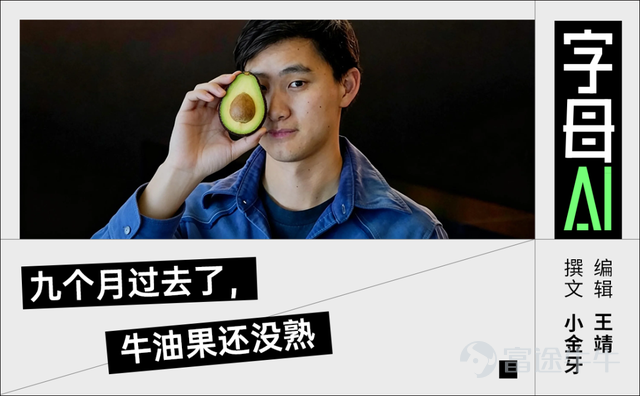

Mass layoffs of 20%, difficulty in delivering new models, Meta's AI remains an unresolved mess
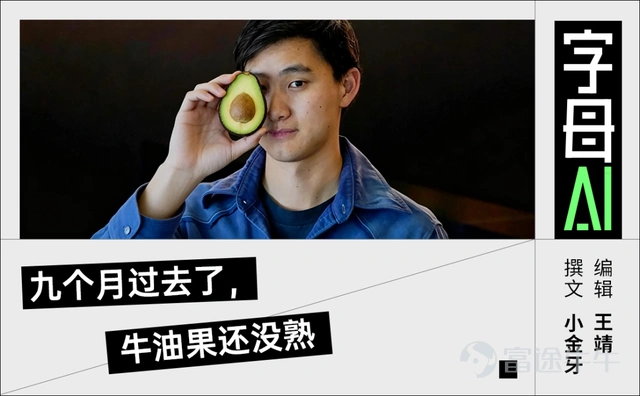
Meta is going through a delicate period.
The latest news from The New York Times reveals that Meta has postponed the release of its next-generation AI model, 'Avocado.' According to Zuckerberg's original plan, this model was supposed to debut in March this year, but the timeline has now been pushed back to May.
The reason is simple — the new model isn't good enough and fails to outperform competitors.
Meanwhile, Reuters cited insiders indicating that Meta might undergo a major round of layoffs, potentially affecting 20% of its employees.
The reason is also straightforward — the costs associated with investing in AI infrastructure are too high, necessitating offsets. Additionally, Meta is preparing for efficiency gains brought by 'AI-assisted employees.'
If the rumored 20% layoff figure comes true, it would mark the largest workforce reduction since Meta's major restructuring in 2022 and 2023. At that time, Meta laid off 11,000 employees, accounting for 13%, followed by another 10,000 layoffs four months later.
But this is only part of the problem.
Alexandr Wang, the AI head responsible for developing the new model, has started facing external doubts; Meta's internal restructuring around its AI organizational framework continues; and the highly anticipated 'Super Intelligence Lab,' established nearly a year ago, has yet to deliver any truly groundbreaking results.
Amid the 'Lobster Craze,' neighboring OpenAI directly 'recruited' the founder of OpenClaw, while Meta acquired Manus, which gained some traction last year, and Moltbook, known for its OpenClaw social platform and accused of fabricating data. These actions seem like carving flowers on a watermelon rind — purely cosmetic.
Over the past year, Zuckerberg has almost bet the future of the company on artificial intelligence. Meta has not only hired researchers from various labs at high salaries but also plans to invest hundreds of billions of dollars in building computing power infrastructure, hoping to regain the initiative in this round of technological competition.
For a company with 4 billion users that has long dominated social networks, AI should have been the new growth engine. But Meta is currently at a moment where it needs to re-prove itself.
01
What's wrong with Avocado?
The New York Times reported, citing three informed sources, that 'Avocado' is being delayed.
Meta’s current series of new models is codenamed 'Avocado.' According to Zuckerberg’s original plan, the first model in the 'Avocado' series was supposed to be released this month, but now it has been postponed until May.
The reason is simple—the model isn't good enough.
According to informed sources, the new model developed by Meta over several months did not meet expectations during internal testing. In terms of reasoning, programming, and writing abilities, its performance lags behind the most advanced models from competitors like Google, OpenAI, and Anthropic.
To be more specific, this model outperforms Meta’s previous models as well as Gemini 2.5, which Google released in March last year, but compared to Gemini 3.0, which Google launched in November last year, it still falls slightly short.
Sources even revealed a major piece of information: Meta’s senior management has discussed temporarily licensing Gemini to support the company's AI products, though no decision has been made yet.
Meta first launched the open-source large model Llama in 2023, which quickly became one of the most influential open-source models at the time. The company then successively released Llama 2 and Llama 3, attracting a large number of developers and companies through an open-weight strategy, allowing Meta to take a leading position in the open-source ecosystem for a period.
The performance of the later versions of Llama in areas such as reasoning and programming did not meet external expectations. There were even controversies surrounding its benchmark test results, which undermined confidence in its technical capabilities.
According to reports from various media outlets, Zuckerberg was extremely upset and lost his temper over this incident. The 'fabrication controversy' surrounding Llama 4 also became a turning point for Meta's model strategy.
Thus, the 'Avocado' project made its brilliant debut.
To be precise, after undergoing four reorganizations in half a year, aggressively recruiting top talent with high salaries, and establishing the 'Super Intelligence Lab,' the new model plan codenamed 'Avocado' was born.
Meta’s AI organization is ultimately led by the 'Super Intelligence Lab,' which is divided into four divisions: TBD (To Be Determined) Lab, the FAIR internal research lab, the Product and Application Research Department, and the Fundamental Research Department.
The TBD Lab began developing two AI models codenamed after fruits — 'Avocado' and 'Mango,' with Mango being an image and video generation model.
By the end of last year, the TBD Lab had completed the first phase of Avocado’s development, known as 'pre-training.' In January this year, the team moved on to the next phase — 'post-training.' Two insiders revealed that it was during this phase that the team set the target release date for mid-March.
Meta's executives have been debating whether this new AI model should adopt an 'open-source' approach — meaning part of the code would be made public so other developers can continue building on it — or remain 'closed-source,' keeping the underlying code confidential.
For a long time, Meta has been an active supporter of open-source models, believing that open-source helps drive technological progress; whereas companies like OpenAI and Anthropic argue that allowing external developers to build products based on their AI poses security risks.
Two insiders stated that last summer, Zuckerberg leaned towards keeping Meta's new model closed-source.

In July of last year, during Meta's earnings call, Zuckerberg stated that in the 'coming year,' Meta’s new series of models would 'push the technological frontier.'
This was an ambitious statement—Zuckerberg wasn’t just aiming for a model that was good enough; he wanted one that would be the best and most dazzling right out of the gate.
However, according to the latest report from The New York Times, this ambitious plan is encountering difficulties.
02
Wang has yet to prove himself.
The longer it drags on, the more it raises doubts about whether things are running smoothly within Meta.
The delay of 'Avocado' has once again put immense pressure on one individual—Alexandr Wang (Wang Tao), the current head of Meta AI.
As mentioned earlier, within Meta’s current AI organization, the Super Intelligence Lab is at the top, divided into four parts. Among them, TBD, despite its name meaning 'to be determined,' is the core unit responsible for developing the new models.
Wang is both the head of the Super Intelligence Lab and the leader of TBD, making him the true helmsman of Meta AI.

With Meta’s bumpy journey toward 'super intelligence,' how can Wang not bear responsibility?
At the very least, there is now skepticism about Wang from the outside.
Wang has been the subject of rumors lately, with one this week suggesting that Wang is leaving Meta, out of the game!
This rumor is not entirely baseless.
An internal employee memo from Meta shows that the company will establish a new team - the AI Engineering Team, led by Andrew Bosworth.
The highlight is that this new AI Engineering Team is on par with the Super Intelligence Lab, as Meta put it, the two teams 'will collaborate.'
It should be noted that Meta had previously integrated the entire AI organization into the Super Intelligence Lab, including the decades-old research department FAIR. Now, suddenly forming a parallel AI engineering team, what does it imply?
Most thought-provoking is that as early as the end of last year, The New York Times reported that Zuckerberg had specifically set aside a space next to his office for the TBD team, providing resources and freedom, making TBD like a 'startup' within Meta.
Moreover, Wang has increasingly clashed with veteran executives, including Andrew.
Andrew joined Meta (then called Facebook) back in 2006 and knew Zuckerberg at Harvard University, making him an elder statesman-level executive. His two most critical roles are Meta's CTO and head of Reality Labs (the division working on AR/VR and the metaverse, which has consistently incurred massive losses).
According to reports at the end of last year, Wang and Andrew had a disagreement over how the next-generation AI model should help boost the company's advertising business.
In the view of researchers at TBD, executives representing the old guard at Meta, like Andrew, are only interested in improving social media operations, while TBD's goal is to create a 'god-like' super artificial intelligence.
Andrew seems to be at a disadvantage. At that time, Reality Labs' budget was cut by $20 billion, which was reportedly transferred to the TBD team led by Wang.
Knowing this background information, it’s not hard to understand why outsiders 'over-interpreted' Meta's recent decision to suddenly put Andrew in charge of the AI engineering team, on par with Wang.
Zuckerberg personally stepped in and posted a photo with Wang on Threads to dispel the rumors. However, the fact that such 'rumors' spread indicates that Wang has yet to prove himself.
03
Meta hasn't proven itself either.
At 41, Zuckerberg has almost bet the entire future of Meta on artificial intelligence.
For a company that owns Facebook, Instagram, and Threads, staying at the forefront of AI technology has become a decisive issue.
To achieve this, Meta has spared no expense over the past few years, poaching top researchers from major labs and committing to invest $600 billion in building data centers to support AI development.
In January this year, the company projected that related expenditures could reach as much as $135 billion by 2026—almost double last year’s $72 billion.
Of course, progress in AI models is never achieved overnight. Industry experts believe Meta still has the opportunity to catch up with its competitors. However, internally, the timeline has clearly been extended.
Over the past few months, Zuckerberg has also been actively managing market expectations by cooling down external hype around the 'Avocado' project, attempting to recalibrate market anticipation.
The Super Intelligence Lab has been established for nine months, and currently, its two most notable actions are:
1. Acquiring the company behind Manus. Manus is an AI Agent product.
2. Acquiring Moltbook. Moltbook is a 'robot social network' specifically built for OpenClaw.
All of this happened during the global 'lobster craze' sparked by OpenClaw.
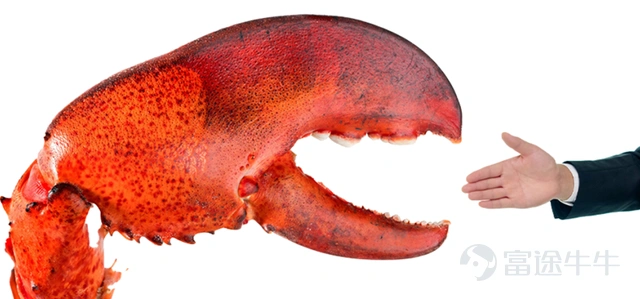
In contrast, OpenAI directly recruited Peter Steinberger, the founder of OpenClaw. With the key figure onboard, the technical roadmap also came under their control. Meanwhile, Meta's actions appear to be more peripheral—acquiring applications and communities around the OpenClaw ecosystem, rather than the key individuals and core technologies driving this trend.
To make matters worse, Moltbook itself has faced allegations of data fabrication and exaggerated user numbers.
While OpenAI brought the most critical people and technology into its system, what Meta acquired seems more like some peripheral assets left over from this wave.
From the results, these two acquisitions seem more like attempts to 'catch up,' rather than strategic moves to redefine the technological direction. For a new department named the 'Super Intelligence Lab,' such a start appears somewhat conservative.
Make no mistake, Meta remains a formidable giant.
It is one of the most widely used internet platforms globally, with approximately 4 billion monthly active users across its products, reaching nearly half of the world’s internet users daily. In 2025, its revenue is expected to reach about 200.9 billion US dollars, a year-on-year increase of 22%.
But for Meta, which is in the midst of the AI wave, the question is not whether it's good enough now, but whether it can continue to thrive in the future.
The crisis has emerged. Just last July, when Zuckerberg announced that Meta's new model, 'over the next year,' would 'push the technological frontier,' ByteDance reported revenue exceeding $43 billion in that quarter, surpassing Meta ($42.3 billion) for the first time to become the world’s highest-earning social media company.
Let’s not forget that ByteDance, which also owns a 'social empire,' has been moving steadily in this wave of AI.
DouBao has become one of the largest AI applications in terms of user scale in China. According to 36Kr, by the end of 2025, DouBao is expected to have more than 100 million daily active users.
On the model level, ByteDance has also established an entire multimodal system, including the DouBao language model, Seedream for image generation, Seedance for video generation, and the Seed-TTS voice model. These technologies have already been widely deployed in TikTok, CapCut, and corporate AI services.
ByteDance is one of the few companies that has both a traffic entry point and has genuinely developed AI applications, something Meta is anxiously trying to achieve but hasn't yet succeeded in doing.
Over the past decade or so, Meta has been accustomed to solving problems through acquisitions, traffic, and product iterations. But in the AI era, these old tools may no longer be effective.
If 'Avocado' cannot become the new foundation, Meta’s initiative in the AI era may already be out of its own hands. $Meta Platforms (META.US)$$Artificial Intelligence (LIST2136.US)$$Artificial Intelligence (LIST23586.HK)$$Technology (LIST20763.US)$$Technology (LIST20840.HK)$$Star Tech Companies (LIST2518.US)$
Risk Disclaimer: The above content only represents the author's view. It does not represent any position or investment advice of Futu. Futu makes no representation or warranty.Read more
Comments
to post a comment