
Iranian oil may return to the market—will oil prices shift dramatically?

OptionSir Breaks Down Hot Topics | Special Assets Amid Geopolitical Crisis: Why Have Palantir and Ondas Been Redefined as 'Defense Tech Stocks'?
The pulse of the global financial markets has been continuously affected by the sudden escalation of tensions in the Middle East. The US-Iran standoff has intensified sharply, evolving from diplomatic maneuvering into direct military conflict.
On February 28, the US and Israel jointly launched a large-scale military strike against Iran, codenamed 'Epic Fury,' resulting in the death of Iran's Supreme Leader Khamenei and several senior officers. In response, Iran's Revolutionary Guard announced the closure of the Strait of Hormuz, the global oil chokepoint, and launched counterattacks on at least 27 US military bases in the Middle East. This 'black swan' event continues to cast a shadow over the global market, causing crude oil futures to surge and traditional safe-haven assets like gold to skyrocket in price, while global stock markets have generally come under pressure.
However, amidst the wave of risk aversion, the share prices of two technology companies $Palantir (PLTR.US)$and$Ondas (ONDS.US)$have demonstrated unique 'Crisis Alpha' characteristics.This article will delve into the underlying logic of these two companies amid the current geopolitical crisis, outline other tech sectors benefiting from the situation, and ultimately design corresponding options trading strategies for these two 'contrarians.'
Palantir: The 'Ultimate Arms Dealer' of the AI Era
Palantir was founded in 2003 by Peter Thiel, the godfather of Silicon Valley venture capital. Its core business is providing highly customized big data analytics and artificial intelligence platforms to government agencies (especially defense and intelligence departments) and large enterprises.Its core government product, the Gotham platform, has long been deeply embedded in the U.S. national security system and has participated in key operations such as locating Osama bin Laden.
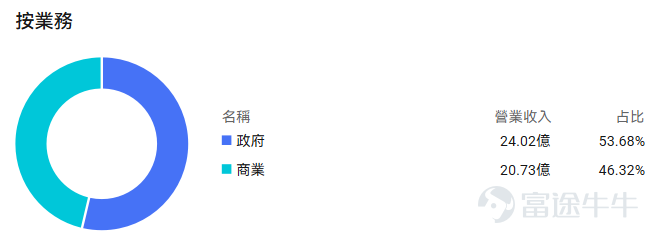
More than 50% of Palantir's revenue comes from government contracts, with clients covering at least 12 government departments including the U.S. Department of Defense, Army, and CIA.PLTR’s government business has maintained rapid growth in recent years, with annual growth exceeding 50% in 2025.

Data source: Futubull
In 2025, the company collaborated with Boeing's defense division to deploy AI solutions and signed a letter of intent on cybersecurity and AI cooperation with Poland's Ministry of Defense, continuously expanding its global defense footprint.In February 2026, the U.S. military used the large model Claude deployed through Palantir’s platform during military operations against Iran for intelligence analysis and military decision support. This signifies that Palantir has evolved from being a 'data analysis tool provider' to becoming an 'integrated platform for AI combat systems'.
AI, leveraging Palantir's platform, provided critical support to the US military in this operation:
According to the Wall Street Journal, during this conflict, large models rapidly processed massive amounts of data (involving approximately 2,300TB of data and 120 million intelligence fragments), generating situational awareness summaries. The efficiency was notably enhanced when processing Persian-language documents. AI also assisted in locating and cross-verifying targets by correlating multi-source information, significantly improving the accuracy of predicting operational windows. The US military also utilized the chain reasoning capabilities of large models to quickly simulate strike sequences and collateral damage.
Against the backdrop of escalating geopolitical conflicts, the trend towards deregulation of AI technology and its application in national security will accelerate. Palantir, as a pioneer and compliance benchmark in this field, has a business model that aligns perfectly with this historic turning point.
Military conflicts in the AI era are essentially information wars and data wars. The real-time integration, analysis, and decision-making on vast, multi-source intelligence (such as satellite imagery, signal interception, drone reconnaissance, and human intelligence) are key to achieving victory. This is precisely where Palantir's core capabilities lie.
When the market sells off tech stocks related to the economic cycle due to war panic, Palantir’s 'defense technology' attribute makes it a special kind of safe-haven asset. The drivers of its government business (defense budgets, geopolitical conflicts) differ significantly from most tech stocks (consumer demand, corporate IT spending).
The company’s market capitalization has surpassed$Lockheed Martin (LMT.US)$ traditional defense giants.Although some institutions have warned about its overvaluation, under the current geopolitical crisis, its unique scarcity and direct benefit logic may lead the market to grant it a higher 'risk premium'.
Ondas: Dedicated Communication and Drone Systems
If the starting point of the decision-making cycle in modern warfare driven by AI and data is intelligence, then drones are the frontier 'nerve endings' that pierce the fog of war and gather critical intelligence.It has become a central player in modern conflicts, particularly in the Russia-Ukraine war and confrontations in the Middle East, with its application evolving from tactical reconnaissance to strategic strikes, profoundly rewriting the rules of warfare.
Ondas Holdings operates through two main divisions:
Autonomous Systems: Provides autonomous drone systems and related services, with its Optimus system being the primary revenue driver.
Networks: Offers broadband wireless communication solutions based on SDR (software-defined radio), migrating traditional radio functions (such as modulation/demodulation, filtering, frequency switching, etc.) typically implemented by dedicated hardware into software. The aim is to overcome bandwidth limitations of traditional proprietary wireless networks and enable customers to deploy their own private wireless networks.
Although Ondas primarily targets commercial markets, its SDR technology has inherent military potential. In combat zones where traditional satellite or cellular communications may be disrupted or jammed, establishing dedicated communication networks is crucial for troop coordination and intelligence transmission.
Whether it’s Iran's swarm attacks using suicide drones or coordinated reconnaissance operations conducted by the US military, there is a need for communication networks capable of supporting large numbers of drone nodes self-organizing into networks, enabling inter-drone data sharing and collaborative task allocation rather than relying solely on a single link to a rear control station. This greatly enhances network survivability and mission resilience.
Ondas' drone systems, coupled with their dedicated communication links, can be used for border patrols, critical infrastructure monitoring, and reconnaissance in conflict zones. Whether directly utilized for military purposes or integrated by defense contractors into larger systems, demand for these capabilities could be heightened and stimulated by current events.
Last year, Ondas engaged in multiple mergers, acquisitions, and investments spanning ground systems, robotics, fiber-optic communications, underground intelligence, and mine-clearing robots, reflecting its determination to build a closed-loop defense platform.
Notably, the defense drone hardware manufacturer $AeroVironment (AVAV.US)$ rose nearly 20% at yesterday’s opening. However, following news during trading that the US Space Force project faced significant uncertainty (with its core contract worth approximately $1.4 billion potentially being rebid), the stock price plummeted and ultimately closed down over 17%.All the geopolitical tailwinds were completely offset by a single negative contract update, which also dragged down the entire sector. Ondas Holdings also formed a long upper shadow, ending with a gain of just over 5%.

Options strategy deployment
In a highly uncertain geopolitical environment, options are a sophisticated tool for managing risk and capturing potential gains.Fellow investors should be aware that event-driven market movements are extremely volatile, with direction heavily influenced by headline news. During this period, risk management is even more critical. If geopolitical risks escalate beyond expectations, it is possible that risk-off sentiment could weigh on all sectors.
(1) Palantir
The company’s stock has been continuously adjusting since December of last year and broke through the MA 250 bull-bear dividing line in early February. March 2 was a pivotal turning point, with net inflows reaching $388 million that day. Driven by institutional capital, the stock staged a strong rebound, repairing its technical chart. Observers can now watch whether the stock price can break through effectively and trade above the MA 250.

Palantir's implied volatility (IV) stands at about 60.14%, ranking in the 39th percentile over the past year, indicating a relatively moderate-to-low level.Palantir boasts a large market capitalization, strong liquidity, and an active options market. Its performance is closely tied to geopolitical developments and the company’s fundamentals (orders, earnings reports).
Aggressive bullish strategy:If you believe the situation in Iran will continue to escalate, or that Palantir is about to secure a major defense contract,you can directly purchase out-of-the-money or at-the-money call options with a maturity of 1-3 months. This move allows you to capitalize on significant stock price increases driven by event catalysts while limiting risk (premium). Note that this strategy suffers from both time decay and a decline in implied volatility.
Going long volatility:If you anticipate that the situation in Iran will cause significant volatility in PLTR’s stock price,but the direction is uncertain (it could soar due to a large contract win, or it could fall as the broader market shifts to risk aversion).You can simultaneously buy at-the-money call and put options with the same expiration date (a straddle), or buy out-of-the-money call and put options (a strangle). As long as the stock price shows a significant deviation by the expiration date—whether up or down—you can profit.

(The design images displayed on screen are for illustrative purposes only and do not constitute any investment advice or guarantees; market conditions fluctuate frequently, and the option prices shown do not represent real-world values.)
(2) Ondas
Ondas’ stock price surged last night, briefly breaking above the MA 50 but quickly retreating; yesterday, it still closed below the MA 50, facing a key directional decision at this level.

Ondas has a smaller market cap, higher stock price volatility, and relatively lower liquidity compared to Palantir, so options strategies need to be more cautious. The current implied volatility (IV) is 126.54%, which, although low relative to its own history, remains very high in absolute terms.
If you are bullish on Ondas, investors may consider deploying a bull call spread: buying a call option with a lower strike price while selling a call option with a higher strike price. Purchasing call options outright can be costly and suffer significant time decay. By selling the higher strike price option, you can reduce overall position costs and improve the probability of reaching the breakeven point.

(The design images displayed on screen are for illustrative purposes only and do not constitute any investment advice or guarantees; market conditions fluctuate frequently, and the option prices shown do not represent real-world values.)
Finally, here's a small perk for fellow investors—welcome to claim it!Options Beginner Pack
This event is exclusively for invited HK users, click to learn moreDetailed event rules >>
Futu's simulated trading challenge is now open for registration! Zero cost, zero risk, and you can win stock cash vouchers!Click to learn more

Disclaimer
This content does not constitute any offer, solicitation, recommendation, opinion, or guarantee of any securities, financial products, or tools. The risk of loss in buying and selling options can be substantial. In some cases, your losses may exceed the initial margin amount deposited. Even if you set contingent orders, such as 'stop-loss' or 'limit' orders, these may not necessarily prevent losses. Market conditions may make these orders unexecutable. You might be required to deposit additional margin within a short period. If you fail to provide the required amount within the specified time, your open positions may be liquidated. However, you will still be responsible for any account deficit arising from this. Therefore, before trading, you should study and understand options and carefully consider whether such trading suits you based on your financial situation and investment objectives. If you trade options, you should be familiar with the procedures upon exercising options and at expiration, as well as your rights and obligations when exercising options and at expiration.
Risk Disclaimer: The above content only represents the author's view. It does not represent any position or investment advice of Futu. Futu makes no representation or warranty.Read more


Comments (9)
to post a comment
72
96