
Trump to launch trade investigation, another tariff war on the way?

Why the overturn of Trump's blanket tariff might put pressure on long-term bonds?
Background: IEEPA invalidation and Trump’s countermeasures trigger market volatility
The U.S. Supreme Court ruled that the 'International Emergency Economic Powers Act' (IEEPA) lacked clear legal authorization, thus not allowing President Trump to unilaterally impose broad tariffs (02/20). This ruling caused all tariffs previously reliant on IEEPA to immediately become invalid, including trade terms negotiated with multiple countries. The Trump administration quickly turned to other statutory tools as countermeasures, signing an executive order invoking Section 122 of the '1974 Trade Act' (International Payment Issues Clause), imposing a 15% tariff on global imports (the maximum rate allowed by this clause, previously announced at 10%), effective from February 24 for 150 days. Certain products such as critical minerals and energy could be exempted. This series of rapid changes was seen by the market as a new source of global trade uncertainty; following the announcement, risky assets (such as Bitcoin) fell, while safe-haven assets (such as gold) rose, and the bond market also experienced significant fluctuations.
Excessive measures: "15%" is just a stopgap measure; the real focus for the White House’s revenue generation lies in the restructuring of tariffs.
After the expiration of IEEPA, Trump turned to Section 122 as the primary alternative. This clause addresses international balance of payments imbalances and does not require investigation by federal agencies, allowing for rapid implementation. However, it caps the tax rate at 15%, limits its duration to 150 days, and requires Congressional approval for any extension. Once the 150-day period expires, if Congressional support is not secured, other provisions must be utilized, such as:
– Section 232 (National Security Threat)
– Section 201 (Domestic Industry Injury)
– Section 301 (Trade Discrimination or Violation of Rights)
These alternative tools generally require investigative procedures, are slower to implement, and offer less flexibility, making them difficult to fully replace IEEPA’s unilateral fast-pressure capabilities.
Perspective: The White House’s "real issue" – Tariff revenue loss exacerbating fiscal deficit pressures
1. For risk assets, there may be short-term shocks, but long-term fundamentals will prevail:
Currently, most countries have reached trade agreements with the US. According to Bloomberg estimates, if the court strikes down IEEPA tariffs, the effective US tariff rate would drop from 13.6% to 6.4%, increasing uncertainty; if Section 122 maintains the 15% rate, the effective tariff could rebound to around 12%, close to the original level. Compared to IEEPA, these alternative tools impose more restrictions, weakening Trump's "repeated tariff pressure" negotiation leverage and stabilizing policy expectations, marginally improving the corporate decision-making environment.
2. However, the "real issue" remains unresolved: the core problem lies in the marginal increase in deficit and borrowing needs.
The core impact lies in the significant anticipated loss of tariff revenue. If the previous IEEPA tariff revenue is retroactively overturned, approximately $175 billion will fall into dispute according to HSBC estimates; simultaneously, future revenues will also decline. However, substantial expenditures already committed (such as stimulus policies like the "Big and Beautiful Bill") still need to be honored. Under the dual pressures of declining revenues and rigid spending, fiscal deficits are expected to widen further, potentially forcing the government to issue more long-term treasury bonds (restarting the printing press). An increase in the supply of long-term bonds would depress prices, pushing up expectations for long-end yields.
Strategy Recommendation: Slow Rate Cuts Favor 'Short-Duration Bonds' with Lower Volatility
Overall, while raising tariffs to 15% can temporarily sustain the trade agenda, it exacerbates concerns over fiscal deficits in the medium to long term, placing pressure on long-duration bonds. By contrast, short-end yields exhibit relatively higher certainty (supported by the Fed’s relatively accommodative monetary policy), offering lower volatility and income advantages. In the current environment of slow rate cuts and ongoing uncertainty, we recommend allocating short-term bonds as a defensive strategy to hedge against long-end risks.
Disclaimer
Unless otherwise stated, all information contained in this document is current as of the publication date.
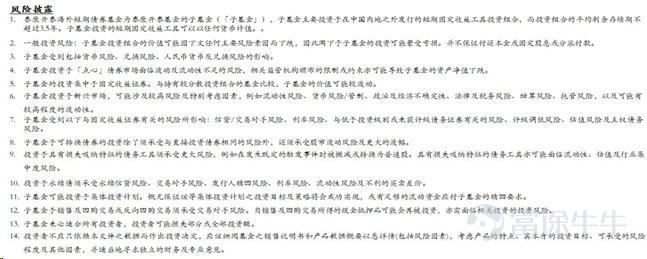
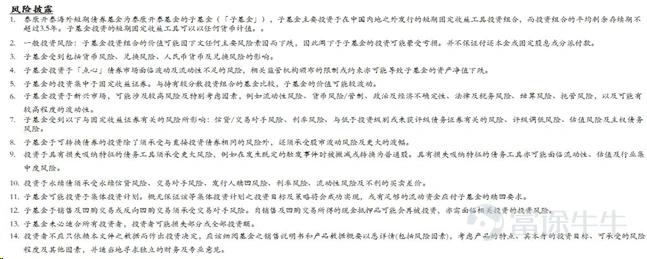
The above content is for reference purposes only and is intended for general review by clients of Taikang Asset Management (Hong Kong) Limited ('Taikang Hong Kong'). It does not consider any specific investment objectives, financial situation, or particular needs of any specific recipient and should not be considered as advice or an offer or solicitation to buy any investment products.
Any research or analysis used in the preparation of this document was acquired by Taikang Hong Kong for its own use and purposes, and is sourced from what is considered reliable as of the date of this document. However, no representation or warranty is made regarding the accuracy or completeness of information originating from third parties.
Any forecasts or other forward-looking statements regarding future events or performance may not be indicative and could differ from actual events or results. Any opinions, estimates, or predictions may be changed at any time without prior notice. Taikang Hong Kong shall not be liable for any losses arising from the use of this document.
The views, recommendations, advice, and opinions expressed in this document do not necessarily reflect the position of Taikang Hong Kong and may be changed at any time without notice. Taikang Hong Kong has no obligation to provide updates on any related information or opinions.
This document may not be reproduced, distributed, or transmitted to anyone without the prior written approval of Taikang Hong Kong. This document and the information contained herein may not be distributed or published in any jurisdiction where such distribution or publication is prohibited. If you are not the intended recipient of this document, please refrain from reading it further and destroy it immediately.
Investment involves risks. Past performance is not indicative of future results.
This document is issued by Taikang Hong Kong and has not been reviewed by the Securities and Futures Commission. You should consult your investment advisor before making any investment decision.
Risk Disclaimer: The above content only represents the author's view. It does not represent any position or investment advice of Futu. Futu makes no representation or warranty.Read more


Comments
to post a comment
10
2