
How to view the post-holiday market trend in Hong Kong stocks?

Tencent Breaks Below All Moving Averages: Technical Considerations for Bull Certificate Recovery Price at 513 with Buffer Space
As of February 13, 2026, Tencent (00700) was trading at HKD 527, within a critical range for the recent adjustment wave. Market news shows that JPMorgan issued a report on February 11 stating that Tencent is most likely to benefit from the new iteration of DeepSeek, as embedding AI into high-frequency consumer products will unlock platform economic benefits. However, Bernstein’s report on the same day pointed out that the market is concerned about Tencent falling behind in chatbot development. Year-to-date, its share price has fallen 11%, and valuation pressures have mounted. Amidst the debate over whether Tencent is a 'leader' or 'laggard' in AI narratives, combining technical levels with derivatives terms will be key for short-term trading strategies.
Technical Analysis and Key Levels
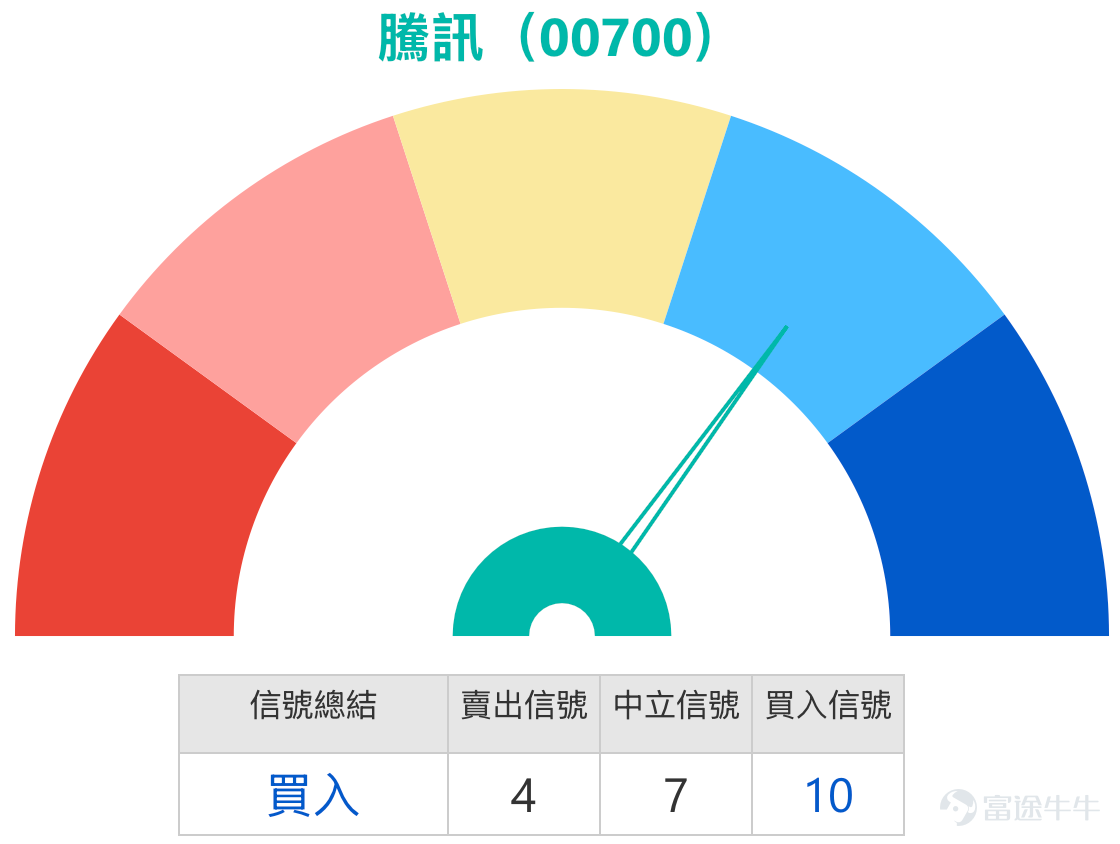
Technical data from February 12 indicates that Tencent exhibits a clear coexistence of a 'downward trend' and 'oversold indicators.' The share price has broken below all key short-term moving averages: MA10 at HKD 564.4, MA30 at HKD 598.47, and MA60 at HKD 604.32, with the moving average system showing a bearish alignment. However, multiple oscillation indicators are signaling strong bottom indications: RSI dropped to 25, entering an oversold zone; Williams %R and stochastic oscillators also indicate oversold conditions and issue buy signals; the VR volume ratio suggests 'oversold, potential bottom formation.' The overall technical indicator signal is 'buy,' with strength level 10, reflecting accumulating short-term rebound momentum.
In terms of support levels, the first support is seen at HKD 520, close to Simon's initial support level of HKD 521 mentioned in the February 4 [Hong Kong Stock Podcast], and also near the lower edge of the recent high-volume trading zone. The second support is at HKD 477, corresponding to the key承接区 (support zone) listed in February 12 data, close to the middle Bollinger Band on the monthly chart around HKD 501. For resistance levels, the first resistance is at HKD 570, representing prior small platform bottom pressure near MA10. The second resistance at HKD 605 is near MA60 and the late January rebound high, serving as a pivotal point for a potential short-term trend reversal.

Review of Warrants and Analysis of Bull-Bear Certificate Advantages
Reviewing the four bearish products mentioned on February 10, under the backdrop of a 2.81% decline in the underlying stock over the following two trading days, derivative performance fully demonstrated their efficiency in tracking the underlying stock along with leverage characteristics. UBS Group Bear Certificate 58047 recorded a 34% increase, while Bank of ** Certificate 57847... $BI#TENCTRP2812D.P (57847.HK)$ rose 31%, UBS Put Warrant 21984... $UBTENCT@EP2606A.P (21984.HK)$ Up 20%, BOC put warrant 23122 $BITENCT@EP2606A.P (23122.HK)$ Up 24%. From this set of data, the fundamental differences in product structure between bull-bear certificates and CBBCs can be clearly seen.

The advantage of bull-bear certificates lies in their price movements being nearly linearly related to the underlying stock, with no time decay and unaffected by changes in implied volatility. For short-term trades with clear directional views, bull-bear certificates offer higher actual leverage while maintaining price transparency. Taking bear certificates as an example, the significant rise over the two days was much higher than that of put warrants, precisely because there is no daily time value erosion. As for CBBCs, although they also have a leverage effect, their pricing includes two major variables: implied volatility and time value – which is why some investors find that even if the direction of the underlying stock is correct, the increase in CBBCs can sometimes still be lower than expected. These are not speculative instruments but structured products with rigorous pricing models; investors need to understand the delta and implied volatility sensitivity of CBBCs to make appropriate choices.
Current Product Deployment Strategy
Considering the first support level at $520 and the first resistance level at $570, those optimistic about a rebound may look at reasonably priced mid-range bull certificates. JPMorgan bull certificate 59338 has a stop-loss price of $513, the lowest premium, with actual leverage of 19.1 times; UBS Group bull certificate 62576 has a stop-loss price of $515, with actual leverage of 19.8 times. Both stop-loss prices are below the first support level of $520, providing a buffer distance of about $15, consistent with Simon's principle emphasized on February 4th in [HKEX Podcast] that 'choosing products with slightly farther stop-loss levels can improve safety margin',effectively reducing the risk of forced stop-loss in volatile markets. Regarding call warrants, Morgan Stanley call warrant 14647 $MSTENCT@EC2609A.C (14647.HK)$ and HSBC call warrant 14683 have exercise prices of $600.5, close to the second resistance level at $605, with leverage reaching 7.4 times and 7.2 times respectively, and implied volatility at the lowest among similar products, making them suitable for capturing the rebound wave after the share price recovers from $570 towards $605.
For bearish strategies, JPMorgan put warrant 24965 $JPTENCT@EP2606B.P (24965.HK)$ and BOC put warrant 23122 have exercise prices of $499.8, corresponding to above the second support level at $477, with leverage reaching 8 times and 7.9 times respectively. If the stock price breaks below the $520 level, the delta of these near-the-money put warrants will increase, accelerating price movements. Among bear certificates, JPMorgan bear certificate 54571 $JP#TENCTRP2812G.P (54571.HK)$ has a stop-loss price of $635, relatively low premium, with actual leverage of 6.3 times; BOC bear certificate 60959 $BI#TENCTRP2812A.P (60959.HK)$The call price is 636.8 yuan, with an actual leverage of 6 times. Both call prices are much higher than the second resistance level at 605 yuan, maintaining sufficient buffer space, making it suitable for investors who believe that the stock price will be constrained by resistance and continue its adjustment pattern.
800700

Interactive Questions:
Do you think Tencent will first test the support at 520 yuan in the short term, or rebound to challenge the resistance at 570 yuan?
When deploying a technical rebound, would you choose bull certificates that don’t suffer from time decay, or call warrants with lower implied volatility? Feel free to leave a comment sharing your strategy and considerations.
Disclaimer: This article does not constitute any investment advice.
This article is for reference only and does not constitute any investment advice. The market data, opinions, and analysis contained herein may change at any time without prior notice. We are not responsible for any loss or damage caused by reliance on the information in this article. Technical analysis only shows whether certain technical conditions are met; a comprehensive assessment of asset performance should combine other data and should not solely rely on this article to make trading decisions. Please note that past performance is not indicative of future results. Follow Jenny's insights on Hong Kong stock warrants for more professional analysis.
#Tencent Stock Price #Technical Analysis #Support and Resistance Levels #Hong Kong Stock Podcast #RSI Oversold #Bollinger Bands #Moving Average System #Bull Certificate Redemption Risk #Implied Volatility #Warrants Bull and Bear Certificate Advantages
Risk Disclaimer: The above content only represents the author's view. It does not represent any position or investment advice of Futu. Futu makes no representation or warranty.Read more

Comments
to post a comment
1
9