
As geopolitical risk premiums fade and Waller turns hawkish, when will precious metals hit bottom?

AceCamp Original | Analysis of Recent Drivers of Silver Price Movements and Outlook for Q1 2026: Significant Increase in Volatility
This article was first published on the AceCamp official website on February 10, 2026, offering fresh information and a quicker perspective!
Summary
1. Drivers of significant fluctuations in silver
2. Analysis of short squeezes in silver futures
3. Silver Q1 2026 outlook
2. Analysis of short squeezes in silver futures
3. Silver Q1 2026 outlook
1. Drivers of significant fluctuations in silver
Recently, silver prices have experienced roller-coaster movements with sharp declines from highs. Silver futures have witnessed multiple limit-downs, as London silver rapidly fell from $120 per ounce to $64. The main contract for domestic silver also dropped from 32,000 yuan per kilogram to around 18,000 yuan. The immediate trigger was the news that Kevin Warsh would succeed as the Federal Reserve Chair, which stirred market expectations that Fed policy might shift towards tightening, leading capital markets to quickly price in hawkish monetary tendencies. Additionally, after nearly half a year of sustained gains, bullish investors had incentives to take profits. Against this backdrop, profit-taking by earlier bulls triggered speculative selling, compounded by factors such as stagnation in U.S. equities, recent margin increases, and position limits imposed by exchanges. Sentiment dominated the flash crash in prices.
However, logically speaking, the change in the Fed Chair is essentially a personnel shift rather than a fundamental policy change. The Trump administration’s core demand remains monetary easing and economic liquidity. Even if the new chair has a hawkish background, they will ultimately conform to Trump's policy direction, likely continuing an accommodative stance. Although Warsh has a hawkish past, upon assuming office, he will likely partially align with interest rate cuts rather than completely defy Trump’s demands, primarily due to the dual logic of political balance and practical constraints.
In terms of his evolving stance, Warsh opposed quantitative easing and advocated for balance sheet reduction in his early years, but since 2025, he has publicly shifted to a pragmatic tone, stating that failing to cut rates poses the biggest threat to the Fed's credibility, aligning superficially with Trump’s call for interest rate cuts. This reflects both a compromise with the political environment and a response to U.S. debt pressures. Currently, federal debt has surpassed $38.5 trillion, and high interest rates will exacerbate government financing costs. Even a hawkish stance must weigh fiscal sustainability.
The market's simplistic attribution of the sharp decline in asset prices like silver and gold solely to the replacement of the Fed Chair is overly one-sided. If gold were priced at $3,500 and silver at $50, even the most hawkish Fed Chair would not have such an exaggerated impact.
2. Analysis of short squeezes in silver futures
This round of short squeezes became evident in October 2025, coinciding with the start of the downward trend in the gold-to-silver ratio. In October, inventory shortages were reported in the London spot market, primarily due to earlier tariff threats by Trump and the US Geological Survey's April list of critical minerals subject to a Section 232 investigation, which led to market concerns that the US might impose up to a 35% tariff on strategic metals like silver and copper. During the second and third quarters of 2025, large quantities of physical silver were transported from London and other markets to COMEX warehouses, eventually causing the London spot price of silver to trade at a premium of over 3% compared to COMEX in October, with lease rates surging above 100%. To meet delivery obligations, short sellers in the London silver market had to urgently air-freight silver ingots from the US.
The recent round of silver short squeezes since November 2025 is mainly related to structural changes in COMEX futures deliveries. According to COMEX data during months with large silver deliveries, the pattern has consistently been one where clients of dealers are net buyers while proprietary trading desks are net sellers controlling the market. However, as December approached, this phenomenon shifted within the delivery structure. As the December contracts neared expiration, dealers needed to buy for delivery to cover these positions, leading to a decline in COMEX deliverable inventories.
Since 2026, with shifts in year-end capital flows, some institutions have needed to rebalance their asset allocation, potentially driving proprietary trading desks to engage in buying for silver delivery. The most critical factor remains that as prices continue to rise, an increasing number of overseas capitals have joined the soft squeeze. By exploiting supply-demand mismatches across different markets, through massive purchases for delivery and stockpiling physical silver, large amounts of physical silver have been transferred into hidden inventories, artificially exacerbating the illusion of supply tightness, thereby significantly pushing prices higher and forcing shorts to exit at a loss.
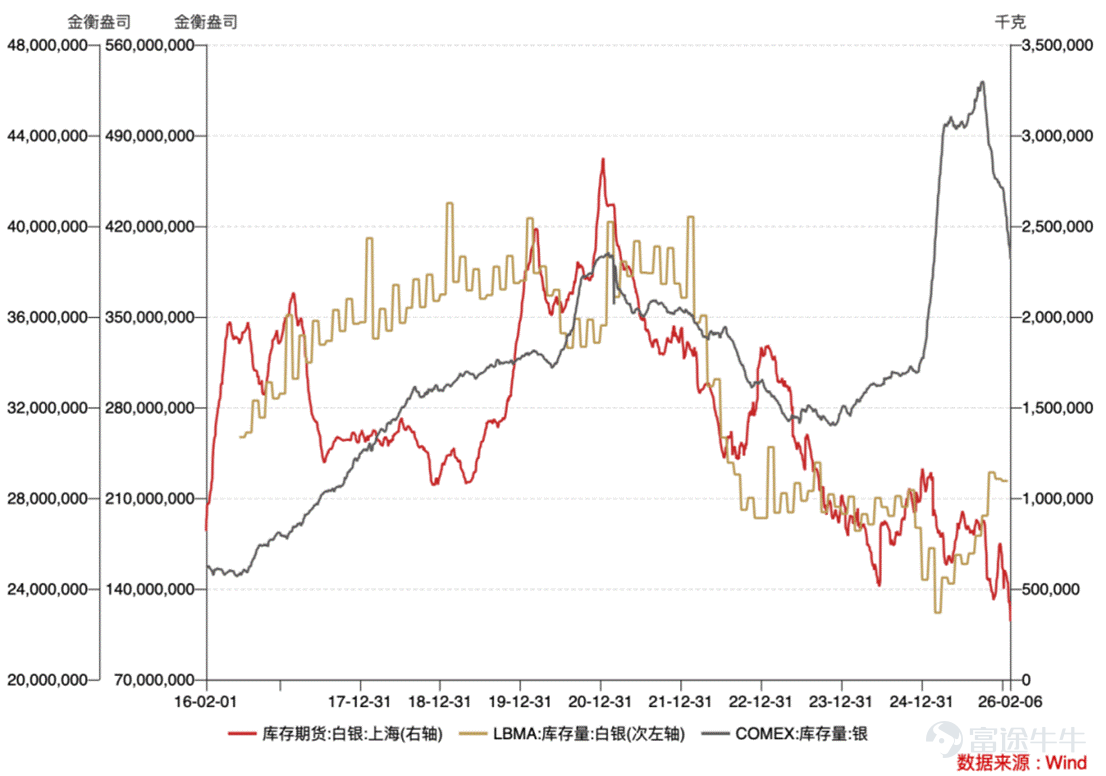
As of February 6, SHFE and COMEX deliverable silver inventories continued to decline, with COMEX registered warehouse receipts possibly insufficient to cover delivery needs before March, leaving shorts still facing certain risks. According to COMEX data, on February 5, 2026, open interest in the March 2026 contract was approximately 420 million ounces, while COMEX registered silver inventory was around 100 million ounces. If 25% of the contracts expire and require delivery in March 2026, COMEX will need about 100 million ounces; if the delivery rate remains consistent with January-February levels, market demand could reach 200-300 million ounces, indicating that inventories remain relatively tight. Domestically, according to Shanghai Metals Market data, domestic spot premiums have again risen to highs of 2,000-3,000 yuan per kilogram, with strong speculative intent and reluctance to sell among domestic traders. Short-term prices are driven by factors such as overseas geopolitical developments, macro policy trends, and delivery demands, making market sentiment sensitive and volatility amplified.

Data source: Wind, drawn by the author
3. Q1 2026 Silver Outlook
Silver price movements in Q1 2026 will feature high volatility driven by delivery dynamics in the short term, supported by supply-demand fundamentals and macro logic in the medium term. The core conflict lies in the tug-of-war between delivery risks amid tight inventories and long-term support from macro easing policies, with overall trends showing initial fluctuations followed by stabilization and recovery.
Q1 2026 is a peak delivery season for COMEX and SHFE, but current COMEX registered silver warehouse receipts cannot cover March delivery needs, making this contradiction the key driver from late January to mid-February, i.e., before the March delivery month. If shorts cannot supplement physicals before delivery, it may trigger a short squeeze, pushing London silver prices to quickly rebound to the $90-100 per ounce range. However, after the earlier plunge, highly leveraged funds have not yet fully unwound, with CME margin requirements remaining high; a stampede post-short squeeze could also trigger a temporary pullback, significantly amplifying volatility at the start of the quarter.
Specifically, within the short term (1-3 months), prices will remain in a consolidation phase, with London silver trading in the core range of $60-100 per ounce and Shanghai silver between 17,000-24,000 yuan per kilogram. Subsequent attention should be paid to sentiment repair and regulatory developments; if CME suspends margin hikes or ETF redemptions stop, it could trigger a technical rebound. However, if silver-reduction technologies are implemented faster than expected, prices may test the $60 support level.
In the medium to long term, silver is likely to strengthen gradually. Precious metals may see pullbacks in the short term due to market sentiment and overbought conditions, but the foundation for a bull market remains intact over the longer term. Trump’s policies focus on trade protectionism and debt expansion, which will exacerbate US economic imbalances in the medium to long term. Tariff policies will push domestic inflation higher, while debt expansion weakens the credibility of the dollar. Under dual pressures, the dollar is likely to enter a slow depreciation channel and unlikely to strengthen significantly again. Gold, as a non-sovereign credit asset, will benefit long-term from the weakening of dollar credibility and central bank gold purchases, even if affected by liquidity fluctuations in the short term, its long-term pricing center will continue to rise.
Risk Warning: The above represents only personal views and does not constitute any investment advice. Please bear the risks on your own.
Risk Disclaimer: The above content only represents the author's view. It does not represent any position or investment advice of Futu. Futu makes no representation or warranty.Read more


Comments
to post a comment
6