
Earnings reports from the top two wafer companies are coming! Will they ignite a rally in chip stock

SMIC Short-term Analysis: After the earnings report, the stock price is seeking direction within a key technical range
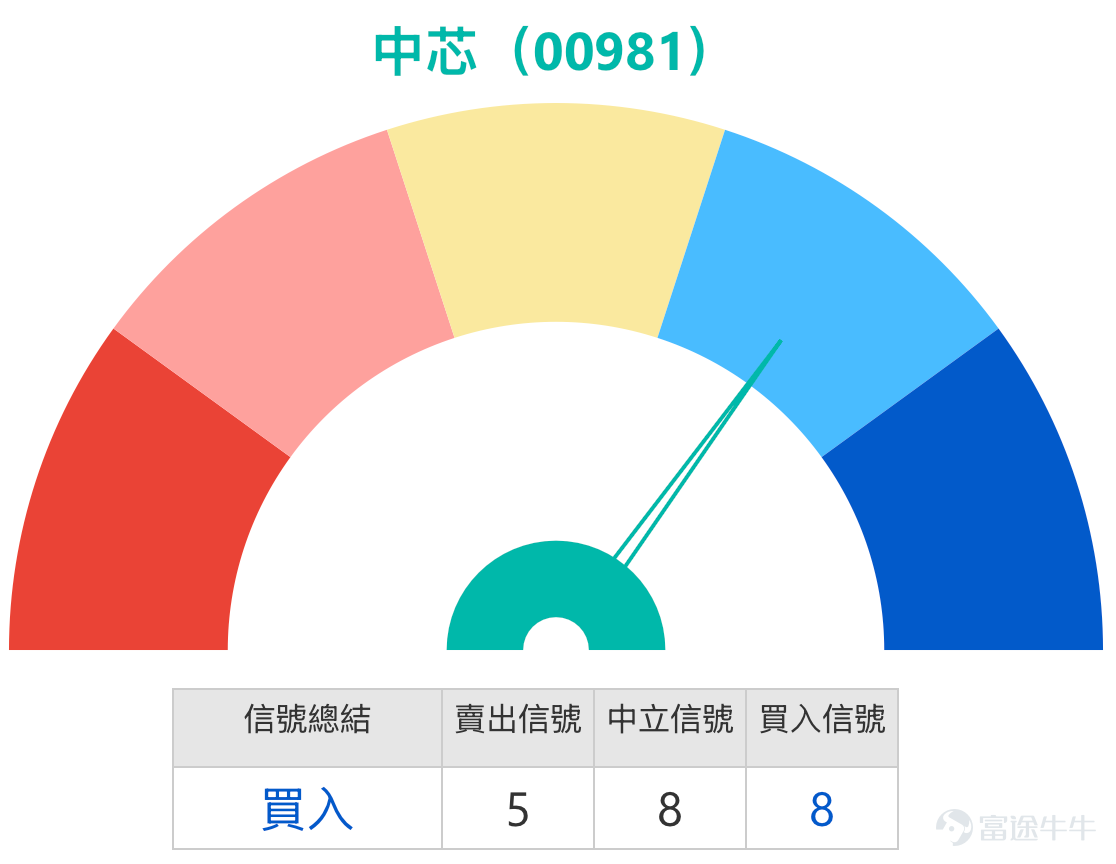
$SMIC (00981.HK)$ Technical analysis: The stock price is stabilizing above key moving averages, with the short-term trend leaning towards neutral.
As of February 10, 2026
$SMIC (00981.HK)$ The stock price closed at 70.35 yuan. Based on technical chart analysis, it is currently at a critical technical inflection point. At present, the latest closing price is consolidating around several important moving averages. It is slightly below the MA10 (72.0 yuan) and MA30 (74.48 yuan), but marginally above the MA60 (71.70 yuan). This indicates that while the short-term trend faces slight pressure, the mid-to-long term foundation remains intact. The 14-day RSI indicator on the daily chart stands at 47, within the neutral zone, showing neither overbought nor oversold conditions. Overall, multiple technical indicators suggest a 'neutral' signal, reflecting a temporary balance between buyers and sellers after prior volatility, as the market awaits new catalysts to break this pattern.
Key Support and Resistance Analysis: Focusing on the critical battle between 68.2 yuan and 75 yuan
In the current market environment, clear key technical levels are the cornerstone for formulating short-term strategies.
The support area below is the first line of defense for the market. According to the analysis, 68.2 yuan forms the primary near-term support level, a critical observation point for determining whether the short-term correction will deepen. If this line of defense is breached, it may further drop to the more significant 62.4 yuan region, which is considered the core support for assessing the depth of the stock price adjustment.
The resistance area above determines the space and effectiveness of a rebound. The 75 yuan level represents the most immediate resistance. For the stock to reverse its short-term downtrend, it must break through this position effectively. If successful, the next stronger resistance will appear near 80.1 yuan, which is not only an important technical threshold but also close to the high point area in January this year. Success here is key to determining whether the medium-term trend can turn bullish again.

Market View Integration: Review and Strategy Divergence After Earnings Release
In the February 9th [Hong Kong Stock Podcast], host Simon pointed out that as the earnings disclosure period approaches, there has been a noticeable divergence in market strategies. Some investors who are long-term optimistic about the company's fundamentals have chosen to hedge risks by purchasing bearish warrants to protect against potential short-term volatility triggered by the earnings report, demonstrating a 'long-term optimism with short-term defense' cautious strategy. This view aligns closely with the market sentiment ahead of the earnings release.
According to the schedule, SMIC officially disclosed its Q4 and full-year 2025 earnings after trading hours on February 10. Prior market analysis suggested that due to factors like rising depreciation costs, the company's Q4 gross margin might face sequential pressure, a key financial metric that investors need to watch. The final performance of these results will be a significant variable for the market to reassess the company’s value and break the current technical balance. Notably, during the past period, some institutional investors (such as northbound capital) adjusted their holdings in SMIC, which also impacted the market's capital flow and sentiment to some extent.
Review of Warrant Products: Leveraging Effects in Rebound Situations
Reviewing the warrant and bull/bear certificate products mentioned on February 6, it is clear that following the subsequent two-day rally of 5.40% in the underlying stock, related bullish derivatives recorded significant gains, fully demonstrating their leverage characteristics. Among them, UBS Group's bull certificates surged by 48%, HSBC bull certificates rose by 40%, while UBS call warrants and Bank of China call warrants increased by 26% and 23%, respectively. This performance verifies that when the underlying stock shows clear directional movement, derivatives can offer more efficient price performance.

Product Terms Analysis and Strategic Deployment under Current Market Conditions
Considering SMIC's stock price oscillating within a key range and the fundamental background of the recently released earnings report, the following outlines product strategies for investors with different market perspectives. All analyses correlate product terms with the aforementioned key technical levels.
For investors who believe the earnings report will have a positive impact and that the stock price may rise to challenge resistance levels, they can focus on bullish products. In terms of call warrants, UBS Group’s call warrant (20322) with a strike price of 80.05 yuan $UB-SMIC@EC2606B.C (20322.HK)$ and Bank of China’s call warrant (20089) $BI-SMIC@EC2607A.C (20089.HK)$ are worth noting. This strike price nearly coincides with the second resistance level at 80.1 yuan. If investors believe that earnings performance can drive the stock price to break through the first resistance level at 75 yuan and target the 80 yuan range, such products represent a more aggressive choice. For bull contracts, UBS Group’s bull contract (62288) $UB#SMIC RC2706A.C (62288.HK)$ and HSBC’s bull contract (62371) $HS#SMIC RC2607P.C (62371.HK)$ offer a higher margin of safety. The forced call price is set significantly below key support levels of 68.2 yuan and 62.4 yuan, providing ample buffer space for potential stock price fluctuations, making them suitable for investors optimistic about a rebound but wishing to strictly control forced call risks.
For investors who think there could be a 'profit-taking' pullback after the earnings release or that the stock price still needs time to digest earlier pressures, they can focus on bearish products. In terms of put warrants, UBS Group’s put warrant (21404) and Bank of China’s put warrant (21097) with a strike price near 68.8 yuan $BI-SMIC@EP2605A.P (21097.HK)$ are options to consider. This strike price is close to the first support level at 68.2 yuan. If investors believe the stock price might test this support, such products can serve as hedging tools or expressions of their view. For bear contracts, UBS Group’s bear contract (63354) with a forced call price at 81 yuan $UB#SMIC RP2704D.P (63354.HK)$ and Societe Generale’s bear contract (59399) with a forced call price at 80 yuan provide greater safety margins. These two forced call prices are well above the current stock price and the first resistance level at 75 yuan, meaning the risk of hitting the forced call price is relatively low unless there is a strong one-sided surge in the stock price, making them suitable for expressing the view that upside potential is limited.

#LearnWarrantsAndBullBearCertificatesWithJenny# Key Analysis: What does 'time decay' mean in warrants?
When trading warrants (also known as call options), 'time decay' is a crucial concept. Simply put, the value of a warrant consists of two parts: intrinsic value and time value. As the expiration date approaches day by day, even if the underlying stock price remains unchanged, the time value of the warrant will naturally erode like ice melting in the sun. This reduction in value is what we call time decay.
The rate of time decay is not uniform; it is influenced by multiple factors such as remaining time and the degree to which the option is in or out of the money. Typically, the closer it is to the expiration date, the faster the time value decays. Therefore, when choosing a warrant, investors need to balance leverage, out-of-the-money levels, and time to expiration. For example, UBS Group's call warrant (20322) and Bank of China’s call warrant (20089), mentioned later in the article, usually have medium-term durations of several months. Compared to so-called 'end-game' warrants with only weeks left until expiration, their initial time decay speed is relatively slower, giving the underlying stock price more time to move favorably. Understanding time decay helps investors avoid situations where they ‘predict the right direction but still lose money’—for instance, when the underlying stock rises slightly but fails to reach the target in time, causing the warrant's price to fall due to the passage of time.
Interaction and Reflection
In your opinion, given the current price level and fundamental background, which side’s strength will dominate the short-term trend? And how should we use the characteristics of tools to match our market outlook?
Please consider and share:
1. In light of the new information post-earnings report, are you currently more focused on the rebound opportunity after the stock price found support at HKD 68.2, or are you more cautious about the risk of it failing to break through the resistance level at HKD 75 and falling again?
2. When expressing the above market views, which tool characteristic do you think is more important right now: the high leverage and clear forced-stop risk of bull/bear contracts, or the fact that warrants, while having no forced stop mechanism, must endure time value decay?
We welcome you to share your insights and logic in the comments section. The collision of market views helps us examine risks and opportunities more comprehensively, but please always remember that any investment decision must be based on independent research and careful evaluation.
Disclaimer: This article does not constitute any investment advice.
This article is for reference only and does not constitute any investment advice. The market data, opinions, and analyses contained herein may change at any time without prior notice. We assume no responsibility for any loss or damage resulting from reliance on the information provided in this article. Technical analysis only indicates whether certain technical conditions are met. A comprehensive evaluation of asset performance should be conducted by integrating additional data. Trading decisions should not be made solely based on this article. Please note that past performance is not indicative of future results.
#SMIC #TechnicalAnalysis #SupportResistanceLevels #Warrants #BullBearCertificates #TimeDecay #EarningsReports #Semiconductors #HongKongStocks #DerivativesStrategy
Risk Disclaimer: The above content only represents the author's view. It does not represent any position or investment advice of Futu. Futu makes no representation or warranty.Read more

Comments
to post a comment
1
11