
Around 80% of new listings rose on their debut in 2026; can this strong performance be sustained?

Estun's Second Push for a Hong Kong Listing: Breakthroughs and Concerns of the 'Top Player' in Industrial Robotics

The leading industrial robotics company is once again at the doorstep of the Hong Kong Stock Exchange.
Following the expiration of its initial filing in June 2025, on January 15, Estun Automation (hereinafter referred to as 'Estun') made another attempt to list on the Hong Kong Stock Exchange. This domestic industrial robotics leader, which has already been listed on the A-share market for a decade, is seeking to make further progress in the capital markets.
However, upon closer inspection of this 33-year-old industry giant, concerns are hidden beneath its high-growth veneer.
From 2022 to 2024, the company's revenue marginally increased from 3.881 billion yuan to 4.009 billion yuan, while net profit experienced a dramatic plunge, dropping from a profit of 184 million yuan to a staggering loss of 818 million yuan in 2024.
Not until the first three quarters of 2025 did it manage to barely achieve a slight profit for the full year due to strong performance in the fourth quarter. Performance volatility has become an unavoidable challenge in its journey toward listing on the Hong Kong stock market.
Standing once again at the gates of the Hong Kong Stock Exchange, Estun holds two key cards.
One is the entry ticket to the new energy sector: its photovoltaic layout robots have entered LONGi’s supply chain, and in the lithium battery sector, it has secured 90% of new production line orders from BYD. Its robots have replaced Germany's KUKA in Geely's Zeekr factory workshop. The other card is a future bet on humanoid robots.
Market sources suggest that the focus of this fundraising round will be overseas acquisitions. Potential targets include a hidden champion in a niche field in Italy, with an acquisition price potentially reaching 500 million euros.
In fact, the entire industry landscape is quietly being reshaped. Global giant Yaskawa Electric will cut prices for its general models in China by 15% in 2024, while KUKA has introduced a 'three-year warranty' policy targeting the weak points of domestic manufacturers.
Meanwhile, domestic newcomers like JAKA and Loxin are aggressively expanding production with the backing of capital. Expanding their reach and enhancing the competitiveness of various product lines has become an inevitable trend.
The secondary listing is bound to be a do-or-die battle.
As dusk fell, the robotic arms at Estun’s Suzhou factory continued to operate tirelessly. These precision devices can perform operations at the 0.01-millimeter level but cannot measure the depth of the capital market.
The outcome of this breakout battle concerning the fate of domestically produced robots remains uncertain.
1. The 'double-edged sword' behind high growth
In 2025, the industrial robot market is undergoing a deep adjustment; while the overall growth trend in the industry is clear, performance differentiation among companies is further intensifying.
Zhang Yunming, Vice Minister of the Ministry of Industry and Information Technology, stated at a press conference held by the State Council Information Office that China's industrial robot production increased by 28% year-on-year in 2025.
However, when it comes to the performance of leading enterprises, there hasn't been sufficient long-tail effect.
According to Frost & Sullivan data, Estun ranked sixth globally in revenue among industrial robot manufacturers in 2024, and its domestic shipments exceeded foreign-funded firms for the first time in the first half of 2025, maintaining the top position locally for several consecutive years.
But even as the undisputed leader, Estun's profitability performance has not been impressive.
From 2022 to the first three quarters of 2025 (hereinafter referred to as the 'reporting period'), the company's revenue was 3.881 billion yuan, 4.652 billion yuan, 4.009 billion yuan, and 3.804 billion yuan, respectively.While the growth trend is not particularly strong, the profitability performance is even less optimistic.

Net profits for the same period were 184 million yuan, 134 million yuan, -818 million yuan, and 29.7 million yuan, respectively,barely standing on the edge of turning a profit.
Regarding the performance that does not match the brand value and status, ESTUN attributed it mainly to the decline in gross margin and the increase in operating expenses. The rise in sales, administrative, and R&D expenses is primarily due to strategic investments in the workforce.
As for the negative year-over-year profit in 2024, ESTUN attributed it to the decrease in revenue and gross margin, impairment losses on intangible assets and goodwill, and the increase in operating expenses.
In terms of gross margin data, during the reporting period, the company's gross margins were 32.9%, 31.3%, 28.3%, and 28.2%, respectively.
Amidst the increasingly competitive landscape in major industries like automotive, price wars have significantly impacted companies within the supply chain.
The prospectus shows that during the reporting period, revenue from the top five clients surged from 16.4% to 37.2%. Specifically, the largest client’s revenue share skyrocketed from 5.5% to 18.0%,with the top two clients contributing a combined revenue share of 31.4% in the first three quarters of 2025.
This issue of customer concentration not only affects the stability of the company's operations but also conceals financial and capital risks.
The prospectus information shows that Estun’s days sales outstanding for accounts receivable and notes receivable increased from 135 days in 2022 to 160 days in 2023, and further to 215 days in 2024. During the reporting period, Estun recognized provisions for trade receivables losses of 79 million, 110 million, 145 million, and 128 million yuan respectively.

The financial condition caused by customers delaying payments, along with inventory turnover issues, significantly impacts Estun’s already less-than-healthy cash flow.
Meanwhile, due to inventory overstock or declining market value, Estun’s inventory write-downs have continued to rise, increasing from 58.079 million yuan in 2022 to approximately 113 million yuan in 2024.Moreover, the company's inventory write-downs in just the first three quarters of 2025 have already reached 105 million yuan.
2. From 'Buying Spree' to Domestic Substitution
While the smoke of price wars looms over the industry, another scene is unfolding at Estun’s R&D center.
In September 2025, its Nanjing laboratory announced a key breakthrough: the overload capacity of the new generation servo system was increased to 350%, surpassing Yaskawa Electric’s equivalent product by 15 percentage points. A similar scenario is being replicated at BYD’s battery base — of the ten battery production lines newly commissioned in 2025, nine chose Estun robots.
Estun’s rise reflects not only the growth of China’s industrial robotics industry but also the success of its comprehensive strategic planning and overseas acquisitions strategy.
Fifteen years ago, Dr. Wang Jie Gao, who had an overseas education background, returned to China and joined Estun, taking charge of robot body and system development. Since then, Estun officially entered the industrial robotics sector.
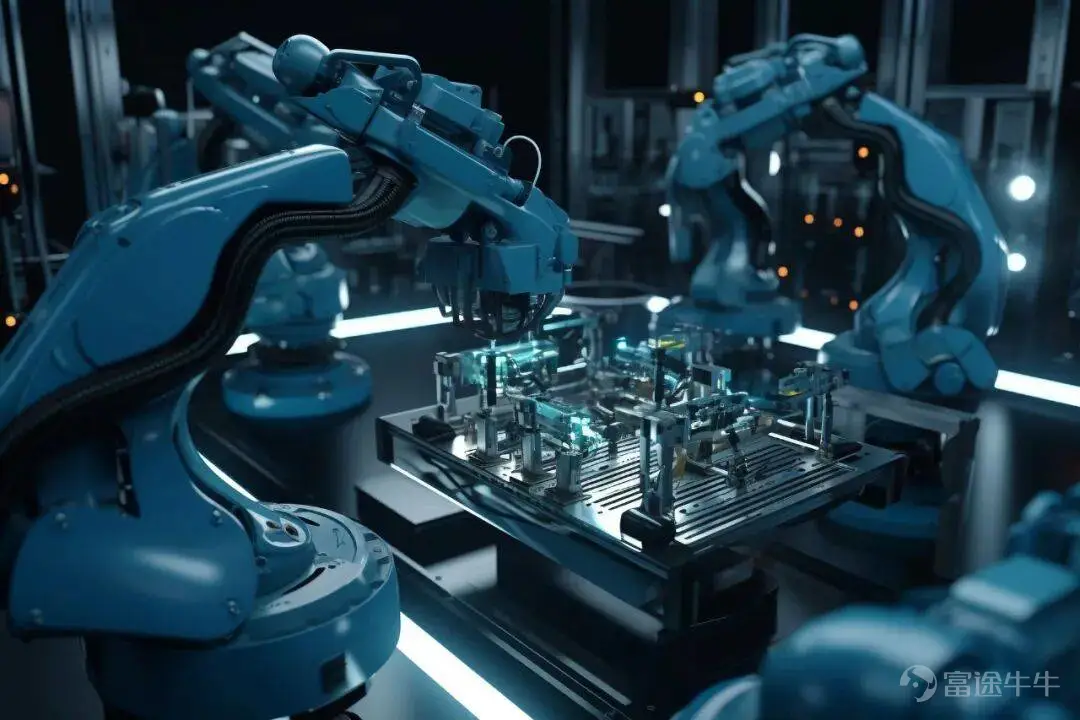
In addition to following up on technology research and development, Estun's success is inseparable from its precise M&A strategy.
In 2015, the company successfully acquired UK-based Trio Motion Technology, filling the gap in high-end controllers; in 2017, it acquired Germany’s MAI and the US-based Barrett, enhancing its capabilities in metal processing and high-performance servo systems; in 2019, it spent 1.96 billion euros to acquire German welding equipment company Cloos, officially entering high-barrier industrial scenarios such as automobile manufacturing.
After a series of acquisitions and investment deployments, Estun gradually built up a full industrial chain for robotics, covering controllers, servo systems, electronic control systems, robot bodies, and software algorithms.
The recent Hong Kong stock fundraising prospectus revealed new developments. Forty percent of the planned funds will be used for overseas acquisitions, with the first target being Italian gripper company Gimatic. This hidden champion holds a 19% market share in automotive assembly grippers, and the acquisition will strengthen Estun’s white body business.
But the path to globalization is fraught with challenges. Cost issues caused by geopolitical factors are also testing Estun’s profitability structure.
Previously, at Estun’s 2024 earnings communication meeting, board secretary Xiao Tingting stated that in 2025, Estun will continue to expand into European, American, Middle Eastern, and Southeast Asian markets, focusing on opportunities presented by domestic leading clients in sectors like new energy vehicles and lithium battery equipment going global, pushing forward its worldwide business deployment, and hoping that overseas markets will become a significant growth driver for the company.

Prior to this, in 2024, Estun had just faced revenue declines due to weak demand in the European market and ongoing inflation.
Currently, the majority of Estun’s client revenue comes from China.In the first three quarters of 2025, revenue from mainland China accounted for 70.6%, while overseas revenue made up 29.4%. Among overseas clients, Germany and the United States were the main contributors, with revenue shares of 12.3% and 4.7%, respectively. Of its seven manufacturing bases, five are in China, two are in Germany, and the Poland manufacturing base will officially commence operations in June 2026.
3. The new 'cash-burning' logic in the robotics sector
According to Frost & Sullivan data, the global industrial robotics solutions market has been continuously growing, with a compound annual growth rate of 14.6% from 2020 to 2024, reaching USD 25.4 billion in 2024, and is expected to increase to USD 51.8 billion by 2029.
As a core market, China's growth rate is even more significant, with a compound annual growth rate of 16.5% in 2024. The market size is projected to reach USD 28.8 billion by 2029, accounting for 55.6% of the global market.
The high growth rate of the industry does not correspond to favorable business conditions, as can be seen from Estun’s earnings performance.
While the traditional track feels the chill, another robotics sector is thriving. According to incomplete statistics from GGII Robotics, there were 215 financing events in China’s robotics supply chain in 2025, with financing transactions exceeding RMB 18 billion.
Investors, capital, and even consumers are now shifting their focus to humanoid robots, this new competitive arena.

Estun, too, has demonstrated its technological reserves and ambitions in emerging sectors through its participation in Nanjing Estun CoolTech Co., Ltd.
However, commercial implementation in this field still faces significant challenges and remains a long journey ahead.
Estun's humanoid robots being tested at a precision manufacturing factory in Dongguan can be applied in various scenarios such as education and research, production line collaboration, and commercial services. However, current mass production and delivery capabilities are weak, efficiency is low for high-intensity operations, and importantly, the unit cost remains relatively high without economies of scale.
A noticeable shift is that the extension of the commercialization timeline for humanoid robots has led the capital markets to adopt a more rational perspective on humanoid robots.
Coupled with the overly rapid market pace of humanoid robots leading to various out-of-control incidents, these developments have sparked widespread skepticism about humanoid robots and even begun to shake confidence in industrial robots.
For Estun, the company’s success requires steadfastness and the ability to navigate through cycles with a long-term belief.
In fact, in this race towards intelligent transformation, Estun needs to secure more substantial resources through the capital markets, improving its financial position while opening up a global development perspective.
This evolutionary path from 'manufacturing tools' to 'intelligent partners' is destined to weather dual storms of capital and technology. For Estun, attempting a second listing on the Hong Kong stock exchange, balancing present survival with future aspirations remains the toughest challenge.
*Illustrations in the article are sourced from: Shutterstock, based on the VRF license.
This article comes from 'Bullet Finance,' authored by Wei Shuai, edited by Feng Yu.
Risk Disclaimer: The above content only represents the author's view. It does not represent any position or investment advice of Futu. Futu makes no representation or warranty.Read more
Comments
to post a comment