
[Opportunity Express] A $50 billion financing injection. What’s the outlook for Oracle after its rollercoaster ride? What issues have arisen with OpenAI's chain?
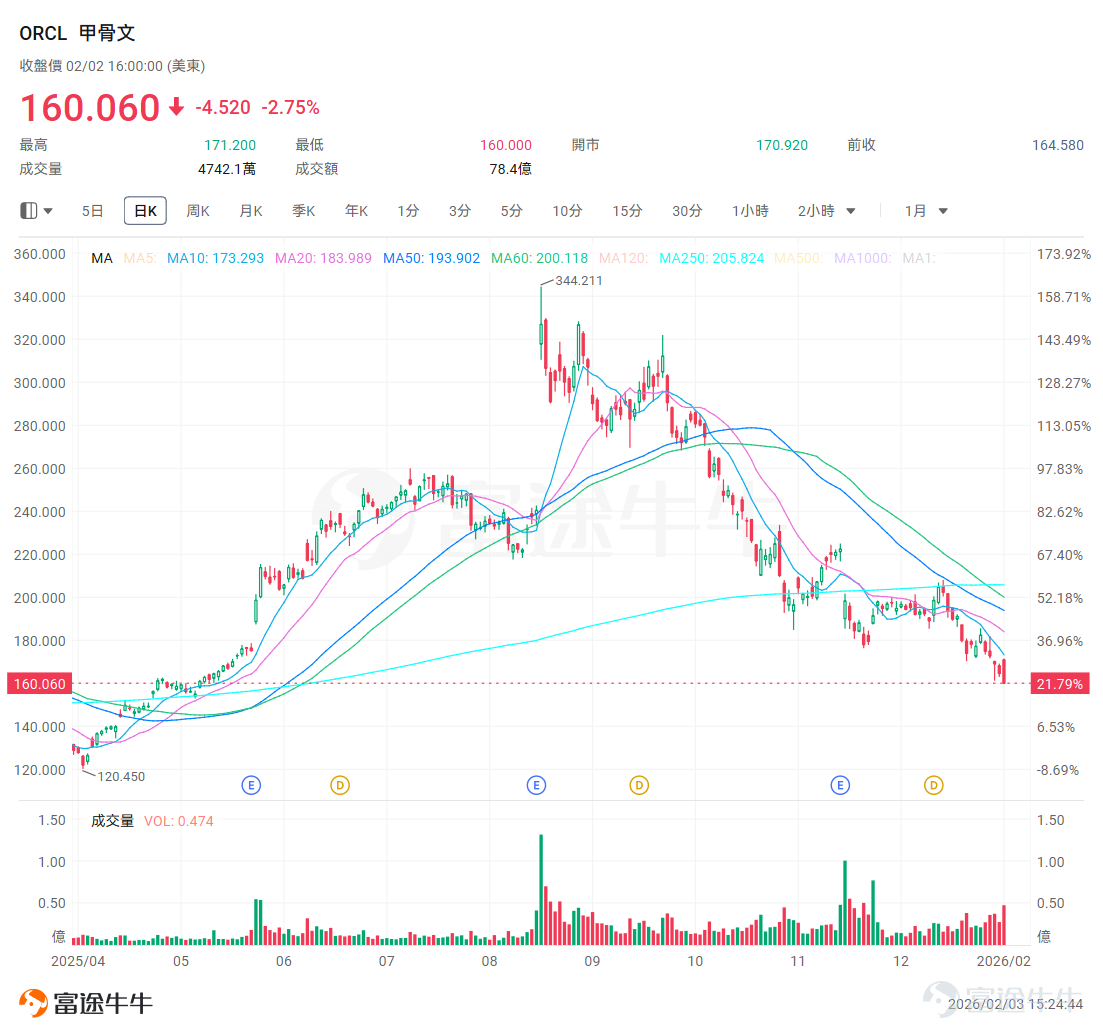
In 2025, $Oracle (ORCL.US)$After experiencing the frenzied hype of the "new king of AI computing power" to the brutal sell-off of the "pioneer of debt bubbles," a thrilling roller coaster market has unfolded.
The company has launched a financing plan combining equity and debt, with a total amount of up to $50 billion, to support its aggressive expansion of AI cloud infrastructure.The first phase of bonds worth $20-25 billion has started issuing yesterday (February 2).
How did Oracle make this “high‑asset, high‑stakes gamble,” and why has its business model—deeply intertwined with OpenAI—become a “double‑edged sword”? After the deep correction, will the recently announced financing plan enable the company to be revalued? Let’s take a closer look at this week’s opportunity roundup.
From AI stars to the "fragile link" in the industrial chain.
For a long time, Oracle has been regarded by the capital market as a mature, stable but slowing growth traditional software and database giant. However, with the wave of artificial intelligence sweeping the globe, the company's management has made a radical strategic shift: All in AI cloud infrastructure (OCI), striving to become the next...$Amazon (AMZN.US)$ AWS, $Microsoft (MSFT.US)$The world's third-largest public cloud provider after Azure, particularly targeting the computing power gap brought about by the explosion of generative AI.
The surge in stock prices began with the market's repricing of Oracle's "AI story" and peaked in the third quarter of 2025. Oracle signed a five-year, over $300 billion computing power procurement agreement with OpenAI. This order, which was the largest in the global cloud computing industry at the time, was interpreted by the market as Oracle securing a "super ticket" for the AI era.
The stock price surged nearly 36% in a single day, marking the largest increase since 1992, and briefly made the company's founder, Larry Ellison, the richest person in the world.

However, the market's frenzy was quickly replaced by rational financial scrutiny. Since the peak in September 2025, Oracle's stock price has plummeted by over 50%.An aggressive capital expenditure plan has led to a significant widening of its credit default swap (CDS) spreads, with growing concerns in the bond market over its financial risks.
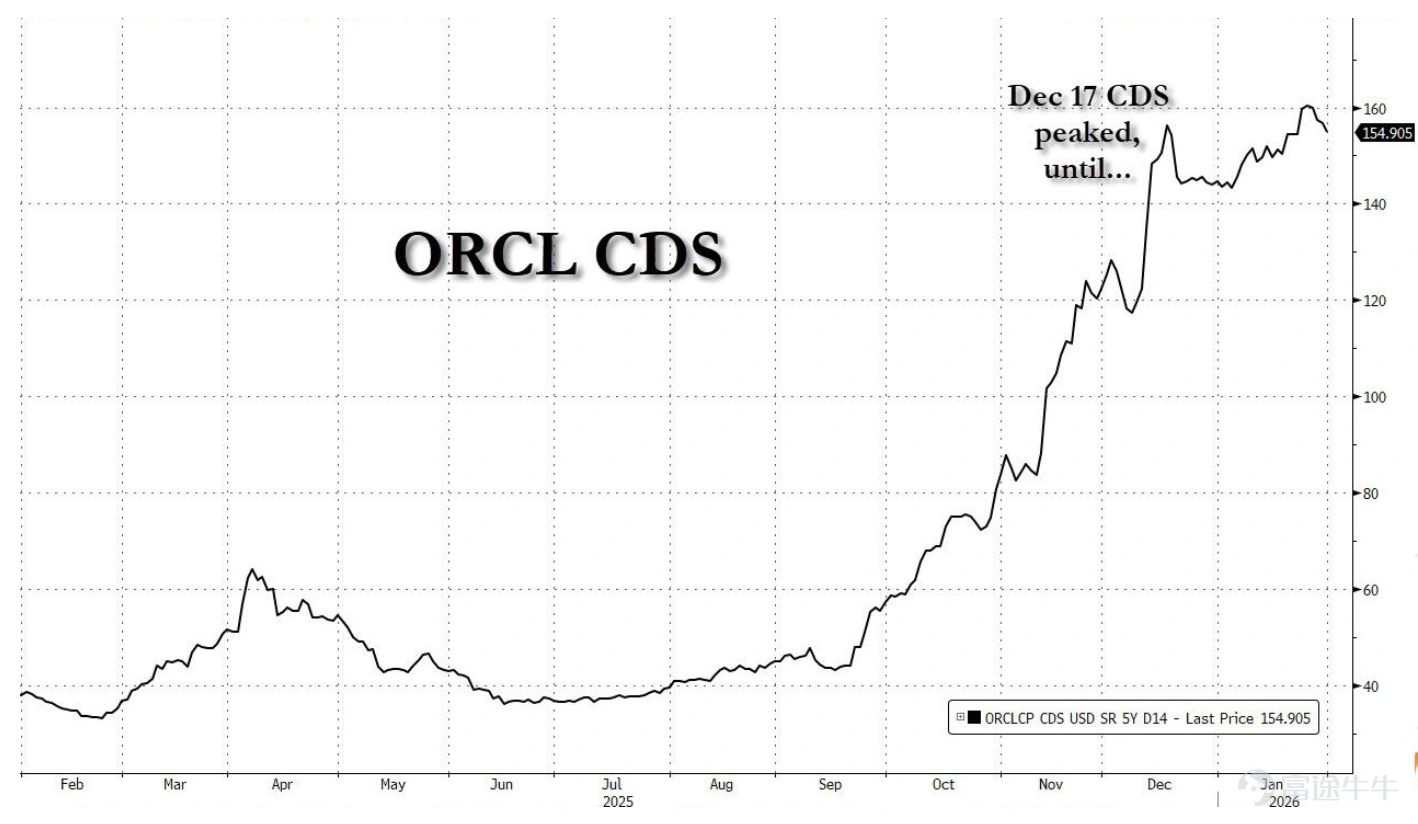
To meet the substantial capital expenditures (Capex) required for AI infrastructure development, Oracle's debt levels have soared. As of the November 2025 quarter, net debt reached $88.3 billion, with a leverage ratio (net debt/TTM EBITDA) of 2.8x. Including lease liabilities, the leverage could reach 4x by 2027. The company is currently rated at the second-lowest tier of investment grade (BBB), and if downgraded twice more (to BBB-), it would fall into junk status (C-level), significantly raising financing costs.
The trajectory of this 'roller coaster' clearly outlines the evolution of market sentiment and perception:
Upswing phase (period of optimism): Record-breaking cloud contracts → Explosive RPO (Remaining Performance Obligations) and revenue guidance → Valuation re-rating and skyrocketing stock price.
Downswing phase (period of reality): Exorbitant capital expenditures and negative free cash flow → Surging debt and deteriorating financial structure → Doubts about profitability and return on investment → Valuation correction and sharp stock price decline.
Can a $50 billion financing plan provide Oracle with the lifeline it needs?
Oracle’s emergency launch in early February 2026 of a massive hybrid financing plan totaling $45-50 billion represents its core response to current financial challenges. This includes issuing $20-25 billion in bonds and raising the remaining funds through mandatory convertible preferred securities and equity programs.
Before the announcement of the financing plan, the market's biggest concern was how Oracle would address its enormous capital expenditure (expected to reach $50 billion in the 2026 fiscal year). Multiple US banks had stopped lending to its data center projects, narrowing financing channels and driving up costs. This 'where will the money come from?' uncertainty was a key factor weighing on the stock price.
The implementation of this large-scale financing plan first eliminated uncertainties regarding the source of funding.Additionally, the latest batch of bonds received ratings from Fitch Ratings, maintaining their BBB investment-grade status without slipping further. This directly addressed market concerns about the company's credit rating.
However, it is also necessary to soberly recognize that this round of financing mainly addresses the liquidity issue of 'whether construction can continue,' but does not eliminate the market's fundamental doubts about Oracle's business model. To continuously raise funds for AI data center construction, Oracle plans to cut up to 30,000 jobs and sell assets.
What went wrong with OpenAI's chain?
If high debt and rating pressures are considered 'financial symptoms,' then the market's biggest 'worry' stems from Oracle's AI strategy centered around a single core client—OpenAI—and the apparent fatigue in the entire OpenAI supply chain.
It’s not just Oracle alone. $NVIDIA (NVDA.US)$ 、 $Microsoft (MSFT.US)$ Giants closely related to OpenAI, as well as cloud service providers similar to Oracle's positioning, $CoreWeave (CRWV.US)$ have all performed poorly in recent months.
As OpenAI’s main source of revenue, ChatGPT's growth indicators are showing signs of slowing down, facing continuous challenges from large models such as Gemini and Claude.
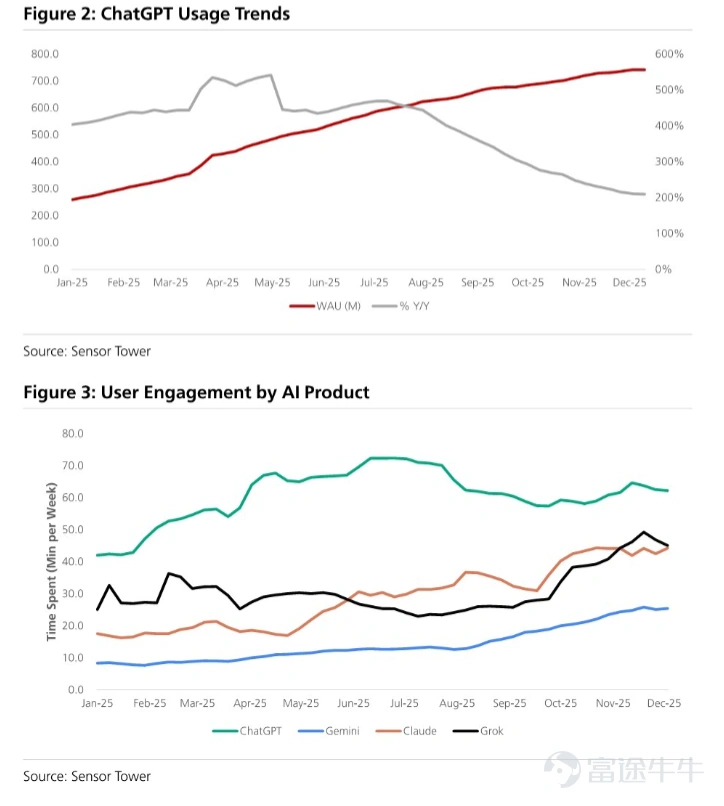
The market has also begun to question the feasibility of OpenAI's long-term, large-scale contracts signed with multiple suppliers. Although OpenAI achieved an annualized revenue exceeding $20 billion in 2025, it still falls far short compared to its claimed expenditure commitments totaling $1.4 trillion.
However, by 2026, there are multiple potential paths for reversing OpenAI's negative narrative:
(1) Successfully completing large-scale financing
Rumors in the market suggest that OpenAI is planning a funding round of up to 100 billion US dollars. In January this year, media reports indicated that this investment plan had stalled, with Jensen Huang privately criticizing OpenAI for its 'lack of commercial discipline.'
On February 3, Jensen Huang personally refuted the rumors, stating that claims of dissatisfaction with OpenAI were pure nonsense. He emphasized that NVIDIA’s partnership with OpenAI remains strong and that NVIDIA 'will definitely participate' in OpenAI's latest funding round.
(2) New model releases prompt key ChatGPT usage metrics to improve or stabilize again.
OpenAI’s CEO hinted at the possible release of GPT-6 (or an equivalent major upgrade) in the first quarter of 2026, reestablishing a technological edge and breaking the competitive narrative that 'Google Gemini has caught up.'With the user base approaching 1 billion and the product already three years on the market, expecting a significant acceleration in growth might be overly optimistic. However, 'slower but still substantial growth' could itself be positively interpreted by the market amid a sluggish environment.
Let’s not forget that during the Gemini 2.5 era, $Alphabet-C (GOOG.US)$ it also faced heavy criticism from investors, but the subsequent launch of Gemini 3 completely reversed Google's narrative. The industry is still in a period of rapid development, and it's common for different large models to leapfrog one another.
(3) Substantial progress in the enterprise market with a clearer monetization roadmap.
OpenAI stated that revenue from enterprise clients now accounts for nearly 40% of its total and predicted that 'Enterprise AI will become a major theme in 2026.' Additionally, introducing the widely anticipated advertising tier and increasing the conversion rate of free users to paid ones (currently only about 5%) could diversify and make its revenue sources more sustainable.
If any or several of the above paths are realized in 2026 (especially in the first half), they are expected to significantly boost market confidence in OpenAI’s growth prospects and execution capabilities, driving the performance of companies in the supply chain.
Technical Analysis & Options Strategies
Oracle's share price fell continuously after reaching a high of $207.8 on January 13, 2026, hitting a low of $160.0 on February 2. The maximum retracement in this period exceeded 23%.The current share price is significantly below all major moving averages. Short-term indicators show severe oversold conditions, but no clear trend reversal signal has emerged yet.
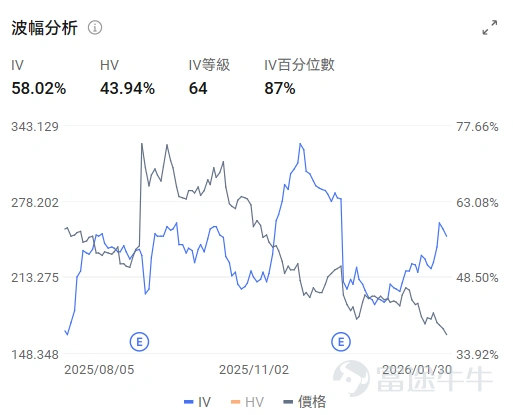
Futubull's options analysis tool shows that the current implied volatility (IV) is 58.02%, with an IV rank of 64 and an IV percentile of 87%, indicating a relatively high level. This means that selling options can generate higher 'premiums,' while buying options requires paying a higher premium, making it more demanding on stock price fluctuations. The proportion of put option trading volume has fluctuated significantly recently (35%-60%), reflecting notable divergence between bulls and bears.
Options strategies can be constructed around the possibility of high volatility and an oversold rebound:
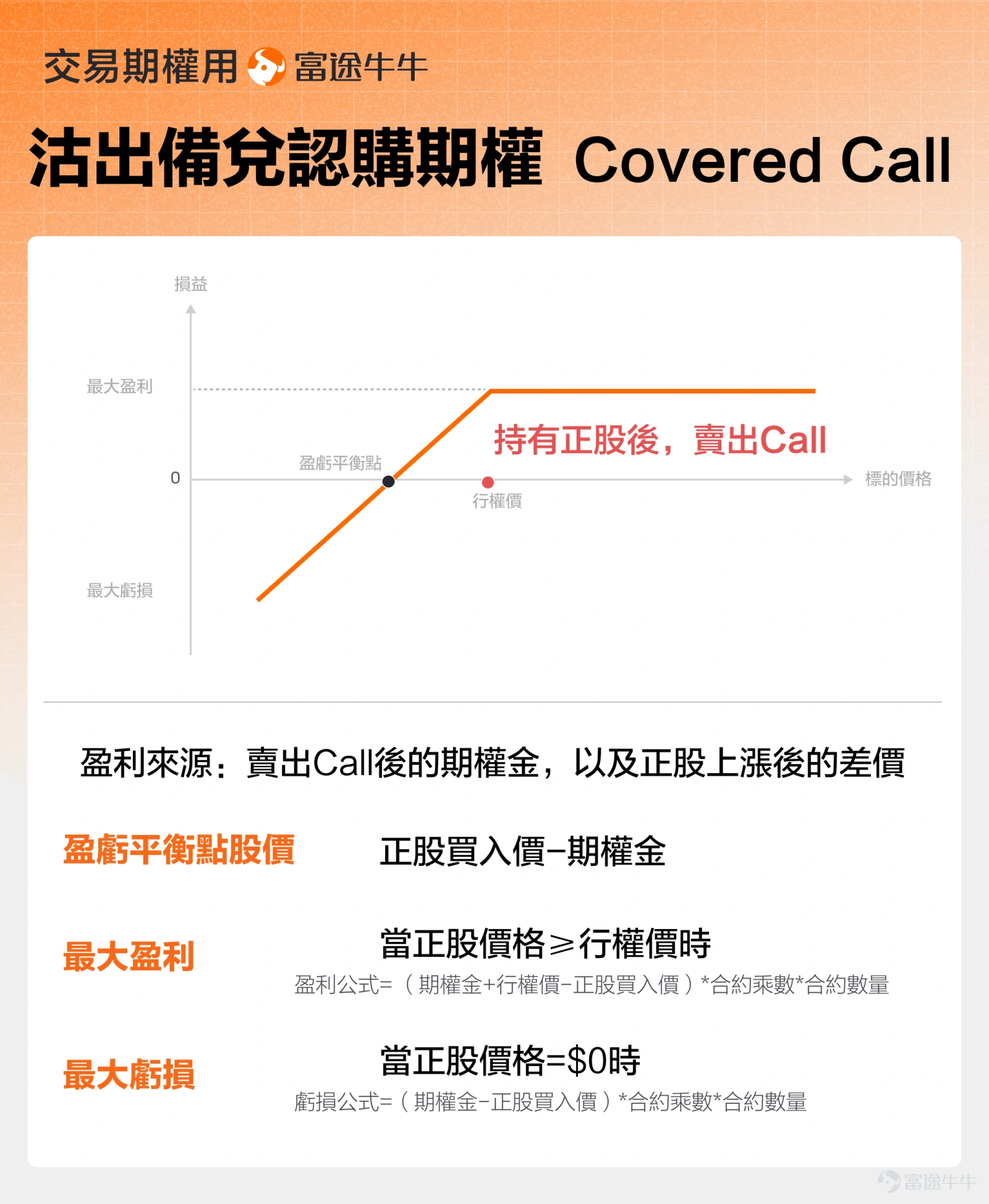
For existing position holders, the Covered Call strategy is the preferred choice, as it generates additional income in a falling market. If the share price rises above the strike price, positions can be reduced at a preset rebound level.
For investors who are not currently holding positions but are optimistic about the medium to long-term value and preparing to enter, selling out-of-the-money put options can yield high premium compensation under the current market sentiment and may allow for purchasing shares at a discounted price.
Risk Disclosure: This content does not constitute a research report and is for reference only. It is not intended as a basis for any investment decision. The information provided herein does not comprehensively describe the securities, markets, or developments mentioned. While the sources of information are considered reliable, no guarantee is made regarding the accuracy or completeness of the content above. Additionally, no assurance is given regarding the accuracy of any statements, opinions, or forecasts provided herein.
Finally, here's a small perk for fellow investors—welcome to claim it!Beginner's Options Package
This event is exclusively for invited HK users, click to learn moreDetailed event rules >>
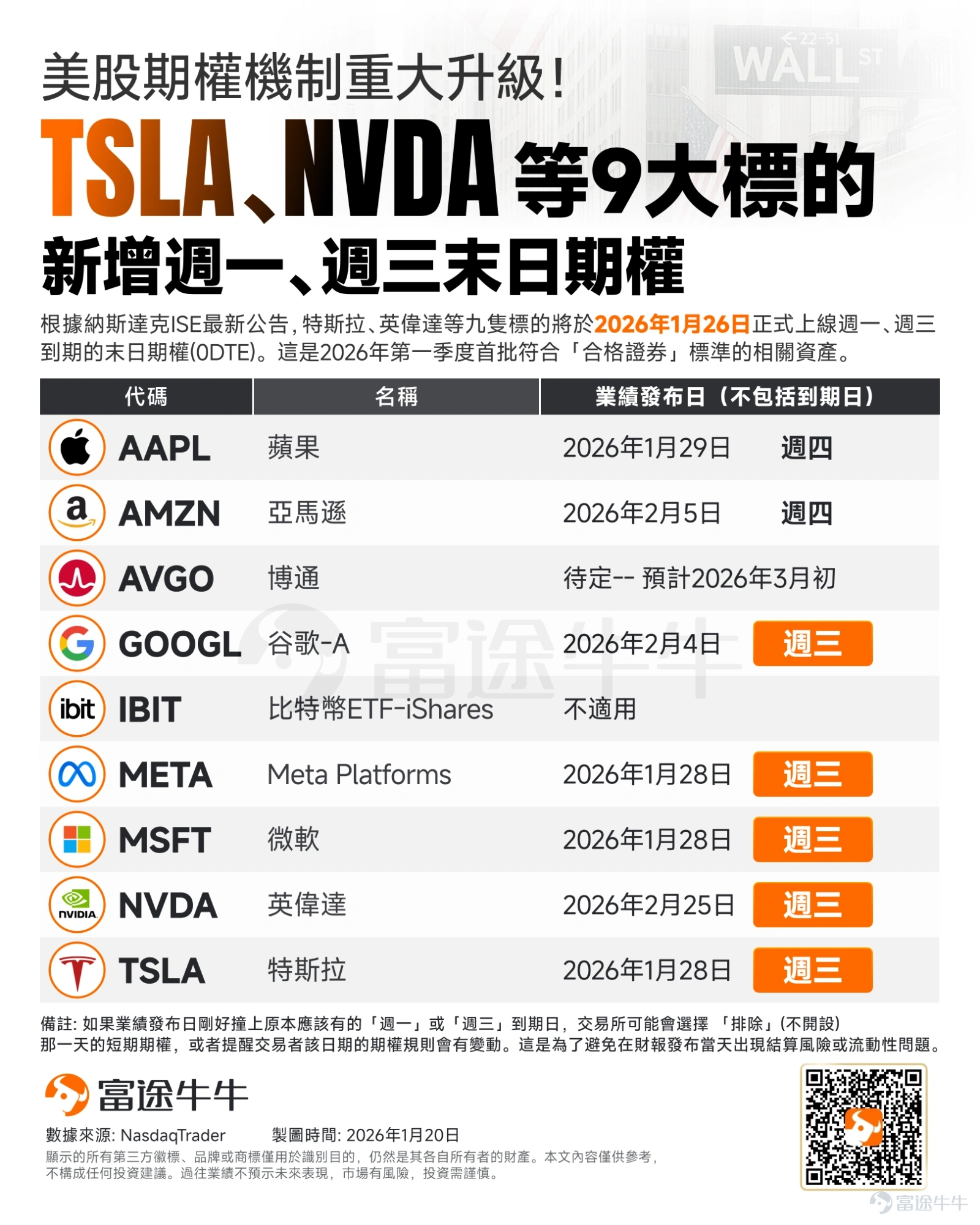
Major upgrade to the US options mechanism! New Monday and Wednesday options added for nine major symbols including Tesla and NVIDIA. A step-by-step guide to profiting from end-of-term options using the NiuNiu tool >>
Risk Disclaimer: The above content only represents the author's view. It does not represent any position or investment advice of Futu. Futu makes no representation or warranty.Read more


Comments (5)
to post a comment
64
49