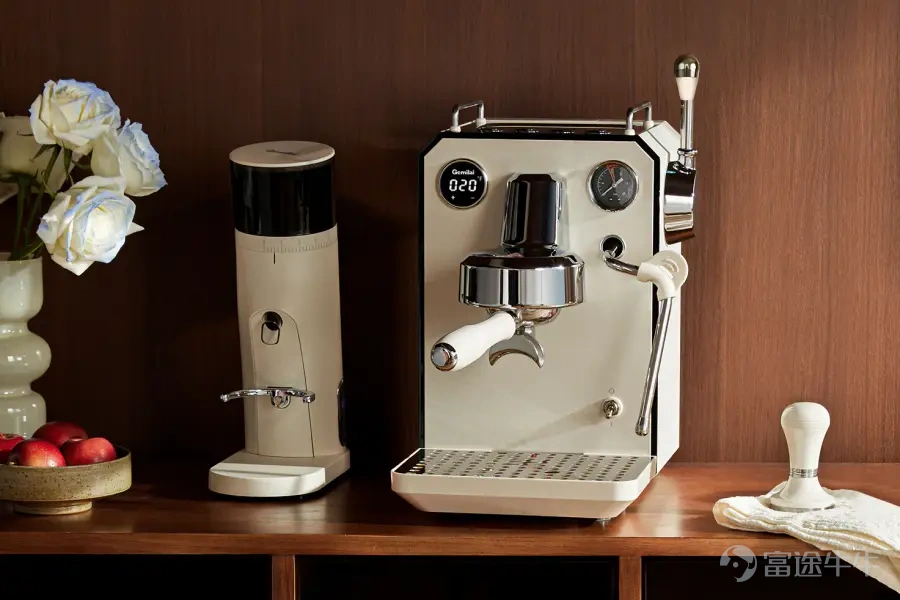

Can Gemi Lei, the leading coffee machine company, avoid the risk of an overheated market while capitalizing on its momentum?
Gemilai, a leading Chinese manufacturer of Italian-style coffee machines, has applied for a listing in Hong Kong. Last year, its revenue grew by 44%, and profits surged approximately fourfold year-on-year.
![Gemi Lei, a leading Chinese manufacturer of espresso machines, has applied for a listing in Hong Kong. Last year, its revenue grew by 44%, and its profit surged about fourfold year-on-year. Key points: * Gemi Lei plans to go public in Hong Kong, offering investors a new entry point into China’s coffee market. The company is one of the major manufacturers of espresso machines in China. * Despite strong growth in sales and profits last year, the company may still face certain pressures in the future amid a slowing Chinese economy and increasing saturation in the coffee market. This article was authored by Yang Ge At first glance, the latest[Share Link: Hong Kong IPO application]submitted by Gemi Lei Holdings Limited last week appears quite appealing. This leading Chinese homegrown espresso machine company is currently in a phase of rapid business expansion. However, behind the impressive performance of a 44% increase in revenue and a fourfold surge in profit year-on-year, both the overall Chinese economy and the coffee market itself are simultaneously showing signs of overheating. On the business side, China's coffee shop market is quickly reaching saturation, even though coffee consumption penetration remains relatively low in this traditionally tea-drinking culture. The market is currently dominated by large brands such as $Luckin Coffee (LKNCY.US)$Compared with $Starbucks (SBUX.US)$ , with around 29,000 and 8,000 stores respectively in China as of September last year. However, the market is also crowded with secondary brands like Manner and Cotti, not to mention the numerous independent cafes sprouting up like mushrooms in first-tier cities such as Shanghai...](https://nnqimage.futunn.com/sns_client_feed/27769806/20260202/web-1770020980498-uM05csPPEN.webp/big?area=1&is_public=true&imageMogr2/ignore-error/1/format/webp)
Key points:
Gemilai plans to go public in Hong Kong, offering investors a new entry point into China’s coffee market. The company is one of the major manufacturers of Italian-style coffee machines in China.
Despite strong growth in sales and profits last year, the company may still face certain pressures in the future amid a slowing Chinese economy and increasing saturation in the coffee market.
This article was authored by Yang Ge
At first glance, the latestHong Kong IPO applicationsubmitted by Gemilai Holdings Co., Ltd. last week appears quite attractive. This homegrown leader in Italian-style coffee machines in China is currently in a phase of rapid business expansion. However, behind last year’s impressive 44% revenue growth and about fourfold year-on-year profit increase, several overheating warning signs have emerged from both the overall Chinese economy and the coffee market itself.
On the business side, China's coffee shop market is rapidly approaching saturation, despite low coffee consumption penetration in a culture traditionally dominated by tea drinking. The market is currently dominated by $Luckin Coffee (LKNCY.US)$Compared with $Starbucks (SBUX.US)$ large brands, with around 29,000 stores and 8,000 stores respectively as of September last year. However, the market is also crowded with secondary brands like Manner and Cotti, not to mention the numerous independent coffee shops that have sprung up like mushrooms in first-tier cities such as Shanghai.
On the consumer side, the rapid slowdown of China’s economy is prompting more cautious spending attitudes among consumers. This means that although people still require basic food and beverage consumption, many are cutting down on dining out and reducing discretionary spending, such as purchasing luxury items like home espresso machines.
The aforementioned risk factors have not yet been clearly reflected in Gemilai’s latest financial data, but doubts remain whether this could be another case of a company launching an IPO at the peak of economic prosperity while a real slowdown lurks just around the corner. Although most operational indicators remain robust, some early warning signs are emerging, such as the decline in the average selling price of commercial espresso machines, reflecting potential oversupply in the coffee shop market.
According to the listing application filed by Gemilai last Thursday, the average selling price of the company's household espresso machines remained strong, increasing significantly from 781 yuan in 2023 to 1,680 yuan in the first nine months of last year, nearly doubling. However, the trend for commercial espresso machines was quite the opposite, with their average selling price dropping from 8,049 yuan to 7,426 yuan, a decrease of about 8%.
The third-party market data cited in the application document is also quite impressive, especially the part regarding China's low coffee market penetration rate. The document shows that in 2024, the average annual coffee consumption per capita in China was only 14.3 cups, slightly more than one cup per month. In contrast, the average annual coffee consumption per capita in Europe in 2024 was as high as 567.9 cups, while in South Korea it reached 415.6 cups.
This low penetration rate indicates that China’s coffee market still has substantial room for growth. From 2019 to 2024, the compound annual growth rate of China's coffee machine market was 21.5%, significantly higher than the global market's 14.9% during the same period. Looking ahead, the market expects China’s coffee machine market to maintain an average annual growth rate of 18.7% from 2024 to 2029, reaching an annual sales scale of 12.5 billion yuan by the end of the period.
In this continuously warming growth wave, Gemilai is well-positioned. According to its listing application, the company held approximately 7.5% of the market share in China’s coffee machine market in 2024.
Rapid growth
Gemilai's own growth rate is clearly faster than the overall market. As mentioned earlier, the company's revenue in the first nine months of last year surged 44% year-on-year from 312 million yuan to 449 million yuan. Household espresso machines were the largest source of income, accounting for 37.8% of total revenue in the first nine months of last year; dual-use (home and commercial) espresso machines were the second-largest category, making up 30.3%; and commercial espresso machines accounted for 16%. Additionally, the company also produces coffee grinders, but the related revenue contribution is relatively small.
The company breaks down its revenue structure from multiple perspectives, including domestic versus overseas markets, online versus offline channels, and proprietary versus third-party brand businesses. The overall trend is broadly positive, indicating that the company is gradually shifting towards a higher-margin business model.
Sales of the company’s proprietary brand 'Gemilai' continued to rise, accounting for 83% of total revenue in the first nine months of last year, up from 69% in 2023. This is crucial for the company’s profitability, as products under its own brand typically enjoy significantly higher gross margins compared to OEM or third-party brand sales. Meanwhile, the proportion of the company's online sales increased from 41% in 2023 to 58% in the first nine months of last year, and online channels generally also have higher gross margins, supporting overall profitability.
While many Chinese companies are actively expanding into overseas markets, Gemilai is moving in the opposite direction. Over the past three years, the proportion of its revenue from the domestic market has continued to rise, increasing from 70% in 2023 to 80.9% in the first nine months of last year. This may be related to the still low penetration rate of China’s coffee market, but it also makes the company more vulnerable to a potential economic slowdown in mainland China, which seems almost inevitable.
Gemilai has also performed commendably in cost control. Despite significant revenue growth, administrative and R&D expenses over the past three years have remained largely flat or even declined. This prudent expenditure management, combined with a shift in the business structure toward higher-margin operations, propelled the company’s profit in the first nine months of last year from 11.6 million yuan to 54 million yuan, an increase of nearly fourfold.
Despite the company's positive outlook on its own development, its overall scale still leaves an impression of being relatively small. The introduction of Xie Jianping, the founder and chairman of the board, in the prospectus is relatively limited. From the company’s development history since its establishment in 2011, almost all financing has come from Xie Jianping’s circle of friends and relatives. On the other hand, if we refer to the price-to-earnings ratio of about 17 times of global home appliance giantDe’Longhi Group(DLG.MI), GemiLai's valuation based on last year’s expected earnings is only approximately 1.22 billion yuan, equivalent to about 175 million US dollars, which is a relatively moderate level.
Ultimately, whether GemiLai represents a "half-full" or "half-empty" cup of coffee remains for investors to decide. Optimistic observers may believe that as China’s coffee-drinking standards gradually align with those of other countries, the company is well-positioned for continued growth. However, cautious voices might argue that after a period of rapid expansion, China’s coffee economy could now be facing a slowdown, potentially putting pressure on GemiLai's future growth prospects.
Risk Disclaimer: The above content only represents the author's view. It does not represent any position or investment advice of Futu. Futu makes no representation or warranty.Read more

Comments
to post a comment
1
2