
2026 Trend Forecast Report: When On-Chain Finance Enters Daily Life
Article author: Bitget Wallet
Source: BlockBeats
1. Over the past 20 years, fintech has evolved from digitization (1.0) to mobilization (2.0). It is now entering theFintech 3.0 phase, based on blockchain. On-chain finance will reconstruct the financial system at the clearing and settlement rail level, making capital flows cheaper, faster, and more globally accessible.
2. Wallets are evolving from simple asset management tools into the main entry point for users to handle diversedaily financial tasks,gradually becoming commonly used financial applications that cover transactions, payments, and asset management, frequently appearing in daily life and capital flows, creating a user-centric on-chain daily financial experience.
3. Stablecoin Payments: Stablecoins have become a critical infrastructure for global value settlement, deeply embedded in B2B2C cross-border payments, local payment networks, and card organization systems; wallets will serve as the unified front-end and routing node for stablecoin payment capabilities.
4. AI:As protocols like x402 mature, AI agents will have the ability to autonomously complete payments and transactions within an authorized framework, driving a qualitative change in the frequency and form of value exchange. Wallets will become the execution and risk control layer for delegated financial actions.
5. Privacy: Privacy will become the default prerequisite supporting payments, asset management, and institutional on-chain activities. Privacy capabilities will be integrated into major wallets as infrastructure functions rather than being achieved through a single privacy asset.
6. On-chain Credit: On-chain credit will gradually move away from the single over-collateralization model and begin building a tiered system around long-term user behavior, time dimensions, and performance stability; wallets will provide cross-chain and cross-cycle continuity data support in this process.
7. RWA: RWA will shift toward tradable and composable financial instrument forms, with RWA Perps and RWA × DeFi becoming key growth areas; wallets are becoming an important channel connecting on-chain users with global assets, providing users with global asset exposure.
8. Perp DEXs: Perp DEXs will enter a competitive phase focused on stability, efficiency, and user retention; native Perp trading within wallets will become a high-frequency use case, significantly enhancing user stickiness.
9. Prediction markets: With continuous catalysts from major real-world events such as the World Cup and the U.S. Congressional midterm elections, prediction markets will enter a period of accelerated expansion; front-end functional innovation will prioritize event discovery, signal judgment, and convenient order placement rather than liquidity aggregation.
10. MemeSome attention on Meme trading may be diverted to prediction markets, and wallets will optimize through features like address relationship and cluster analysis, helping users more efficiently identify sentiment and capital flows.
For a long time, crypto wallets have mainly been viewed as an on-chain traffic entry point and operational tool, with core functions focusing on asset storage, connecting decentralized applications, managing contract authorizations, performing swaps, and other basic operations. These primarily addressed how users could access the blockchain and complete basic interactions but did not directly support full financial use cases.
This perception began to change significantly in 2025. As the scale of stablecoins continued to expand and on-chain transaction and settlement infrastructure matured, real-world use cases such as payments and yield generation started appearing on-chain and were repeatedly validated. The role of crypto assets also shifted—they were no longer just used for passive holding or speculative trading but were increasingly utilized for practical financial activities such as payments, yield management, and cross-border liquidity. In this process, the positioning of wallets was elevated, gradually evolving into a core application that supports everyday financial activities on-chain.
Today’s crypto wallets are taking on roles similar tothe front end of everyday on-chain finance"
· The main interface for users to manage stablecoin balances and capital flows
· A key payment tool connecting real-world payment networks with on-chain systems
· Executes trading and risk management for various assets such as Meme, RWA, and prediction markets
Wallets are evolving from simple asset management tools into the primary entry point for users to handle a variety of everyday financial tasks. This transformation is not triggered by any single product innovation but stems from the evolving expectations users have of wallets. Early adopters initially used wallets to participate in airdrops, try out DeFi protocols, and execute basic transactions. Later, swap functionality and cross-chain capabilities became standard. Subsequently, yield management and asset allocation emerged as important needs. Wallets are no longer just tools for completing on-chain operations; more and more users now rely on them to handle daily financial tasks, treating them as a frequently-used financial application covering trading, payments, and asset management, deeply embedded in daily life and fund movements.
The evolution of the wallet's role is closely tied to the development of the financial system itself. From a broader perspective, the financial infrastructure over the past two decades has roughly gone through three stages: initially, the digitization of financial services, moving banking operations online; then came mobilization, where new financial applications significantly improved user experience, though the underlying clearing and settlement systems did not fundamentally change; now, finance is entering its third phase, with blockchain-based on-chain finance reconstructing the financial system at the foundational level, making capital flow cheaper, faster, and more globally accessible.
Compared with the first two phases, the changes in Onchain Finance stem froma shift in financial access methods and underlying structures.Based on permissionless open networks, users worldwide can connect to the same financial system at lower costs and higher efficiency; the composability of assets and smart contracts allows financial products and applications to be built and iterated within shorter cycles; within this system, both users and institutions operate under the same rules and shared infrastructure—finance is no longer solely a service dominated by institutions but gradually evolves into an open system that anyone can participate in and build upon.
As financial infrastructure migrates on-chain, the use cases for wallets continue to expand,Functions that were originally scattered across bank accounts、Payment apps, trading platforms, and crypto tools are now being integrated into a single wallet app, creating a user-centric daily financial experience on-chainAn increasing number of users are entering the on-chain space, not merely for speculative or profit motives, but hoping to reduce reliance on traditional centralized financial systems for fund management, cross-border flows, and value storage. Non-custodial solutions are becoming a critical starting point for on-chain finance, as users seek more direct control over their assets and the freedom to utilize them globally.
In this context, wallets have become a crucial vantage point for understanding real on-chain usage. Questions such as why users enter the chain, which assets they primarily use, which behaviors are sustainable, and which scenarios are forming real adoption often cannot be fully answered by data from trading platforms or individual protocols alone. Wallets naturally sit at the intersection of all on-chain activities, providing a more direct reflection of users' real financial behavior on the chain
With this in mind, this report will take a wallet-centric view to briefly review the key changes closely related to everyday finance in the on-chain ecosystem in 2025 and explore the direction of on-chain finance's evolution in 2026 based on these insights.
The year 2025 marks a turning point for the widespread acceptance of stablecoin payments in mainstream financial systems. From Circle's IPO to the passage of the US Genius Act, the regulatory boundaries for stablecoins have gradually become clearer. If 2024 was still a phase of mutual probing between regulators and the market, then in 2025, the world's three largest economies collectively built a 'legislation + licensing + enforcement' framework, pushing stablecoins out of their previous gray area and transforming them into compliant financial infrastructure widely adopted globally
· North American Market: July 2025 marked a milestone with the official passage of the US Genius Act. This act established the framework for payment-type stablecoins The federal regulatory framework for stablecoins and issuer access requirements have truly broken down the capital barriers between traditional banks and on-chain issuers.
· Asian market: On August 1, 2025, Hong Kong's 'Stablecoin Issuer Regulatory Regime' officially came into effect. This regulation not only brought stablecoin activities under the supervision of the Monetary Authority but also attracted several institutions, including Standard Chartered Bank and JD.com, to actively deploy Hong Kong Dollar stablecoins during the subsequent implementation phase of the issuer licensing system; Japan initiated a pilot program for the Japanese Yen stablecoin.
· European market: As the 'MiCA Act' entered its first full year of comprehensive implementation, Euro stablecoins overcame liquidity shortages in 2025 and began trading on mainstream platforms. EU member states like Germany introduced stablecoins based on national regulations under the MiCA framework, while the UK launched a pilot program for the British Pound stablecoin.
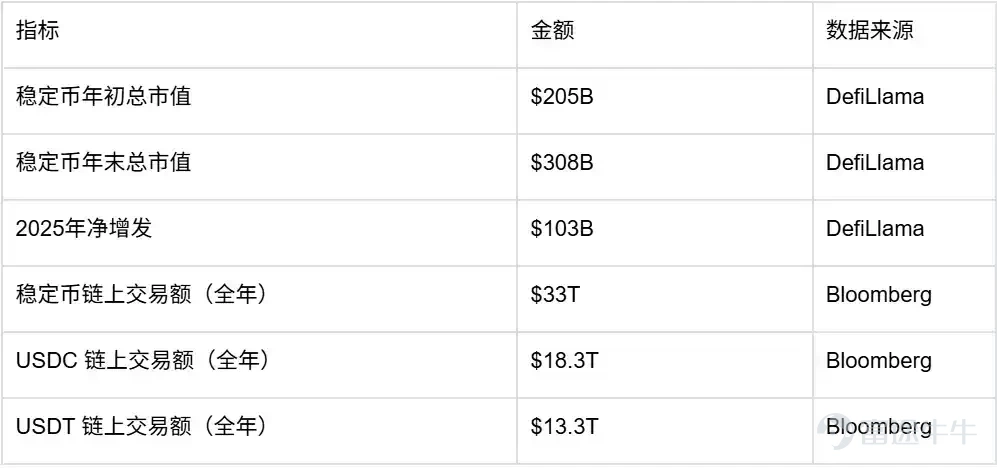
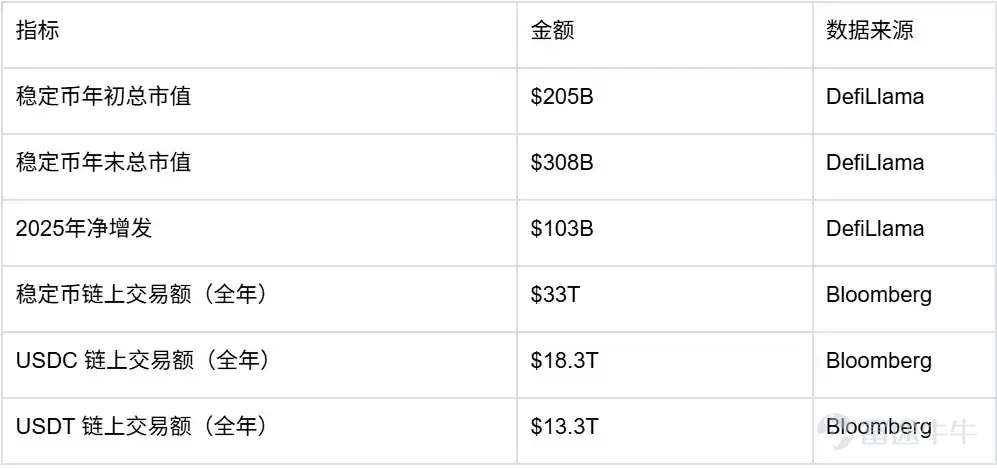
Driven by the dual forces of establishing three major compliance frameworks and the explosive demand on-chain, the stablecoin market experienced significant value revaluation. In terms of macro data, both the issuance volume and on-chain transaction activity of stablecoins reached record highs in 2025.
· Breakthrough Growth in Market Size: The total market value of stablecoins climbed from USD 2,050 billion at the beginning of the year to USD 3,080 billion by the end of the year, with a net issuance increase of USD 1,030 billion throughout the year, representing an increase of over 50%.
· A Significant Leap in On-Chain Settlement Volume: The total annual on-chain transaction volume reached an astonishing USD 33 trillion, allowing stablecoins to surpass the currencies of some countries substantially and become a clearing network carrying global value flows.
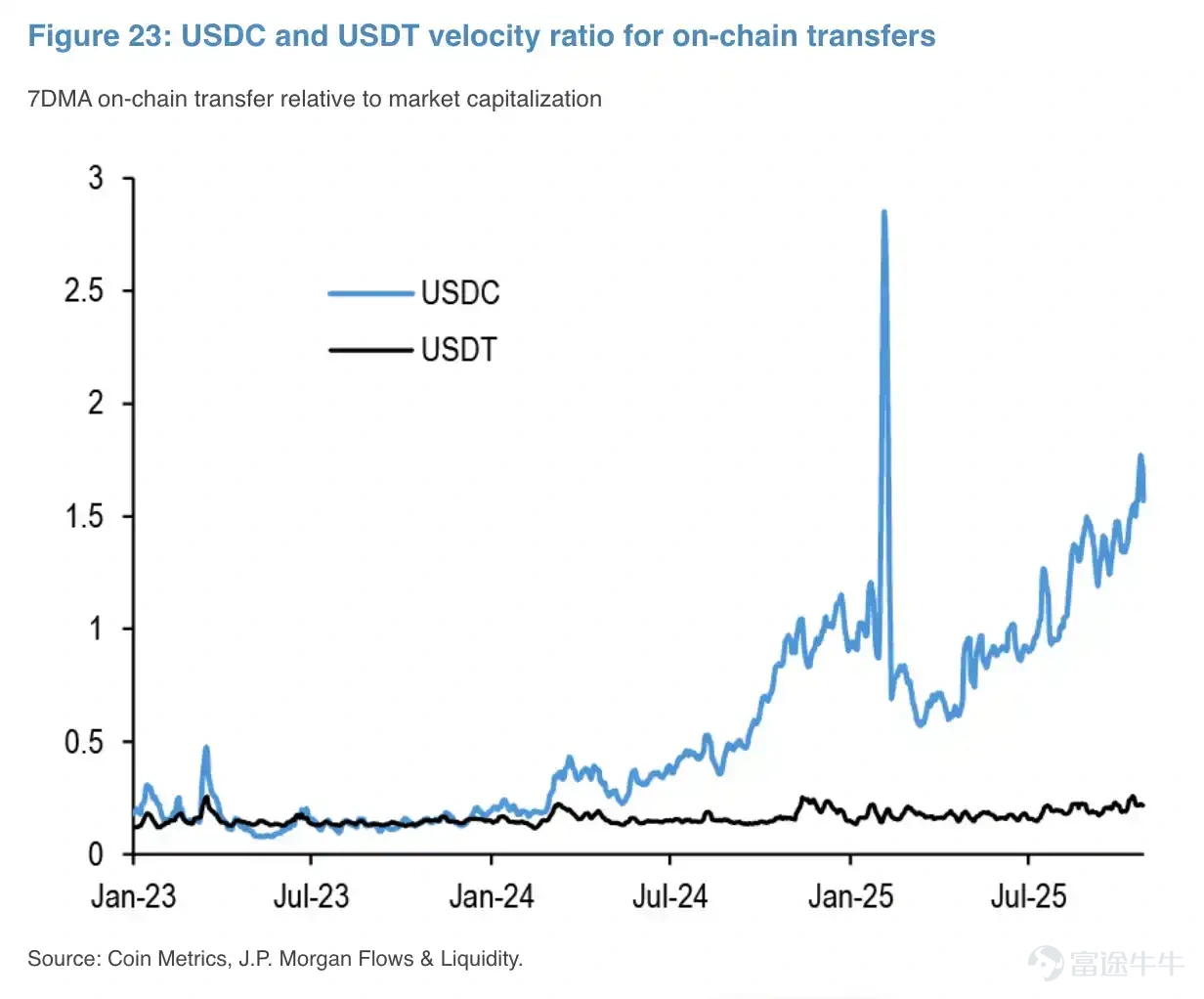
Notably, a highly significant reversal occurred in the market structure in 2025: Although USDT maintained its lead in terms of market capitalization, USDC’s annual on-chain transaction volume (USD 18.3 trillion) surpassed that of USDT (USD 13.3 trillion) for the first time. This change was primarily driven by USDC’s higher capital reuse rate within DeFi protocols and the preference of European and American institutions for using the more compliant USDC for large settlements and cross-border payments following the implementation of the 'Genius Act'.
At the application level, the most notable feature of 2025 was the integration with traditional financial systems. Traditional finance and payment networks began deeply embedding stablecoins into key aspects of the funding channels.
· Brokerage Firms and Account Systems: New Channels for Compliance Funding. Interactive Brokers officially allowed retail customers to use stablecoins to fund their personal brokerage accounts, signifying that stablecoins have broken out of their internal circulation and now directly serve the funding process for traditional securities trading.
· Payment Networks: Restructuring the Settlement Layer. Stablecoin settlement is becoming a standard feature for card networks and payment giants. After acquiring stablecoin infrastructure company Bridge, Stripe launched its own stablecoin product; PayPal expanded PYUSD to the Stellar network, specifically targeting cross-border micropayments and on-chain payment scenarios; Visa also announced the gradual rollout of USDC settlement functionality in the United States.
· Emerging Markets: Genuine Demand Amid Currency Challenges. Next-generation neobanks like BVNK and Mesh are bridging on-chain assets with real-world consumption by providing bank-like IBAN account direct connection services. This offers users in high-inflation regions such as Argentina and Turkey a new cross-border funding solution featuring 'on-chain storage, global payments.'
Looking ahead to 2026, we believe that the adoption rate of stablecoins in payments is expected to rise further and achieve breakthroughs across the following three dimensions:
· The substantial demand for cross-border payments will stem from the large-scale commercial adoption of the B2B2C model.. The market is establishing a standardized hybrid architecture that combines fiat currency front-ends with stablecoin back-ends. These solutions deeply integrate the stablecoin settlement layer into local instant payment networks such as Brazil's PIX or Mexico's SPEI through API interfaces, enabling efficient cross-border fund transfers while remaining invisible to end-users.
· PayFi (Payment Finance) will redefine the time value of money and the logic of capital flow.Stablecoins are evolving beyond their role as mere value carriers and integrating with DeFi protocols to become programmable capital with yield-generating capabilities. This allows funds in the middle stages of payment and settlement to no longer remain idle, but instead automatically capture on-chain yields, achieving a coexistence of liquidity efficiency and asset returns.
· Non-dollar stablecoins will experience coordinated growth with on-chain foreign exchange markets.. With the anticipated launch of compliant stablecoins led by nine central banks, including the Eurozone, in the second half of 2026, non-dollar stablecoins are set to enter a new phase. These assets will move beyond their role as mere trading instruments to serve as crucial local funding channels (Local Rails), working alongside dollar stablecoins to establish a diversified and interconnected on-chain monetary system that meets the genuine needs of global multi-currency business settlements.
Against the backdrop of these trends, wallets will assume an increasingly clear distribution role within the stablecoin payment system:
· Unified entry point for payment capabilities: As compliant stablecoins integrate deeply with traditional payment networks, users and merchants will no longer interact directly with underlying on-chain protocols. Wallets will serve as the primary interface for accessing and utilizing stablecoin payment functionalities, shielding users from on-chain complexities while handling transfers, consumption, and settlements.
· Interface layer between on-chain funds and real-world payment networks: By integrating card networks, Virtual Account systems, local payment networks (such as PIX and SPEI), and the stablecoin settlement layer, wallets will act as key nodes connecting on-chain assets with real-world financial channels, enhancing the usability of stablecoins within the real economy.
· Programmable payment and fund scheduling execution layer: As PayFi and stablecoin wealth management gradually mature, wallets will take on the role of managing and allocating funds during the payment process, allowing settlement funds to not only meet payment efficiency requirements but also possess the ability to automatically capture on-chain yields.
· Multi-currency settlement and routing hub: With the development of non-US dollar stablecoins and on-chain foreign exchange markets, wallets will become the switching and settlement routing layer for multi-currency stablecoins, completing currency selection, exchange rate conversion, and settlement path optimization in the background while maintaining a unified and simplified user experience.
The smart economy is entering a new phase of deep agent participation, where value exchange will no longer rely entirely on human-initiated actions but will begin to be autonomously completed by AI agents within established authorization and rule frameworks. However, due to the lack of a native, low-friction value transfer mechanism on the internet, traditional account systems and subscription-based payment models have struggled to adapt to the high-frequency, on-demand, cross-service invocation characteristics of agents, long constraining AI's autonomous execution capabilities in real-world commercial scenarios.
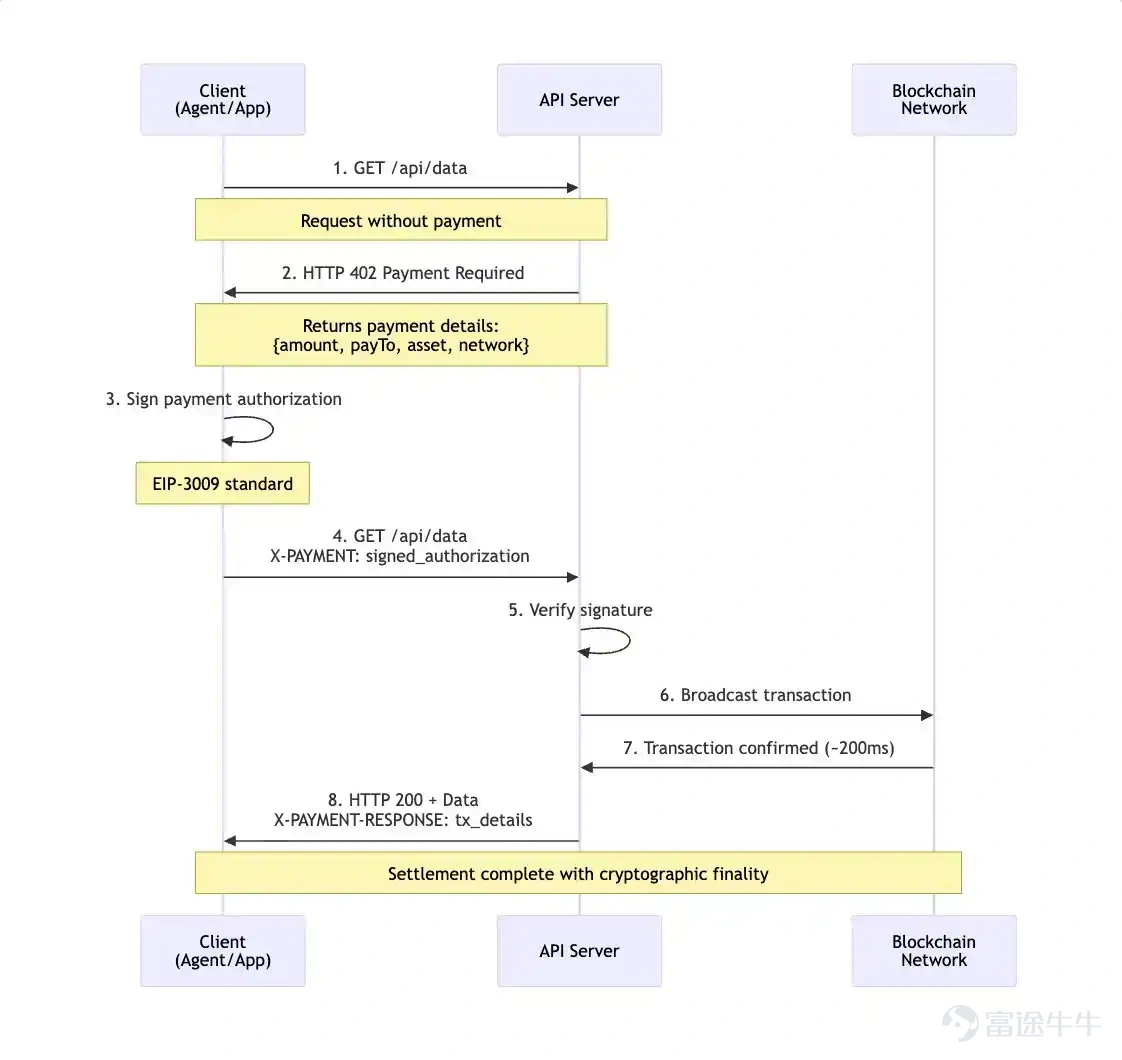
This issue saw structural progress in 2025. The x402 protocol, driven by institutions like Coinbase and Circle, was the first to embed stablecoin payments into HTTP requests and service invocation processes in a standardized manner, establishing the foundational form of an AI-native payment layer. By reactivating the HTTP 402 (Payment Required) status code, x402 enables AI agents to complete payments and settlements just like invoking APIs, without requiring additional account systems or human intervention, fundamentally altering the process where payments had to be handled externally in machine economies. This shift also transforms AI business models from subscription-based approaches aimed at human users to per-use or intent-driven payment systems for agents. Agents can dynamically purchase data, computing power, or service interfaces as needed for tasks, unlocking vast amounts of previously hard-to-price long-tail resources.
With the completion of x402’s V2 upgrade by the end of 2025, improvements in latency, session reuse, and automatic discovery could lay the groundwork for broader implementation in 2026, which may become the year Agentic Commerce enters an accelerated phase.AI is gradually transitioning from assisting decision-making to becoming a real economic participant representing individuals or enterprises in executing specific commercial behaviors,the consumer-side behavior path may shift from 'search—compare—place order' to 'authorize—verify—confirm'; on the enterprise side, many highly repetitive processes, such as reconciliation, procurement, and supply chain coordination, will also start to meet the conditions for systematic takeover by agents.
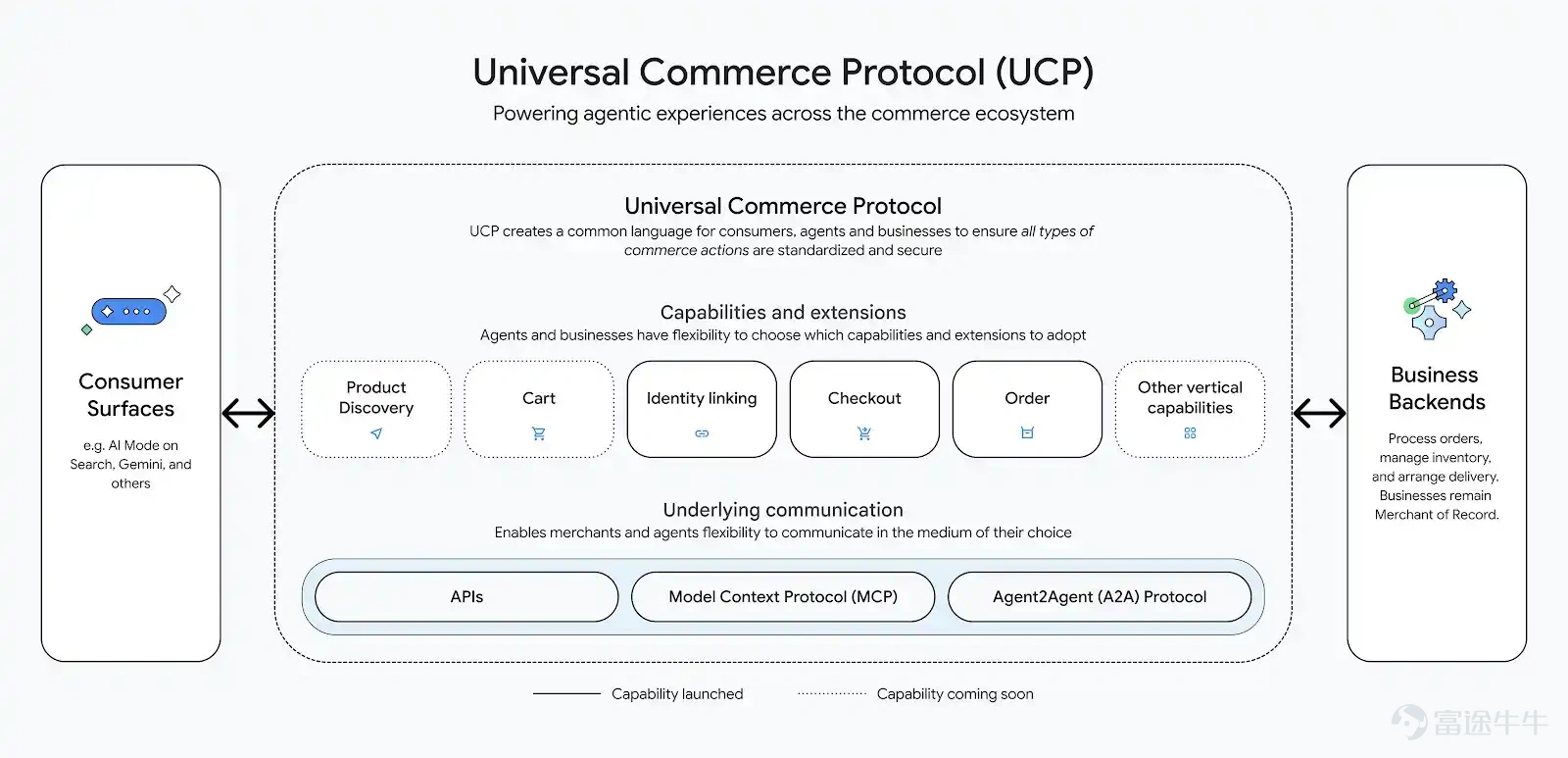
This trend is being echoed by a broader standard layer. Google's recent proposal of the Universal Commerce Protocol (UCP) marks the beginning of mainstream technology systems establishing unified norms for 'agent-understandable commerce interfaces.' UCP aims to create open interfaces between product discovery, transaction intent expression, and settlement processes, enabling AI agents to complete a full decision-to-transaction loop across platforms. While UCP handles the expression of commercial semantics, x402 assumes the role of value settlement, forming a layered collaboration that will provide clearer technical pathways for automated transactions between agents and between agents and merchants.
As a growing number of non-human entities begin holding funds and participating in transactions, new trust and compliance issues emerge. Traditional KYC systems centered on natural persons struggle to directly address the complex scenarios of the agent-driven economy. KYA (Know Your Agent) is set to become a key topic of market discussion and resolution by 2026, with the ERC-8004 protocol expected to see widespread adoption. Without compromising privacy, KYA must establish verifiable identity markers for agents, cryptographically binding them to their authorized entities, scopes of authority, and responsibility boundaries, while incorporating code audits and behavior monitoring to strike a new balance between efficiency and risk. Such trust frameworks will not only fulfill compliance functions but also serve as an essential prerequisite for agents to engage in more sophisticated financial activities.
Meanwhile, wallets will evolve from tools serving only human operations toexecution layers handling financial behaviors of AI agents, becoming the default entry point for agents to participate in economic activities under user authorization:
· Unified fund entry and settlement hub: By integrating multi-chain assets, stablecoins, and payment protocols, wallets can provide agents with consistent fund management and payment capabilities, allowing them to execute tasks without perceiving underlying network differences, thereby completing cross-chain settlements and value transfers;
· Agent behavior visualization and risk perception interface: Wallets are naturally positioned at the intersection of user assets and agency behavior, capable of aggregating and displaying real-time operations, historical performance, and key risk indicators of agents. This helps users understand 'what the agent is doing, based on what decisions, and bearing what risks,' establishing a clear cognitive boundary between automated participation and risk control.
· KYA Execution and Security Buffer Layer: As the KYA mechanism gradually takes effect, wallets can serve as execution nodes for agent identity and permissions, managing the identification, permission constraints, and abnormal behavior monitoring of agents accessing the ecosystem. When the system detects operations exceeding authorized limits or abnormal fund flows, the wallet can introduce necessary risk controls or manual verification without interrupting the overall automation process, providing bottom-line protection for user assets.
In 2025, privacy re-entered the core discussion area of the crypto market, with privacy-focused assets represented by ZEC experiencing multiple phases of strength throughout the year, making privacy a frequently discussed topic. In a chain environment that has long assumed transparency as the default, this price performance itself appears more like a forward-looking expectation, reflecting the market's reassessment of the necessity of privacy in the next phase of the crypto financial system.
From a longer-term perspective,Assets can carry privacy preferences but struggle to solve cross-protocol、Cross-application, cross-user level privacy consistency issuesWhen privacy demand shifts from 'a choice for a minority of users' to 'a prerequisite for most scenarios,' the coverage and scalability of a single asset path begin to show limitations. To achieve large-scale adoption on-chain, privacy needs to be embedded as an infrastructure capability, existing in a low-friction, composable, and default-available manner, rather than relying on isolated assets or applications for delivery.
This assessment received systematic responses from the Ethereum ecosystem in the second half of 2025. The Ethereum Foundation elevated privacy to a long-term strategic goal at the ecosystem level, explicitly stating that privacy should become a 'first-class property' of the Ethereum ecosystem. Around this goal, the foundation advanced several organizational and roadmap-level adjustments, including forming a privacy cluster and institutional privacy task force, restructuring the PSE team, and releasing a multi-year privacy technology roadmap. Privacy work was divided into three categories: private writes, private reads, and private proofs, corresponding to transaction and contract interaction, on-chain data access, and data validity verification, respectively.

Looking ahead to 2026, privacy urgently needs to transition from experimental R&D to systematic implementation in real-world use cases:
For Web2 users: privacy is a default expectation; bank transfers, securities accounts, and corporate financial systems do not require users to accept full public disclosure of assets and transaction paths, and the high transparency of on-chain states instead creates psychological and usage barriers;
For native Web3 users: in certain scenarios, users wish to conceal their asset holdings, trading strategies, governance positions, or address associations to avoid passive exposure of their behavior patterns;
For institutions and real-world asset on-chain scenarios: privacy is a prerequisite, and without minimal disclosure and controlled access mechanisms, traditional assets, contracts, and identity data cannot be securely migrated onto the chain.
Around the implementation of on-chain privacy, three main technical approaches have currently emerged within the Ethereum ecosystem.We anticipate that stealth addresses and privacy pool models are more likely to be widely adopted by mainstream applications first.:
· Stealth addresses (represented by ERC-5564)By generating one-time addresses for recipients, stealth addresses reduce the associability between addresses and identities, providing fundamental-level privacy protection for scenarios such as payments, airdrops, and salary disbursements without altering the existing asset forms and account models.
· Zero-knowledge privacy pools (zk-SNARK Privacy Pool)By funneling multiple transactions into an anonymous pool and using zero-knowledge proofs for verification, zero-knowledge privacy pools enable strong concealment of fund sources, destinations, and transaction amounts, suitable for financial and asset management scenarios with high privacy requirements.
· Privacy-native chains: Introducing default privacy assumptions at the protocol layer places transactions and states in a naturally non-linkable environment, minimizing explicit privacy operations from the user experience perspective. It is currently still in the experimental stage, facing issues such as ecosystem fragmentation, complex cross-chain interactions, and high integration costs with mainstream assets and the DeFi system.
As performance and fees gradually converge, privacy will begin to exhibit strong user stickiness and network effects. In a public state, cross-chain migration incurs almost no additional cost; however, once within a privacy-focused environment, migration inevitably introduces risks related to identity, time, and behavioral associations, making users more inclined to stay within the existing privacy context.
In this evolutionary path, wallets will become one of the most practical points of implementation for privacy capabilities:
Privacy is not a feature that can be simply layered on at the application level but needs to be systematically integrated throughout the entire process from when users open their wallets, read on-chain data, sign transactions, to identity interactions.
As capabilities for private reading and private writing advance, wallets will gradually assume the first line of privacy boundaries for users' on-chain behaviors, making asset queries, transaction initiations, and contract interactions no longer inherently expose complete behavioral trajectories.
With the maturation of capabilities like private proofs, wallets will become key execution nodes for 'minimal disclosure' data circulation, helping users strike a balance between trust and privacy in identity verification, asset proof, and compliance scenarios.
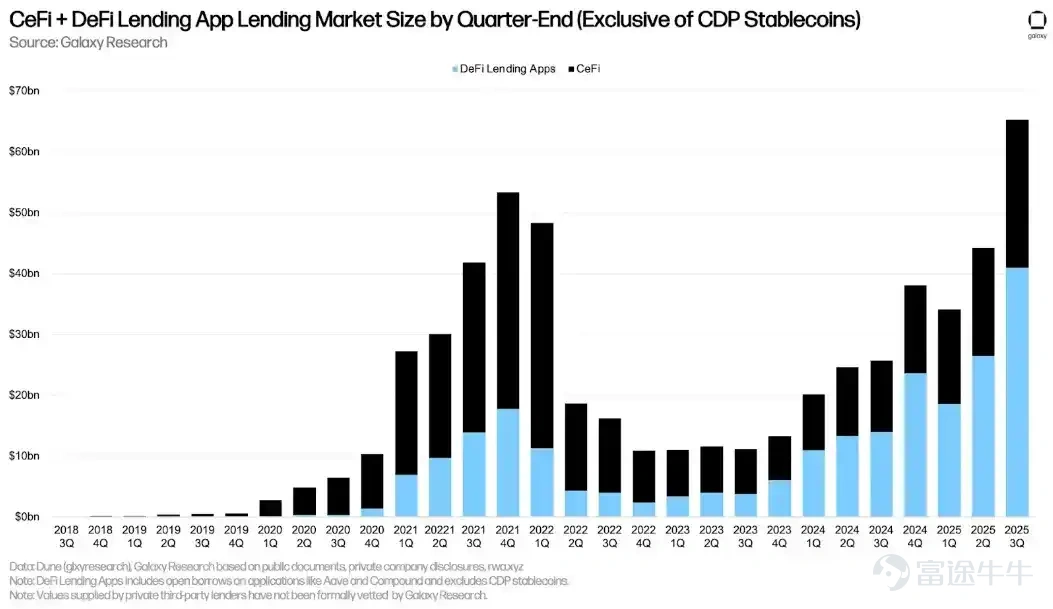
For a long time, on-chain credit has primarily revolved around whether 'collateral assets are sufficient.' While this design provided necessary security cushions for protocols during the DeFi cold start phase and accelerated the rapid expansion of lending markets, its limitations have begun to show as on-chain activities extend from simple trading and arbitrage to payment and asset management scenarios—it becomes difficult to effectively differentiate the true credit value and risk differences of on-chain participants.
A significant portion of on-chain borrowing revolves around leverage, arbitrage, circular lending, and position management, resembling an efficient capital allocation mechanism rather than being based on real financial demand involving time-value exchange. DeFi essentially operates a highly liquid market system emphasizing rapid entry and exit along with instant risk pricing, catering to high-frequency, short-cycle, strategy-driven funds while lacking effective recognition and incentives for long-term, stable usage behavior. This results in long-term users and short-term speculators being treated similarly in risk pricing and access permissions, forcing protocols to cover overall uncertainty by raising collateral requirements, thereby depressing capital efficiency and hindering the transformation of genuine on-chain behaviors into identifiable credit premiums.
Looking ahead to 2026, on-chain credit is more likely to be gradually implemented in the form of embedded capabilities. As on-chain finance expands from speculative use to payments, consumption, and asset management, credit systems that can identify and serve long-term genuine users are more likely to create stickiness and achieve scaled retention. Practices represented by 3Jane and Yumi show thatThe first step in building a credit system often lies in user identification and stratification, requiring the extraction of stable, continuous, and interpretable behavioral trajectories from on-chain noise to model on-chain credit.:
· Time dimension and behavioral stability: Credit is regarded as a state that updates over time. Protocols continuously observe characteristics such as asset volatility range, interaction frequency, capital turnover pace, historical compliance, and risk events, mapping these features into permissions, credit limits, and risk control thresholds. Synchronizing credit changes with behavior updates helps to proactively manage risks within behavioral chains, reducing uncertainties caused by one-time credit approvals.
· Building reputation and identity layers: First, complete user identification and profile stratification, then map reputation to product permissions and differentiated experiences, such as lower friction costs, higher operation limits, wider risk control boundaries, or better rate structures. The benefit of establishing the reputation layer first is that risk exposure remains controllable, allowing the system to complete user stratification and long-term incentives with lower financial risk, providing a data foundation and risk control experience for more complex credit products in the future.
In this evolution process, the importance of the wallet layer will begin to stand out. A single protocol or single chain can only capture fragments of user behavior, while the establishment of a credit system depends on cross-chain, cross-protocol, and cross-cycle data continuity. As the aggregation entry point for all user on-chain interactions, wallets naturally gather multi-chain asset distributions, long-term interaction trajectories, and payment authorization behaviors, making them the closest representation of the full user picture in the current ecosystem. Whether to treat users' long-term behavior as a core asset and build differentiated permission systems and service experiences accordingly will become an important foundation for applications to establish long-term user relationships and competitive barriers.
The development of RWA is set to gain policy tailwinds in 2025, with the SEC holding four consecutive crypto regulatory roundtable meetings from April to June. The May meeting explicitly focused on 'asset tokenization,' exploring development paths for the RWA tokenized market. In his keynote speech, SEC Chairman Atkins outlined new regulatory approaches around 'asset issuance, asset custody, and asset trading' for tokenization and clearly stated: 'Security tokenization can revolutionize outdated traditional models and benefit the US economy.'
As Ondo Finance completed its SEC review by the end of 2025, the regulatory environment saw substantial improvement. The 'Innovation Exemption' approach proposed by the SEC allows compliant entities to pilot securities tokenization within a regulated sandbox, indicating a shift in regulatory focus from pure risk prevention to institutional acceptance and controlled experimentation. This established a clearer legal foundation for asset issuance and removed key legal barriers for large-scale entry by traditional financial institutions.
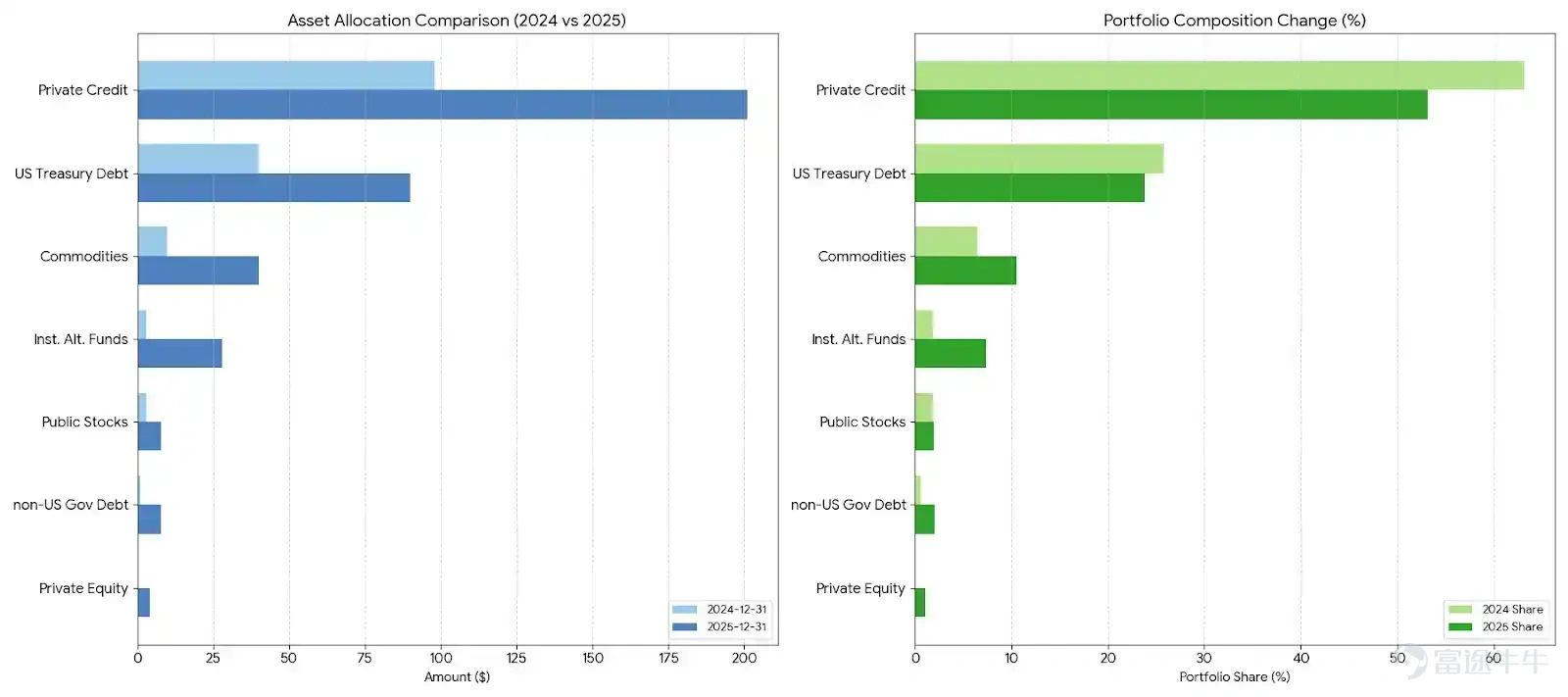
From the end of 2024 to the end of 2025, all sectors of RWA achieved positive growth.At the same time, there was a noticeable structural shift in capital flows.:
Asset scale achieved exponential growth: total market stock surged from $15.5 billion to $37.7 billion in just one year, representing an overall increase of 2.4 times.
Position structure shifted from unipolar concentration to diversified balance: private credit's share dropped from 63.2% in 2024 to 52.8%, with incremental funds dispersing into other sectors.
· Alternative assets have become a new growth engine: Institutional alternative funds (approximately 9x growth) and non-US government bonds (approximately 8x growth) emerged as key highlights of the year, reflecting a shift in investor risk appetite from single stable income to diversified alpha-seeking strategies.
· An all-weather inflation-resistant system: Commodities scale grew by about 4x year-over-year (accounting for 10.6% of the portfolio), complemented by private equity building positions from scratch, forming an RWA market with a combination structure of 'equity + debt + commodities + alternatives,' laying the groundwork for constructing all-weather strategies on-chain.
TCG (Trading Card Game, collectible card games), as a representative of long-tail RWA assets, also showed relatively strong market performance in 2025. Taking scarce cards (e.g., 1st Edition Charizard) as an example, they gradually demonstrated significant liquidity premiums in on-chain trading. These assets exhibit low correlation with traditional stock and bond markets, and their cultural and collectible attributes bring non-financial premiums, making them meaningful alternative asset options within the RWA framework, providing investors with a more diversified portfolio supplement.
It is expected that by 2026, with further establishment of the compliance framework, the market focus will shift from simple 'asset on-chain' to deeper 'trading business,' especiallyRWA perpetual contracts, RWA×DeFi will become core growth drivers:
(1) Evolution of trading forms: The rise of RWA Perps and synthetic assets
In 2026, the key variable for RWA is shifting from 'whether the asset is on-chain' to 'how to trade.' As oracle and Perps DEX infrastructures mature, the boundaries of RWA are being reshaped by synthetic assets (Synthetics). Under this logic, RWA is no longer limited to custodied physical or legally entitled assets but has evolved into 'any data stream with a fair price can be traded.' In addition to stocks and bonds, private company valuations, macroeconomic indicators (such as CPI, non-farm payrolls), and even weather data can bypass physical delivery restrictions through synthetic structures and be converted into on-chain tradable instruments. Everything Perpetualized is becoming a reality.
(2) Improvement in capital efficiency: DeFi composability and all-weather strategies
In 2026, the competitive focus of the RWA sector will shift from asset issuance to capital efficiency. With the underlying infrastructure now integrated, the fusion of RWA assets with DeFi protocols will deepen further, with 'yield generation + hedging' expected to become the new model. For instance, Horizon Protocol, launched by Aave, allows investors to earn stable returns by holding Treasury RWA while using it as collateral to establish macro-hedging positions on-chain. This model reduces idle capital and fully unlocks the potential of RWA, maintaining the safety net of TradFi while leveraging the liquidity advantages of DeFi, creating a true all-weather investment portfolio.
(3) Expansion of asset categories: On-chain integration of non-US dollar assets and fixed-income systems
In terms of asset categories, the expansion direction of RWA will no longer be limited to the US dollar asset system. With the depreciation trend of the US dollar, the on-chain integration of non-US dollar assets is expected to become a significant direction by 2026, including European, Japanese, and Korean stocks, as well as major foreign exchange markets (such as G10 currencies other than USD) related assets. Meanwhile, the on-chain integration of money market funds and more fixed-income derivatives will further enrich the pool of low-volatility assets on-chain, providing more optional dimensions for asset allocation and trading at the wallet end.
From the wallet perspective, the core value of RWA does not lie in whether a single asset is successfully integrated on-chain, but rather in whether it can be naturally incorporated into users' daily asset allocation and trading behavior. As the trading form evolves from RWA primarily focused on holding to tradable and composable RWA, wallets are becoming an essential channel connecting users with global assets, offering diversified asset exposure beyond local markets and single-currency systems, and driving on-chain finance from crypto asset management toward broader cross-market asset allocation.
The year 2025 marks a critical turning point for liquidity changes in decentralized perpetual contract trading (Perp DEX) on-chain, with Perp DEX achieving explosive growth in both capital scale and trading activity.
In terms of absolute scale, the industry TVL demonstrates strong capital retention capabilities, consistently stabilizing above $230 billion after peaking in October. On the trading volume front, starting from the second half of 2025, the monthly average trading volume of mainstream protocols exceeded $5 trillion, breaking through the $1 trillion ($1 Trillion) threshold consecutively in October and November during peak periods, proving that on-chain liquidity depth is now sufficient to support institutional-grade funds.
From a relative structural perspective, the ratio of Perp DEX to CEX futures trading volume climbed from the beginning of the year 6.34% to nearly its November peak of 20%. Taking Hyperliquid as an example, its monthly derivatives trading volume ratio against Binance increased from 8% to nearly 14%This series of data indicates that with the improvement of infrastructure and changes in user habits, Perp DEX has broken through the liquidity bottleneck and is gradually challenging traditional spot DEXs, becoming the next-generation core traffic pool for on-chain funds.
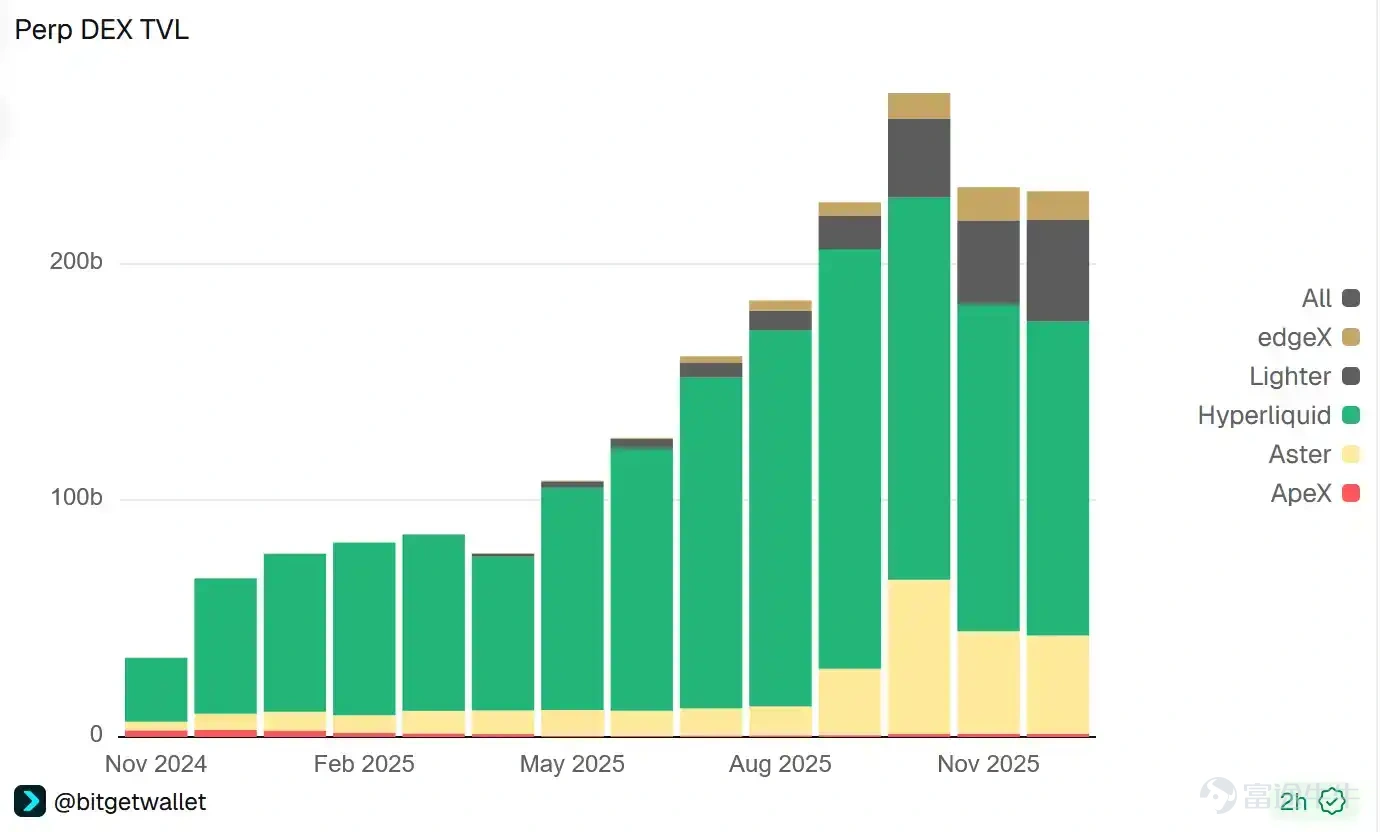
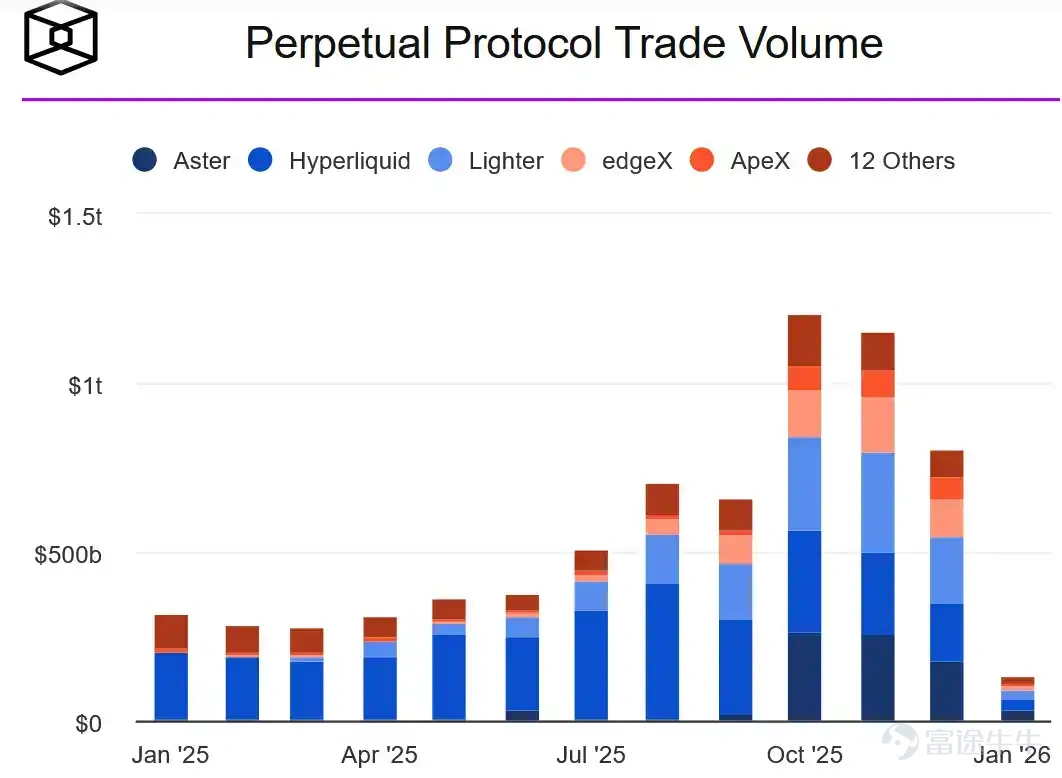
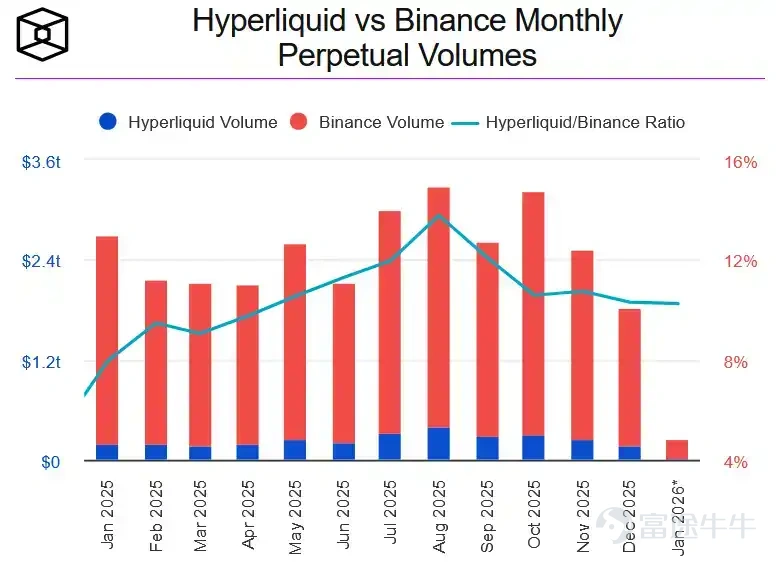
Another notable feature of the Perp DEX track in 2025 lies in the rapid restructuring of the competitive landscape. The market shifted from Hyperliquid's absolute monopoly at the beginning of the year to a multipolar competition in the second half. According to The Block, by mid-2025, Hyperliquid’s trading volume share fell below 60% for the first time. New players like Aster and Lighter began capturing shares within specific user groups and trading scenarios through initiatives such as token incentive programs. However, this shift does not indicate a substantial shake-up of top-tier liquidity. Perpetual contract trading inherently benefits from strong network effects and economies of scale — the deeper the liquidity, the lower the slippage, making it easier to become traders' long-term mainstay. Historical experience shows that, whether in centralized exchanges (CEX) or decentralized exchanges (DEX), derivatives markets often exhibit a 'the strong get stronger' structure. The core challenge for second-tier players remains how to form a self-sustaining liquidity flywheel.
Looking ahead to 2026, there are still 20-30 Perp DEX projects scheduled to launch Token Generation Events (TGE). Measures such as transaction mining, token incentives, and market-making subsidies primarily reflect competition for existing users rather than an actual expansion of market size. Against the backdrop of stabilizing overall derivatives demand, the focus of competition in Perp DEXs is expected to shift gradually from traffic expansion to efficiency, stability, and user retention. Key variables determining the long-term position of protocols will include order matching efficiency, system stability during extreme market conditions, capital capacity, and sustained depth in major trading pairs.
At the application level, wallets have validated the feasibility of in-app derivatives trading (In-App Perps) in real user and trading scenarios through native integration with leading Perp DEX platforms like Hyperliquid. Perp DEX is becoming animportant incremental scenarioUsers completing Perp orders, risk control, and asset management directly within wallets is evolving into a more natural usage pathway.
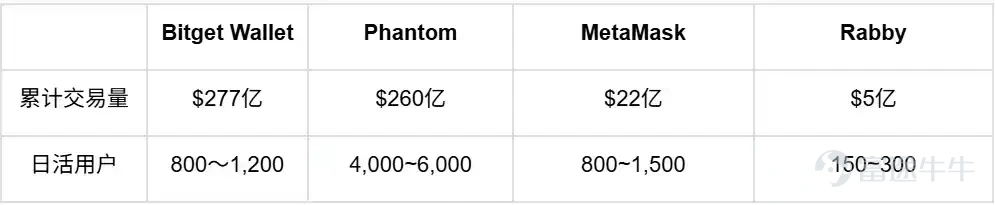
As the front-end closest to users' assets and decision-making paths, wallets will play an increasingly vital role in distributing and supporting the Perp DEX ecosystem.Amid diminishing wealth effects from new tokens and large-scale transactions gradually returning to core assets like BTC/ETH, Perp trading within wallets provides users with higher-frequency and more continuous reasons to engage. For wallets, Perp trading is no longer merely a functional supplement but a key scenario for connecting on-chain liquidity, enhancing user stickiness, and increasing usage frequency. It is anticipated that by 2026, as infrastructure matures further and user habits continue shifting, the deep integration of Perp DEX and wallets will become a long-term structural trend in the on-chain derivatives market.
Looking back at 2025, Meme remains one of the most significant attention gateways on-chain. Trump issuing tokens, Web2 celebrity coins, Pump.fun live streams, and the Chinese Meme wave successively formed multiple cycles of activity at varying scales, releasing certain wealth effects over specific periods. During these structural market movements, many users downloaded a wallet for the first time, completed their first on-chain transaction, and understood concepts like Gas, slippage, and failure rates for the first time. Meme has become the most direct and lowest-barrier entry point for users entering the on-chain world.
From the internal user and transaction data of Bitget Wallet, this trend is particularly evident:New users in 2025 accounted for approximately 65% of the annual trading users and contributed nearly 61% of the total trading volume.Meme truly played the role of on-chain enlightenment for new users entering, making their first trades, and engaging in high-frequency usage. The periodic recovery of Meme trends often directly corresponded to simultaneous increases in wallet downloads, address creation, and Swap activities.
However, judging from the trading volumes and number of trading addresses on major Meme Launchpads, the repeated emergence of Meme hotspots did not bring about a sustained recovery in overall on-chain liquidity. A Meme season covering the entire market like the Trump coin at the beginning of 2025 is becoming increasingly difficult to replicate. In 2026, Meme is more likely to exhibit structural market behavior:Periodic speculative opportunities arise around specific hot topics and narrative windows.

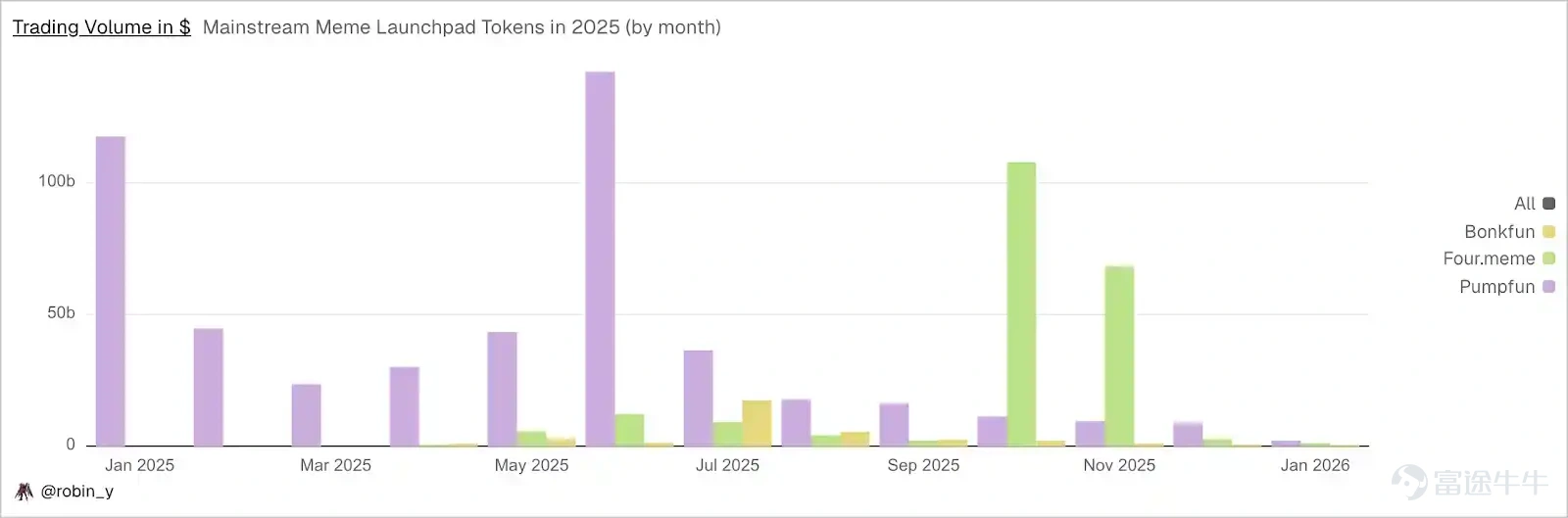
Another uncertainty for the 2026 Meme market comes fromthe diversion caused by new forms of 'hotspot assetization'.Pump.fun quickly converts hotspots into Tokens, while Polymarket turns hotspots into topics and odds. Both are essentially competing for the same type of attention and risk appetite. As prediction markets lower participation thresholds for hotspot events, offer more direct modes of expression, and present product formats that are easier for the general public to understand, Meme may face further diversion of attention and on-chain liquidity in some scenarios.
In the ongoing evolution of Meme, an increasing number of projects have been attempting to attract external incremental users through multiple channels, transitioning Meme from an asset form centered on internal consensus to a more diffusive and clearly defined cultural symbol output. They are also trying to create reverse influence in real-world events and public topics. Meanwhile, although various Launchpads have proven the advantages of fair issuance and efficiency, improvements are still needed in terms of creator incentive mechanisms, long-term value承接 capabilities, and the continuous introduction of non-crypto users.
However, there is no doubt that what Meme represents—fair launches, permissionless on-chain issuance, and participation methods—will remain one of the most attractive and vibrant experiments in the crypto world. The future anticipation lies in its value-based upgrade: whether it will remain stuck in short-term, highly zero-sum player-versus-player games or has the potential to once again produce a phenomenon-level Meme that can carry cultural expression, involve creators, and attract a broader user base beyond the current circle.
From a product and tool perspective, Meme trading itself may find it hard to see disruptive innovation and will enter a phase centered on 'intelligence and refinement.' Trading tools are helping users enhance their perception of the chain in low-liquidity environments through more detailed data presentation, clearer risk alerts, and proactive intelligent services, enabling faster and more stable decision-making. Products focusing on address relationship and cluster analysis will become more widespread, serving as foundational tools for an increasing number of users. Providing more transparent and understandable on-chain behavior analysis for mass users will become a key focus for the continuous optimization of trading tools and wallet functionalities in the next phase.
By 2025, prediction markets will have completed a critical leap from being a fringe product in the crypto space to becoming a prototype of mainstream financial applications, with overall trading volume and participation significantly increasing. The monthly trading volume of current mainstream prediction markets has stabilized above $10 billion, with annual cumulative trading volume exceeding USD 40 billionAlthough its absolute scale is still significantly smaller than mature financial markets such as stocks and futures, as an independent new asset class, the prediction market has shown an extremely steep growth trajectory and has entered a clear phase of accelerated expansion.
As trading depth increases and participant structure improves, its function is undergoing substantive changes. In more and more scenarios, prices no longer merely reflect opinions or sentiment but instead represent information that some participants have already grasped but not yet publicly confirmed. The flow of capital itself becomes a carrier for information release, enabling the market to form price signals ahead of factual disclosures.
The evolution of contract structures further reinforces this trend. As prediction markets expand from simple binary judgments to finer-grained event breakdowns and combinatory pricing, their prices begin to acquire referential financial significance. In certain cases, when the market size is large enough and stakeholders pay close attention to price movements, prediction markets may even provide feedback on the behavior of event participants, making price signals one of the variables influencing real-world decisions.
From a broader perspective, prediction markets can be understood as aA more mature attention-trading mechanism:
· Meme trading is essentially a game of narratives and emotions, with its connection to real-world events often being indirect and unstructured. It usually relies on Devs or communities for subjective interpretation and mapping, lacking a unified and reusable event framework. This makes it easier for assets with identical names and angles to circulate simultaneously, with discussions and propagation often confined within the crypto community.
· Prediction markets trade highly specific real-world events, based on clear occurrence conditions and settlement rules (e.g., whether it happens, when it happens, and in what form). Events of public interest from the real world — such as political developments, macroeconomic shifts, industry dynamics, celebrity incidents, sports, etc. — are directly converted into tradable and verifiable probability assets.
In this sense, prediction markets possess not only greater virality and discussion value but also significant positive externalities: researching issues, acquiring information, and assessing trends can be monetized through market mechanisms, while earlier and clearer outcome signals themselves carry substantial social value.
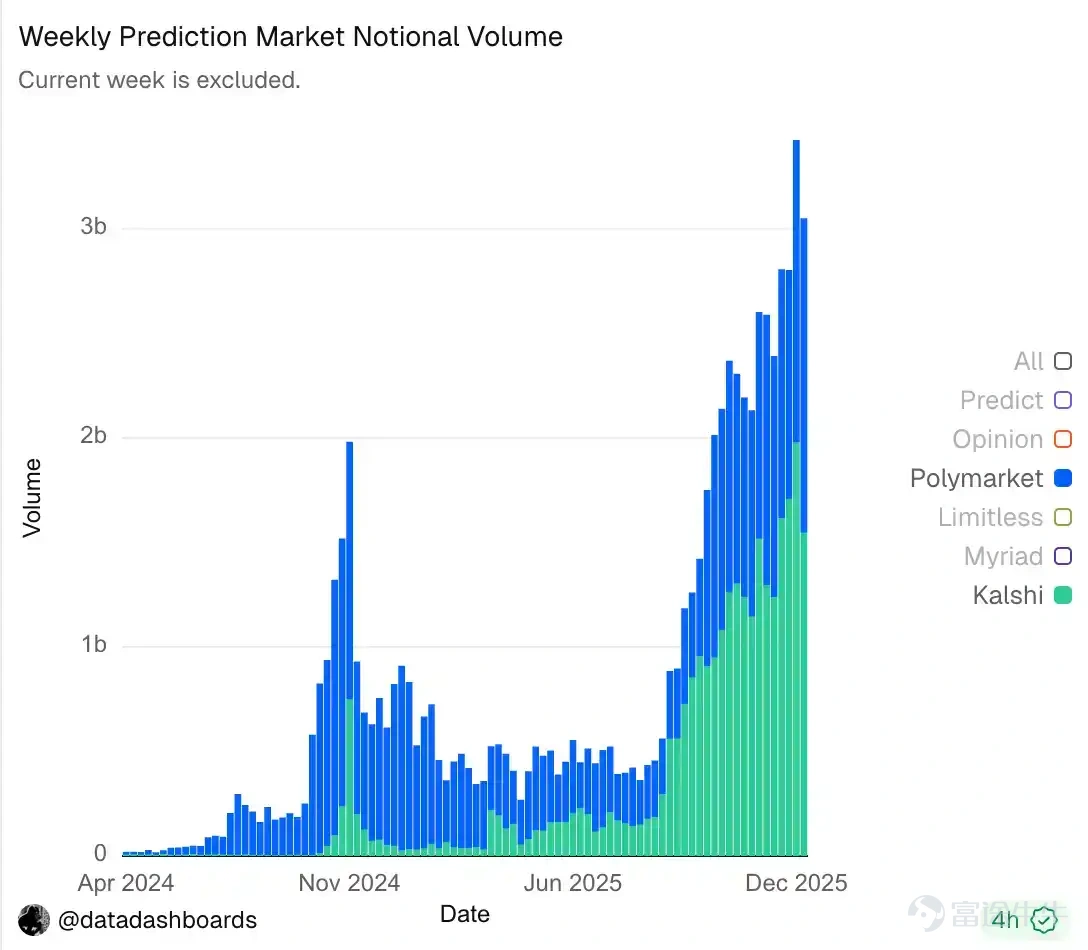
The year 2026 will be a period of high event concentration. A series of major events with clear outcome milestones, such as the World Cup and the US Congressional midterm elections, will continue to provide high-quality, sustainable tradable contracts for prediction markets. Against the backdrop of increased trading volume, maturing platform capabilities, and gradually clarified regulatory pathways, the dense occurrence of real-world events is expected to amplify the prediction market significantly, driving it into a broader growth phase by 2026.
As the number of underlying platforms increases and event coverage gradually improves, the focus of competition in prediction markets is also shifting: from whether market supply capacity exists to who can become the primary trading entry point for users. At this stage, user experience, information organization methods, and trading efficiency are becoming key differentiating factors between platforms.
Looking ahead to 2026, prediction markets are more likely to see innovations emerge first inInterface layer and product layerInnovation is emerging on the surface rather than achieving full integration at the liquidity aggregation level. This assessment stems from the structural characteristics of prediction markets: events are highly fragmented, and different platforms lack a unified standard for defining the same event, splitting options, and settlement rules; variations in account systems, fund custody, and order logic across platforms also make it difficult to achieve seamless cross-platform matching and fund consolidation as seen in DEXs.
Against this backdrop, the core needs of most retail users remain focused on event discovery, quick decision-making, and convenient order placement, rather than cross-platform odds comparison or complex arbitrage execution. In the current phase, a more realistic and feasible direction for the evolution of prediction markets may be the unification of the information layer and interface layer: by improving event filtering, odds display, and position management, reducing users' cognitive and operational costs, thereby enhancing overall decision-making efficiency.
As the front end closest to users' assets and decision-making paths, wallets naturally have the potential to become the main entry point and distribution layer for prediction markets. As prediction markets expand from crypto-native users to broader consumer groups, their strong correlation with real-world events will continue to amplify the value of this entry point. We look forward to witnessing the role of wallets evolve from a simple collection of transaction functions to a core entry point for event-driven daily financial behaviors.
Based on the above observations, we believe that on-chain activities in 2026 will continue to shift from being driven by trading to being driven by usage, gradually transitioning from reliance on periodic market trends and traffic to reusable and retentive daily financial behaviors. In this process, wallets will gradually evolve into the core front-end application connecting users, on-chain systems, and the real-world financial ecosystem. Based on this judgment, we summarize the evolutionary paths of eight key areas in 2026 into the following three trends:
· Stablecoin payments and AI agent consumption drive the expansion of value exchange networks, with wallets becoming the settlement routing layer between on-chain and real-world economies
As stablecoins continue to make breakthroughs in regulation, issuance scale, and adoption rates, they have become an essential component of the global value clearing network and are beginning to be deeply integrated into cross-border B2B2C payments, local instant payment systems, and card organization clearing and settlement systems; the introduction of protocols like x402 has enabled AI agents to independently complete payment transactions under predetermined authorization, significantly expanding the participants and frequency of value exchange; these two developments will jointly drive the flow of value on-chain from native crypto scenarios towards real-world economies and automated business models. By integrating stablecoin systems, real-world payment networks, and multi-chain assets, wallets will provide users with functions such as currency exchange, path orchestration, and fund scheduling, gradually evolving into the core settlement routing layer connecting on-chain and real-world economies.
· Privacy and credit enter the preparation stage for scaled adoption, with wallets becoming the infrastructure layer for long-term on-chain financial relationships
As the proportion of payment and asset management scenarios in on-chain activities continues to rise, privacy and credit are transitioning from peripheral issues to essential prerequisites for everyday finance. Privacy is no longer merely a preference for a small group of users but will gradually become a default capability necessary for supporting large-scale cryptocurrency adoption. On-chain credit will also move beyond the single-collateral logic and begin establishing a tiered system based on users' long-term behavior trajectories, time accumulation, and performance stability. The implementation of these two needs relies on continuous cross-chain, cross-protocol, and cross-cycle data. As the aggregation entry point for users' on-chain behaviors, wallets will start to serve as practical endpoints for privacy boundaries and credit statuses by systematically integrating asset queries, transaction initiation, identity interactions, and permission controls, providing infrastructure support for long-term, reusable on-chain financial relationships.
· Meme, RWA, Perp, and prediction markets reshape the structure of on-chain tradable assets, with wallets becoming the main transaction承接layer
The diversification of on-chain tradable asset categories will comprehensively cover different users' risk preferences and investment needs. Meme, as an important attention-based asset on-chain, will continue to exhibit structural trends. The incremental scale and capital depth of on-chain trading will gradually shift towards asset categories with stronger financial attributes and real-world anchors, such as RWA, perpetual contracts, and prediction markets. RWAs will evolve into DeFi financial instruments that can be freely traded and combined, meeting demands for stable returns and diversified portfolios. Perpetual Decentralized Exchanges (Perp DEXs), after enhancing liquidity and stability, will continuously attract high-frequency and professional traders. Prediction markets, through event probability pricing, offer new risk exposures for opinion-driven and information-driven users. Users' trading and asset management behaviors will increasingly concentrate within wallets capable of providing multi-asset options alongside unified, permissionless operational experiences, making wallets the primary gateway for global asset allocation and cross-market trading.
These outlooks represent only a periodic review and expression, perhaps not constituting definitive answers. The industry is still rapidly evolving, with many paths yet to be finalized and many questions far from being thoroughly discussed. Through this report, we aim to systematically present Bitget Wallet's observations and thoughts on on-chain daily finance for 2025-2026, offering perspectives that can be continuously verified and discussed within the industry.
Whether you are a crypto-native builder, researcher, developer, or a participant from traditional finance and technology fields, we look forward to ongoing exchanges with you. Through open discussions, we will continuously refine our judgments and improve our understanding through practical feedback, working together with more like-minded individuals to push on-chain finance towards a more authentic and sustainable direction, reshaping the global financial infrastructure of the next era.
Risk Disclaimer: The above content only represents the author's view. It does not represent any position or investment advice of Futu. Futu makes no representation or warranty.Read more

Comments
to post a comment
1