
2026 IPO bonanza! Over 90% of new stocks rose on their debut

The listing dream of Golden Star Beer: A special dividend exceeding 300 million yuan but owes social security and housing funds, what will it compete with giants?
Henan Golden Star Beer Co., Ltd. (hereinafter referred to as Golden Star Beer), which has had a listing dream for many years, has recently finally submitted its application to the Hong Kong Stock Exchange, with Citic Securities and BOC International as joint sponsors.
Whether it can successfully enter the capital market still needs to be verified over time. From the prospectus disclosed by the company, although Jinxing Beer's performance has seen explosive growth, the hundreds of millions of yuan in dividends distributed before the listing application left many people astonished.
The public couldn’t help but speculate that after the actual controller took away hundreds of millions of yuan in dividends, they then sought public fundraising. This 'capital-raising' effect and the logic of development through fundraising may, to some extent, conflict with each other.
Advantages of Chinese craft beer, weaknesses of being eighth in the industry
According to Tianyancha, Jinxing Beer was established in December 2022; however, the prospectus traces its origins back to 1982. In the beer market, although Jinxing Beer is far less ubiquitous than leading brands such as Tsingtao Beer, Snow Beer, and Budweiser, in recent years, Jinxing Beer has successfully captured the fusion of tea, fruity flavors, and beer.
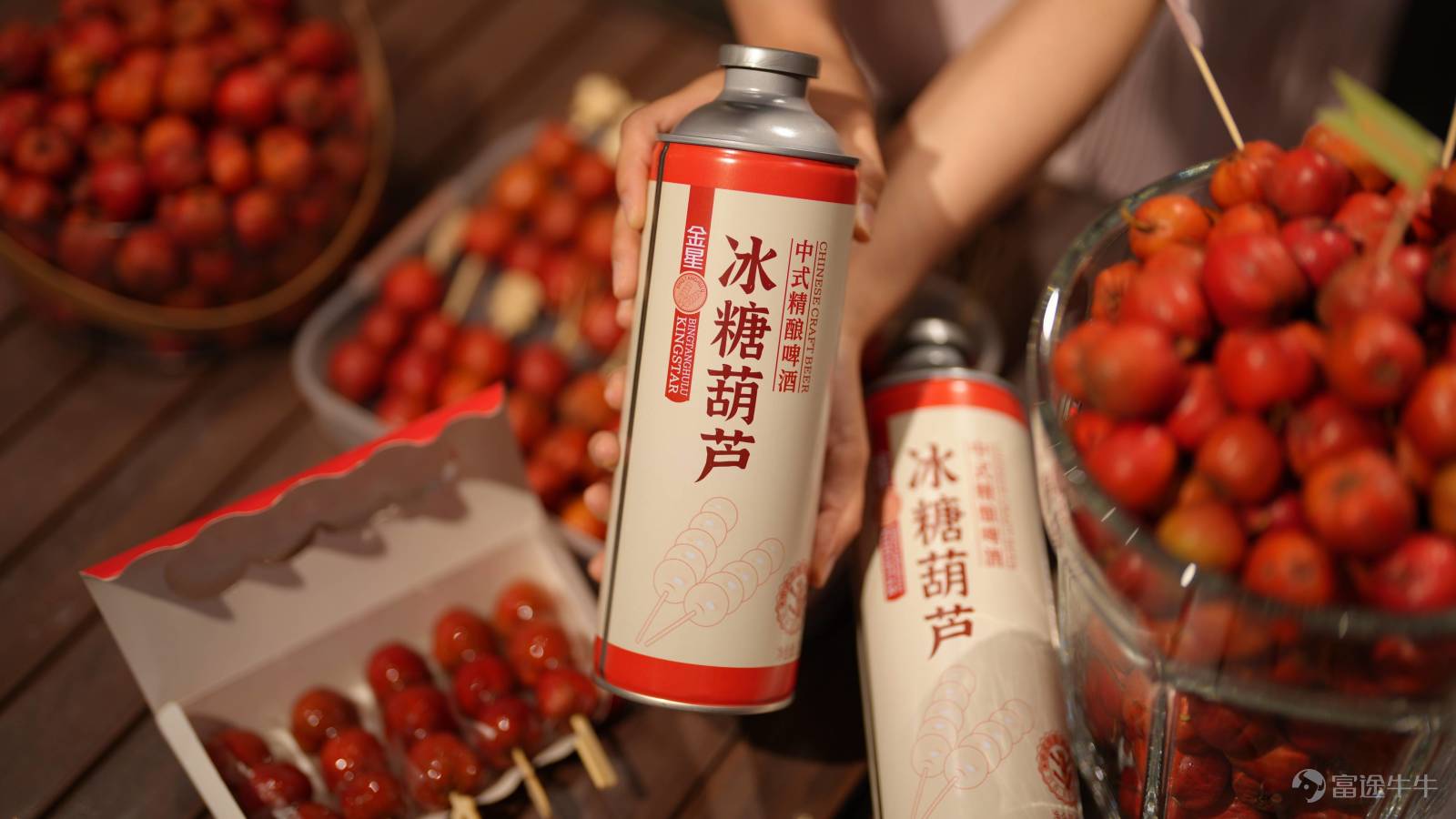
The prospectus states that in August 2024, the company launched its first Chinese craft beer – Jin Xing Maojian – and subsequently expanded its offerings to include jasmine tea, hawthorn candy, and tangerine varieties. As of September 30, 2025, the Chinese craft beer range included 50 SKUs, contributing 78.1% of revenue.
The company believes it has built a strong technical barrier in the brewing techniques for Chinese craft beer. With a research and development team led by master brewers and sommeliers, the company has laid a solid foundation for product innovation and quality control. Its proprietary '1258 Brewing Process' systematically achieves the true integration of tea and beer. During the fermentation of tea-infused beer, alcohol-free yeast is introduced, significantly enhancing flavor harmony and depth. At the same time, cold-brew technology precisely extracts the original aroma of tea, avoiding damage to the tea’s essence from high temperatures, ensuring the tea fragrance remains natural and long-lasting. The '1258 Brewing Process,' combined with a proprietary yeast strain developed over more than 40 years, not only gives the beer a rich taste but also fully presents the mellow and refreshing notes of famous Chinese teas.
After launching its Chinese craft beer, Jinxing Beer added over 1,000 specialized distributors, creating a distribution network that operates parallel to and complements the traditional beer distribution system. As of September 30, 2025, the distributor network covered 29 provinces nationwide. While distributors continued to serve traditional outlets like supermarkets, convenience stores, and restaurants, they were encouraged to integrate instant delivery services to improve order response times and consumer convenience.

In terms of industry competitiveness, according to CIC Consulting, based on retail sales in 2024 and the first nine months of 2025, the company ranked as the eighth-largest enterprise in China's beer industry and the fifth-largest domestic beer company. As of September 30, 2025, the company was the third-largest craft beer enterprise in China and the largest flavored craft beer company, with a market share of 14.6%.
In terms of market size, measured by retail value, China's beer market has grown from RMB 604.3 billion in 2019 to RMB 734.7 billion in 2024, with a compound annual growth rate (CAGR) of 4.0%. It is expected to maintain steady growth over the next five years, reaching a market size of RMB 929.3 billion by 2029, with a CAGR further increasing to 4.8% between 2024 and 2029.
Measured by retail value, the craft beer market size grew from RMB 12.5 billion in 2019 to RMB 63.2 billion in 2024, with a CAGR of 38.4%. Between 2024 and 2029, it is expected to continue expanding rapidly, with an average annual compound growth rate of 23.6%, potentially reaching a market size of RMB 182.1 billion by 2029. By comparison, the industrial beer market has experienced relatively stable growth. Measured by retail value, its market size increased from RMB 591.8 billion in 2019 to RMB 671.5 billion in 2024, with a CAGR of 2.6%. The CAGR between 2024 and 2029 is projected to be 2.2%, reaching RMB 747.2 billion by 2029.
This shows that Golden Star Brewery has successfully hopped onto the fast track of the rapidly growing craft beer market. However, when looking at the overall beer market share rankings, Golden Star Brewery, ranked eighth, is considerably far behind its competitors.
As of the end of September 2025, Golden Star Brewery's market share was only 0.4%, while the market shares of the top seven companies were 21.6%, 17.3%, 16.7%, 9.3%, 8.2%, 3.5%, and 1.0% respectively. Even though the company claims a compound annual growth rate of 23.7% from 2022 to 2024, the highest among beer enterprises, capturing business from these long-established giants remains highly challenging.
To a certain extent, most consumers are still most familiar with industrial bottled or canned beer found everywhere on the streets. It is ubiquitous and inexpensive, making it suitable for mass consumption, especially in the current climate of consumer adjustments.
Higher-priced craft beer can actually be divided into two categories: one being bar-made craft beer, which is relatively expensive, and the other being Golden Star Brewery-style craft beer. The former often provides an excellent drinking experience, while the latter resembles industrial beer production but in bottled or canned craft form.
Can Golden Star Brewery’s niche strategy reverse its fortunes and dominate the entire beer industry? Or can the beer giants quickly encroach on Golden Star Brewery’s 'craft' advantage?
In terms of economies of scale at present, the latter outcompeting the former seems more feasible. According to data from the China Alcoholic Drinks Association, in 2023, China Resources Beer (00291.HK), Tsingtao Beer (600600.SH; 00168.HK), Budweiser Asia Pacific (01876.HK), Yanjing Beer (000729.SZ), and Chongqing Beer (600132.SH) held market shares of 28.89%, 19.71%, 19.5%, 10.48%, and 7.45% respectively in the Chinese market. In both 2023 and 2024, the top five companies collectively generated annual revenues exceeding 150 billion yuan. Among them, Budweiser Asia Pacific, China Resources Beer, and Tsingtao Beer, the top three, each had annual revenues above 30 billion yuan, while Chongqing Beer and Yanjing Beer reported revenues above 10 billion yuan.
Despite rapid growth, limitations remain significant.
Golden Star Brewery’s economies of scale are merely a fraction of those of the aforementioned giants.
In 2023, 2024, and the first three quarters of 2025 (the reporting period), Golden Star Brewery achieved revenues of 356 million yuan, 730 million yuan, and 1.11 billion yuan respectively. Gross profits were 97.274 million yuan, 276 million yuan, and 521 million yuan, with gross margins of 27.3%, 37.8%, and 47.0%. Net profits were 12.196 million yuan, 125 million yuan, and 305 million yuan, with net profit margins of 3.4%, 17.2%, and 27.5% respectively.
Zhu Danpeng, Vice President of the Guangdong Food Safety Assurance Promotion Association and analyst of China's food industry, pointed out that as a representative of provincial leaders and one of the few remaining regional brands, Golden Star Brewery has found a development path or 'rebirth approach' through innovation, upgrades, and iteration in recent years, leading to its rapid growth. Within the craft beer segment, it is considered a large enterprise, but within the overall beer industry, it is relatively small, sitting right in the middle, neither too big nor too small in terms of scale effect. Therefore, the key to supporting the company’s development lies in maintaining good speed and quality in innovation, upgrades, and iterations; otherwise, its success may be short-lived.
Perhaps missing out on an IPO for many years, along with a lack of funding and comprehensive planning, has led to the relatively weak scale of Golden Star Brewery at present.
Public data shows that around 2010, Golden Star Brewery initiated its shareholding system reform, completing the restructuring in August 2011, and once again putting its IPO plan on the agenda. At that time, Chairman Zhang Tieshan of Golden Star Brewery pointed out, 'Golden Star Brewery must go public; relying solely on the company's own profits for growth is no longer feasible. Therefore, the key issue moving forward is how to maintain profitability and increase profits.' It was reported that the company planned to go public within a timeline of three to five years.
After a decade without success, during the 2021 New Year appreciation event, Deputy Chairman and General Manager Zhang Feng of Golden Star Brewery stated: 'The company’s vision is to become a first-class listed beer enterprise with nationwide influence.' According to reports, as the brewery approaches its 40th anniversary, Golden Star Brewery Group announced plans to prepare for an IPO. The year 2022 marked the beginning of the company’s preparation for listing, with the group aiming to achieve its IPO target by 2025.
At least from these timelines, Golden Star Brewery’s IPO is delayed by approximately 10 to 15 years. The process has been undeniably long.
Zhu Danhong believes that when a company reaches a certain size, it needs to instill greater confidence in its team, distributors, and suppliers. Going public can enhance the company’s overall strength, establish a larger moat, and improve risk resistance. Additionally, for national expansion or achieving growth and refinement, the company must also have the empowerment of the capital markets.
Due to its origins in Henan, Golden Star Brewery enjoys a relatively strong advantage within the province, which is also reflected in the central China market. The prospectus shows that over 90% of Golden Star Brewery’s revenue relies on distributors. As of September 30, 2025, the company has established cooperative relationships with more than 2,000 distributors. Distributors are the core force enabling the company’s regional expansion and market penetration.
During the reporting period, distributor revenue from the central China region amounted to 307 million yuan, 435 million yuan, and 510 million yuan, accounting for 98.4%, 73.6%, and 58.8% of total revenue, respectively.
Renowned economist Song Qinghui believes that over 90% of Golden Star Brewery’s peak performance comes from central China distributors, and nearly 60% still depends on them currently. This highlights the double-edged sword effect of the company’s business development. On one hand, the company’s strong overall capabilities in this region over the years serve as a crucial support for its development. On the other hand, the company has not truly expanded beyond central China to cover the entire nation, which has resulted in the company’s stagnant scale for many years, only recently crossing the 1 billion yuan threshold.‘The biggest pressure and challenge for the company after submitting its listing application to the Hong Kong Stock Exchange lies in what to do post-IPO: how to execute a nationwide strategy? How to compete with giants worth hundreds of billions? If these goals cannot be achieved, the company’s future prospects will remain bleak.’
According to the prospectus, the proceeds from Golden Star Brewery’s IPO will mainly be used to increase production capacity, strengthen global sales channels, conduct marketing and brand building, and drive product innovation and expand its product portfolio.
The actual controller holds over 90% of shares, distributing 300 million in dividends while owing social security and housing fund payments
However, what has sparked significant controversy is that just before filing for the IPO, Goldstar Brewery distributed over 300 million in dividends in 2025, surpassing its net profit during the same period.
The prospectus shows that in March, May, and October of 2025, Goldstar Brewery distributed dividends of 102 million, 127 million, and 100 million respectively to shareholders, cumulatively distributing 329 million. As previously mentioned, the company’s net profit for the first three quarters of 2025 was only 305 million.
In just a few months, a 'fire sale-style dividend' rapidly took place, with the vast majority flowing to the father-and-son controlling shareholders. Currently, Zhang Tieshan and his son Zhang Feng hold a combined 93.45% of the proposed listed company's shares through direct and indirect means.
Liu Zhigeng, a well-known expert in finance, taxation, and auditing, as well as a senior certified public accountant, pointed out: 1. The essence of a 'draining-style dividend': Goldstar Brewery had a net profit of 305 million in the first three quarters of 2025, but distributed 329 million in dividends just a few months before its IPO, exhausting previous profits and then relying on IPO financing to 'replenish funds.' Essentially, this money mostly went into the pockets of the Zhang family, hence being labeled by the market as a 'draining-style dividend.'
2. Issues of interest transfer and governance: With highly concentrated equity, dividend decisions lack checks and balances, clearly dominated by family will, severely neglecting the interests of minority shareholders.
3. Questioning the motive for going public: Outsiders are concerned that the company is listing to solve family financial issues rather than for corporate development, making new investors 'scapegoats.'
Liu Zhigeng believes that investors should be highly vigilant about such companies. This model exposes several key risks: 1. Corporate governance defects: Family control, lack of transparency, prone to irrational decision-making, harming long-term corporate interests. 2. Financial sustainability in question: Rushed dividends may impact the company's cash flow and debt repayment ability, creating hidden dangers for post-IPO operations. 3. Potential compliance and reputation risks: The company has been exposed for failing to pay social security and housing funds; this behavior of 'large-scale cash-out dividends to shareholders while defaulting on employee social security and housing fund contributions' could attract regulatory scrutiny and public backlash, damaging the company's brand value.
Liu Zhigeng stated that this is not simply a matter of 'raising money,' but a complex issue involving corporate governance, interest distribution, and the purpose of listing. Investors must thoroughly evaluate the financial sustainability and governance structure before considering participation.
Indeed, alongside the over 300 million in dividends, Goldstar Brewery also owes social security and housing fund payments. According to the prospectus, the company failed to fully pay social security and housing funds for some employees in accordance with relevant laws and regulations, potentially facing arrears, late fees, and fines. During the reporting period, the company owed 7.5 million, 7.9 million, and 6.5 million in unpaid social security and housing funds, amounting to a cumulative total of 21.9 million. (Report produced by Harbor Finance)
Shi Zifu, Wang Lu from Harbor Business Observer
Risk Disclaimer: The above content only represents the author's view. It does not represent any position or investment advice of Futu. Futu makes no representation or warranty.Read more
Comments
to post a comment