
How to view the post-holiday market trend in Hong Kong stocks?

[Warrant Perspective] Divergence in Hang Seng Index technical signals: How to seize opportunities amid volatile conditions?
On January 29, $Hang Seng Index (800000.HK)$
The index closed at 27,968.09 points, with a daily change of +0.51%, turnover of 331.994 billion yuan, and a 5-day volatility range of 5.1%. The probability of upward movement is 51%. The overall trend remains relatively stable but shows noticeable internal divergence.
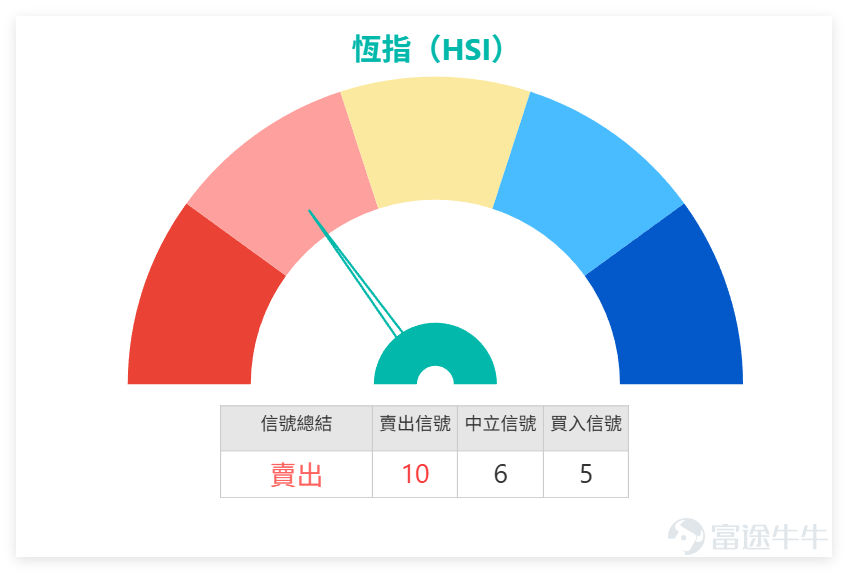
From a technical perspective, the Hang Seng Index RSI is at 73, entering overbought territory. MACD shows a buy signal, and Bollinger Bands as well as Ichimoku Cloud also indicate buying opportunities. However, multiple moving averages show strong sell signals, while oscillators remain neutral overall. The mixed bullish and bearish signals suggest investors should exercise caution regarding current levels.

Key support levels for the Hang Seng Index are at 27,087 points (Support 1) and 26,476 points (Support 2). Resistance levels are at 28,178 points (Resistance 1) and 29,123 points (Resistance 2). In the short term, focus will be on whether the 28,178-point resistance can be effectively broken through. If it fails to stabilize above this level, there's a high probability that the index will retreat to seek support near 27,087 points.
On January 29, key blue-chip stocks showed mixed performance. Financial stocks remained strong but faced overbought pressure, while most tech stocks were in consolidation. A few individual stocks received buy signals, with detailed analysis as follows:
1. Tencent (00700): Closing price at HKD 622.00, up 0.16% in a single day. The stock price is above the 10-day moving average (HKD 607.30) and the 30-day moving average (HKD 611.52), indicating a technically strong pattern. However, the RSI is 55, close to neutral. Technical indicators summarize as neutral (strength 10, strong sell). Multiple oscillation indicators are overbought, and subsequent pullback pressures need attention.
2. Meituan (03690): Closing price at HKD 98.60, up 0.25% in a single day. The stock price is above the 10-day moving average (HKD 97.83) but below the 30-day moving average (HKD 101.22), indicating short-term consolidation. The RSI is 44, neutral with a slight weakness. Technical indicators suggest a buy (strength 9). Some oscillation indicators show oversold conditions forming a bottom, making it a potential target for attention amidst divergence.
3. Alibaba (09988): Closing price at HKD 173.30, down 0.12% in a single day. The stock price remains above the 10-day moving average (HKD 166.47) and the 30-day moving average (HKD 155.00). However, the RSI is 67, close to overbought levels. Technical indicators summarize as a sell signal (strength 9, strong sell). Overbought signals are clear, and blind chasing of highs should be avoided.
4. AIA (01299): Closing price at HKD 90.95, up 2.36% in a single day, leading gains among financial stocks. The stock price remains consistently above the 10-day moving average (HKD 84.71) and the 30-day moving average (HKD 83.63). However, the RSI is 75, entering the overbought zone. Technical indicators summarize as a sell signal (strength 8, strong sell). A top divergence signal has appeared, and investors with profits may consider taking profit.
5. Hong Kong Exchange (00388): Closing price at HKD 444.20, up 1.14% in a single day. The stock price has risen above all short-term moving averages (10-day, 30-day, and 60-day). From a technical perspective, the pattern is the strongest. However, the RSI is 62, neutral with slight strength. Technical indicators suggest a sell signal (strength 8, strong sell). Overbought and top divergence signals indicate cautious buying.
6. Xiaomi Group (01810): Closing price at HKD 36.62, up 0.83% in a single day. The stock price is above the 10-day moving average (HKD 35.97) but below the 30-day moving average (HKD 38.09), showing a consolidation pattern. The RSI is 38, neutral with slight weakness. Technical indicators suggest a buy signal (strength 8). Selling pressure has weakened, and subsequent breakout momentum can be monitored.
7. Wuxi Bio (02269): Closing price at HKD 37.90, down 1.04% in a single day, with minor adjustments. The stock price is above the 10-day moving average (HKD 38.40) and the 30-day moving average (HKD 35.88). The RSI is 61, neutral with slight strength. Technical indicators suggest a buy signal (strength 8). However, moving average signals suggest selling, creating mixed technical signals that require further clarity.
8. HSBC Holdings (00005): Closing price at HKD 137.60, up 0.07% in a single day. The stock price remains above all short-term moving averages. The RSI is 74, entering the overbought zone. Technical indicators strongly suggest a sell signal (strength 12). Overbought and top divergence signals are highly significant, confirming a clear sell signal.
Warrant Bull-Bear Recap: Previously recommended picks performed well, but risk warnings must not be overlooked.
A detailed review of the Hang Seng Index (HSI) warrants and bull contracts recommended on January 23 shows an overall impressive performance, aligning with the HSI's 1.41% gain that day, as follows:
JPMorgan Bull Certificate (53078): Gained 34% in two days, becoming the best-performing product, fully benefiting from the leverage effect brought by the Hang Seng Index's rise.
BOC Bull Certificate (64323): Increased by 33% in 2 days, performing similarly to J.P. Morgan’s bull certificate, with reasonable premium and prominent leverage advantage;
BOC Call Warrant (23128): Increased by 17% in 2 days, showing steady performance;
J.P. Morgan Call Warrant (22977): Increased by 16% in 2 days, in line with expectations.
Risk Warning: Warrants and bull/bear certificates are derivatives with strong leverage characteristics; returns and risks coexist. Investors who have already profited may adjust according to their own pace, while those who haven’t entered the market should avoid blindly chasing highs and need to rationally choose based on technical signals.
Today's Featured Products:
Based on the divergence in the technical aspects of the Hang Seng Index and a neutral, volatile market environment, we have selected two HSI call warrant products focusing on reasonable leverage and controllable premiums, for technical reference only:
1. BOC Call Warrant (21457): Actual leverage 19.7, exercise price at 30,150 points, relatively higher leverage, suitable for investors optimistic about Hang Seng Index breaking through resistance levels and willing to bear corresponding risks, but pressure near the exercise price should be noted.
2. J.P. Morgan Call Warrant (21187): Actual leverage 18.7, exercise price at 30,000 points, slightly lower leverage than 21457 but with an exercise price closer to the current Hang Seng Index position, offering relatively controllable risk, suitable for investors seeking stable leveraged returns.
Hang Seng Index short-term resistance at 28,178 points: Do you think it will “break through successfully” or “retest the support level”? Between the two selected Hang Seng Index call warrants, do you prefer the “high-leverage (21457)” or the “relatively stable (21187)”? Come share your thoughts in the comments!
Disclaimer: This article does not constitute any investment advice.
This article is for reference only and does not constitute any investment advice. The market data, opinions, and analysis contained herein may change at any time without prior notice. We shall not be liable for any loss or damage arising from reliance on the information in this article. Technical analysis merely indicates whether certain technical conditions are met; a comprehensive evaluation of asset performance should incorporate additional data. Trading decisions should not be based solely on the content of this article. Please note that past performance is not indicative of future results.
#HongKongStocks #HangSengIndex #RealTimeAnalysis #WarrantsSelection #WarrantsStrategy #DerivativesHedging #BlueChipStocks #FinTechSector #TechnicalAnalysis
Risk Disclaimer: The above content only represents the author's view. It does not represent any position or investment advice of Futu. Futu makes no representation or warranty.Read more
Comments
to post a comment