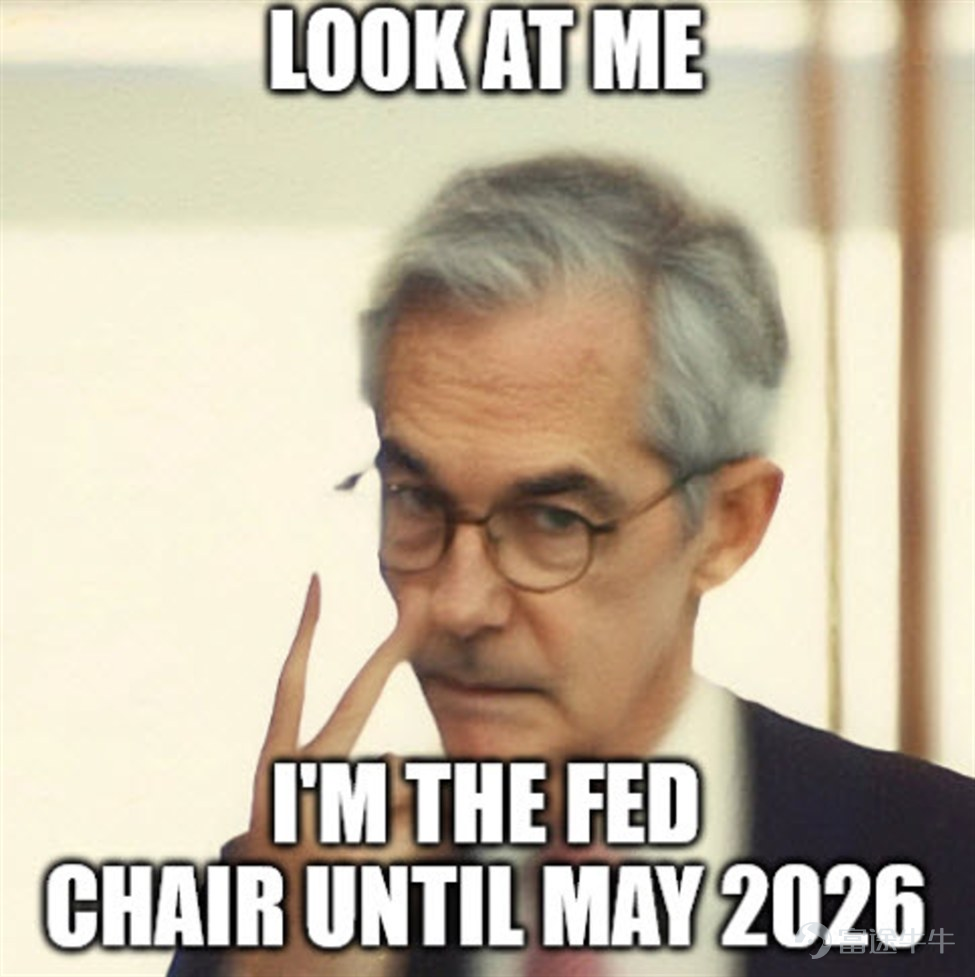

The Federal Reserve remains on hold! When will the rate cut window reopen?

Options Sir Views Macro | Two Dissenting Votes at the FED, S&P 7000, Soaring Gold and Silver
In the early hours of January 29 Beijing time, the Federal Reserve announced the results of its first interest rate meeting of the new year under intense market scrutiny. As the market had almost fully anticipated,the Fed decided to keep the target range for the federal funds rate unchanged at 3.50%-3.75%, ending three consecutive cuts that began in September of last year.
While this meeting appeared to lack novelty, it also reflected the complex spectrum of the current macroeconomic landscape: $S&P 500 Index (.SPX.US)$ After historically touching the 7,000-point mark before the meeting, there was a pullback, with expectations today to continue challenging this important psychological level. Precious metals such as gold and silver ignored Monday's massive fluctuations and continued their strong upward trend, breaking through key levels at $5,600/ounce and $120 respectively today.
What kind of ripple effects did this Fed meeting create for major asset classes, and how should investors respond?
Analysis of the Fed Meeting: A 'Hawkish Pause' Amid Internal Divisions
The subtle shift in wording in the policy statement from this FOMC meeting established the tone of a 'hawkish pause.' Compared to the December statement, the January statement upgraded the description of economic activity from'moderate expansion' to 'solid expansion,'”while removing the phrase 'risks to the downside for employment have risen.',At the same time, the phrase 'the risk of a downturn in employment has risen' was removedstatement.
Although the statement still emphasized that inflation remains high, the robust economy and stabilizing employment together provided the Fed with the confidence to 'pause interest rates,' suggesting that the policy stance has moved closer to a neutral range.raising the threshold for rate cuts in the short term.
CME interest rate futures show that after the Federal Reserve's monetary policy meeting, the probability of the Fed remaining on hold in March increased from 82% to 88%. The probability of maintaining the current interest rate in April (Powell's last FOMC meeting as Fed Chair) also exceeds 75%.

This meeting saw two dissenting votes,coming respectively from Christopher Waller, a potential candidate for the next Fed Chair, and Stephen Miran, the newly appointed governor who was hastily nominated by Trump last September to fill a vacancy. Both supported a 25-basis-point rate cut.
Since taking office, Miran has consistently advocated for more aggressive easing, often standing out as a very noticeable dot in the dot plot. More notably, this marks the first time Waller dissented in an interest rate decision.
At a sensitive moment when Fed Chair Powell’s term will end in May and Trump is about to announce his choice for the next chair,Waller's vote was interpreted by the market as potentially being politically motivated, or a 'final push' in his bid for the position of Fed Chair.
Options Sir has been consistently tracking the twists and turns of the race for the next Fed Chair over the past month or two for everyone.Although Waller had always been one of the four leading candidates, he remained largely in the running without much expectation. After the FOMC meeting concluded, his chances of appointment saw a notable increase but still lag behind Ridel and Warsh.

Powell, who has continuously been at the center of the storm, adhered to a 'no comment' stance regarding conflicts related to Trump during the post-meeting press conference.He emphasized the hope that the next chair will 'stay away from politics.' His intention to defend the central bank’s independence is clear, but how future appointees might act could be another matter altogether.
Regarding the U.S. economy, he stated that both the upside risks of inflation and downside risks of employment have 'likely diminished somewhat,' and assessed that the impact of tariffs on commodity prices would gradually peak. His policy focus has temporarily shifted from an 'insurance-style rate cut' aimed at preventing economic downturns to an observation period focused on 'solidifying existing gains.'
U.S. stocks: Earnings-driven momentum overshadows monetary narratives; small-cap stock rally reversed.
In previous Fed meetings, hawkish statements often weighed on the market, which also explains the origin of Powell's globally famous phrase 'Good afternoon.'However, after this meeting, the market reacted indifferently to the slightly hawkish statement. Neither the announcement at 14:00 nor the start of the press conference at 14:30 showed any significant volatility.

On the day of the meeting, storage giant $Seagate Technology (STX.US)$ Surged 19% due to impressive earnings reports, driving the entire storage sector, including $Micron Technology (MU.US)$ 、 $SanDisk (SNDK.US)$ , to soar. Meanwhile, the market is awaiting the post-market earnings reports of tech giants. Among the Big Seven, three of them had mixed results, but it didn’t disrupt the overall market’s risk appetite. As of this writing, S&P 500 futures have risen again, continuing to trade above 7,000. $Tesla (TSLA.US)$ 、 $Microsoft (MSFT.US)$ and $Meta Platforms (META.US)$
After the temporary resolution of monetary policy uncertainties, the market focus quickly returned to corporate earnings themselves. Especially for the tech sector, which has an extremely high market weight, its robust profitability and the productivity gains brought by the AI narrative, along with expectations of shifting industry bottlenecks, have become the core drivers of the index.
Moreover, the small-cap rally that had consistently outperformed the broader market earlier this year $iShares Russell 2000 ETF (IWM.US)$has reversed for the fourth consecutive day around the time of the meeting.Small-cap stocks are typically more sensitive to interest rates and have relatively weaker fundamental resilience. Their underperformance suggests that after the delay in expectations of falling rates, market risk preference has shifted from rate-sensitive 'beta' plays toward fundamentally solid 'alpha' opportunities supported by strong earnings.
The S&P 500 at 7,000 points isn’t driven by euphoria over an immediate easing by the Fed, but rather reflects cautious optimism as the market confirms an increased probability of a 'soft landing' and a continuation of the corporate earnings cycle.The future path will depend more on the quality of this earnings season, the realization of the AI wave, and the pace when the rate-cut window truly opens in the second half of the year.
Gold and silver: What constitutes an 'epic' market move?
In sharp contrast to the 'calm' in the US stock market is the wild surge in the precious metals market, especially gold and silver. Despite the rebound in the dollar and cooling interest rate expectations, gold prices have risen sharply against the trend, strongly suggesting that its driving logic has surpassed the traditional framework.The grand narrative is becoming even grander.
The technical pattern formed by silver during Monday's volatility (shooting star) can be considered quite ugly, but in an epic market move, some assets just manage to go against the tide. Silver has easily reclaimed the high set on Monday and once broke through $120 today.

The persistence of central bank gold purchases and the global trend of 'de-dollarization' are irreversible long-term supports.Although the dollar index rebounded in the short term due to Treasury Secretary Bessent's statement yesterday on a 'strong dollar policy,' concerns about its long-term credibility have not dissipated.The political threats to the Federal Reserve's independence (such as the lawsuit against Governor Cook, the subpoena from the Department of Justice to Powell, and the prolonged delay over the next Fed chair) further erode market confidence in the stability of the dollar system. Gold, as a non-sovereign credit asset, has become the core tool for hedging this institutional risk. Silver, due to the resonance of its industrial and financial attributes, continues to show stronger elasticity.
The dollar index has broken down this week, but fortunately, this isn't the K-line of the broader market.

Around the time of the Fed’s interest rate meeting, Trump posted comments on social media about sending a massive fleet to Iran, directly spurring oil and precious metal prices to soar simultaneously.Beyond the macro narrative, any geopolitical tremor can instantly ignite the market's enthusiasm for allocating 'hard assets.' The current market preference for precious metals already carries strong characteristics of reallocating safe-haven assets and emotional premium, with its volatility significantly decoupled from traditional interest rate correlations.
Options Strategy: Seeking Balance Amid Divergence and Volatility
The current market environment is characterized by 'volatile yet upward-trending US equities and heightened but increasingly volatile sentiment in precious metals'.
(1) Broad-market ETFs
Although yesterday coincided with the Fed's interest rate meeting, $SPDR S&P 500 ETF (SPY.US)$ 、 $Invesco QQQ Trust (QQQ.US)$ the volatility of major US equity index ETFs such as SPY and QQQ remains very low. SPY’s implied volatility (IV) is approximately 16%, while QQQ’s IV is around 21%, both at historically low percentiles (below 10%).
If you are uncertain about direction but expect a major event to trigger a rise in volatility, consider deploying a Long Straddle or Long Strangle strategy. This strategy has limited risk (only the total premium paid), but requires significant one-sided movement to generate profits.

(The illustration is for explanatory purposes only and does not constitute any investment advice or guarantee.)
Of course, if you have a clear directional view, and given the current low volatility environment, you can also opt for single-leg options trading to make a directional bet. For instance, if you are bullish on the future rise of the S&P 500, you may directly choose to buy out-of-the-money (+3%~5%) Calls expiring within a month, leveraging the options’ gearing to amplify returns.
(2) Precious Metals ETFs
The recent gains in gold and silver have already exceeded all forecasts from leading global banks, with the speed of price increases even outpacing target price revisions.Citi recently raised its annual silver price target to $100, while Goldman Sachs increased its gold price target to $5,400, yet both silver and gold have already surpassed these levels with ease.
Unlike index ETFs with low volatility, the current precious metals market is experiencing a historic frenzy characterized by high volatility, high prices, and technically overbought conditions. The focus of strategy can shift to 'managing extreme volatility risk' and 'capitalizing on high volatility premiums'.
$SPDR Gold ETF (GLD.US)$The IV reached 40.21%.$iShares Silver Trust (SLV.US)$The IV has reached an astonishing 109.10%.Both have an IV percentile (IV Rank) of 100%, sitting at absolute historical highs.
Investors holding physical assets who are concerned about a pullback may consider implementing a collar strategy. While holding the underlying asset, one can purchase an out-of-the-money put option (Put) to insure the asset and sell an out-of-the-money call option (Call) with a higher strike price to cover the cost of the insurance.
Under the current high IV, selling Calls can generate substantial premiums, significantly reducing or even covering the cost of buying Puts.This strategy locks in downside risk while sacrificing some upside potential. For example, while holding GLD, one can buy a Put with a lower strike price and simultaneously sell a Call with the same expiration date and a strike price at the current price level.

It’s important to note that no options strategy is a set-it-and-forget-it solution; adjustments must be made dynamically based on event windows. OptionSir will continue to accompany all fellow investors, providing the latest event analysis and potential options strategies.
Finally, here's a small perk for fellow investors—welcome to claim it!Beginner's Options Package
This event is exclusively for invited HK users, click to learn moreDetailed event rules >>
Major upgrade to the US options mechanism! New Monday and Wednesday options added for nine major symbols including Tesla and NVIDIA. A step-by-step guide to profiting from end-of-term options using the NiuNiu tool >>

Disclaimer
This content does not constitute any offer, solicitation, recommendation, opinion, or guarantee of any securities, financial products, or tools. The risk of loss in buying and selling options can be substantial. In some cases, your losses may exceed the initial margin amount deposited. Even if you set contingent orders, such as 'stop-loss' or 'limit' orders, these may not necessarily prevent losses. Market conditions may make these orders unexecutable. You might be required to deposit additional margin within a short period. If you fail to provide the required amount within the specified time, your open positions may be liquidated. However, you will still be responsible for any account deficit arising from this. Therefore, before trading, you should study and understand options and carefully consider whether such trading suits you based on your financial situation and investment objectives. If you trade options, you should be familiar with the procedures upon exercising options and at expiration, as well as your rights and obligations when exercising options and at expiration.
Risk Disclaimer: The above content only represents the author's view. It does not represent any position or investment advice of Futu. Futu makes no representation or warranty.Read more


Comment (1)
to post a comment
56
12