
How to view the post-holiday market trend in Hong Kong stocks?

After the Hang Seng Index Breaks New Highs: Subtle Game Amid Strength and Warrant Positioning Strategies
On January 28, the Hang Seng Index (HSI) ignited the entire market with an exuberant rally that hit a four-year high. The index surged by 699.96 points for the day, closing at 27,826.91 points, representing a gain of 2.58%. The main board turnover exceeded 360 billion Hong Kong dollars, indicating a heated trading atmosphere. On January 29, after reaching a high near 27,860 points, the market took a breather, slightly rising by 0.49% to close at 27,944 points, seemingly brewing for its next move. However, market sentiment was not as uniform as it appeared on the surface; several technical indicators had already issued clear overbought warnings. A subtle game revolving around 'following the trend to chase gains' versus 'betting on a pullback' was unfolding.
Technical Analysis: Contradictory Signals Behind the Record High
From a trend perspective, the bullish pattern of the Hang Seng Index is undeniable. Six consecutive days of gains not only broke through the four-year high at 27,700 points but also firmly positioned the price above all major moving averages, exhibiting strong upward momentum. However, the rapid short-term surge has placed significant pressure on technical indicators.
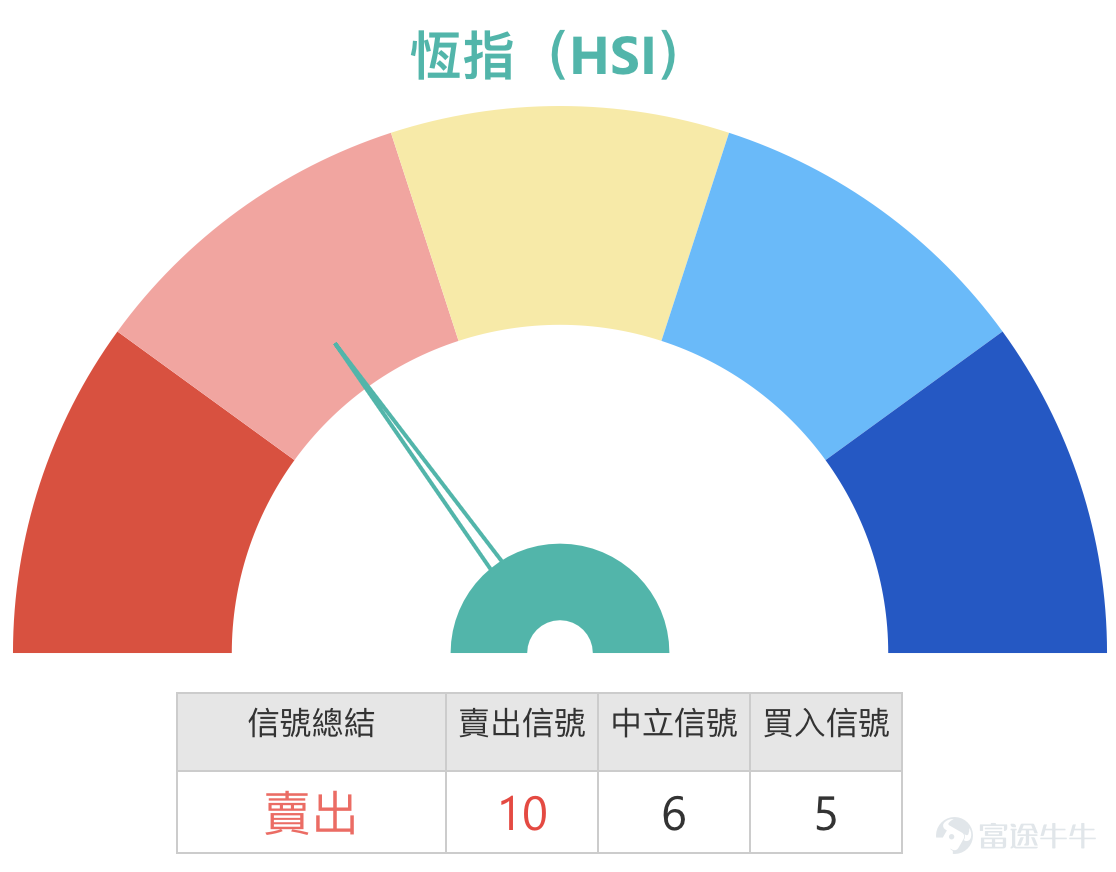
The most noteworthy indicator is the Relative Strength Index (RSI). The current 14-day RSI of the Hang Seng Index has climbed to a level of 73, clearly entering the technically overbought zone. This reading typically indicates that buying power in the market has been overly consumed in the short term, signaling a need for adjustment or consolidation. Meanwhile, multiple oscillation indicators have also issued similar 'sell' signals, contrasting sharply with the continuously rising stock prices. This clearly reveals a core contradiction: the market sentiment and capital-driven upward trend remain robust, but the technical aspect has accumulated considerable pullback pressure.
Key Support and Resistance: Grasping the Rhythm of Short-Term Offense and Defense
After the index enters a sensitive high-level area, accurately identifying key price levels is crucial for short-term operations.
* On the upside resistance, the first psychological threshold is undoubtedly the 28,000-point level, which naturally becomes the focus of attention after the market breaks through a four-year high. The next important technical resistance level is at 28,967 points. With the current momentum, it's not impossible for the index to challenge these highs, but considering the overbought technical conditions, the process may not be smooth sailing.
* On the downside support, the first line of defense in the near term is around 27,047 points, close to the 10-day moving average. A more critical and solid support level is near 26,434 points, which not only serves as another important support platform for this upward trend but also coincides with multiple medium- to long-term moving average support levels, making it the 'lifeline' of this uptrend.
Market Dynamics Integration: [BOC Guest] Wisdom in Trend Following
In the face of this complex situation where market euphoria coexists with technical overbuying, Niki, Director at BOC International, provided investors with insightful analysis and pragmatic strategy advice during the January 28 episode of [BOC Guest].
Niki first pointed out the ideal state for the current market: Investors who deployed bullish warrants two days ago would have profited from both the index rise on January 28 and the increase in 'implied volatility' due to heightened market fluctuations, achieving a 'win-win' scenario — a testament to the allure of derivatives in trending markets. However, she also keenly observed subtle changes in capital flows: Over the past week, about HKD 120 million flowed out of bullish Hang Seng Index positions, while approximately HKD 100 million flowed into bearish products. This indicates that some investors have begun to show caution towards the market after consecutive rises, attempting contrarian plays.
In response, Niki offered clear strategic advice: 'In this rallying market, follow the trend.' She believes that rather than trying to predict when the top will appear, it's better to continue buying warrant products aligned with market direction, letting the trend work in your favor. For investors looking to bet on a pullback, she specifically reminded them to carefully choose product terms: 'I don’t recommend selecting Hang Seng Index bear warrants with strike prices too close to the knock-out level.' For instance, when the index is at 27,700 points, choosing bear warrants with a knock-out level set at 28,000 points or closer poses extremely high risk, as they could easily be 'shaken out' by continued market gains.
To help investors find suitable tools in a fast-changing market, Niki once again provided BOC International’s Warrant Hotline 3988 6909, where a professional team can assist in screening products with the most fitting terms based on each investor’s specific risk preferences and market conditions.

Selected Warrant Product Analysis
In line with Niki's approach of 'going with the trend' and 'keeping a safe distance,' we can examine several representative warrant products. The key to selecting these products is to correlate their recovery or strike prices with the critical support and resistance levels mentioned above to assess their risks and opportunities.
For investors who are optimistic about the market outlook and want to trade in line with the trend:
* BOC Bull Certificate (61936) $BI#HSI RC2809X.C (61936.HK)$ This product’s recovery price is set at 26,775 points. This level is far below the current index level but above the key second support level of 26,434 points, providing a buffer of about 1,000 points for potential normal pullbacks in the index, avoiding the risk of being forcibly redeemed due to short-term fluctuations, in line with Niki’s suggestion to 'keep a safe distance.' Its actual leverage of approximately 21x offers capital efficiency while managing risk.
* BNP Paribas Call Warrant (21578) $BP-HSI @EC2603A.C (21578.HK)$ This warrant’s strike price is set at 30,000 points, making it an out-of-the-money product. This target is well above the current resistance level and is designed as a typical product aimed at 'betting on further upside potential by following the trend.' It stands out for its relatively low premium and ideal implied volatility, and if the index continues to show strong upward momentum, this product will be able to leverage its gearing effect.
For cautious investors looking to make small bets against the prevailing trend:
* UBS Group Bear Certificate (56474) $UB#HSI RP2803K.P (56474.HK)$ This bear certificate’s recovery price is set at 28,450 points. This level is slightly above the psychological threshold of 28,000 points but still maintains a certain distance from the current index level. It provides a buffer for bearish investors, allowing the product to remain active even if the index rises a few hundred points, avoiding the high risk of forced redemption associated with choosing overly close-to-money products. Its nearly 50x high actual leverage means it is highly sensitive to downward movements, making it suitable for disciplined short-term traders.
* J.P. Morgan Put Warrant (21184) $JP-HSI @EP2603C.P (21184.HK)$This is a put warrant with an exercise price of 25,800 points. This exercise price is already below the critical second support level of 26,434 points, indicating that it is not designed for small pullbacks but rather for investors expecting a deeper market correction. It has high actual leverage, but investors should note that the value of the warrant will erode over time.


Interactive Q&A: What is your strategy?
After hitting a four-year high, the Hang Seng Index seems to be standing at a crossroads. On one side, there is the potential broad upside after a breakout; on the other side, technical indicators are frequently flashing overbought warnings. In this market environment, which side would you lean towards?
1. A. Trend Followers: Agreeing with Niki’s view of 'following the trend,' they believe that capital momentum remains strong and any pullback is an opportunity to enter. They might consider deploying bull contracts (e.g., contract 61936) with a stop-loss near the 27,000-point support region when the index approaches it.
2. B. Cautious Observers: Believing that RSI overbought signals need to be respected, they think the market may require a significant consolidation to absorb profit-taking. They would prefer to patiently wait or look for more definitive follow-up opportunities after the index effectively breaks through 28,000 points and stabilizes above it.
3. C. Range Traders: Judging that the index might oscillate between 26,400 and 28,500 points, they could use bull contracts with stop-losses near 26,775 points and bear contracts with stop-losses around 28,450 points to execute swing trades within the range.
Faced with the current Hang Seng Index, which approach do you favor? Or do you have a more sophisticated strategy using leveraged products like CBBCs? Feel free to share your insights in the comments section so we can discuss them together!
A final gentle reminder: Warrants and CBBCs (Callable Bull/Bear Contracts) are complex leveraged derivative investment products with expiration dates. Their prices can go up or down, and investors may lose all their principal. Before investing, fully understand the product characteristics, including forced call mechanisms, time decay, and changes in implied volatility risks. If you have any questions about product terms, feel free to call the BOC International Warrant Hotline at 3988 6909 to consult the professional team. For more daily in-depth analysis of Hong Kong stocks and derivatives, make sure to follow 'Jenny's HK Stock Warrants'.
#Hang Seng Index #Technical Analysis #Warrants #Bull and Bear Certificates #Trend Following #Bank of China Guest #Hong Kong Stock Derivatives #Short-term Speculation #RSI Overbought #Four-Year High
Risk Disclaimer: The above content only represents the author's view. It does not represent any position or investment advice of Futu. Futu makes no representation or warranty.Read more
Comments
to post a comment
10