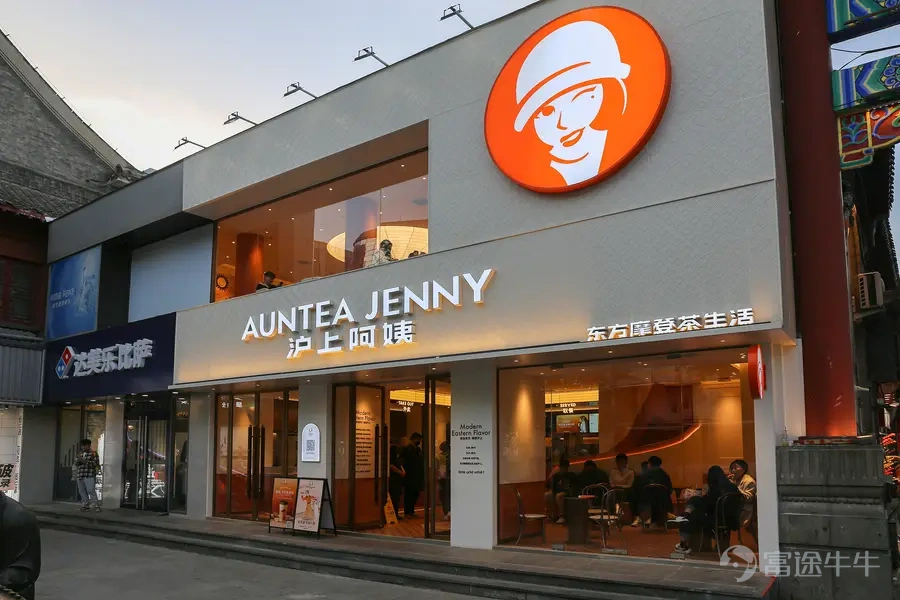

The Shanghai Auntie, surviving in a tight spot, is only suitable for short-term trading and should temporarily avoid long-term holding
After experiencing a setback in performance in 2024, Auntie Shanghai recently announced positive earnings prospects, expecting a standout financial performance for last year
Key points:
* Forecasted profit increase of up to 60% year-on-year for last year
* Overseas expansion is slow, far lagging behind competitors
The author of this article is Liu Zhiheng.
At one point, the capital market was obsessed with tea beverage companies, and their 'going global' stories sounded particularly appealing. However, as the market has become increasingly competitive in recent years, the share prices of many listed tea beverage firms have weakened. Apart from a few leading stocks, tea beverage shares are no longer the focus of the market, returning from brilliance to normalcy.
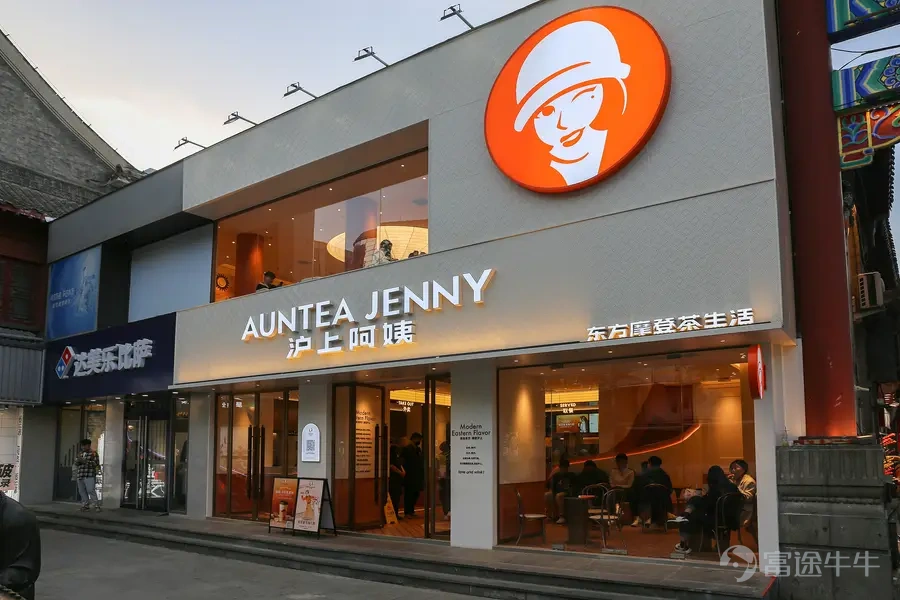
Breaking into the tea beverage market with 'five-grain milk tea' $AUNTEA JENNY (02589.HK)$is no exception. When it went public in Hong Kong in May last year, its stock price once reached as high as HKD 197.6, 75% higher than the offering price; however, this peak was short-lived. After the mid-term results were released, profits only increased by 20%, falling short of market expectations, making the stock price unsustainable.
Auntie Shanghai's stock, which had been quiet for a long time, suddenly surged last week due to the company’s announcement of an earnings forecast upgrade. It expects net profits for 2025 to be between RMB 495 million and RMB 525 million, representing a year-on-year increase of 50% to 60%. The company stated that the significant rise in profits was mainly due to the continuous expansion of its store network, driving revenue growth. At the same time, ongoing cost reduction and efficiency improvement efforts have enhanced operational effectiveness, boosting profitability.
Although the stock price rebounded somewhat, compared to its peak last year, it has fallen by half in just eight months. Even when calculated based on the upgraded profit forecast, the price-to-earnings ratio remains high at 19 times, indicating that the valuation is not cheap and the investment attractiveness is limited.
Franchise growth rate slows down
In fact, for a tea beverage shop to increase revenue, the focus lies in either boosting store sales or increasing the number of franchise stores. Auntie Shanghai has encountered bottlenecks in both aspects in recent years; not only has the GMV of individual stores stagnated, but it also shows a declining trend. The GMV in 2023 was approximately 1.6 million yuan, but by 2024 it had dropped to 1.4 million yuan, marking a 12.5% decrease.
With the decline in GMV per store, Auntie Shanghai can only rely on continuously attracting more franchisees to boost income. However, the tea beverage market in mainland China is nearly saturated, and the era of rapid expansion of tea shops has passed. According to data from the China Chain Store Association, Guosheng Securities, and Tech China, the number of tea beverage stores fell from a peak of 515,000 in 2023 to 448,000 in 2024, further declining to 415,000 last year.
The total number of tea beverage stores has declined rather than increased. Even major brands have slowed their pace of expansion within mainland China. In the first half of last year, Auntie Shanghai opened 905 new franchise stores but closed down 645, resulting in a net increase of only 260 stores—representing a 60% drop compared to a net addition of 653 stores in the same period of 2024. In this overall environment, it is difficult for Auntie Shanghai to significantly raise revenue through large-scale expansion of outlets.
Overseas expansion still in its infancy
As the tea beverage market in mainland China gradually becomes saturated, overseas expansion is the only viable path for further growth. As of the end of last year, $MIXUE GROUP (02097.HK)$overseas branches had expanded to 4,500 stores across 13 countries, $Chagee Holdings (CHA.US)$with over 260 overseas branches, $CHABAIDAO (02555.HK)$and there were 21 branches in Southeast Asia during the first half of last year.
In contrast, although Auntie Shanghai has become a chain with thousands of tea beverage stores, its overseas progress remains stagnant. As of the first half of last year, there was only one branch in Malaysia. Of course, overseas expansion is not an easy task—how to cater to different market tastes and cultures, balance cost considerations, and coordinate supply chains are crucial challenges that Auntie Shanghai appears to still be struggling to address effectively.
Stuck in the middle
The capital market's evaluation of Auntie Shanghai is that its brand positioning lacks a competitive edge, giving off an impression of being stuck in the middle. When it comes to high-end options, Auntie Shanghai is not the first brand that comes to mind—people tend to think of Heytea or Chagee; if we talk about mass-market tea drinks, Mixue Ice City dominates the scene, and Auntie Shanghai doesn't come to mind. Even as a mid-tier brand, the competition in the market is fierce. $GUMING (01364.HK)$Chabaidao's scale is no less than Auntie Shanghai’s, making it difficult for either to stand out.
In terms of brand recognition, Auntie Shanghai lags far behind. According to iiMedia Ranking (iimedia.cn), in the 'Top 10 New-style Tea Brands NPS Reputation Index in China 2025', the top three spots are held by Mixue Ice City, Chagee, and Guming, while Auntie Shanghai ranks only seventh with a score of 22.37—ten points behind Mixue Ice City.
Although Auntie Shanghai saw a sharp increase in performance last year, the market believes this was partly due to the food delivery price war between Meituan and JD.com. The two giants engaged in a fierce price battle, drastically reducing delivery fees, which helped boost the online tea beverage business. Recently, the price war between these platforms has subsided, and for non-essential, low-priced categories like tea drinks, any increase in delivery fees will inevitably affect sales.
The tea beverage industry today is a fiercely competitive battleground. For Auntie Shanghai, there are premium brands like Chagee and Heytea above, Mixue Ice City below, and direct competitors at the same level such as Guming and Chabaidao—with Guming ranking second in both store count and brand awareness. Auntie Shanghai, positioned in the second tier, seems to lack sufficient selling points and differentiation. Investors may be better suited to follow short-term trends or specific events when investing in this stock. If choosing among tea beverage stocks for long-term investment, leading brands still hold the higher winning odds.
Risk Disclaimer: The above content only represents the author's view. It does not represent any position or investment advice of Futu. Futu makes no representation or warranty.Read more


Comments
to post a comment
4