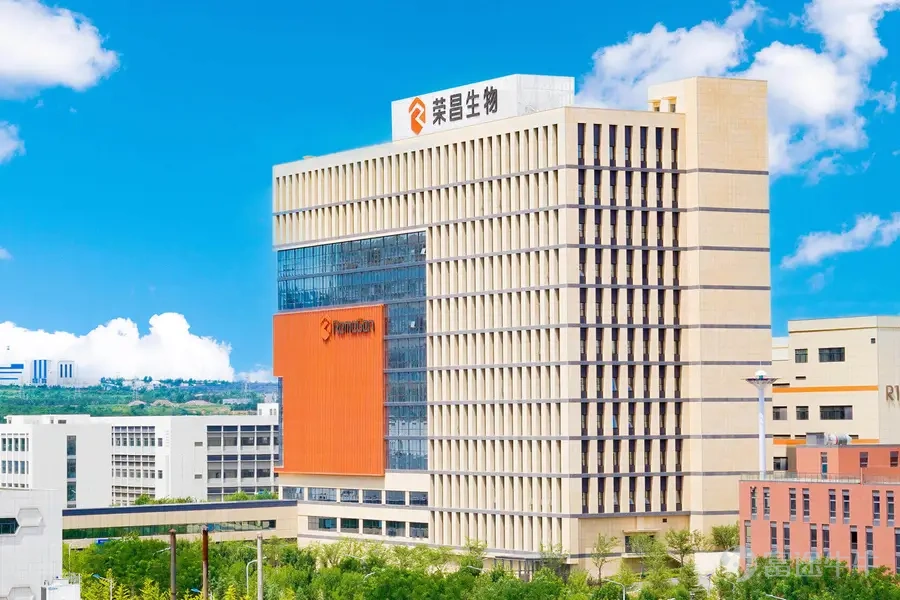

RemeGen achieves $5.6 billion BD collaboration; bispecific antibody deal eases urgent funding needs
This collaboration marks RemeGen's third BD deal since 2025, setting new records for upfront payment and total transaction value in the company's BD history
![This collaboration marks RemeGen's third BD deal since 2025, setting new records for upfront payment and total transaction value in the company's BD history Key points: * The PD-1/VEGF bispecific antibody has become a highly sought-after target among multinational pharmaceutical companies, with the drug expected to become the next generation of cancer immunotherapy * By partnering with multinational giants, the international development and commercial prospects of the product have been significantly enhanced By Molly Mo In the context of China's innovative drug BD (out-licensing) total annual transaction amount surpassing $1.3 trillion in 2025, reaching a historical high, Chinese innovative drugs out-licensing achieved a strong start to 2026. On January 12th, $REMEGEN (09995.HK)$[Share Link: announced]with multinational pharmaceutical companies $AbbVie (ABBV.US)$ signed an exclusive licensing agreement for RC148, a novel bispecific antibody targeting PD-1/VEGF. The upfront payment is $6.5 billion, with a total potential transaction value of up to $56 billion. Following the announcement, on January 13th, RemeGen’s A-shares opened 15.33% higher and closed at the daily limit price of RMB 114.46 per share, with a trading volume as high as RMB 2.369 billion. Its H-shares also performed strongly, rising nearly 15% intraday, and finally closing up by 7.87%. Since the beginning of 2026, RemeGen's stock price surged nearly 40% within half a month. Due to potentially high premiums, from January 14th to 19th, RemeGen’s stock price experienced fluctuations and retraced, with its Hong Kong shares...](https://nnqimage.futunn.com/sns_client_feed/27769806/20260122/web-1769070587951-fwtA57KDii.webp/big?area=1&is_public=true&imageMogr2/ignore-error/1/format/webp)
Key points:
The PD-1/VEGF bispecific antibody has become a star target fiercely contested by multinational pharmaceutical companies, with the drug expected to become the next generation of cancer immunotherapy.
Through partnerships with multinational giants, the product’s international development and commercial prospects have significantly improved.
By Molly Mo
Against the backdrop of China's innovative drug BD (outbound licensing) total transaction value surpassing $1.3 trillion in 2025 and setting a new historical high, the start of 2026 saw another strong beginning for China's innovative drug exports. On January 12, $REMEGEN (09995.HK)$announcedpartnered with a multinational pharmaceutical company $AbbVie (ABBV.US)$ to sign an exclusive licensing agreement for RC148, a novel bispecific antibody targeting PD-1/VEGF. The upfront payment was $6.5 billion, with the total deal potentially reaching up to $56 billion.
Following the announcement, on January 13, Rongchang Biotech's A-shares opened 15.33% higher and closed at the daily limit price of RMB 114.46 per share, with a trading volume as high as RMB 2.369 billion. Its H-shares also performed strongly, rising nearly 15% intraday before closing up 7.87%. Since the start of 2026, Rongchang Biotech’s stock price surged nearly 40% within half a month. However, possibly due to premium adjustments, from January 14 to 19, Rongchang Biotech’s share price experienced volatility and pulled back, with its Hong Kong-listed shares nearing the level prior to the BD announcement.
This collaboration marks Rongchang Biotech's third BD deal since 2025, setting a new record for the company in terms of upfront payment and total deal size. Under the agreement, AbbVie will obtain exclusive rights to develop, manufacture, and commercialize RC148 outside Greater China. After the agreement takes effect, Rongchang Biotech will receive an upfront payment of $6.5 billion (approximately RMB 4.5 billion), and is eligible to receive milestone payments of up to $49.5 billion, as well as tiered double-digit royalties on net sales outside Greater China.
RC148 is a novel bispecific antibody targeting PD-1/VEGF. By simultaneously blocking the PD-1 signaling pathway and VEGF-mediated angiogenesis signaling, the drug restores the cytotoxic function of immune T-cells by inhibiting PD-1, while controlling abnormal tumor blood vessel formation by suppressing VEGF, thereby effectively inhibiting tumor growth and metastasis. The PD-1/VEGF bispecific antibody has become a highly sought-after target among multinational pharmaceutical firms. Such drugs are considered to be able to succeed PD-1 inhibitors as the next generation of cancer immunotherapy. In May 2025, $3SBIO (01530.HK)$a similarly targeted innovative drug product by $Pfizer (PFE.US)$reached a collaboration agreement worth up to $60 billion in total transaction value.
Rongchang Biotech is conducting clinical research in China on the use of RC148 monotherapy and combination therapy for patients with various advanced malignant solid tumors. According to the phase I/II clinical data released in December 2025, the objective response rate for RC148 monotherapy in treating PD-L1 positive advanced non-small cell lung cancer reached 61.9%, while the combination therapy with docetaxel achieved a maximum objective response rate of 66.7% in treated patients, showing superiority over...$AKESO (09926.HK)$The trend of Ivosidenib (ORR 40%, PFS 7 months). AbbVie also stated that in the future, the combination of RC148 and AbbVie's investigational drug Temab-A (c-Met ADC) could be explored for the treatment of solid tumors such as non-small cell lung cancer and colorectal cancer.
The debt-to-asset ratio reached 61.18%.
Despite continuously achieving significant BD transactions, Rongchang Biologics has yet to turn a profit, and its financial situation remains a focal point of market attention.
In the first three quarters of 2025, Rongchang Bio achieved operating revenue of approximately 1.72 billion yuan, a year-on-year increase of 42.27%. Among them, the revenue for the third quarter reached 620 million yuan, setting a new historical high. The revenue growth is mainly attributed to the continued volume increase of the self-immune drug Taitaxip, along with the new indications for dry syndrome and IgA nephropathy that have been submitted for market approval, which are expected to inject new momentum into future sales growth. At the same time, the company's R&D costs have been effectively controlled, with R&D expenditure in the first three quarters amounting to 890 million yuan, a year-on-year decrease of 22.8%. Nevertheless, the company is still in a loss-making state, with a net loss attributable to the parent company of 551 million yuan in the first three quarters, significantly narrowing from 1.071 billion yuan in the same period of 2024.
From a financial perspective, as of the end of the third quarter of 2025, the company's cash funds amounted to 1.07 billion yuan, an increase compared to the end of 2024, mainly due to the completion of the H-share placement in May 2025. However, the company's debt-to-asset ratio remains high at 61.18%, with short-term loans of 1.071 billion yuan and non-current liabilities due within one year amounting to 390 million yuan, indicating ongoing short-term repayment pressure. The cooperation with AbbVie not only significantly supplemented the company's cash flow with a $650 million upfront payment but also enhanced the international development and commercial prospects of the products through its association with a multinational giant. Compared to June 2025 with$Vor Biopharma (VOR.US)$The transaction that has not been fully recognized by the market, this collaboration with AbbVie has advantages in terms of the scale of the down payment, the level of partners, and the long-term potential.
In the current valuation system for innovative drugs, Rongchang Biologics' price-to-sales ratio of 21 times is still significantly lower than its competitor, Kangfang Biologics, which has a price-to-sales ratio of 35 times, indicating that there is still room for its valuation to improve. If future milestone payments are gradually realized, it will further enhance Rongchang Biologics' profit expectations and support an increase in valuation, making it worthy of continued attention from investors.
Risk Disclaimer: The above content only represents the author's view. It does not represent any position or investment advice of Futu. Futu makes no representation or warranty.Read more
Comments
to post a comment