
English
Back
Open Account
星岛财经
wrote a post · Jan 20 18:45

Food delivery accounts for half of the market, commission rate rises to 17.5%, Laoxiangji and Shu Xiaolong are trapped in the platform

Reported by Zhong Kai, journalist of The Sing Tao, with intern Hu Tingwei in Shenzhen
Laoxiangji, which has submitted its listing application to the Hong Kong Stock Exchange three times, not only demonstrates a strong determination to pursue an IPO but also reveals the 'hidden pain' of being deeply tied to food delivery platforms as the leader of Chinese fast food. The path dependency exposed in this prospectus is not unique to Laoxiangji, but rather a collective epitome of the entire catering industry in the era of traffic.
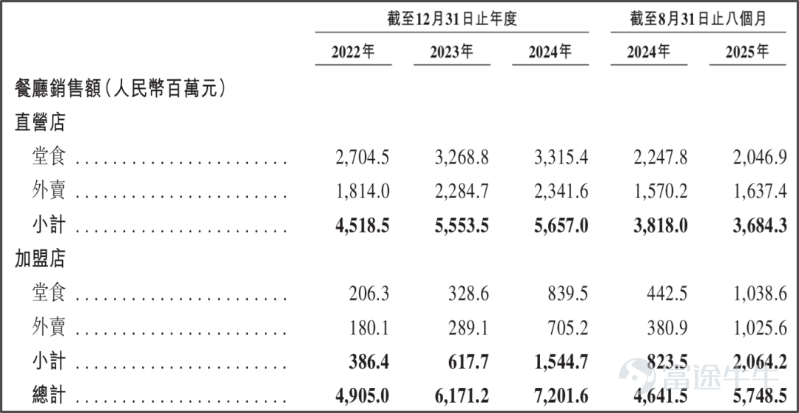
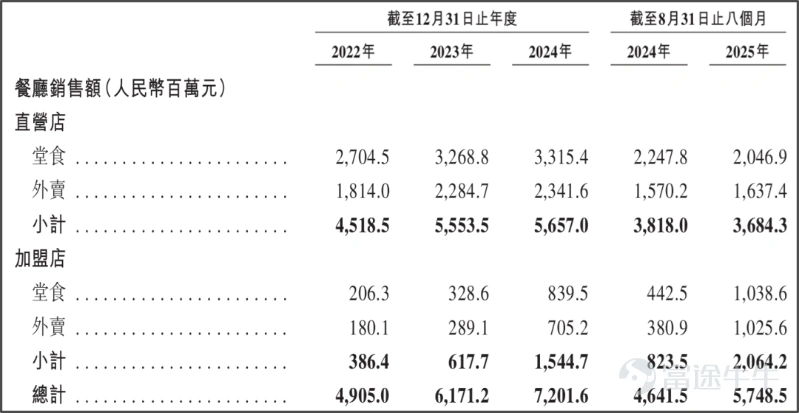
According to the recent prospectus disclosed by Laoxiangji, in the first eight months of 2025, the proportion of food delivery sales in the company's directly-operated stores accounted for approximately 44.44%, increasing by 3.32 percentage points year-on-year; the proportion of food delivery sales in franchised stores was even as high as 49.7%, increasing by 3.4 percentage points year-on-year, with the contribution of food delivery business almost equal to that of dine-in services.
Reported by Zhong Kai, journalist of The Sing Tao, with intern Hu Tingwei in Shenzhen Laoxiangji, which has submitted its listing application to the Hong Kong Stock Exchange three times, not only demonstrates a strong determination to pursue an IPO but also reveals the 'hidden pain' of being deeply tied to food delivery platforms as the leader of Chinese fast food. The path dependency exposed in this prospectus is not unique to Laoxiangji, but rather a collective epitome of the entire catering industry in the era of traffic. According to the recent prospectus disclosed by Laoxiangji, in the first eight months of 2025, the proportion of food delivery sales in the company's directly-operated stores accounted for approximately 44.44%, increasing by 3.32 percentage points year-on-year; the proportion of food delivery sales in franchised stores was even as high as 49.7%, increasing by 3.4 percentage points year-on-year, with the contribution of food delivery business almost equal to that of dine-in services. As food delivery becomes 'half of the market' in terms of sales, the pressure from platform commissions is also intensifying.The average platform service expense rate of Laoxiangji has risen from 15.8% in 2022 to 17.5% in the first eight months of 2025. However, Laoxiangji emphasized in the prospectus that according to data from CIC, the company’s average platform service expense rate is consistent with the industry average of Chinese fast food. Whether it is the proportion of food delivery sales or the platform service fee rate, both tell a harsh reality: food delivery platforms have quietly transformed from 'traffic boosters' for the catering industry into 'profit distributors' with deep ties. Many catering businesses frankly admit that although food delivery appears to generate high turnover, they are essentially working for the platforms. The formation of path dependency stems from the irreversible...
While food delivery has come to account for 'half of total sales,' the pressure from platform commissions is also intensifying.The average platform service fee rate for Laoxiangji increased from 15.8% in 2022 to 17.5% in the first eight months of 2025. However, Laoxiangji emphasized in its prospectus that according to CIC data, the company's average platform service fee rate aligns with the industry average for Chinese fast food.
Both the proportion of food delivery sales and the platform service fee rate tell a harsh reality: food delivery platforms have quietly shifted from being 'traffic boosters' for the catering industry to deeply entrenched 'profit distributors.' Many catering businesses admit that while food delivery appears to generate high revenue, it essentially means working for the platforms.
The formation of this dependency stems from irreversible changes in consumer habits.
The prospectus points out that factors such as smaller household sizes, a decline in full-time housewife households, an increase in urban populations, a faster pace of work and life, reduced time for home-cooked meals, more refined social division of labor, and the convenience of food delivery services are driving changes in China’s food and beverage consumption. Consumers are dining out and ordering food delivery more frequently, leading to a rise in eating-out rates.
From an industry perspective, compared to the eating-out rates of 44.3% and 43.6% in the US and Japanese markets respectively in 2024, China’s market still has room for growth. The eating-out rate is expected to rise from 29.2% in 2024 to 33.1% by 2029. This increase reflects higher per capita spending on dining, growing from RMB 3,337 in 2019 to RMB 3,956 in 2024, and is projected to reach RMB 5,619 by 2029.
Changes on the consumer side are forcing catering companies to deepen their ties with food delivery platforms. The prospectus mentions that Laoxiangji has signed framework agreements with third-party e-commerce platforms like Meituan and Ele.me. These agreements establish standardized terms governing all takeout orders placed through these platforms for the company's restaurants (including franchises and directly operated stores).
Reported by Zhong Kai, journalist of The Sing Tao, with intern Hu Tingwei in Shenzhen Laoxiangji, which has submitted its listing application to the Hong Kong Stock Exchange three times, not only demonstrates a strong determination to pursue an IPO but also reveals the 'hidden pain' of being deeply tied to food delivery platforms as the leader of Chinese fast food. The path dependency exposed in this prospectus is not unique to Laoxiangji, but rather a collective epitome of the entire catering industry in the era of traffic. According to the recent prospectus disclosed by Laoxiangji, in the first eight months of 2025, the proportion of food delivery sales in the company's directly-operated stores accounted for approximately 44.44%, increasing by 3.32 percentage points year-on-year; the proportion of food delivery sales in franchised stores was even as high as 49.7%, increasing by 3.4 percentage points year-on-year, with the contribution of food delivery business almost equal to that of dine-in services. As food delivery becomes 'half of the market' in terms of sales, the pressure from platform commissions is also intensifying.The average platform service expense rate of Laoxiangji has risen from 15.8% in 2022 to 17.5% in the first eight months of 2025. However, Laoxiangji emphasized in the prospectus that according to data from CIC, the company’s average platform service expense rate is consistent with the industry average of Chinese fast food. Whether it is the proportion of food delivery sales or the platform service fee rate, both tell a harsh reality: food delivery platforms have quietly transformed from 'traffic boosters' for the catering industry into 'profit distributors' with deep ties. Many catering businesses frankly admit that although food delivery appears to generate high turnover, they are essentially working for the platforms. The formation of path dependency stems from the irreversible...
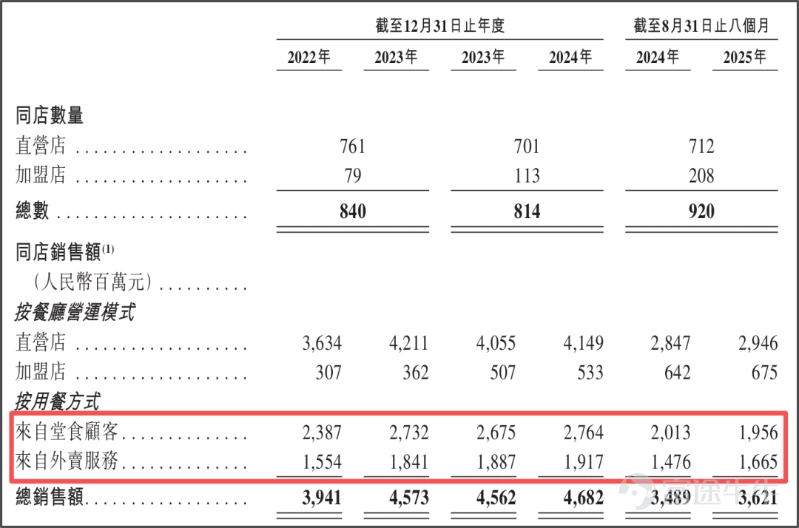
This integration is even more evident in the sales structure. In terms of dining methods, sales from dine-in customers at Laoxiangji have nearly stagnated in recent years. In this context, food delivery has become the core growth driver, with sales from delivery reaching a new high of RMB 1.917 billion in 2024, and continuing to grow by 12.8% year-on-year to RMB 1.665 billion in the first eight months of 2025.
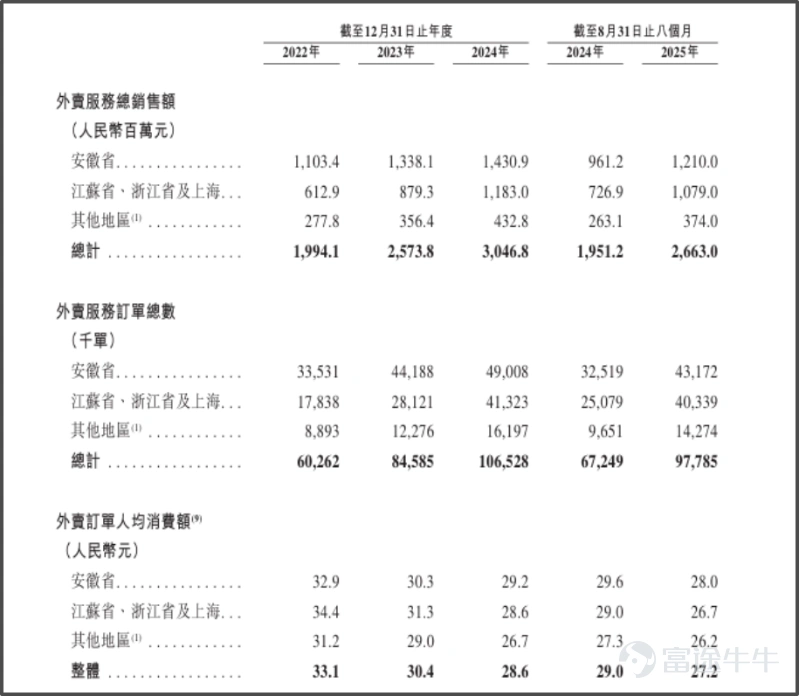
Correspondingly, the total food delivery sales across all Laoxiangji restaurants (including all outlets) grew from RMB 1.994 billion in 2022 to RMB 3.047 billion in 2024, reaching RMB 2.663 billion in the first eight months of 2025, close to the full-year level of 2024. Total delivery orders surged in tandem, increasing from 60.262 million in 2022 to 107 million in 2024, with 97.785 million orders recorded in the first eight months of 2025.
Reported by Zhong Kai, journalist of The Sing Tao, with intern Hu Tingwei in Shenzhen Laoxiangji, which has submitted its listing application to the Hong Kong Stock Exchange three times, not only demonstrates a strong determination to pursue an IPO but also reveals the 'hidden pain' of being deeply tied to food delivery platforms as the leader of Chinese fast food. The path dependency exposed in this prospectus is not unique to Laoxiangji, but rather a collective epitome of the entire catering industry in the era of traffic. According to the recent prospectus disclosed by Laoxiangji, in the first eight months of 2025, the proportion of food delivery sales in the company's directly-operated stores accounted for approximately 44.44%, increasing by 3.32 percentage points year-on-year; the proportion of food delivery sales in franchised stores was even as high as 49.7%, increasing by 3.4 percentage points year-on-year, with the contribution of food delivery business almost equal to that of dine-in services. As food delivery becomes 'half of the market' in terms of sales, the pressure from platform commissions is also intensifying.The average platform service expense rate of Laoxiangji has risen from 15.8% in 2022 to 17.5% in the first eight months of 2025. However, Laoxiangji emphasized in the prospectus that according to data from CIC, the company’s average platform service expense rate is consistent with the industry average of Chinese fast food. Whether it is the proportion of food delivery sales or the platform service fee rate, both tell a harsh reality: food delivery platforms have quietly transformed from 'traffic boosters' for the catering industry into 'profit distributors' with deep ties. Many catering businesses frankly admit that although food delivery appears to generate high turnover, they are essentially working for the platforms. The formation of path dependency stems from the irreversible...
However, behind this growth lies a shift to a volume-over-price model. To maintain competitiveness on food delivery platforms, Laoxiangji has had to participate in platform-led price wars and subsidy campaigns.This directly caused the average spending per food delivery order to drop from 33.1 yuan in 2022 to 27.2 yuan in the first eight months of 2025, which is currently at its lowest level in recent years.
The decline in order value further increased the extent to which platform fees erode profits, trapping Laoxiangji in a vicious cycle of 'sacrificing profits for traffic.' In other words, if catering businesses don’t lower prices, order volumes drop; if they do lower prices, profits are squeezed. The inflexible rise in platform fees exacerbates this dilemma.
As an industry leader with 1,658 stores and annual revenue nearing 6.3 billion yuan, even Laoxiangji finds it hard to escape the squeeze of platform 'commissions,' let alone small and medium-sized catering merchants. Behind this seemingly win-win cooperation lies the passive compromise of the catering industry under traffic hegemony, as well as the difficult choice of 'no customer flow without relying on platforms, no profit when relying on them.'
Risk Disclaimer: The above content only represents the author's view. It does not represent any position or investment advice of Futu. Futu makes no representation or warranty.Read more
2981 Views
Report
Comments
Write a Comment...