
[BOC Guest] and [HK Stocks Podcast] discuss Li Ning: How to use warrant products for strategic positioning
$LI NING (02331.HK)$As of January 19, 2026, the share price movement of Li Ning (02331.HK) has become a focal point in the market. The strong technical breakout is intertwined with long-term fundamental expectations, while short-term pressures from technical adjustments are evident. This article will integrate the latest technical data, consolidate core market insights from [BOC Guest] and [HK Stocks Podcast], and provide an in-depth analysis of warrant and bull/bear certificate products to offer investors clear decision-making references.
I. Technical Pattern Analysis: Key Levels After a Strong Breakout
Li Ning's stock price performed notably in the mid-January trading session, successfully breaking away from the previous consolidation platform and closing above the key psychological level of 20 yuan. This breakout was confirmed by an increase in trading volume, indicating heightened investor attention.
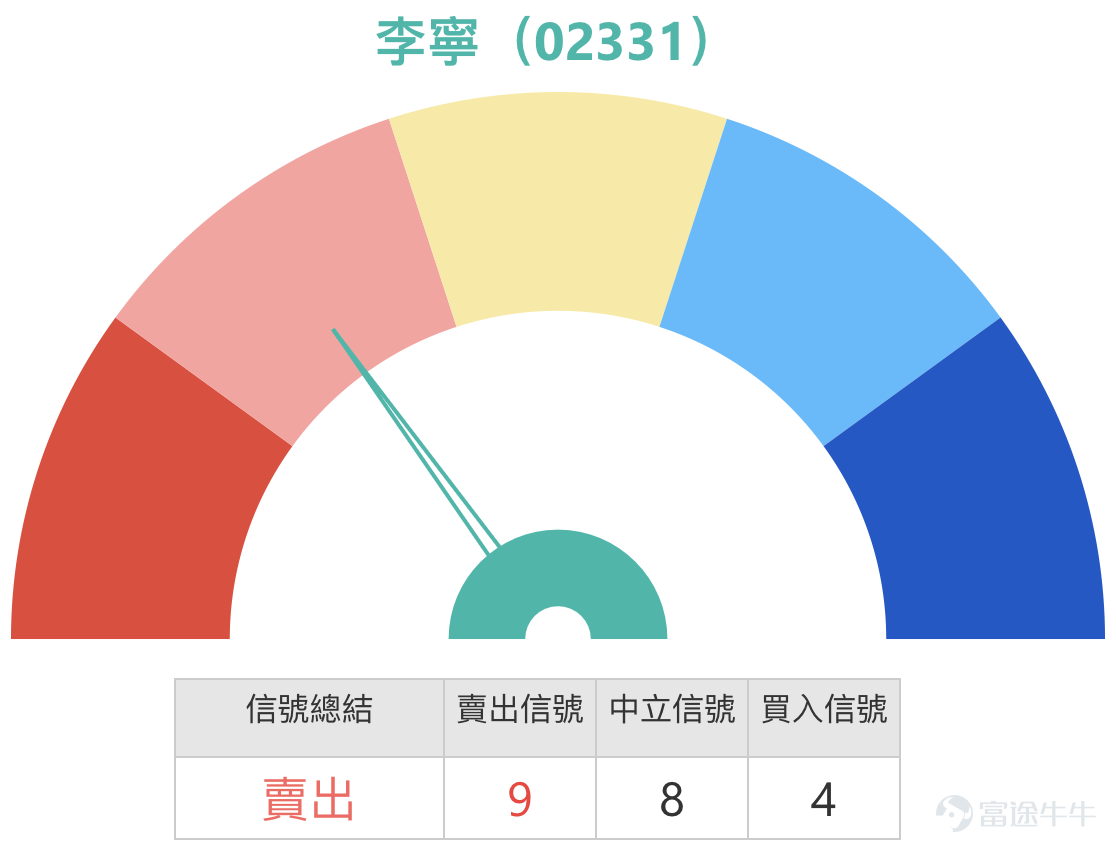
However, the rapid short-term rally has also accumulated technical adjustment pressure. Multiple oscillation indicators have issued warning signals: the Relative Strength Index (RSI) climbed to a high of 67, while the Williams %R and Stochastic Oscillators both suggest the stock has entered an 'overbought condition.' The aggregate technical signals show that the Momentum Oscillator is showing a 'top divergence, sell' signal, corroborating the overbought signals from the RSI and Williams %R, collectively pointing to a higher probability of a short-term technical pullback or sideways consolidation to digest profit-taking.
Against this backdrop, defining key price levels is crucial for short-term operations:
* Upper resistance zone: The immediate resistance level in the short term is at 21.4 yuan, which is the upper boundary of the previous dense trading area and a critical determinant of whether this rebound can evolve into a trend-following rally. If it can break through effectively, the next target will be 21.8 yuan. The market generally believes that directly challenging higher targets (such as 25 yuan) in the short term faces significant resistance.
* Lower support zone: The first support level is at 19.3 yuan, roughly coinciding with the 10-day moving average (currently around 19.56 yuan) and the top of the consolidation platform before the breakout. The more critical second support level is at 18.4 yuan, the starting point of this strong rebound, where multiple medium- to long-term moving averages such as the 30-day and 60-day converge, offering stronger support.
![$LI NING (02331.HK)$As of January 19, 2026, the share price movement of Li Ning (02331.HK) has become a focal point in the market. The strong technical breakout is intertwined with long-term fundamental expectations, while short-term pressures from technical adjustments are evident. This article will integrate the latest technical data, consolidate core market insights from [BOC Guest] and [HK Stocks Podcast], and provide an in-depth analysis of warrant and bull/bear certificate products to offer investors clear decision-making references. I. Technical Pattern Analysis: Key Levels After a Strong Breakout Li Ning's stock price performed notably in the mid-January trading session, successfully breaking away from the previous consolidation platform and closing above the key psychological level of 20 yuan. This breakout was confirmed by an increase in trading volume, indicating heightened investor attention. However, the rapid short-term rally has also accumulated technical adjustment pressure. Multiple oscillation indicators have issued warning signals: the Relative Strength Index (RSI) climbed to a high of 67, while the Williams %R and Stochastic Oscillators both suggest the stock has entered an 'overbought condition.' The aggregate technical signals show that the Momentum Oscillator is showing a 'top divergence, sell' signal, corroborating the overbought signals from the RSI and Williams %R, collectively pointing to a higher probability of a short-term technical pullback or sideways consolidation to digest profit-taking. Against this backdrop, defining key price levels is crucial for short-term operations: * Resistance area above: Short-term initial...](https://nnqimage.futunn.com/sns_client_feed/1162342/20260119/web-1768792533416-84hw3RFIzC.png/big?area=1&is_public=true&imageMogr2/ignore-error/1/format/webp)
II. Consolidation of Market Core Views: Balancing Long-Term Trends and Short-Term Caution
The current market view on Li Ning clearly reflects the coexistence of long-term structural opportunities and short-term realistic challenges, as fully demonstrated through different column perspectives.
Long-term perspective: Policy-driven and leading company value. In the January 6 column [BOC Guest], Niki, Director of BOC International, highlighted the macro-positive environment surrounding Li Ning. Her analysis suggested that ongoing initiatives such as trade-in programs and consumption subsidies are primarily aimed at boosting domestic demand, a trend expected to continue into 2026. Among the three main drivers of economic growth, stimulating consumption represents the 'most controllable environment.' Therefore, as a leading company in China's sports goods sector, Li Ning is expected to benefit continuously. Based on this long-term logic, Niki recommended the BOC call warrant (22219) with a strike price of 23.33 yuan, believing that if the stock breaks above 23 yuan in the future, the leverage effect of this product will be 'very significant.'
Short-term perspective: Technical overbought conditions and valuation pressures. Contrasting with the long-term optimistic outlook, the January 16 [HK Stocks Podcast] expressed a more cautious view on the short-term trend. The analysis pointed out that Li Ning's daily, weekly, and monthly closing prices have 'approached or even broken through the upper Bollinger Bands,' a strong short-term overbought signal technically. Additionally, its RSI has 'approached the high range near 80,' further confirming the pullback pressure. Host Simon explicitly responded to investors' questions about whether the stock price could reach 25 yuan, stating that 'achieving this target in the short term would be quite challenging,' emphasizing the need for 'pullback consolidation or further buildup' before attempting to push higher. This view aligns highly with the current signals from technical indicators.
In summary, the market consensus affirms Li Ning's long-term investment logic but cautions about the risk of pullbacks following a rapid rise based on technical analysis for the short term. Investors need to balance between long-term trends and short-term volatility.
III. Review and Strategy Value Analysis of Warrant Products
1. Review of Recent Product Performance
Reviewing the recent warrant market, it can be observed that derivative tools exhibit capital efficiency when market direction is correctly anticipated. For instance, the CEB call warrant (23932) mentioned on January 14 recorded an increase of about 10% over the following two trading days, while the underlying stock rose by 2.36% during the same period. This performance vividly demonstrates that, due to their inherent leverage characteristics, call warrants can potentially offer higher return elasticity compared to direct investment in the underlying stock when capturing short-term trends. Conversely, this also serves as a warning that losses can be similarly magnified if predictions are incorrect.
![$LI NING (02331.HK)$As of January 19, 2026, the share price movement of Li Ning (02331.HK) has become a focal point in the market. The strong technical breakout is intertwined with long-term fundamental expectations, while short-term pressures from technical adjustments are evident. This article will integrate the latest technical data, consolidate core market insights from [BOC Guest] and [HK Stocks Podcast], and provide an in-depth analysis of warrant and bull/bear certificate products to offer investors clear decision-making references. I. Technical Pattern Analysis: Key Levels After a Strong Breakout Li Ning's stock price performed notably in the mid-January trading session, successfully breaking away from the previous consolidation platform and closing above the key psychological level of 20 yuan. This breakout was confirmed by an increase in trading volume, indicating heightened investor attention. However, the rapid short-term rally has also accumulated technical adjustment pressure. Multiple oscillation indicators have issued warning signals: the Relative Strength Index (RSI) climbed to a high of 67, while the Williams %R and Stochastic Oscillators both suggest the stock has entered an 'overbought condition.' The aggregate technical signals show that the Momentum Oscillator is showing a 'top divergence, sell' signal, corroborating the overbought signals from the RSI and Williams %R, collectively pointing to a higher probability of a short-term technical pullback or sideways consolidation to digest profit-taking. Against this backdrop, defining key price levels is crucial for short-term operations: * Resistance area above: Short-term initial...](https://nnqimage.futunn.com/sns_client_feed/1162342/20260119/web-1768792585837-LeBRlF4sAQ.png/big?area=1&is_public=true&imageMogr2/ignore-error/1/format/webp)
4. Deployment Strategy for Derivatives under the Current Market Situation
In-depth Analysis of Warrant (Call Warrant) Products:
Taking the BOC call warrants (22219) recommended in the column [BOC Visiting] $BILININ@EC2605B.C (22219.HK)$ and similar products such as HSBC call warrants (22268) $HSLININ@EC2605A.C (22268.HK)$ as examples for analysis. Both products have an exercise price around 23.3 yuan, offering approximately 6 times actual leverage.
* Strategic Relationship Between Terms and Pricing: The exercise price of 23.3 yuan is set above the short-term resistance levels of 21.4 yuan and 21.8 yuan for the underlying stock. This design implies that the product is not intended for speculating on minor stock price rebounds, but rather is suited for investors who strongly believe in Li Ning’s medium- to long-term outlook and expect it to successfully break through all short-term resistances to open new upward momentum. This is a more forward-looking and aggressive deployment. If the stock price encounters resistance around 21.4 yuan and retreats, the product's time value will face erosion.
* Importance of Implied Volatility: These two products are labeled as having 'relatively low implied volatility.' Implied volatility is one of the key factors affecting warrant prices, and can be understood as the market’s expectation of future volatility for the underlying stock. Choosing products with lower implied volatility helps control the cost of time decay due to declining expected volatility, making it a more rational choice.
![$LI NING (02331.HK)$As of January 19, 2026, the share price movement of Li Ning (02331.HK) has become a focal point in the market. The strong technical breakout is intertwined with long-term fundamental expectations, while short-term pressures from technical adjustments are evident. This article will integrate the latest technical data, consolidate core market insights from [BOC Guest] and [HK Stocks Podcast], and provide an in-depth analysis of warrant and bull/bear certificate products to offer investors clear decision-making references. I. Technical Pattern Analysis: Key Levels After a Strong Breakout Li Ning's stock price performed notably in the mid-January trading session, successfully breaking away from the previous consolidation platform and closing above the key psychological level of 20 yuan. This breakout was confirmed by an increase in trading volume, indicating heightened investor attention. However, the rapid short-term rally has also accumulated technical adjustment pressure. Multiple oscillation indicators have issued warning signals: the Relative Strength Index (RSI) climbed to a high of 67, while the Williams %R and Stochastic Oscillators both suggest the stock has entered an 'overbought condition.' The aggregate technical signals show that the Momentum Oscillator is showing a 'top divergence, sell' signal, corroborating the overbought signals from the RSI and Williams %R, collectively pointing to a higher probability of a short-term technical pullback or sideways consolidation to digest profit-taking. Against this backdrop, defining key price levels is crucial for short-term operations: * Resistance area above: Short-term initial...](https://nnqimage.futunn.com/sns_client_feed/1162342/20260119/web-1768792605219-Xe5DiMf1Fl.png/big?area=1&is_public=true&imageMogr2/ignore-error/1/format/webp)
* #LearnWarrantsAndBullBearCertificatesWithJenny# Key Analysis: What Are 'Standard Warrants'?
Investors trading in warrants often hear the distinction between 'standard' and 'non-standard' types. The key difference lies in the settlement method. The final settlement price of a 'standard warrant' is not determined by the underlying stock price on the expiration date, but rather calculated based on the average closing price over the five trading days prior to expiration. This is a crucial risk clause. For example, if the last trading day for a Li Ning call warrant is May 15th, its settlement value will be determined by the average closing price of Li Ning over the five days from May 16th to 20th. This means that even if investors sell at an ideal price on the last trading day, they still bear the risk of fluctuations in the underlying stock during the subsequent five trading days. Therefore, when trading standard warrants, it's critical to proactively manage risks and decide whether to stay or exit around the 'last trading day,' rather than waiting for the expiration settlement.
V. Interactive Thinking
Faced with Li Ning's solid long-term fundamentals but overheated short-term technical indicators, how would you choose your strategy?
1. Do you agree with [CICC Guest]’s long-term positioning perspective and are willing to utilize low implied volatility call warrants like 22219 to make a medium-term position setup when the stock price pulls back to support areas at 19.3 yuan or even 18.4 yuan?
Alternatively, do you lean more towards the short-term cautious view expressed in the [Hong Kong Stock Podcast], suggesting that one should remain on the sidelines until the stock price successfully stabilizes and breaks through the key resistance level of HK$21.4, or shift focus to more short-term spread strategies?
Feel free to share your insights and trading logic in the comment section. For more real-time analysis, in-depth interpretation of terms, and practical strategy discussions regarding individual Hong Kong stocks and derivatives, be sure to follow 'Hong Kong Warrants Jenny'.
#Li Ning #02331 #TechnicalAnalysis #SupportResistance #Warrants #StockOptions #ImpliedVolatility #StandardWarrants #HKDerivatives #MarketView
Disclaimer: The content of this article is based on public information for analysis purposes only and is provided for investor reference. It does not constitute any investment advice or offer to buy/sell. Financial markets carry significant risks, and the prices of structured products can fluctuate dramatically, potentially leading to the total loss of invested capital. Investors should fully understand the product features and risks and seek independent professional advice before making any investment decisions.
Risk Disclaimer: The above content only represents the author's view. It does not represent any position or investment advice of Futu. Futu makes no representation or warranty.Read more
Comments
to post a comment
6