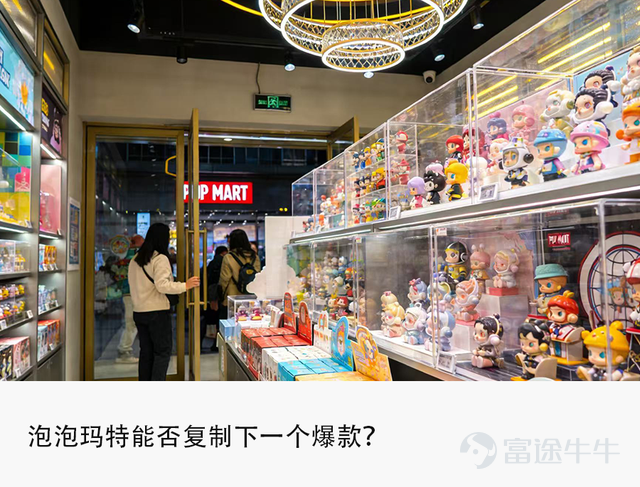

Pop Mart Loses Labubu Magic

Source | Tech Planet
Text| Zhai Yuanyuan
From being 'hard to find a single doll' to 'falling off the pedestal,' it only took Labubu, Pop Mart's top trending toy IP, 8 months.
Starting from 2025, under the phenomenal exposure of international celebrities like Rihanna, Lisa, and Beckham, 'Labubu' gradually became a global sensation. In May 2025, 'Labubu' triggered a buying frenzy overseas, with consumers queuing up in the early hours at multiple stores across Europe and America.
While gaining immense popularity abroad, the craze continued to heat up domestically. The arrival of 'scalpers' directly pushed this buying spree to its peak. Labubu's price myth reached its pinnacle in June 2025. That month, a first-generation collectible Labubu doll was auctioned for a staggering 1.08 million yuan. Meanwhile, prices on the secondary market skyrocketed. The official retail price of the Labubu x Vans collaboration was 599 yuan, but its peak value on the secondary market neared 35,000 yuan, marking a 57-fold premium. Even the hidden editions of regular blind boxes were trading at over 20 times their original price on the secondary market. Counterfeit sales surged, with data from a second-hand platform showing a 300% increase in counterfeit transactions within six months.
As Labubu rose to become a top-tier IP, it successfully propelled Pop Mart's market value to HKD 450.423 billion, making its founder Wang Ning the richest person in Henan, with a net worth surpassing 100 billion yuan at one point.
However, starting from the end of 2025, Labubu’s market prices began to 'collapse.' Nowadays, Labubu’s second-hand prices have plummeted, with topics like 'Pop Mart starts selling at 50% off' dominating discussions for consecutive days. The stock price fell accordingly. As of press time, Pop Mart's latest market value stands at HKD 254.085 billion, having shed nearly HKD 200 billion from its market cap peak above HKD 450 billion, falling back to April 2025 levels.
The fall of a top-tier IP has led to the collapse of the second-hand market that relied on its popularity.
From an astronomical price of 1.08 million yuan, to a 50% drop in the second-hand market
On second-hand trading platforms like Qiandao and Xianyu, many people are selling their Labubu collections. Individual sellers, along with scalpers and resellers, are all trying to offload stock, fearing they’ll be left holding the hot potato in this game of musical chairs.
Selling Labubu at the original price has become a consensus among sellers, as premium pricing strategies have failed. On Xianyu, one seller repeatedly lowered the price of their listed Labubu. In the first-generation Labubu series of vinyl plush toys, items originally priced at 999 yuan, such as ZIMOMO 'Supreme Leader' and 'Archangel,' were initially listed at 1200 yuan but gradually dropped to 1100, then 1050, and finally back to the original price of 999 yuan. Despite this, the item remains unsold.
Sometimes even discounted prices fail to attract buyers. Another seller listed brand-new authentic ZIMOMO 'Supreme Leader' and 'Archangel' vinyl figures from Pop Mart for 750 yuan each, with a bundle deal available for two. The listing attracted over 2,000 views, but after half a month, the items still haven’t sold. There’s no bottom in the market—only lower prices. Some sellers priced similar Supreme Leaders and Archangels at 488 yuan each, which represents a 50% drop from the original price, yet these items remain unsold.
It’s not just the first-generation products; prices for Labubu's second, third, and fourth generations have almost entirely collapsed. The Labubu 'Sit & Party' series, originally priced at 594 yuan per box (99 yuan each), previously averaged over 1,000 yuan on second-hand platforms. Now, the lowest transaction price for a single blind box has dropped to 60 yuan, falling below the issue price. Previously hyped hidden editions have also seen massive price drops. The 'Id' hidden edition from the 'High Energy Ahead' series, once speculated up to over 10,000 yuan, has now plummeted to around 400 yuan. Hidden editions from the fourth-generation mini Labubu series have fallen from 800 yuan to about 260 yuan.
The second-hand market is in chaos, with many dumping goods, others postponing purchases, and some taking advantage by buying at low prices. Reports suggest that some scalpers lost over 100,000 yuan in a single day, while others are stuck with inventories worth millions. As a result, many have suspended acquisitions. However, there are still those buying low and selling high. On social media platforms like Xiaohongshu, many are actively buying back authentic Labubu products.
A merchant specializing in collecting trendy toys claims he isn't picky about models and will buy anything—whether it’s someone quitting the hobby, idle inventory, or factory leftovers. However, his buying price is relatively low, offering only 75% of the lowest price on Qiandao. Factors like whether the packaging is intact or if the product has been unwrapped also affect his offer. He noted that there’s demand for the Labubu he collects, as he already has direct buyers lined up.
Counterfeit Labubu products are also starting to muddy the waters. A merchant selling Labubu replicas told Tech星球 that he carries most of the popular styles, with the first-generation 'Supreme Leader' being the most purchased. These products, made in Shenzhen factories using the same materials as authentic ones, replicate every detail, including packaging, side-by-side with genuine items. While authentic versions sell for 1,200 yuan, his products go for 600 yuan. Unless you’re a professional appraiser, it’s nearly impossible to tell the difference between the real and fake versions.
Even Pop Mart’s official channels are struggling to sell
Behind Labubu's explosive popularity, the roles of scalpers and speculators cannot be ignored. Scalpers are almost the biggest winners in this frenzy, second only to Pop Mart. Some scalpers made a net profit of 370,000 yuan in the first week of Labubu’s surge, while others earned more than 20,000 yuan in a single day.
But now, Labubu’s boom period has passed. Losing the premium is equivalent to losing profit margins. Many scalpers who sell Labubu at the original price do so to earn points, as points can be exchanged for free Pop Mart merchandise.
Pop Mart, the biggest winner from Labubu, also has to face the reality of a continuously cooling market. Although the bubble around Labubu was almost intentionally burst by itself. On June 18 last year, Pop Mart officially announced a large-scale replenishment of the Labubu 3.0 series and simultaneously launched online pre-sales.
However, the replenishment strategy at the time still failed to dampen market enthusiasm. Now, with an oversupply in the second-hand market, Pop Mart continues to release more stock. A consumer noted that recently, Pop Mart has been consistently restocking across various channels including physical stores in multiple cities, WeChat mini-programs, and its Tmall flagship store. What was once “impossible to get” can now easily be obtained. The once scarce Labubu can even now be seen advertised on social media feeds.
On Pop Mart’s WeChat mini-program, exclusive blind box coupons offering 6 yuan off for every 59 yuan spent have been issued. The High Energy Series PVC plush keychain blind boxes, originally priced at 99 yuan each, can now be acquired for 93 yuan after applying the coupon.
Even Pop Mart’s official stores are struggling to sell. One consumer mentioned that when Pop Mart’s offline store in Beijing’s Sanlitun area restocked two products, 'King' and 'Black Skin,' there were no queues or frenzied buying sprees like before. For a long time, these items remained in stock but went unpurchased. Previously, snagging one felt like a win, but now purchasing a Labubu at its original price of 499 yuan even feels a bit expensive.
Not all Labubu products in Pop Mart’s physical stores are best-sellers. While the PVC plush series is quite popular, sales of Labubu figurine blind boxes remain average.
Creating scarcity and employing hunger marketing remains one of Pop Mart’s essential sales tactics. Despite Labubu’s second-hand prices plummeting and falling below the issue price on platforms like PDD Holdings, Pop Mart still aims to cultivate a 'hard-to-get' purchasing atmosphere for consumers. When customers walk into a Pop Mart store, they are often told that the item is out of stock. However, staff will invite them to join the store’s WeChat group where restocking updates are occasionally shared. Interested buyers can then purchase limited quantities based on group notifications.
A consumer who joined Pop Mart’s store WeChat group said that Pop Mart has been restocking very frequently, almost daily, with new Labubu series. In addition to Labubu, another popular series, Starry People, has also seen substantial restocking.
“The waning popularity of Labubu means that not allowing consumers to immediately purchase it reflects Pop Mart’s final act of defiance,” the consumer said.
Can Pop Mart replicate another Labubu?
Pop Mart's rise and Labubu's explosive popularity were once described by many industry experts as 'incomprehensible.'
Recently, renowned investor Duan Yongping, when responding to a netizen’s question, discussed his views on Pop Mart again. Duan stated, 'I've taken a rough look at Pop Mart and think they are indeed very impressive. However, I still can’t understand why people need this product. What if in a couple of years, everyone stops wanting it? If you believe that people will always need it and their business will continue to grow, then this is certainly not a bad investment for you.'
Amidst the controversies of being 'incomprehensible' and 'not optimistic,' Pop Mart set a market capitalization record of over 400 billion Hong Kong dollars in 2025. Both its first-half revenue and net profit surpassed the total for all of 2024, with expectations to reach 30 billion yuan in revenue for the full year of 2025.
However, every viral IP has its lifecycle. With production expansion, what was once hard to obtain became ubiquitous, and Labubu transitioned from a 'fashion item' to a 'mass-market product.' Analysts in the trendy toy industry pointed out that for products reliant on 'emotional value' and 'scarcity,' such widespread adoption often foreshadows a decline in popularity.
In the view of a former Pop Mart executive, Labubu’s bubble was evident: influencer-driven marketing attracted massive numbers of trend followers and speculators, creating a situation where the market struggled to meet demand. Supply shortages caused second-hand prices to skyrocket, while scalpers and speculators hoarded large quantities of stock, reselling them at high prices to seek excessive profits. This perfectly matched the first half of the product's fashion cycle: niche emergence – hype explosion – mass saturation.
However, the underlying logic for elite consumption is scarcity. When Labubu became mainstream, its fashion cycle entered the latter stage: aversion from elite groups – seeking new products – abandoning the old ones. Influential KOLs looked for new labels to maintain their unique identity, thus initiating the next product fashion cycle. For the discarded products, demand shrank drastically, no longer able to support high second-hand trading prices. The explosive rise and subsequent sharp fall are often symmetrical — this is the destiny of IP fashion cycles.
As Labubu ‘falls out of favor,’ the challenge for Pop Mart lies in continuing to tell a compelling growth story to the capital markets and whether it can replicate another Labubu in the future.
Over the past year, Pop Mart has explored diversification, striving to fill the narrative gaps outside of its IPs. It established an independent jewelry brand called popop, set up a film studio to develop blockbuster movie plans, and aimed to create another hit IP. However, as Labubu cools down, everything remains uncertain. Following Labubu, no other major breakout product has emerged yet.
At the earnings conference on August 20, 2025, Pop Mart founder Wang Ning stated that Labubu’s commercial value had only just begun after becoming a world-class IP, 'At first, there was a lot of buzz and discussion, but when the crowds disperse, does that mean the gold mine is gone?'
Although gold mines have not disappeared, the crowds have dispersed, and the real challenge is just beginning.
Molly, once the top IP for Pop Mart for several years, generated cumulative revenue of over 5 billion yuan from 2017 to 2024. Labubu, which surpassed Molly last year to become Pop Mart's largest IP, faces the question of whether its price will rebound and how much commercial value it can create for the company in the future—everything requires time to verify.
Risk Disclaimer: The above content only represents the author's view. It does not represent any position or investment advice of Futu. Futu makes no representation or warranty.Read more


Comments (3)
to post a comment
3