
Options Square: Micron earnings are coming—how to position in a volatile market?

Daily Options Tracker | Major options traders heavily shorted NVIDIA in the closing session; several Put options doubled, MSTR fell, and major options traders collectively shorted at the close
Index Options
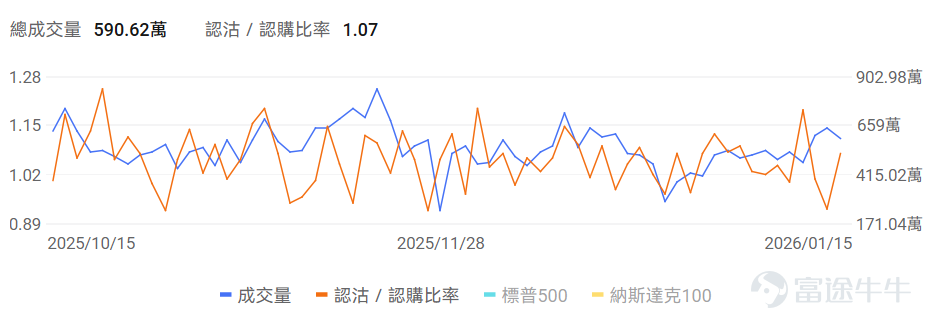
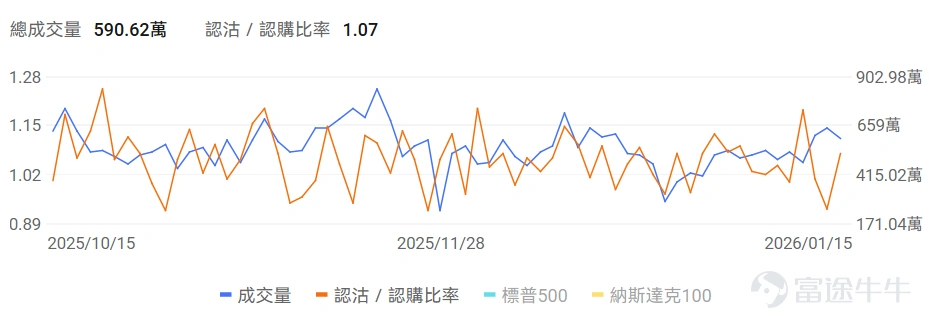
On January 15 Eastern Time, trading volume in the U.S. stock index options market declined, with a total of 5.91 million contracts traded. The put/call ratio rose to 1.07.
As the upcoming expiration date approaches,$S&P 500 Index (.SPX.US)$ The distribution of options trading volume showed the following characteristics: peak put options volume was at 6,895 points, while peak call options volume occurred at 6,980 points.
Single Stock Options
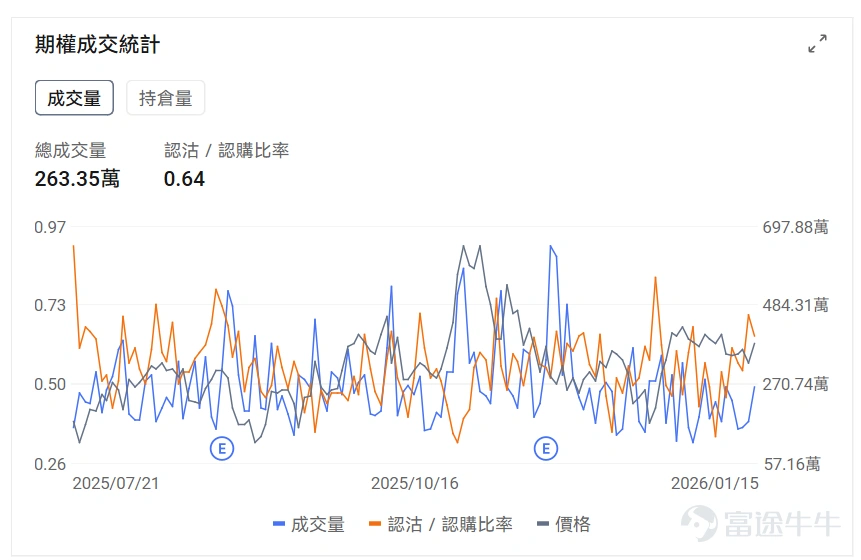
$NVIDIA (NVDA.US)$Closed up 2.13%, with 2.6335 million options contracts traded, and the put/call volume ratio dropped to 0.64. Trump imposed a 25% tariff on certain AI chips but exempted uses such as U.S. data centers; Taiwan Semiconductor's strong earnings boosted AI demand expectations, driving semiconductor stocks like NVIDIA higher, with RBC initiating coverage on NVIDIA with a $240 price target.
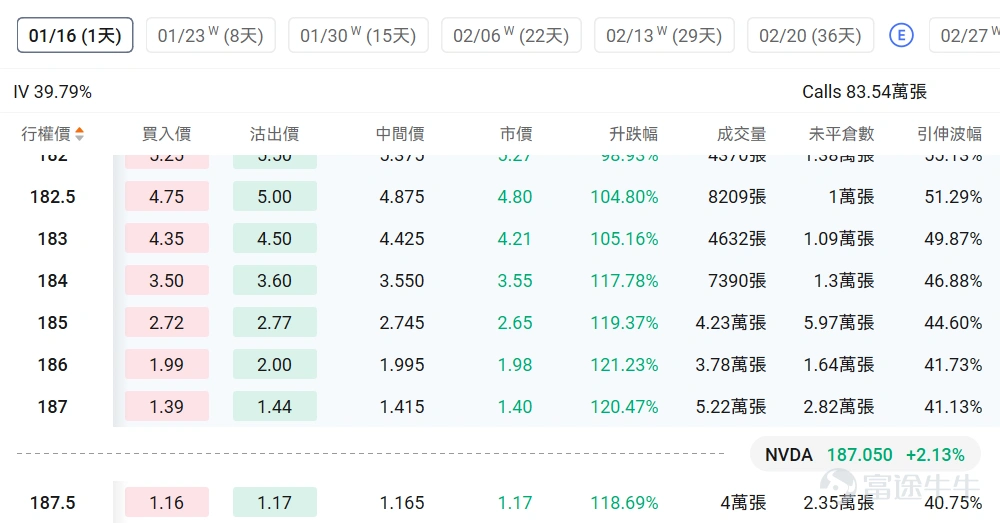
Observing the call options expiring this Friday, multiple contracts have doubled in gains.
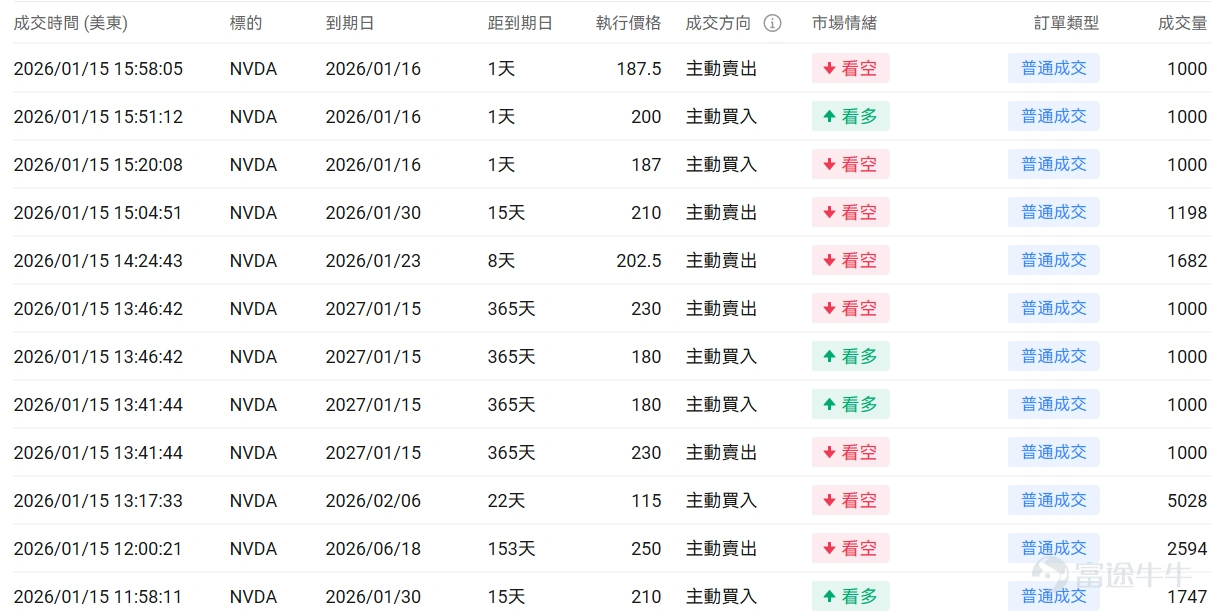
Observing abnormal large options trades, major traders were predominantly bearish.
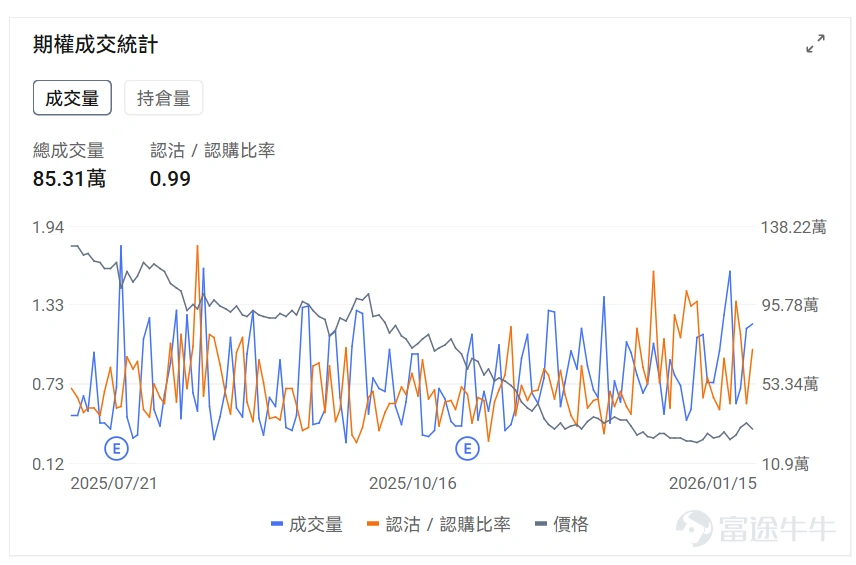
$Strategy (MSTR.US)$Closed down 4.70%, with 853,100 options contracts traded, and the put/call volume ratio rose to 0.99. TD Cowen lowered Strategy’s price target from $500 to $440 but maintained a Buy rating; company director Carl Rickertsen purchased 5,000 shares for approximately $780,000, marking his first buy operation since 2022.
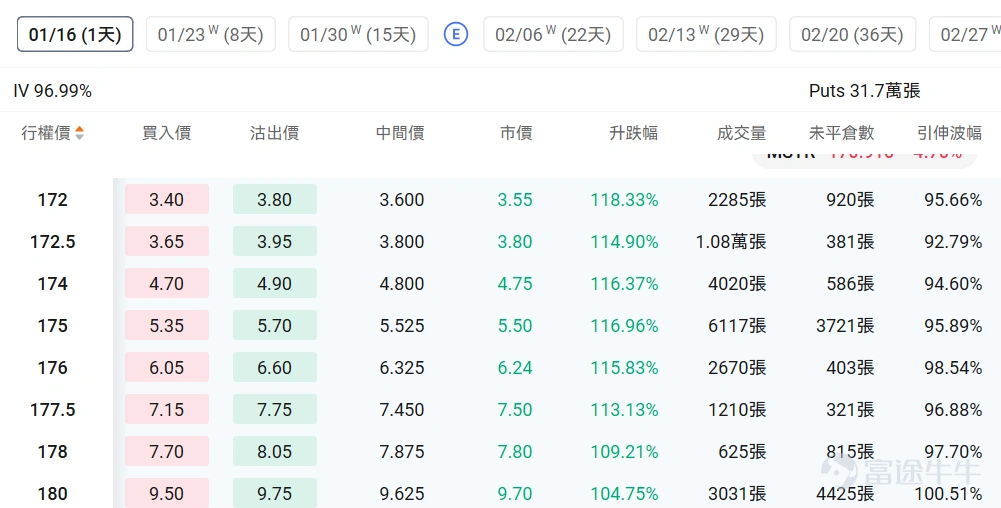
Monitor this Friday's expiring PUT orders, many have doubled in gains.
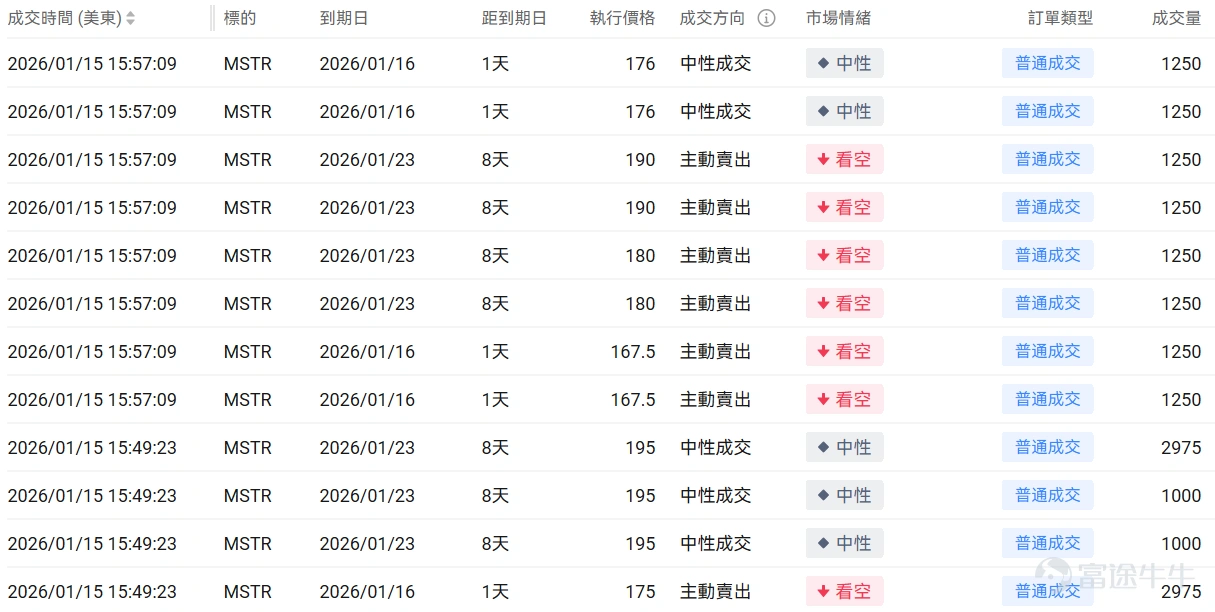
Observing abnormal large options trades, major traders were predominantly bearish.
Options Volume Leaderboard
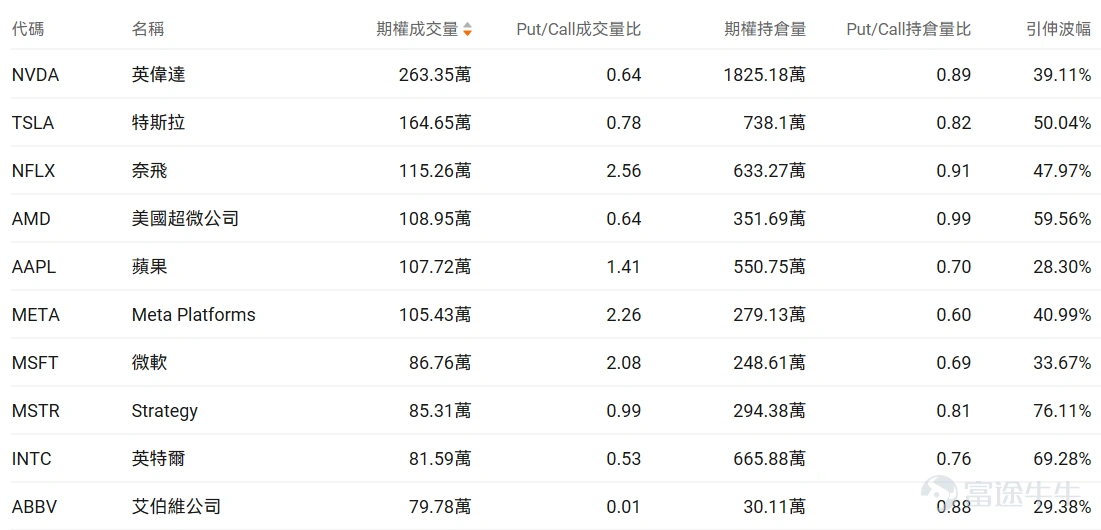
Among the top 10 stocks by options trading volume,$Netflix (NFLX.US)$The put/call volume ratio is at its highest, reaching 2.56. Netflix is competing with Paramount Global to acquire Warner Bros. Discovery, planning to adjust the offer to an all-cash bid, while also expanding an agreement with Sony to provide movie streaming services globally. The company will release its Q4 earnings report on January 20.
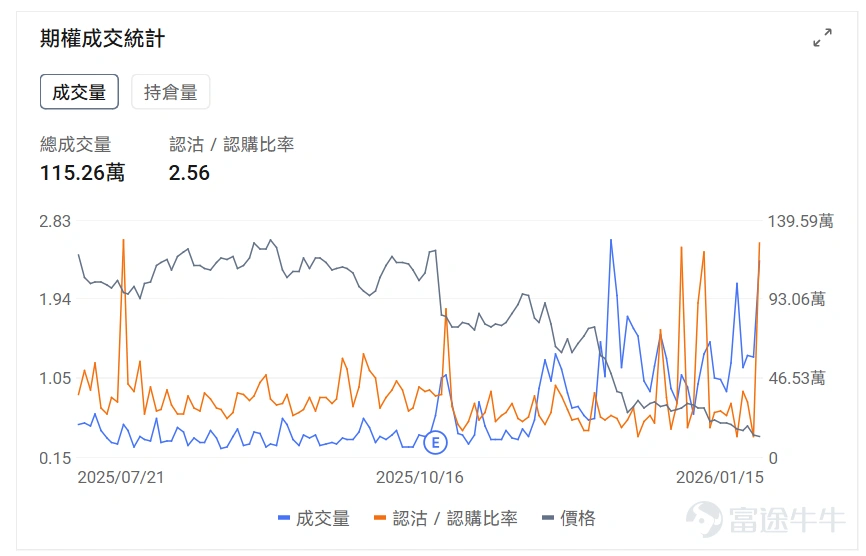
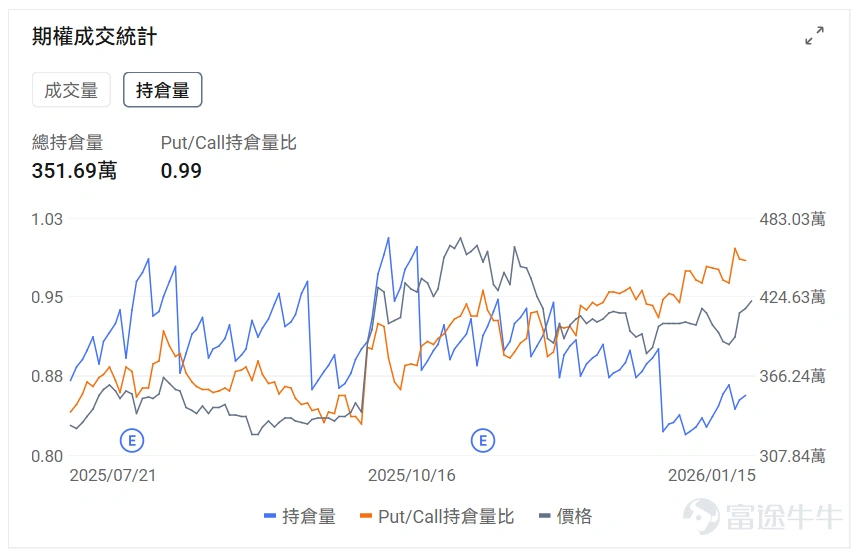
The highest put/call open interest ratio is$Advanced Micro Devices (AMD.US)$Reaching 0.99. Taiwan Semiconductor’s strong earnings drove AMD’s stock price up by about 6%. Analysts predict AMD’s success in 2026 hinges on three key factors: growth in data center CPUs, deployment of the Helios platform, and securing major procurement agreements.
Top 10 Most Actively Traded US Stock Options
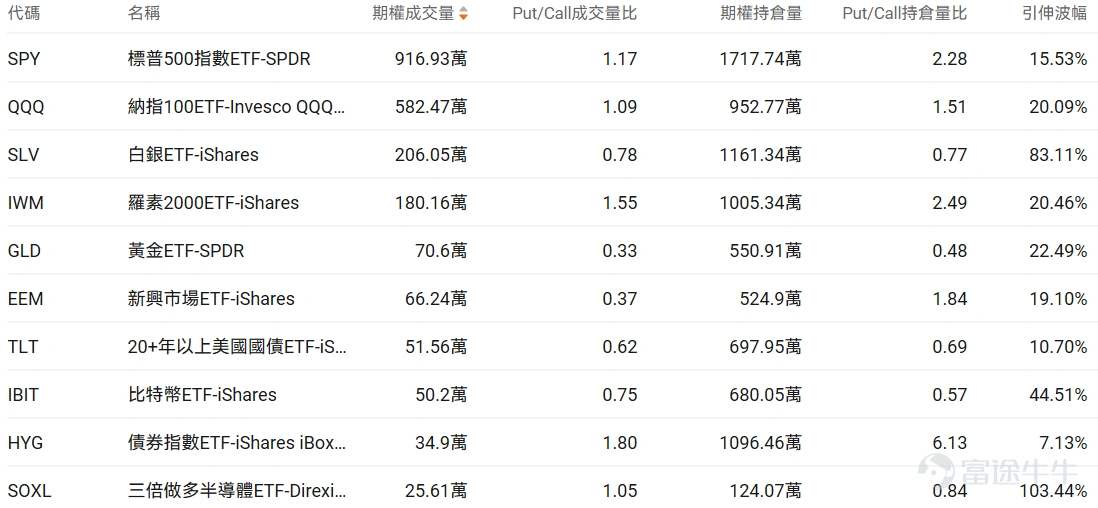
Top 10 US Stock ETF Options by Trading Volume
Implied volatility leaderboard (underlying market cap > $10 billion and option volume > 100,000)
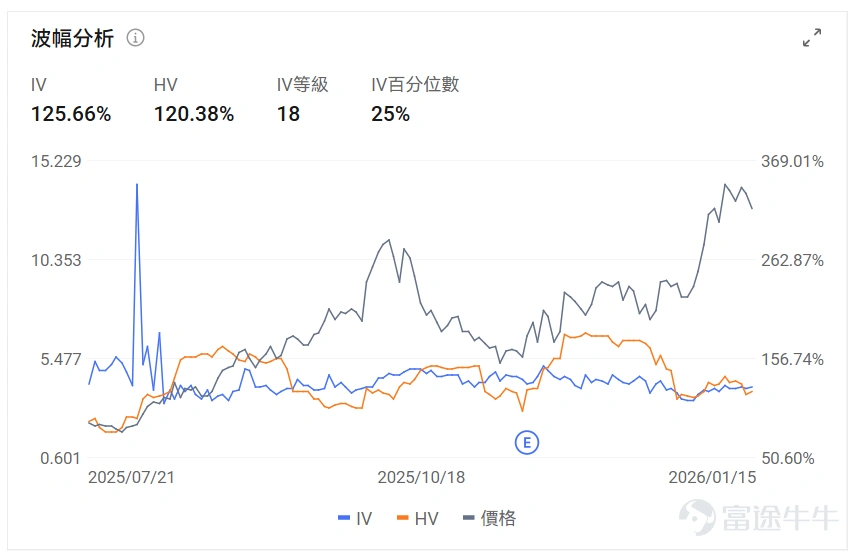
$Ondas (ONDS.US)$Implied volatility is the highest, reaching 125.66%, a 1.34% increase from the previous trading day. Stifel analysts raised their price target for Ondas Holdings from $13 to $17 while maintaining a buy rating. Additionally, Tradr ETFs launched a 2x leveraged ETF product tracking the stock (ONDU), and the company completed a $1 billion stock issuance financing.
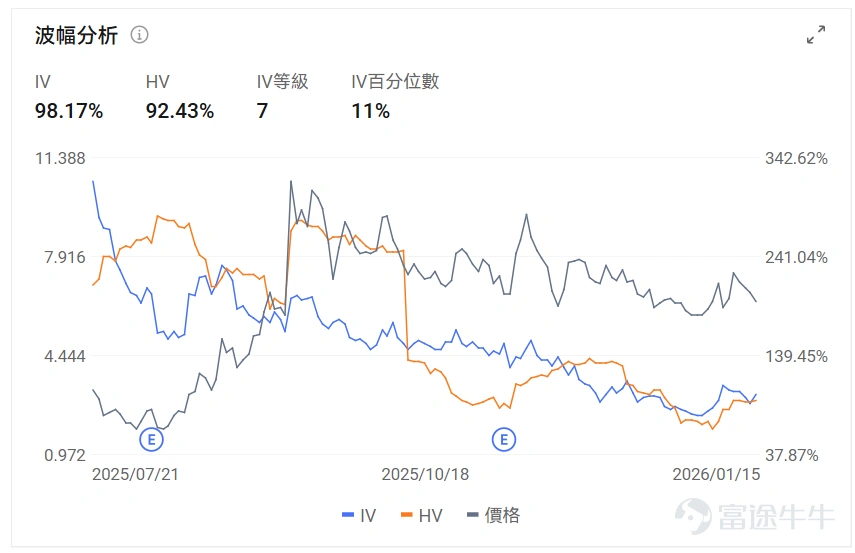
$Opendoor Technologies (OPEN.US)$Implied volatility saw the largest increase, reaching 98.17%, growing by 10.02% from the previous trading day. Morgan Stanley analysts maintained their hold rating on Opendoor Technologies with a $6 price target. US home sales in December increased by 5.1%, marking the largest rise in nearly two years. The company’s new CEO is pursuing a high-volume strategy and introducing AI technology to optimize operations.
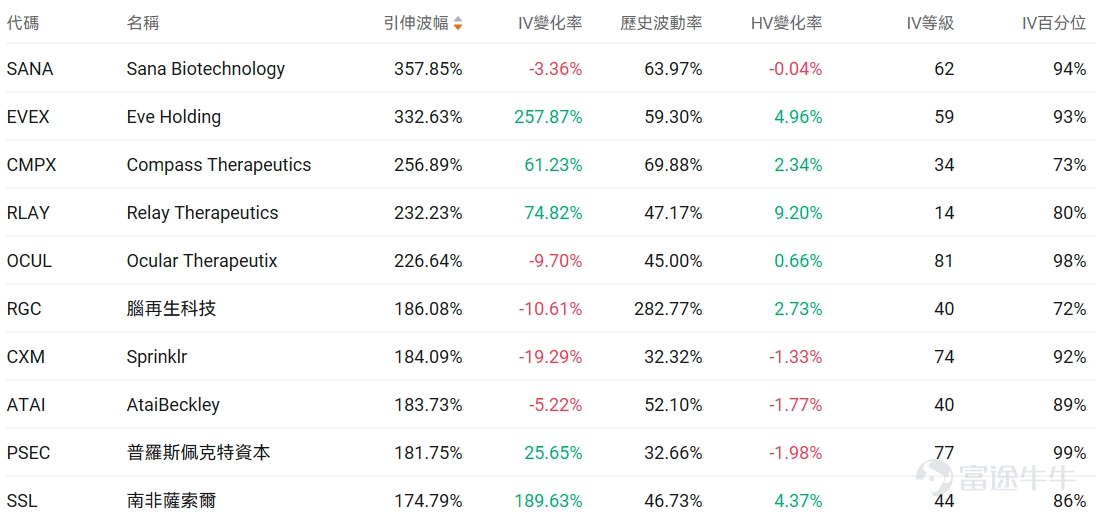
Top 10 most volatile US stock options (underlying market cap > $10 billion and option trading volume > 100,000 contracts)
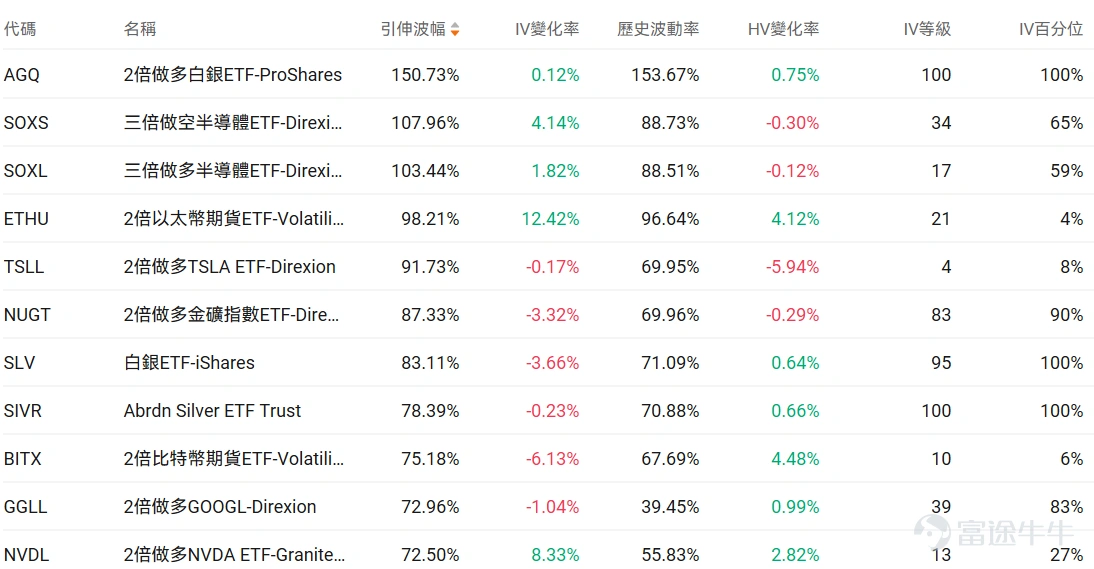
Top 10 US Stock ETFs by Implied Volatility (Criteria: Market Cap > $100 billion)
 Finally, Futu News is offering a small perk to fellow investors. Fellow investors are welcome to claim it.Beginner's Options Package
This event is exclusive to invited HK users. Click to learn more.Detailed rules of the event >>
Market conditions are complex and volatile,Options strategyOverwhelmed by choices? Futubull helps you build a portfolio in three steps.Options strategy, making investment simple and efficient!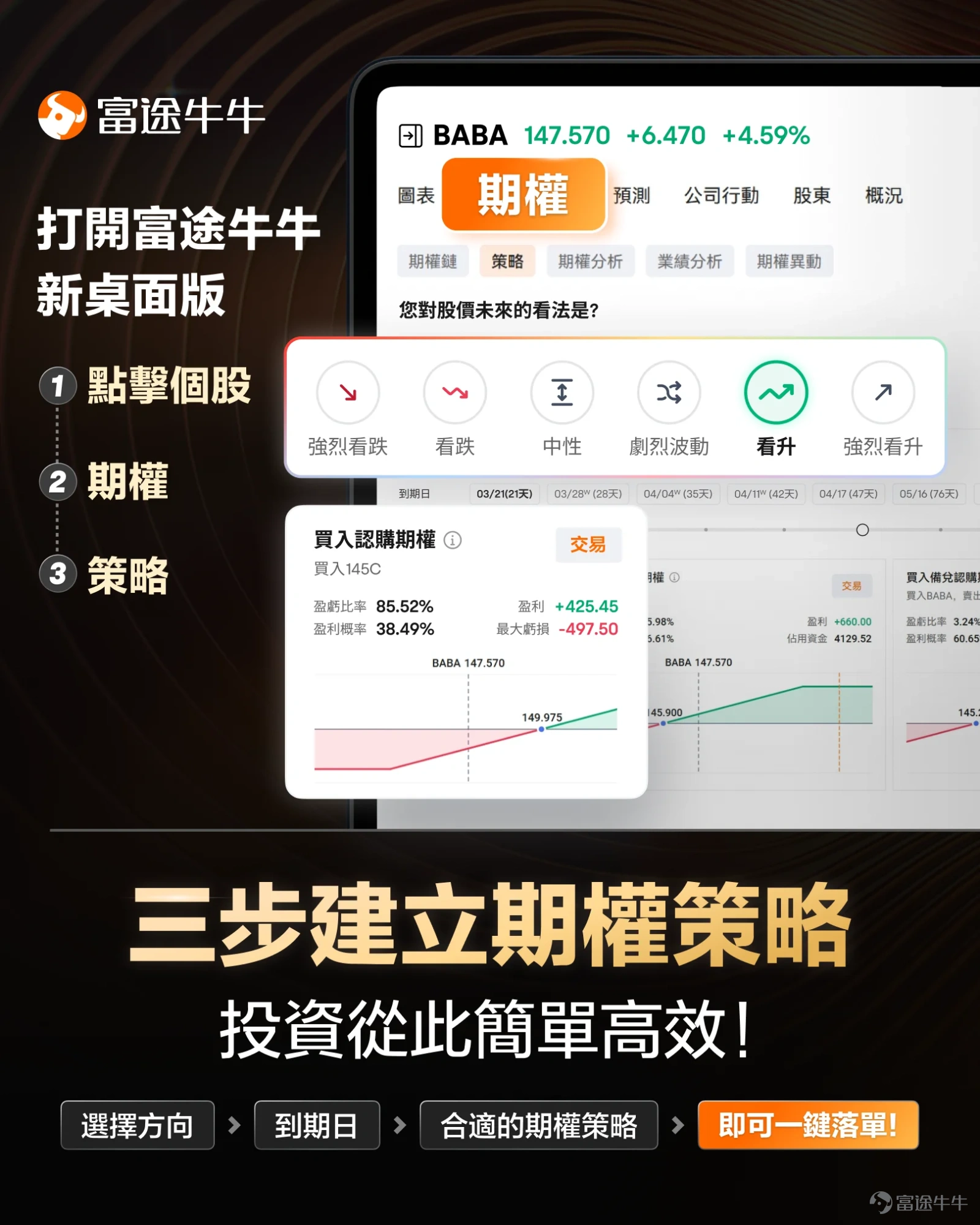
Risk Warning
An option is a contract that gives the holder the right, but not the obligation, to buy or sell an asset at a fixed price at any time on or before a specific date. The price of an option is influenced by several factors including the current price of the underlying asset, the strike price, time to expiration, and implied volatility.
Implied volatility reflects the market’s expectation of the future volatility of an option over a certain period. It is data derived inversely from the BS option pricing model and is generally considered an indicator of market sentiment. When investors anticipate higher volatility, they may be willing to pay more for options to hedge risks, resulting in higher implied volatility.
Traders and investors use implied volatility to assessoption pricesthe attractiveness, identify potential mispricing, and manage risk exposure.Disclaimer
This content does not constitute any offer, solicitation, recommendation, opinion, or guarantee for any securities, financial products, or tools. The risk of loss in trading options can be substantial. In some cases, losses may exceed the initial margin deposited. Even if you set contingent orders such as 'stop-loss' or 'limit' orders, these may not prevent losses. Market conditions may prevent these orders from being executed. You might be required to deposit additional margin within a short period. If you fail to provide the required amount within the specified time, your open positions may be liquidated. However, you will still be responsible for any shortfall in your account. Therefore, before trading, you should study and understand options and carefully consider whether such trading is suitable for you based on your financial situation and investment objectives. If you trade options, you should be familiar with the procedures for exercising options and the rights and obligations upon exercise and expiration. Option trading involves extremely high risks and is not suitable for all investors. Investors should read carefully before engaging in any options trading strategy.Characteristics and Risks of Standardized Options。
This content does not constitute any offer, solicitation, recommendation, opinion, or guarantee for any securities, financial products, or tools. The risk of loss in trading options can be substantial. In some cases, losses may exceed the initial margin deposited. Even if you set contingent orders such as 'stop-loss' or 'limit' orders, these may not prevent losses. Market conditions may prevent these orders from being executed. You might be required to deposit additional margin within a short period. If you fail to provide the required amount within the specified time, your open positions may be liquidated. However, you will still be responsible for any shortfall in your account. Therefore, before trading, you should study and understand options and carefully consider whether such trading is suitable for you based on your financial situation and investment objectives. If you trade options, you should be familiar with the procedures for exercising options and the rights and obligations upon exercise and expiration. Option trading involves extremely high risks and is not suitable for all investors. Investors should read carefully before engaging in any options trading strategy.Characteristics and Risks of Standardized Options。
Editor/Lee
Risk Disclaimer: The above content only represents the author's view. It does not represent any position or investment advice of Futu. Futu makes no representation or warranty.Read more

Comments
to post a comment
3