
Hong Kong-listed AI 'twin leaders' see active trading! How to position in the AI sector for the Year

Discussion on the Short-term Upside Probability and Derivatives Strategy for AAC Technologies
$AAC TECH (02018.HK)$ Discussion on the Short-term Upside Probability and Derivatives Strategy for AAC Technologies
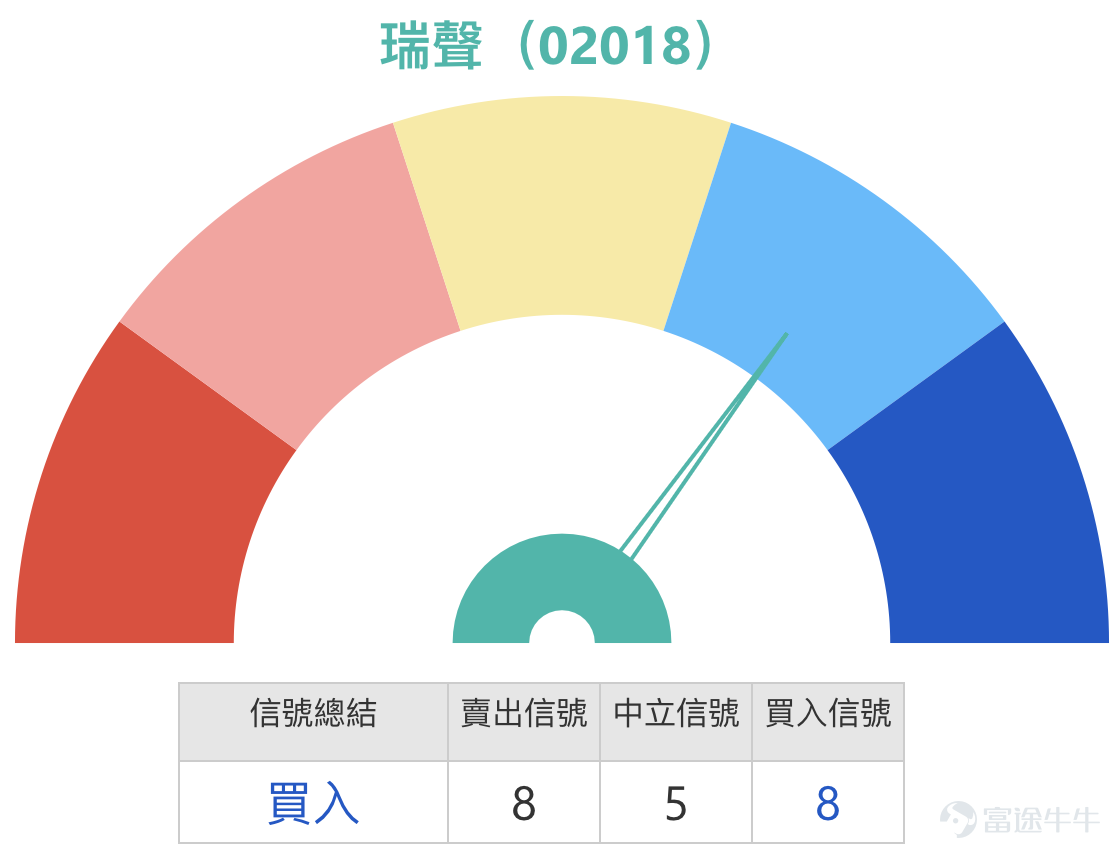
AAC Technologies (02018) is trading at HKD 39.8, up 2.05%. The stock is consolidating within a narrow range around key technical levels. Observing the daily chart, AAC Technologies is currently in a typical range-bound consolidation pattern with temporary equilibrium between buyers and sellers. The latest technical indicator summary has issued a “Buy” signal, indicating early signs of strengthening. However, other indicators show divergence: for example, the Moving Average Convergence Divergence (MACD) continues to flash a sell signal, showing that the mid-term trend momentum has not completely reversed. This conflicting signal reflects the current indecisive state of the share price.
Specifically, the short-term moving average system shows that the 10-day line (HKD 39.38) and the 30-day line (HKD 38.8) are relatively close, with the share price fluctuating narrowly between them, indicating a lack of clear one-sided trend in the short term. Notably, the Volume Ratio (VR) indicator has flashed an “oversold, possible bottoming” signal, hinting that continuous selling pressure may be nearing its end, laying the groundwork for a potential rebound in the future.
Therefore, a clear price fluctuation range has emerged. The market is now focusing on the most critical resistance and support levels. Above, the HKD 40 level acts as the first significant resistance, widely regarded by the market as an important psychological and technical threshold in the short term. If the price can successfully break through and stabilize above this level, the next resistance will be at HKD 40.7. Below, HKD 38.1 is a nearby key support level. If this position fails, the stock could test stronger support at HKD 37.4. Investors should closely monitor the performance of the stock at the edges of this range in the short term.

Market Dynamics Interpretation: New Drivers of Capital Inflows and AI Heat Dissipation
The market is focused on the company's progress in emerging business areas. Recent information shows that AAC Technologies, in response to high computing power AI equipment heat dissipation needs, has increased its ultra-thin VC heat spreader production capacity by an additional 150 million units, bringing the planned annual total capacity to over 300 million units. Reports indicate that as a core heat dissipation supplier for Apple’s iPhone 17 Pro series, the company’s heat dissipation product sales are expected to exceed 1.2 billion RMB in 2025. This business is set to grow rapidly from a base of approximately 300 million RMB in sales in 2024, showing that beyond its traditional acoustics business, the company has established new growth drivers in the AI heat dissipation sector, which could become an important catalyst for boosting market sentiment.
Additionally, on January 13, the company implemented a share repurchase, buying back 150,000 shares at a weighted average price of 39.0977 yuan. This move is typically seen as a signal that management believes the company is undervalued, helping to stabilize investor confidence during market volatility.
Warrant Product Review: A Concrete Demonstration of Leverage Effect
Reviewing the recent performance of the warrant market clearly verifies the capital efficiency of derivative instruments in tracking underlying stock fluctuations. On January 9, 2026, when the market mentioned the Citicorp Call Warrant (22966), the product price rose by 8% over the following two days, while the corresponding rise in the underlying AAC Technologies stock was 1.88%. This 8% increase did not come from luck but was a direct manifestation of the product’s inherent leverage. This demonstrates that with accurate market direction judgment, using derivatives can achieve higher capital utilization efficiency compared to directly trading the underlying stock. Of course, this also means that if the market moves contrary to expectations, it could face greater volatility risks.

Advantages of Derivative Products and Current Deployment Strategies
Given that AAC Technologies' share price is currently within a key technical range, selecting derivative instruments must involve closely analyzing their core terms—especially the strike price or knock-out price—in conjunction with the aforementioned support and resistance levels of the underlying stock.
Bullish Deployment Strategy: If investors believe that advancements in AI heat dissipation business could act as a catalyst driving the stock price to break through upper resistance levels, they might consider call warrants. For example, the Citicorp Call Warrant (22966). $CI-AAC @EC2605A.C (22966.HK)$ With a strike price of 45.88 yuan, providing approximately 5.4 times leverage, it is the warrant with the highest leverage in the recommended list. The strike price is significantly above the current stock price and the second resistance level of 40.7 yuan, making it a deep out-of-the-money warrant characterized by higher leverage, suitable for aggressive strategies anticipating significant rebounds in the underlying stock.
Bearish or Hedging Deployment Strategy: If investors predict that the stock price will be capped by resistance around 40 yuan and turn downward to test support, they may focus on put warrants. For instance, the J.P. Morgan Put Warrant (21033). $JP-AAC @EP2609A.P (21033.HK)$ UBS Group put warrant (19352) $UB-AAC @EP2609A.P (19352.HK)$ The exercise price is 40.86 yuan. This exercise price is slightly higher than the current market price but very close to the first resistance level of 40 yuan. This means that as long as the underlying stock price cannot effectively break through the 40 yuan mark and starts to fall back, these put warrants may come into play. They offer a relatively high leverage of about 2.1 times among put warrants while having lower implied volatility, which makes their prices less susceptible to market sentiment fluctuations, making them suitable for relatively controlled risk bearish strategies or hedging stock-holding risks.

#Learn Warrants and Callable Bull/Bear Contracts with Jenny# Key Analysis: How to Understand the 'In-the-Money/Out-of-the-Money' Degree of Products?
When choosing warrants, the 'exercise price' and the degree of 'in-the-money/out-of-the-money' are crucial factors that directly determine the product's risk-return characteristics and its correlation with the underlying stock price. Simply put, for call warrants, if the exercise price is lower than the current stock price, it is in-the-money; if higher, it is out-of-the-money; the opposite is true for put warrants. Taking AAC Technologies products as an example:
* Credit Suisse call warrant (22966) has an exercise price of 45.88 yuan, much higher than the current stock price of 39.04 yuan, making it a deeply 'out-of-the-money' warrant. Out-of-the-money warrants typically have higher leverage, but require a larger rise in the underlying stock to reach the breakeven point, and time value decay is also faster.
* J.P. Morgan put warrant (21033) has an exercise price of 40.86 yuan, higher than the current stock price, meaning this is a slightly 'in-the-money' or near 'at-the-money' put warrant. Such products have a more linear relationship with changes in the underlying stock price, requiring higher accuracy in directional judgment, but they are less affected by time value decay.
Understanding this helps clarify why deeply out-of-the-money call warrants are chosen when bullish (betting on significant rebounds), and near at-the-money put warrants are selected when bearish (seeking to track downward trends more closely). Investors must compare the exercise price with their projected target levels for the underlying stock (i.e., resistance or support levels) to choose products that match their expectations.
Given AAC Technologies’ current technical landscape and new business catalysts, how would you formulate your strategy? Would you lean toward trusting the VR indicator’s 'bottoming' signal and the AI cooling narrative, seeking opportunities to deploy call warrants near the key support of 38.1 yuan; or do you believe the resistance at 40 yuan is too strong, preparing to use put warrants to hedge against potential pullbacks within the range? When selecting warrant products, besides leverage multiples, would you focus on analyzing the relationship between the exercise price and key technical levels?
#AAC Technologies #TechnicalAnalysis #SupportAndResistanceLevels #Warrants #CallWarrants #PutWarrants #AICooling #CapitalFlow #DerivativesDeployment #RiskManagement
Disclaimer: This article does not constitute any investment advice.
This article is for reference only and does not constitute any investment advice. The market data, opinions, and analysis contained herein may change at any time without prior notice. We shall not be liable for any loss or damage arising from reliance on the information in this article. Technical analysis merely indicates whether certain technical conditions are met; a comprehensive evaluation of asset performance should incorporate additional data. Trading decisions should not be based solely on the content of this article. Please note that past performance is not indicative of future results.
Risk Disclaimer: The above content only represents the author's view. It does not represent any position or investment advice of Futu. Futu makes no representation or warranty.Read more

Comments
to post a comment
1