
The United States and Iran are sticking to their respective positions—can peace talks proceed smooth

Pando Insights: Three Major Trends in Geopolitics, Tariffs, and AI – Deciphering Trump’s ‘Election Playbook’
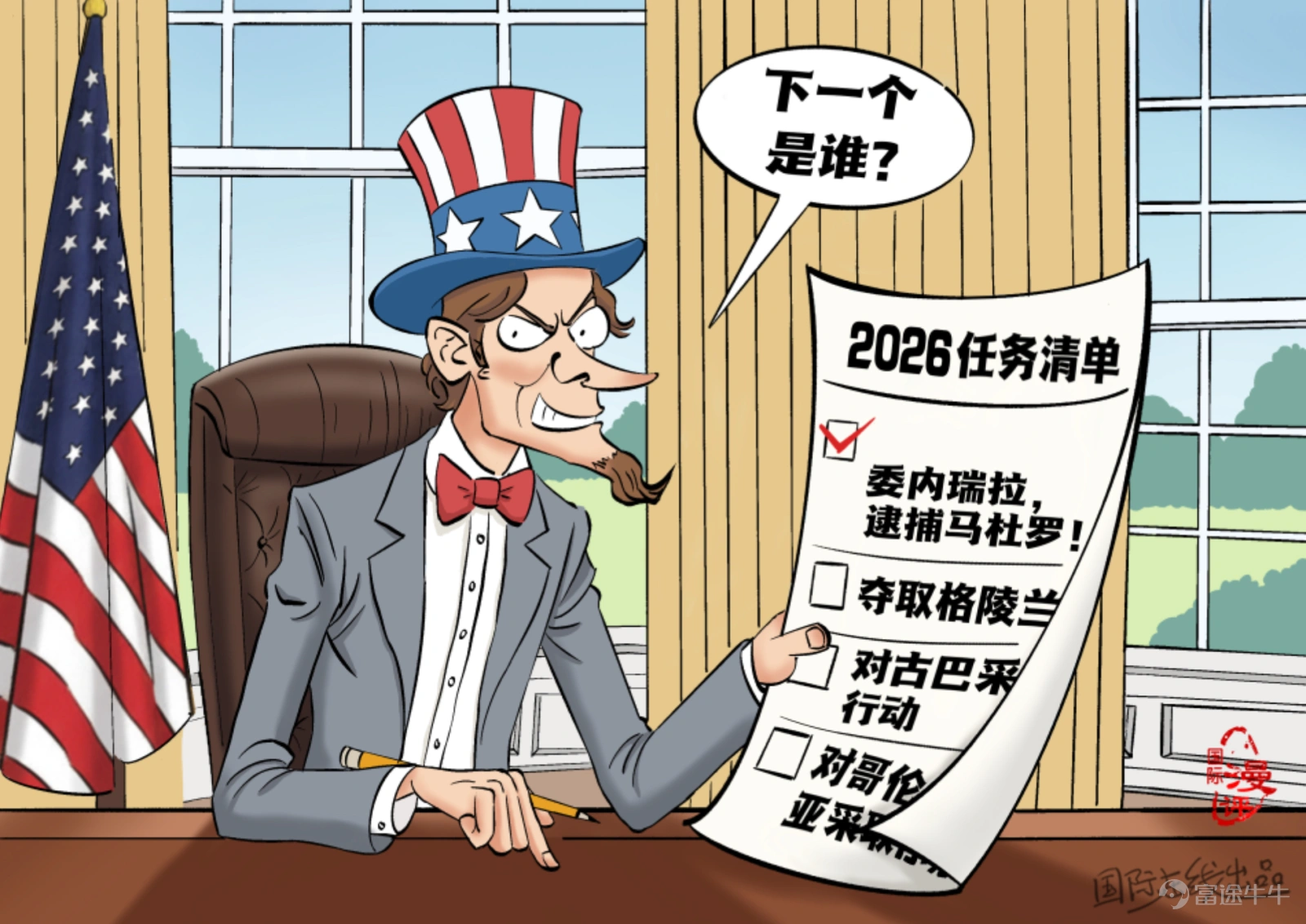
Image source: International Online
Q1. The geopolitical landscape has seen significant changes recently, such as the situation in Venezuela and news about Greenland. What are your thoughts?
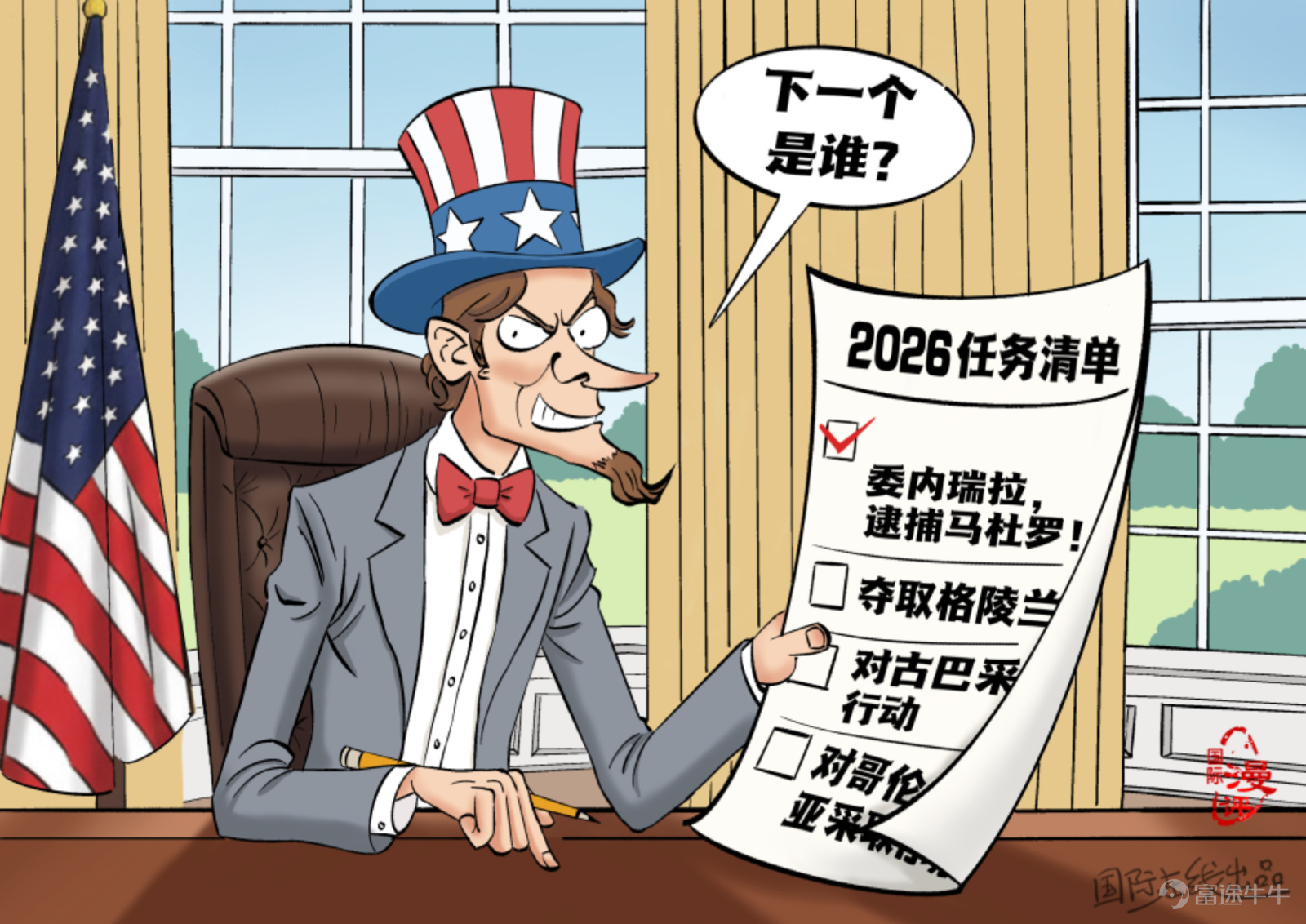
In fact, what appears to be chaotic geopolitics on the surface becomes very clear and consistent if we look at it through the lens of Trump's '2026 election playbook.' My core argument is that the geopolitics of 2026 serves the domestic economy of the US. Everyone is worried about whether Venezuela will bring risks, but what I see is a 'hedge against inflation.' Why do I say this?

First, looking at Venezuela through the lens of 'oil as a tool':
US refineries, especially along the Gulf Coast, have long lacked heavy crude oil. Allowing Venezuelan oil back into the market can precisely fill this structural gap. More importantly, according to IEA data, global oil supply is expected to face an oversupply pressure of 3.8 million barrels per day by 2026. If the US pushes further at this point, allowing supply to expand even more, oil prices could be pushed down to $55 or even lower. There is a straightforward logic behind this: low oil prices lead to low inflation, low inflation creates room for interest rate cuts, and interest rate cuts boost asset prices, thereby solidifying his election prospects. Therefore, Venezuela is not a 'black swan'; it is a key chip for Trump to create a 'low interest rates, low regulation, low taxes' environment.
Second, looking at Greenland through the lens of the 'resource map':
The same logic applies to Greenland. The US's actions regarding Greenland are not about expanding territory but securing the stability of the rare earths and critical minerals supply chain. Similar to controlling oil prices, the aim is to strengthen the US's dominant position on the supply side, thereby increasing its influence over price trends without external interference.
In summary: The market may have misjudged the situation in 2026. Washington cares more about voters' 'perception of price levels' than statistical data. Under this goal, recent geopolitical moves, if they ease upstream price pressures, may indirectly provide liquidity support for risk assets. This is a 'resource game' initiated to create room for interest rate cuts.
Q2. The US Supreme Court is about to rule on Trump's global tariff policy. How do you assess the risks associated with this event?
This is indeed a major suspense for the market recently. Regarding this ruling, instead of guessing, let's see how the money votes. I just checked the latest odds on Polymarket, and the data is quite surprising: the market currently believes there is only a 24% chance of Trump winning at the Supreme Court. In other words, market funds are more than 70% confident that Washington will lose this legal battle.
But my core argument is: investors must never equate 'legal defeat' with 'the end of tariffs.' There's a huge gap in understanding here. We can break down the upcoming scenarios into three possibilities:

First: Government wins (24% chance) — Establishment of 'Imperial Power'
Although Polymarket shows this as only24%possible, if it happens, it would be a major 'shock' to the market. This would mean that the court confirms Trump’s broad policy flexibility over tariffs under the 'emergency powers framework'; the dollar might strengthen quickly, while emerging market exporters would lose further bargaining power.
Second: Government loses (76% chance) — The scenario the market is betting on, and the most dangerous 'illusion'
If the court rules as the market expects and finds the IEEPA tariffs illegal, it may look like good news on the surface because the government could theoretically face a tax rebate risk of up to $133.5 billion. However, this is what we want to warn everyone about: Trump has already prepared Plan B. Even if IEEPA is struck down, he can immediately invoke Section 232, Section 301, or even Sections 122/338 to quickly repackage the old case in the form of new regulations. So, if there's a brief market rally following a ruling against the government tomorrow, it may be a trap. The legal basis changes, but the taxes remain, and the political cost may be higher, extending the litigation timeline.
Third: Mixed ruling — Quagmire
The court might also take a middle-ground approach, retaining some tariffs while overturning others. This is actually a very agonizing outcome because uncertainty is prolonged. Companies will be mired in lengthy administrative appeals and tax rebate tug-of-wars, while Washington will 'patch loopholes as they adjust,' which is exactly the kind of situation the stock market dislikes.
In summary: The 24% shown by Polymarket indicates that the market is pessimistic about Washington’s legal battle. However, I believe that regardless of the ruling, tariffs are a core asset for Trump and will not disappear. If Washington eventually loses, don’t rush to celebrate; instead, watch closely which 'new regulation' Washington will roll out within hours to take over.
Q3. Since the beginning of the year, we've seen a surge in memory stocks and many new developments at CES. Beck, do you think the AI trend will continue until 2026, or is it already overheated?
This is an excellent observation. Many people saw the explosive rise in memory at the start of the year and thought it was just a cyclical rebound, but I believe this is a signal of the official start of 'Phase Two of AI.' To understand the trends of 2026, I suggest everyone pay attention to three key terms: Rubin, cake, and Agent.

First, the hardware 'arms race' has escalated (Vera Rubin & Memory):
The jaw-dropping news from CES was NVIDIA’s announcement of the mass production timeline for the Vera Rubin architecture. This isn’t just about being a bit faster—it shows exponential growth in bandwidth demand. This directly explains why memory (especially HBM4 and high-end DRAM) has skyrocketed—because the new generation of ‘AI powerhouses’ requires stronger ‘fuel.’ This tells us that the capital expenditure (Capex) on AI infrastructure hasn’t peaked; instead, it’s undergoing a ‘qualitative upgrade.’
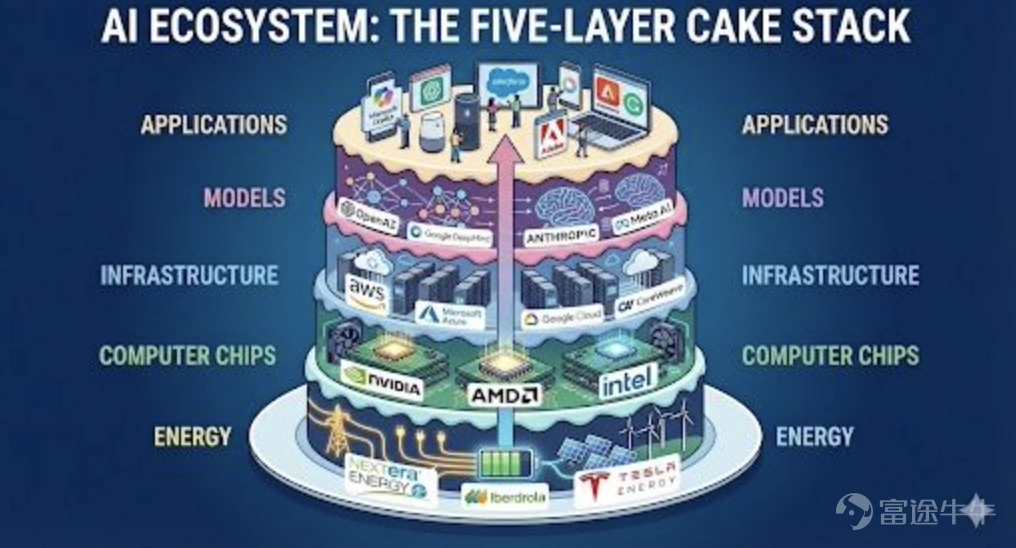
Second, Jensen Huang’s 'Five-Layer Cake' theory (The 5-Layer Cake):
In his keynote, Jensen mentioned an important concept: AI computing is no longer just about a single chip—it’s a 'five-layer cake' stack: starting from Infrastructure (chips and systems) at the bottom, moving up to System Software, then Algorithms, followed by Edge/Robotics, and finally Applications/Agents at the top. Over the past two years, market investments have been heavily focused on the foundational ‘chip’ layer. But by 2026, we’re seeing value begin to shift upward through these layers.
Third, the most important trend: Moving from Chatbots to Agents:
This is why I say the AI trend continues, but the logic has changed. Previously, we used AI in a question-and-answer format (Chatbot); now, what CES showcased is Agentic AI—it can proactively book tickets for you, write code, or even manage supply chains. This means AI has finally evolved from a ‘fun toy’ into a ‘commercializable productivity tool.’ Companies are willing to continue investing Capex because they see that the commercial model for Applications (at the application level) has been validated.
To summarize my view: The market fears AI is a bubble, but what I see is fundamental support. The Rubin architecture establishes the necessity for hardware, and the maturation of the ‘five-layer cake’ allows AI Agents to truly land and generate revenue. Therefore, 2026 isn’t just a year to buy ‘shovels’ (GPUs), but also a year to invest in ‘those who strike gold’ (applications and software).
About Pando
Pando is a licensed company providing virtual asset management services. As a participant in the digital asset management field, Pando has obtained Type 1, Type 4, and Type 9 licenses from the Hong Kong Securities and Futures Commission (SFC) and is authorized to offer virtual asset-related services. Additionally, Pando has acquired the qualification to manage public funds and has issued two actively managed ETF products and two passively managed virtual asset ETF products. Through strategic planning, Pando has accumulated extensive experience in digital asset management and compliance, committed to delivering diversified investment solutions, attracting numerous investors.
-Statement-
This content is for reference only. This is not an invitation or offer to purchase or sell any securities or other financial instruments. Any information, including facts, opinions, or citations, may be condensed or summarized and is accurate as of the date of writing. Information may change without prior notice, and Pandora Limited (“Pandora”) has no obligation to ensure you are notified of such updates. Investing in products mentioned in this content may involve significant risk of loss and is not suitable for all investors. Valuations may fluctuate, potentially resulting in the loss of a substantial portion of your investment. Past performance is not indicative of future results. If an investment is denominated in a currency other than your base currency, exchange rate fluctuations may adversely affect value, price, or income. You should not engage in such investments unless you fully understand the nature of the transactions and the extent of possible losses. If you do not fully understand these risks, you must seek independent advice from your financial advisor. In no event shall this content be construed as an express or implied commitment, guarantee, or suggestion by or on behalf of Pandora that you will profit or can or will limit losses in any way. Investors should note that past performance is not indicative of future results.
Virtual assets represent highly speculative and risky investments. Investors should exercise extreme caution when participating in these products. The legal status of virtual assets has not been clearly defined, potentially affecting the nature and enforceability of investors' rights in such assets. Research reports on virtual assets have not been reviewed by regulatory authorities, and investors cannot benefit from protection under investor compensation funds. Virtual assets are not legal tender, and related transactions may be irreversible, meaning losses caused by fraud or unintended transactions may not be recoverable. The value of virtual assets depends on market participants' ongoing willingness to exchange them for legal tender, implying that if the market for a particular virtual asset disappears, its value could be completely and permanently lost. There is currently no guarantee that virtual assets will continue to be accepted as a means of payment in the future. The volatility and unpredictability of virtual asset prices relative to legal tender may result in significant losses within a short period. Changes in legislation and regulation could also adversely impact the use, storage, transfer, trading, and value of virtual assets. Certain virtual asset transactions may only be considered complete upon recording and confirmation by an SFC-licensed platform, which may differ from the time the client initiates the transaction. The inherent nature of virtual assets makes them more vulnerable to fraud or cyberattacks. Technical failures could also prevent clients of licensed platforms from executing virtual asset transactions.
Tel: +852 3891 3288
Address: Room 1408, Two International Finance Centre, 8 Connaught Place, Central, Hong Kong
Email: media@pandofinance.com.hk
Risk Disclaimer: The above content only represents the author's view. It does not represent any position or investment advice of Futu. Futu makes no representation or warranty.Read more
Comments
to post a comment