
November PPI higher than expected! How to view the interest rate cut prospects for 2026?

CPI reinforces the 'Goldilocks' narrative; US stocks remain flat while gold and silver rise again. What options strategies can be deployed?
The 'Goldilocks' narrative has been reaffirmed.
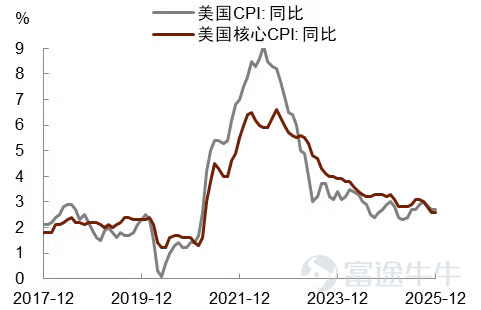
On the evening of January 13 (Beijing time), the US December CPI data was released, showing a year-on-year increase of 2.7%, in line with market expectations; the core CPI, excluding energy and food prices, was 2.6%, lower than market expectations, marking the lowest growth rate since March 2021.
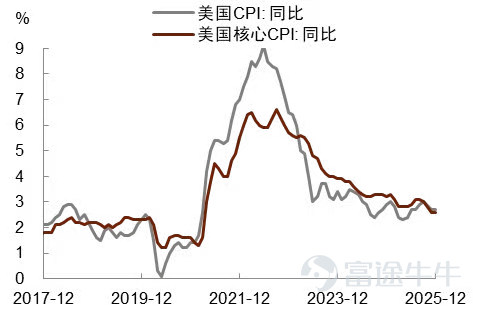
The market had previously worried about a rebound in the December CPI reading, but the trend of moderate inflation decline has been confirmed.
Due to the government shutdown, November price collection was concentrated during the holiday promotional period, which led to the belief that prices of core goods like clothing were suppressed. Additionally, the handling method for missing data also created a low base for the December rebound.
The December data verified that inflation is not a core issue, and it is expected to continue declining in the first and second quarters over the medium term; the rise in core goods prices has stabilized, the transmission of tariffs to inflation has been mild, and no uncontrollable pressure has emerged.
Combined with last Friday's disclosed employment data, the 'Goldilocks' economic narrative has been further reinforced.The so-called 'Goldilocks' economy refers to an ideal state where economic growth is 'neither too hot nor too cold,' maintaining moderate growth and moderate inflation while interest rates are on a downward trajectory.
The number of new non-farm jobs in December was slightly below expectations, but the unemployment rate unexpectedly dropped from 4.5% to 4.4%. This combination of 'moderate employment growth + moderate inflation decline' is typically seen by the market as the perfect picture of 'low growth but still under control.'It shows that the economy is resilient and will not deteriorate rapidly, yet it is not overheating to the point of reigniting inflation and prompting tighter monetary policy.This narrative also forms the core macro foundation supporting the continued rise of US stocks (especially AI tech stocks) in 2026.
After the CPI data release, the probability of the Federal Reserve keeping rates unchanged at the January meeting remains high. With three rate cuts already implemented in 2025 and the policy rate nearing neutral, there needs to be a stronger rationale for an early-year rate cut. Moreover, amid escalating conflict between Trump and Powell, cutting rates prematurely without sufficient justification could be perceived as a compromise of independence.
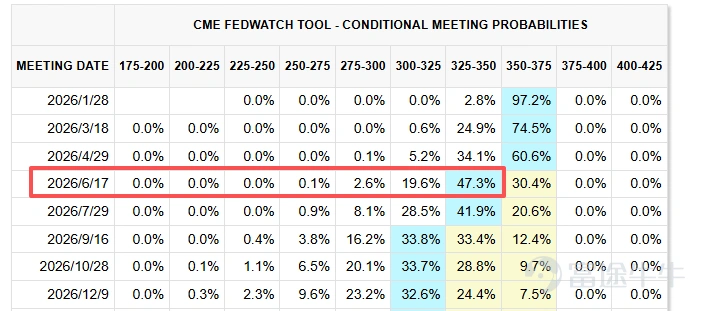
However, the Fed’s rate-cutting path is expected to continue.The CME interest rate futures market anticipates the first rate cut of 2026 to occur in June, coinciding with the first FOMC meeting after Powell steps down in May and the new chair takes office, with two rate cuts projected for the whole year of 2026.
Key Asset Observations & Options Strategy Insights
(1) US Stocks
Following the release of CPI data, the reaction in the US stock market was relatively muted, $Nasdaq Composite Index (.IXIC.US)$ and $S&P 500 Index (.SPX.US)$ with major indices experiencing slight declines yesterday.
$SPDR S&P 500 ETF (SPY.US)$ : Short-term volatility plays, long-term bullish positioning
Since the start of 2026,The volatility of the S&P 500 has dropped another level from the low volatility range seen in 2025.
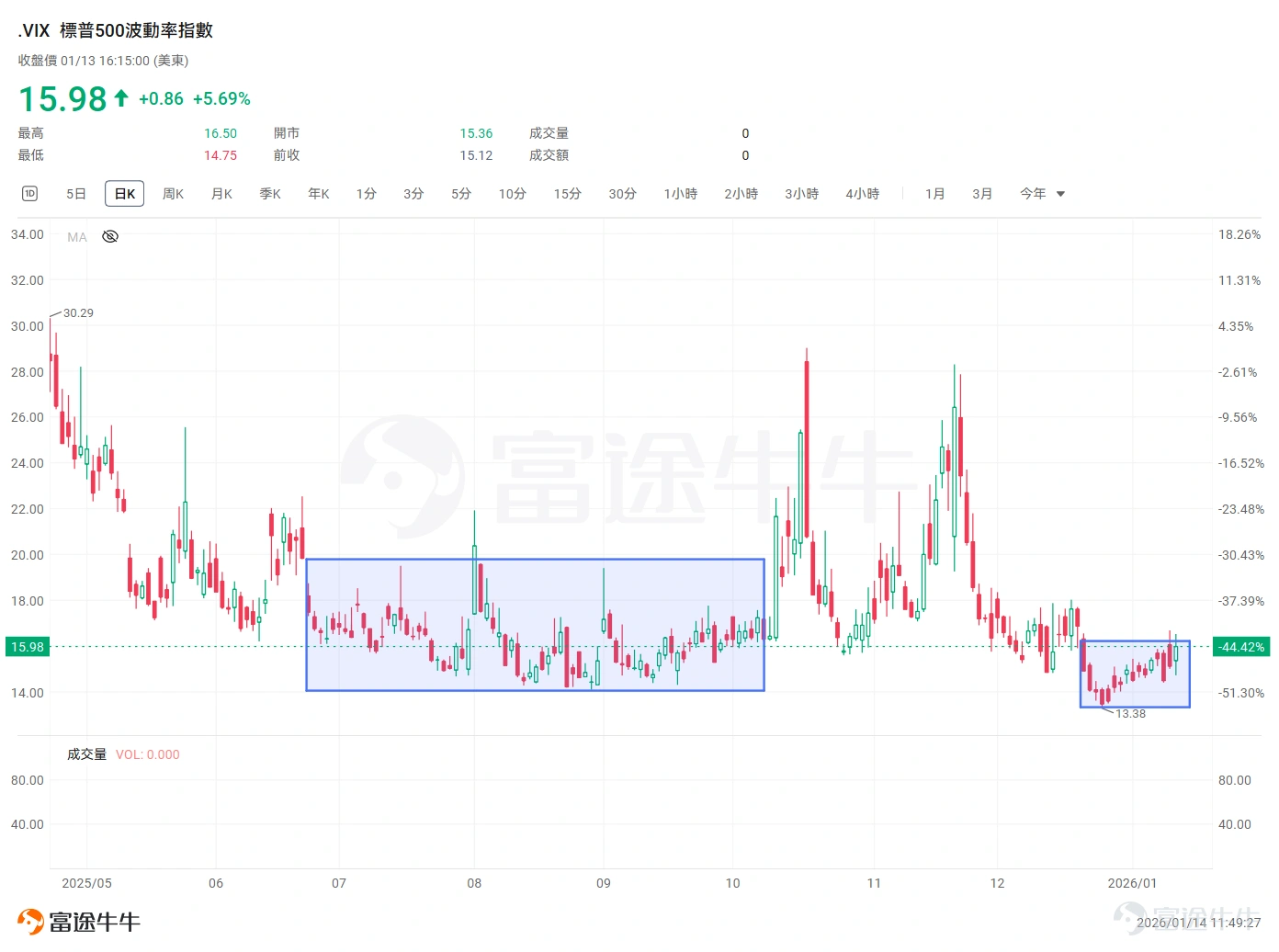
The volatility analysis of SPY also shows that the current IV rank is 7, with a percentile of 24%, slightly higher than earlier in the week. It remains suitable for deploying buyer strategies.
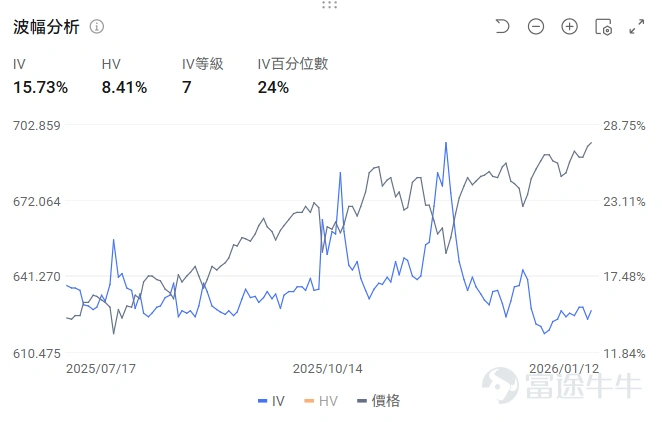
If one believes the market might choose a direction after a lull due to other events (such as earnings season, geopolitical tensions, or Fed-related issues), and volatility will rebound from extremely low levels, consider buying a straddle/strangle combination (Long Straddle/Strangle) to bet on a short-term volatility rebound.
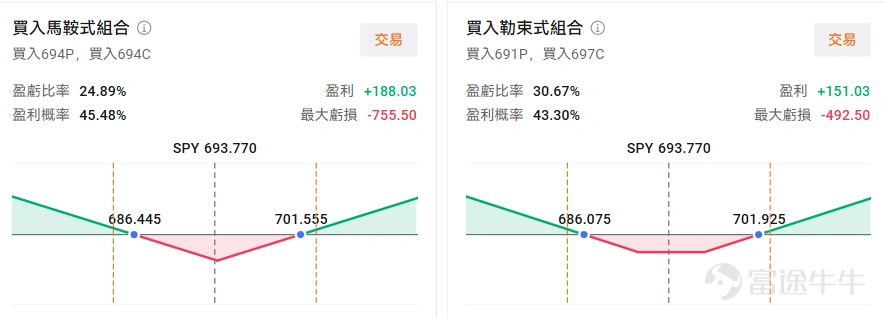
(The image is for illustrative purposes only and does not constitute any investment advice or guarantee.)
If you firmly believe the 'Goldilocks' narrative will drive a long-term slow bull market in U.S. stocks, it may be a good opportunity to buy long-term options (Leaps Call) when volatility is low and option prices are relatively 'cheap.' For instance, you could buy a SPY Call expiring in January 2027 with a strike price slightly above the current market price.
Leaps Call is also the favorite options strategy of 'Capitol Hill stock guru' Nancy Pelosi.However, she retired from Congress in 2025, making it difficult to track her latest information through public channels.
$Invesco QQQ Trust (QQQ.US)$: Focus on whether the technical form can break through
From a technical perspective, QQQ has recently formed a 'bullish triangle' pattern. If the upward momentum continues, it may break through the previous high set in late October last year.
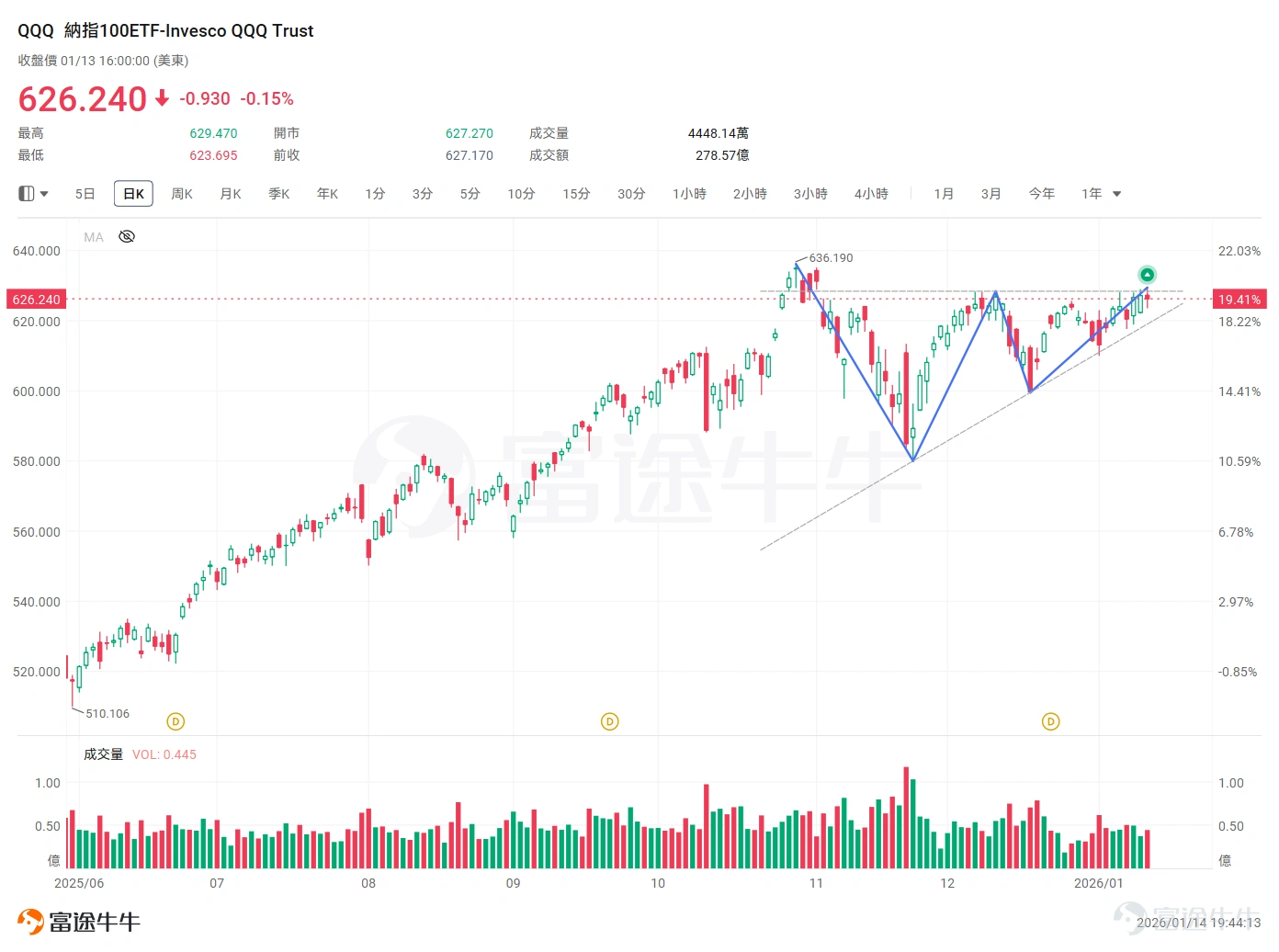
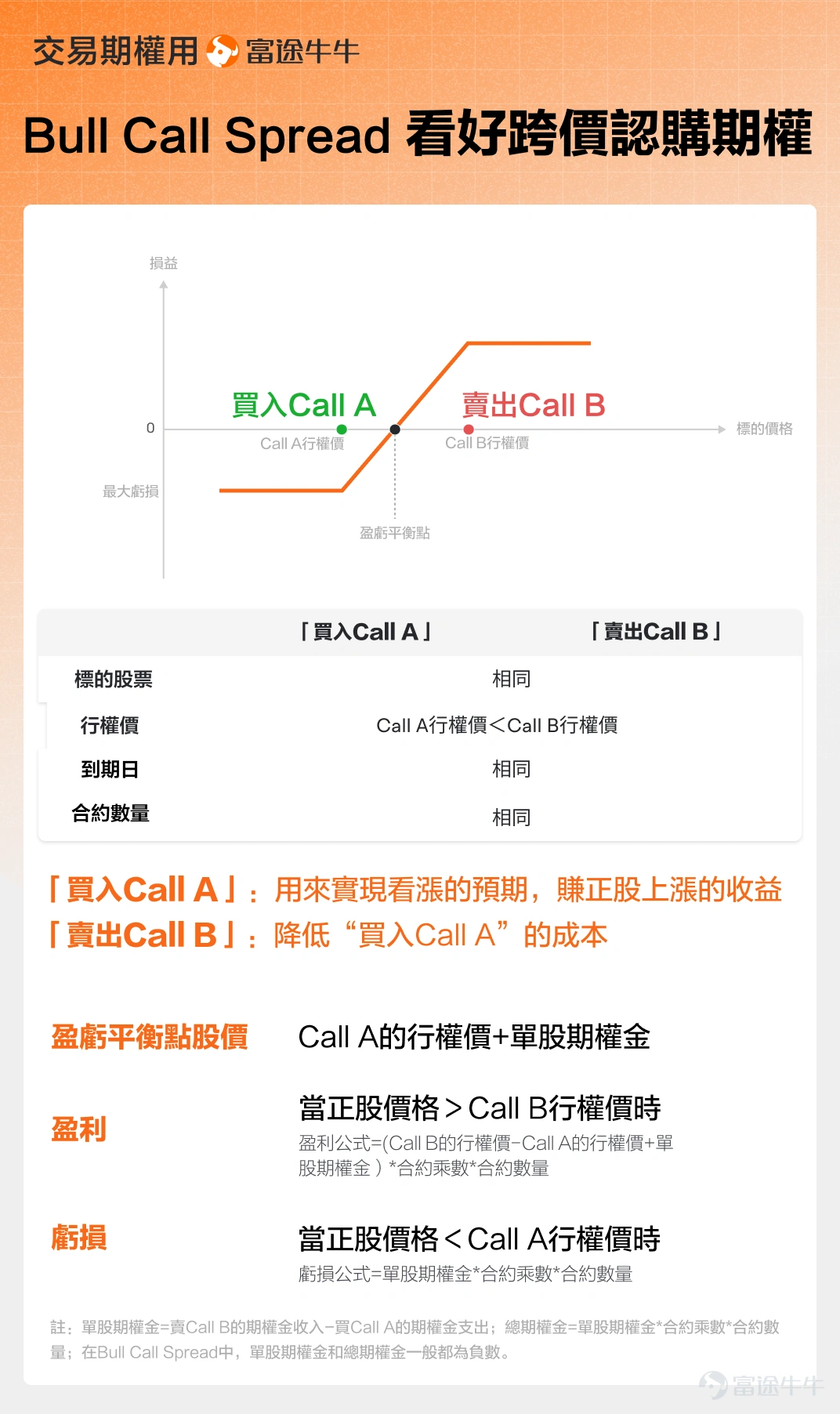
If optimistic about the subsequent performance of tech stocks, consider a Bull Call Spread strategy: Buy an at-the-money or slightly out-of-the-money call option while selling a call option with a higher strike price to reduce the cost of going long and capture rebound gains within a specific price range.
(2) Precious Metals
Gold and silver continued to hit all-time highs following the release of CPI data, with silver surpassing the $90/ounce mark and gold remaining above $4,600. This primarily reflects concerns over the Federal Reserve's independence and the influence of geopolitical factors such as Iran.
$iShares Silver Trust (SLV.US)$ 、 $SPDR Gold ETF (GLD.US)$ The volatility of precious metals-related ETFs has continued to amplify alongside the upward trend, especially for silver. The IV percentile of SLV has surged to extreme levels, with its IV rank also at a very high position.
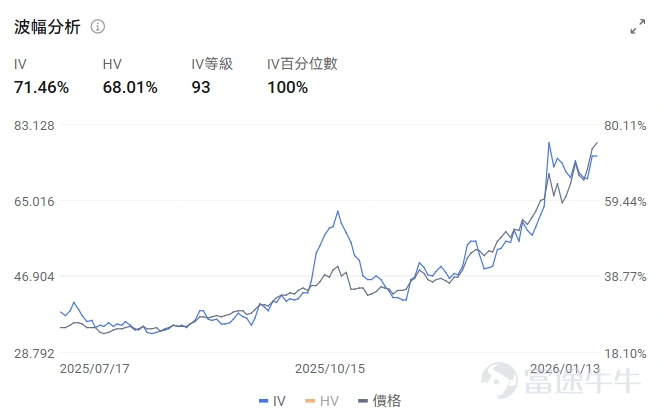
Investors holding precious metals-related assets can construct a collar strategy: while holding the stock, buy downside puts to hedge against downward risks and sell upside calls to offset the premium costs.Though this approach locks in some upside potential, it effectively builds a safety cushion, achieving low-cost defensive positioning.
If looking to deploy related assets, in a high IV environment, one could sell an out-of-the-money put option while reserving sufficient cash in the account to take delivery (if exercised), forming a cash-secured put.
If prices continue to rise or move sideways, the value of the put option will expire worthless, allowing you to fully collect the premium received when selling the option. If prices fall below the strike price, the effective cost basis = strike price - per-share option premium. This is equivalent to establishing a position at a 'discounted' price after a market pullback.
Beyond mainstream products like GLD and SLV, investors with higher risk appetites may also consider $ProShares Ultra Silver (AGQ.US)$ 、 $Proshares Ultrashort Silver (ZSL.US)$ 、 $ProShares Ultra Gold (UGL.US)$ leveraged precious metals ETFs. While these products offer high elasticity, investors must be wary of the erosion caused by their daily rebalancing mechanisms. If prices drop first and then recover, even if the price of gold/silver remains unchanged, your capital may still decrease.
Finally, here's a small perk for fellow investors—welcome to claim it!Beginner's Options Package
This event is exclusive to invited HK users. Click to learn more.Detailed rules of the event >>
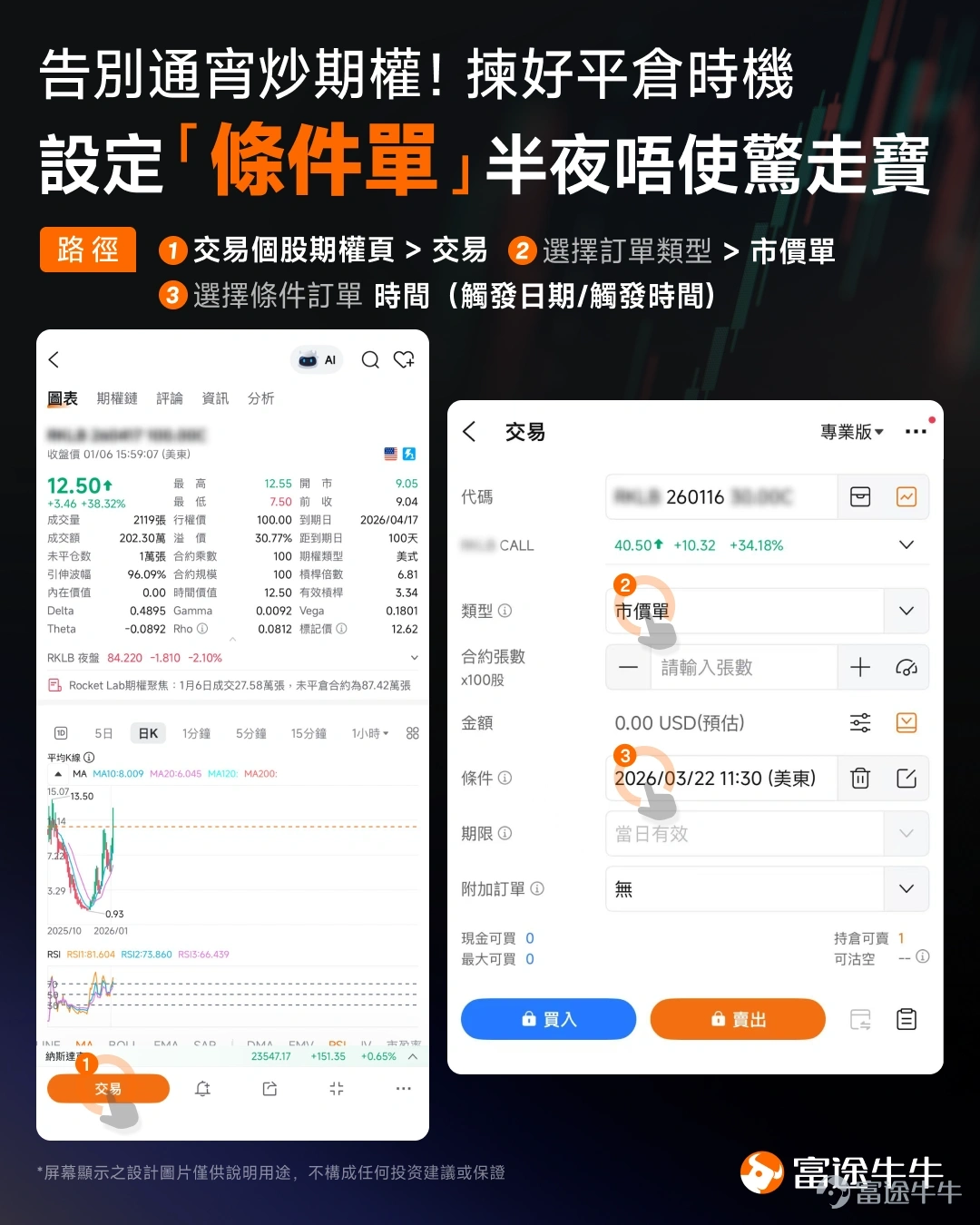
Say goodbye to all-night option trading! Choose good exit timing and set 'conditional orders' so you don’t lose sleep over missed opportunities in the middle of the night.
Disclaimer
This content does not constitute any offer, solicitation, recommendation, opinion, or any guarantee regarding securities, financial products, or tools. The risk of loss in trading options can be substantial. In some cases, losses may exceed the initial margin deposited. Even if you have set contingency orders, such as 'stop-loss' or 'limit' orders, they may not necessarily prevent losses. Market conditions may render these orders unexecutable. You may be required to deposit additional margin within a short period. If you fail to provide the required amount within the specified time, your open positions may be liquidated. However, you will still be responsible for any deficit balance in your account. Therefore, before trading, you should study and understand options and carefully consider whether such trading suits your financial situation and investment objectives. If you trade options, you should be familiar with the procedures related to exercising options and the expiration of options, as well as your rights and obligations upon exercising options and at expiration.
Risk Disclaimer: The above content only represents the author's view. It does not represent any position or investment advice of Futu. Futu makes no representation or warranty.Read more


Comments (2)
to post a comment
50
7