
Nike's new shoes stealing foot massage shop business?
By the IQ Tax Research Center
Will consumers buy into these wildly imaginative shoes?
How can you make two different groups of people afraid with just one pair of shoes? Answer: Add some small massage balls to the soles.
Recently, with its Mind 001 and 002 models, Nike has made competitors in the athletic footwear space like Anta and Li Ning, as well as foot massage businesses like Zheng Yuanyuan and Huaxia Zilian, nervous, fearing it might steal their business.
At the same time, despite being hard to obtain due to the frenzy among sneaker enthusiasts and resellers, Nike's foot massage shoes still seem to have room for improvement when considering comfort, wear resistance, and performance enhancement.
Nike's launch of the 'Qiao Shan Happy Shoes' could be an attempt to tag the brand differently. After all, while Zulijian and Talanis target the elderly and children, and Salomon, On Holding, and HOKA brainwash affluent middle-class consumers, the consumer base left for Nike seems to be shrinking.
However, under the influence of its tech-savvy branding, although Nike frequently surprises with innovative products, its operating performance remains unsatisfactory; perhaps because Nike's overly forward-thinking sense of technology and futurism has led to misguided decisions.
After all, for sports brands, those who move one step ahead often become pioneers, while those who move two steps ahead risk becoming martyrs.
Nike has released a new shoe. Who's the most scared? Not Adidas, Anta, Li Ning, or other competitors, but foot massage brands like Zheng Yuanyuan and Huaxia Liangzi.
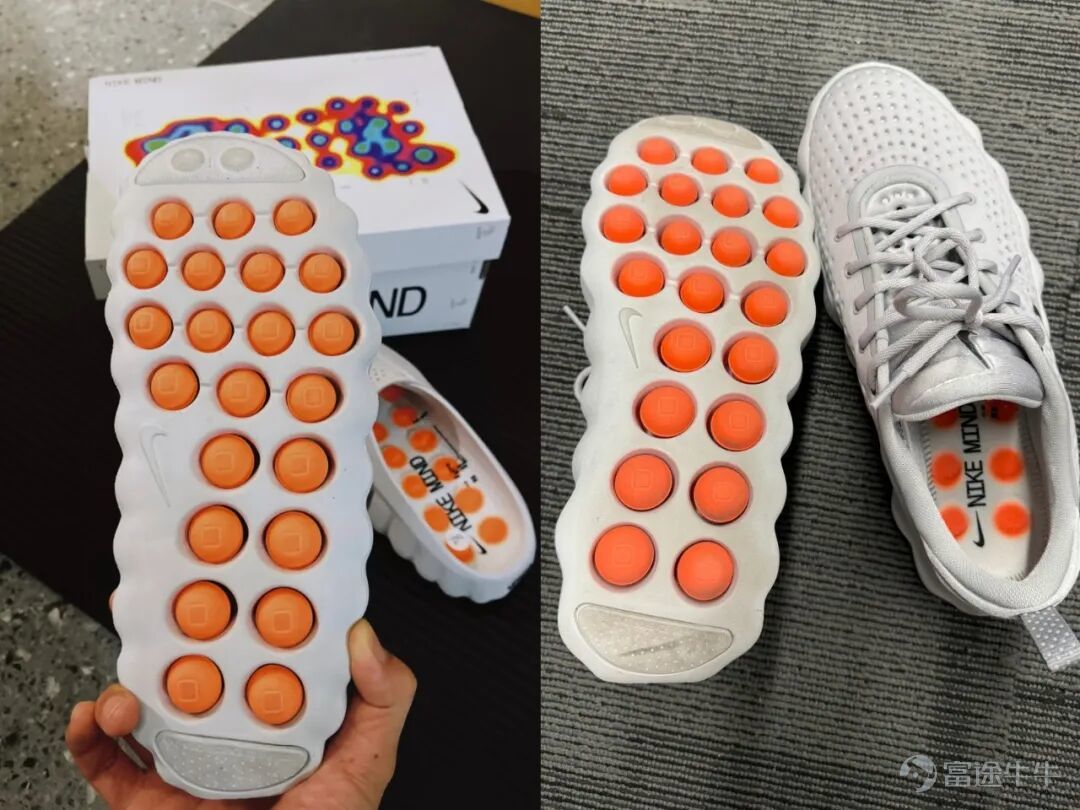
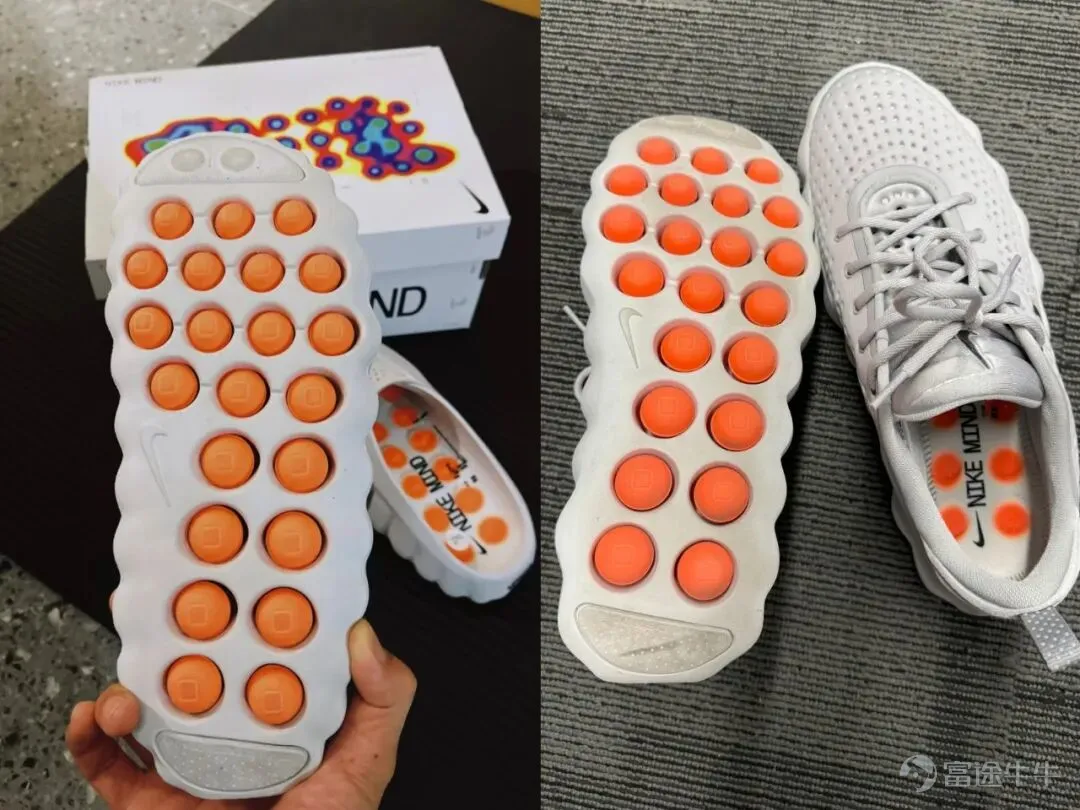
The reason for this is that the sole of Nike’s newly released shoe features 22 massage balls, which the company calls independent sensor nodes. These are designed to apply pressure to key points on the soles of the feet, thereby increasing activity in the brain's motor perception areas.
Through the numerous massage balls embedded in the sole, those who love foot baths can now enjoy a portable foot massage anytime, anywhere. To ensure consumers never stop enjoying this feature, Nike introduced two product solutions.
This release includes two models of Nike's foot massage shoes: Mind 001 and Mind 002. The Mind 001 is a pre-game slipper priced at 599 yuan, while the Mind 002 is a sports shoe priced at 999 yuan.
The “Qiao Shan Happy Shoes,” capable of providing foot massages, attracted significant attention even before their official release, dividing consumers into two camps.
On one side, self-users immediately rushed to Nike stores to purchase them. On JD.com, Taobao, and Douyin, all official stores show that the Nike Mind 001 is out of stock.
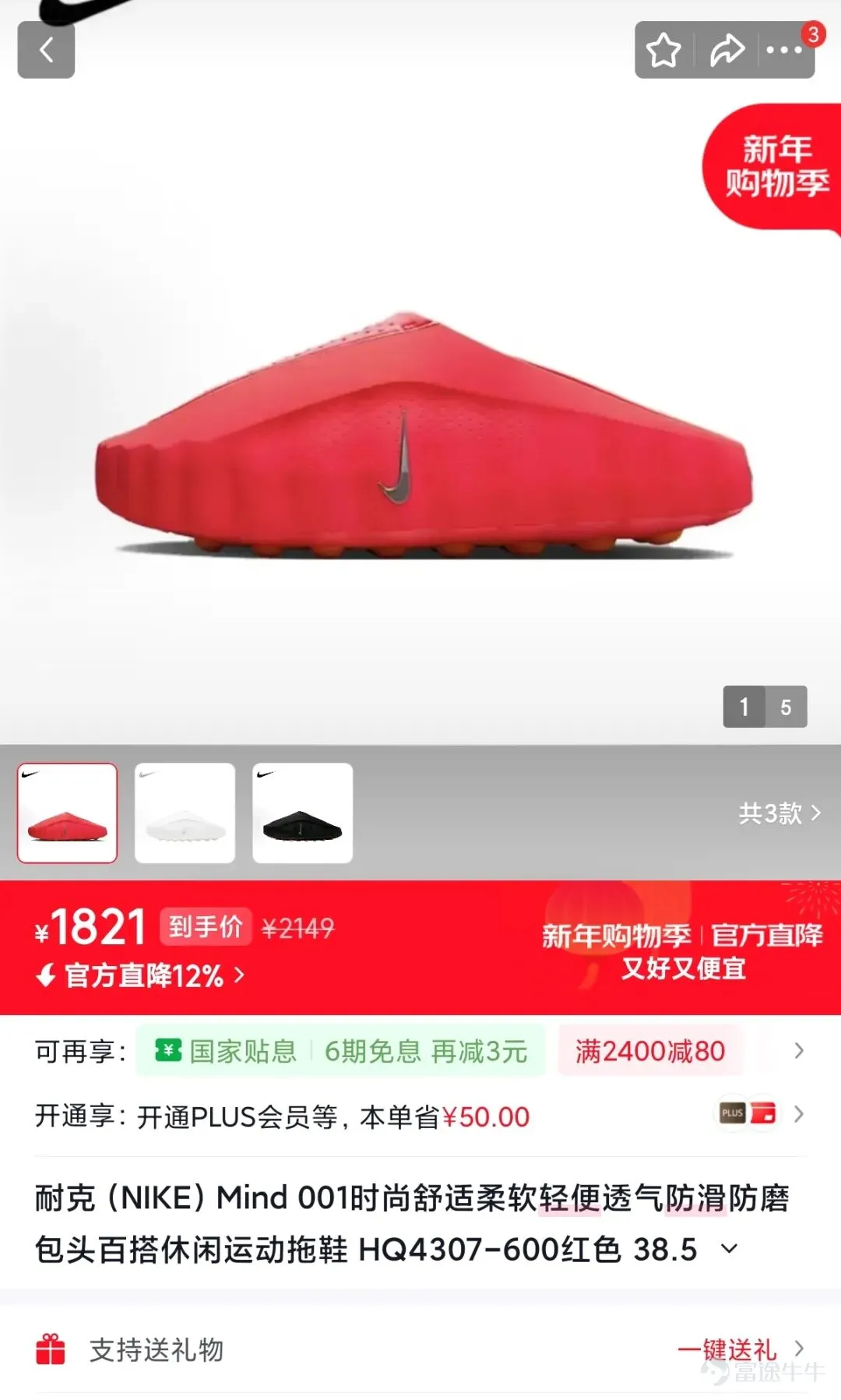
Meanwhile, some scalpers have spotted a business opportunity and started buying up stock indiscriminately from physical stores. Some third-party sellers have listed the Nike Mind 001 for over 1800 yuan, more than triple the official price.
Consumers are flocking to buy these shoes, but what’s the experience like? Pan Ge reached out to users and discussed it from three perspectives.
First, in terms of wearing comfort, a netizen named Xiao Wang told Pan Ge, “My feet don’t hurt after wearing them, but you can definitely feel the small balls. While walking, there isn’t much noticeable friction, but there is a certain grainy sensation.”
Another user commented, “It feels similar to walking on tactile paving. After the small balls underneath rub against the ground, they bounce back and stimulate the soles of the feet, giving a feeling akin to stepping on an electric pedal. However, you can’t use them for weight training as the soles feel unstable.”
Secondly, in terms of wear and tear cycles, a netizen named A'Dou purchased Mind 002 two days ago and after playing a game of basketball, noticed slight wear on the last row of small balls at the heel.
Finally, regarding the stimulating effect on athletic performance, Brother Pan communicated with multiple Nike consumers who all stated they didn’t feel any improvement in their sports abilities.
Later, Brother Pan consulted the Nike Tmall store customer service, who said: 'It enhances the perception of the ground underfoot, allowing better regulation of body balance and rhythm during exercise.'
Why is Nike fixated on the foot massage business instead of sticking to regular sports shoes?
This seems to be because, in today’s athletic shoe industry, brand audiences are becoming increasingly segmented, and Nike needs to use special footwear products to carve out a niche for itself.
Some footwear brands focus on specific groups, relying on perfect functional alignment to become essential wear for certain communities.
For example, Zuli Jian, endorsed by Teacher Zhang Kaili, has attracted many elderly people with mobility issues thanks to its 'elderly shoes' label, turning the brand into a testament of filial piety for countless children.
For some elderly individuals, not wearing Zuli Jian when going out could make them feel inferior within their neighborhood social circles, let alone secure a coveted spot in the popular square dancing lineup.
Meanwhile, Tailanis stable running shoes, designed for children, have also become a social passport for kids due to promises of fewer ankle sprains and injuries. In 2024 alone, Tailanis stable running shoes sold over 6 million pairs, generating more than 3 billion yuan in revenue.
In addition to targeting exclusive demographics, some footwear brands also attract consumers through shared values.
For example, Salomon, which is known as one of the three essential sneakers for the middle class alongside On Holding and HOKA, successfully attracted many female consumers with the viral internet phrase: 'Women who don’t wear Salomon are destined not to be cherished by men.'
The combination of Salomon paired with yoga pants once became an internet trend, driving more young women to place orders thanks to continuous attention from netizens.
On the other hand, Allbirds, often called the Silicon Valley Z-Lite, has become a favorite among IT professionals; while Keen, with its quirky and cute style, is firmly tied to the outdoor tag.
Since so many footwear competitors have established unique brand personas, what is Nike’s defining label? The answer might be a sense of technology.
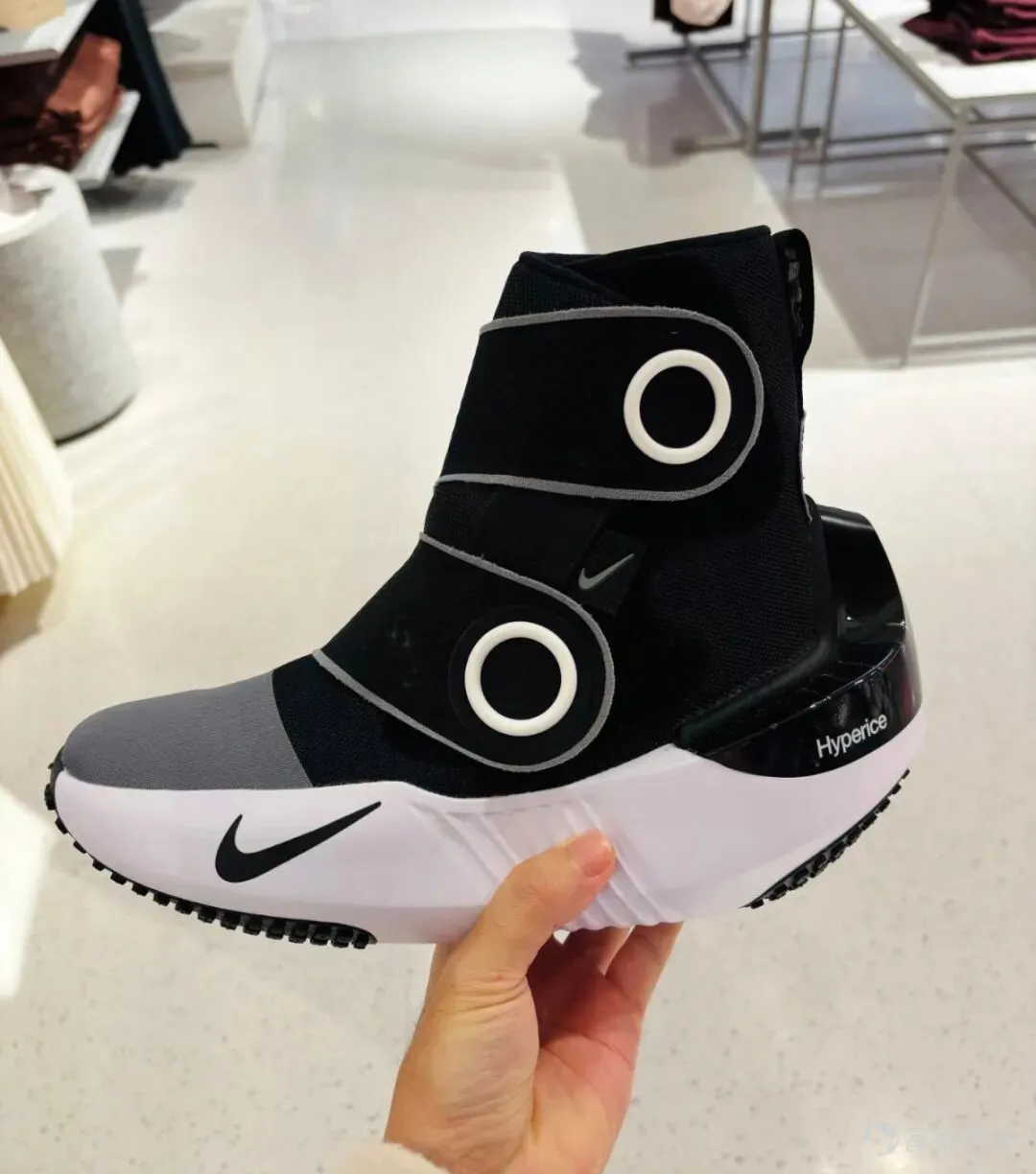
Apart from the recently launched Mind series, Nike introduced Hyperboot, a therapeutic shoe, as early as mid-2025. With features like smart temperature control, hidden power supply, and Bluetooth connectivity, this nearly 10,000-yuan shoe exudes a futuristic vibe, almost resembling a tech gadget.
By the end of 2025, it was rumored that Nike was collaborating with a robotics company to create an exoskeleton shoe: Project Amplify. This shoe, equipped with micro-motors, gives those who want to run but fear exhaustion no excuse to slack off, though it remains unclear whether wearing it in official competitions would be considered cheating.
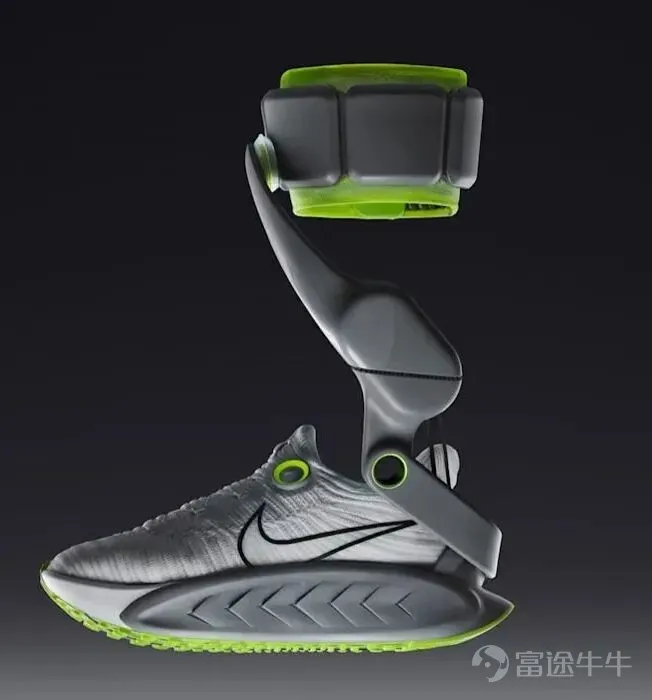
From this perspective, in the footwear world where like attracts like and people group by interests, Nike has found its defining label: technology, which has also spilled over into other products.
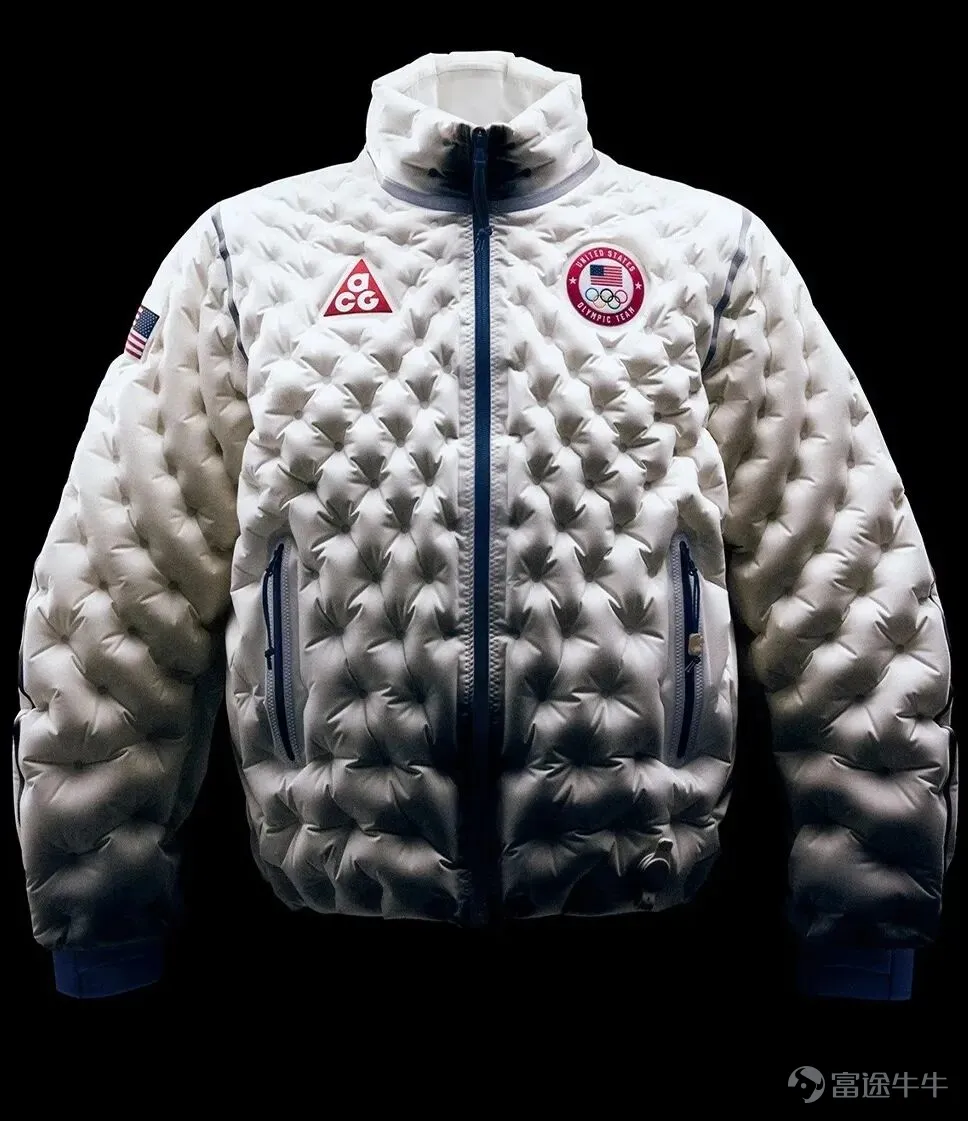
For instance, Nike’s upcoming Air Milano down jacket allows users to inflate or deflate the attached pump to adjust the jacket's thermal insulation effect.
On the other hand, Nike's new Aero-FIT jersey can more efficiently dissipate body heat by accelerating air flow between the skin and the fabric.
Although the product looks futuristic, from an operational data perspective, technology has not yet saved Nike.
In December 2025, Nike released its Q2 earnings report for the fiscal year 2026, reporting revenue of $12.427 billion, a year-over-year increase of 0.4%, and net profit of $792 million, a year-over-year decrease of 31.9%.
Looking solely at Greater China, Nike generated revenue of $1.423 billion, a year-over-year decrease of 17%, with net profit plunging by 49%, nearly cutting its profitability in half.
On the day of the earnings release, Nike’s stock price plummeted by 10.54%, wiping out over $10 billion in market value; however, it is worth noting that Apple CEO Tim Cook, who is also a Nike board member, subsequently purchased $3 million worth of shares.
The sharp decline in operating performance may not be due to Nike misapplying its technological focus but rather because it took too big of a step forward in the past.
In 2021, Nike acquired the virtual sneaker company RTFKT, officially entering digital sales, NFTs, and the metaverse. After more than four years of efforts, in December 2025, Nike sold the company and exited the metaverse and related fields.
From these examples, we can see that Nike demonstrates strong innovation in its products and a willingness to invest in the future; however, these somewhat aggressive moves seem to have struggled to impress consumers enough to pay for its cool, tech-savvy appeal.
Perhaps, taking too big of a step on the path of technological innovation isn't necessarily a good thing; after all, if one’s walking posture deviates, the entire body often suffers as a result.
Risk Disclaimer: The above content only represents the author's view. It does not represent any position or investment advice of Futu. Futu makes no representation or warranty.Read more
Comment (1)
to post a comment