
Hong Kong-listed AI 'twin leaders' see active trading! How to position in the AI sector for the Year

After Hang Seng is privatized by HSBC Holdings, it will be delisted. What should I do with my holdings in Hang Seng Bank? What impact will it have on the Hang Seng Index?
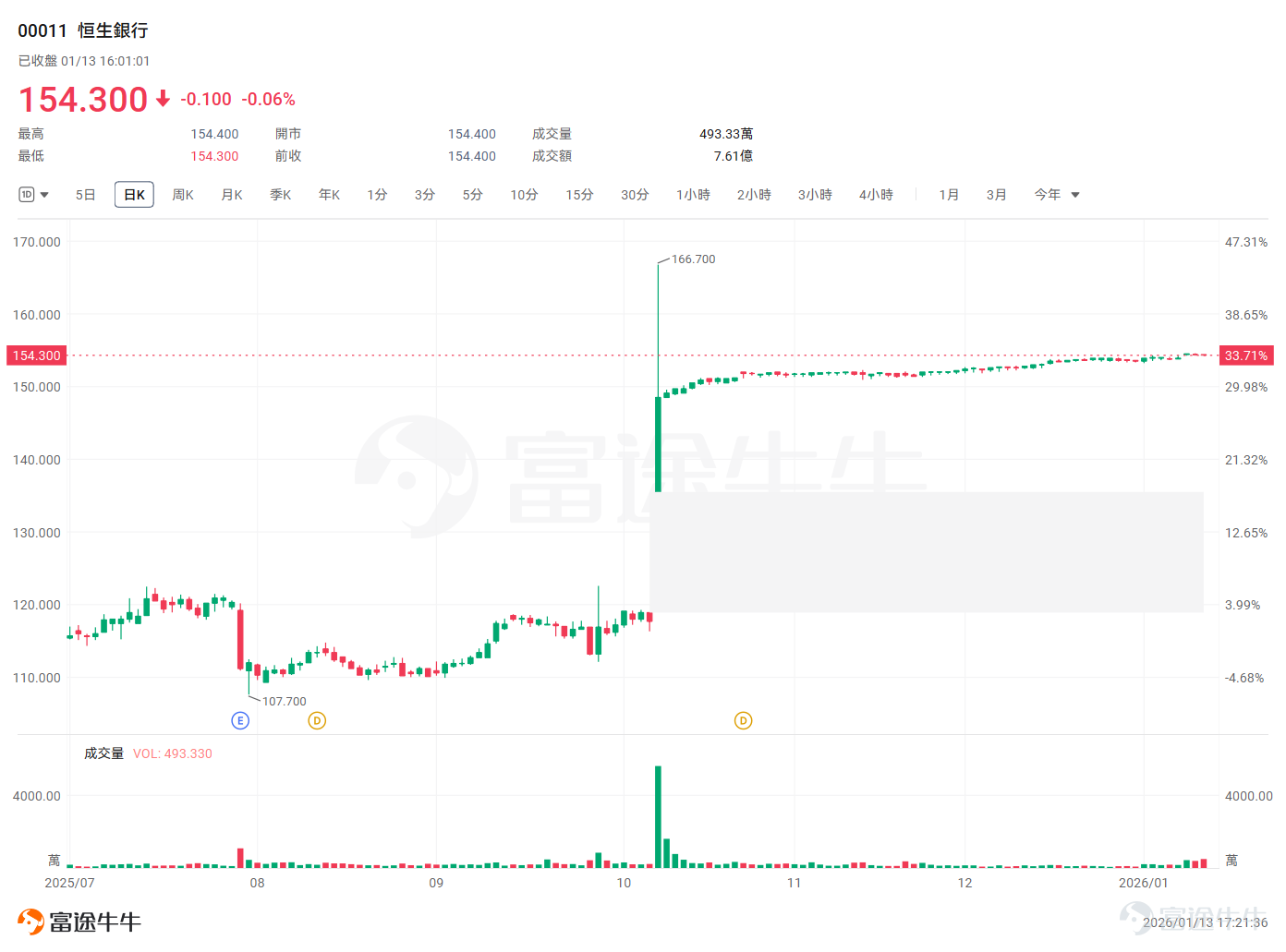
January 14, 2026, is a memorable date for investors focused on the Hong Kong capital markets,$HANG SENG BANK (00011.HK)$as it ushers in the final trading day on the Hong Kong Stock Exchange. The privatization proposal was overwhelmingly approved at both the shareholder court meeting and the general meeting on January 8, 2026 (approximately 85.75% at the court meeting and 97.3% at the shareholders' meeting). It now awaits approval by the High Court at a hearing on January 23, with expectations that the overall process will be successfully completed.
Hang Seng Bank shares will be delisted at a price of HK$155. This long-standing bank, affectionately referred to as 'No. 11' by Hong Kong residents, is set to end its more than half-century-long listing history.
At this moment, the most pressing question for some investors is how to handle the shares they hold? Will it have an impact on...$Hang Seng Index (800000.HK)$the composition, as well as Hang Seng Indexes Company?
Key milestones
The privatization proposal put forward by HSBC Holdings has been officially approved by both the Hang Seng Bank shareholders' meeting and the court meeting, confirming the irreversible nature of Hang Seng Bank's delisting.$HSBC HOLDINGS (00005.HK)$All issued shares of Hang Seng Bank will be canceled at a price of HK$155 per share,The price of HK$155 is fixed and will no longer be affected by subsequent market fluctuations.

January 14 (this Wednesday): The final opportunity to exit
This day marks the last trading day for Hang Seng Bank shares on the Hong Kong Stock Exchange. After the afternoon close, the stock will be permanently suspended from trading. If investors wish to directly cash out through the secondary market, or want to quickly reallocate funds to invest in other assets, this is the last window for active operations. After this moment, holdings will be locked and investors can only wait for the subsequent privatization process to passively settle.
January 27: Official delisting
At 4 PM on this day, Hang Seng Bank’s listing status will officially be revoked. From this point forward, the ticker symbol '00011' will become history, and investors’ securities accounts will no longer display the real-time share price of Hang Seng Bank. Instead, pending settlement entitlements may appear until the funds are credited.
Subsequently, Hang Seng Bank will officially withdraw its listing status on the Hong Kong Stock Exchange on January 27, 2026. Hang Seng Bank, a financial institution with decades of listed history, will transition from public view to become a wholly-owned subsidiary of HSBC Group, continuing its banking operations but no longer existing as an independent investment target.
Handling strategies for common shareholders
For investors holding common shares of Hang Seng Bank, the situation is relatively straightforward, as the privatization agreement has already clarified the cash compensation mechanism.
Investors holding common shares do not need to panic-sell on the last trading day, nor do they need to perform any additional reporting actions. After the official delisting takes effect on January 27, all remaining public shares that have not been sold will automatically enter the cancellation process.
HSBC Holdings will pay cash to all registered shareholders at the agreed price of HKD 155 per share. The calculation of the payment is also very straightforward: number of shares held multiplied by HKD 155.
According to the conventions of the Hong Kong market and the terms of this privatization document,The transfer agent will typically distribute the funds to shareholders' accounts via mailed checks or bank transfers within approximately seven business days after the official delisting date (by February 4).Investors only need to wait patiently for the funds to arrive. During this period, different brokerage platforms may charge a certain platform fee.
– Sell in advance to meet short-term liquidity needs.
If investors choose to sell their shares on the last trading day (January 14), they can receive the funds on T+2 day (i.e., January 16) after the trade. This money can then be used to invest in other targets or meet short-term liquidity needs. Choosing to wait for privatization settlement means the funds won't arrive until February 4 or earlier, resulting in an approximate 20-day capital lock-up period. Investors optimistic about near-term market opportunities may opt to sell in advance.
– What are the fee differences?
Selling directly on the secondary market requires investors to pay trading commissions, stamp duty, and exchange fees. These charges will be deducted from the final transaction amount. Waiting for privatization deregistration, investors generally do not need to pay trading stamp duty and commissions for selling stocks (depending on the specific broker policy), allowing them to fully receive the consideration of HKD 155 per share.
Since the direct deregistration process is automatically conducted through the Central Clearing and Settlement System (CCASS), the cash consideration (HKD 155 per share, adjusted for any dividend deductions) is deposited directly into shareholders' securities accounts by the offeror without requiring shareholders to actively sell or trade through brokers. Therefore, no market transaction-related fees (such as commissions, stamp duty, trading levies, system fees, etc.) are incurred; these fees apply only to normal trading on the Stock Exchange.
Thus, for investors with larger capital amounts who are sensitive to transaction costs, waiting for HSBC Holdings to pay out in cash is often the more cost-effective choice.


Hang Seng Index Constituent Adjustments and Market Impact.
HSBC Holdings is not only a publicly traded company but also one of the founding constituents and the namesake of the Hang Seng Index (HSI). The impact of this delisting on the index system is evident, but such effects primarily relate to changes in constituent composition rather than the index's operational mechanism itself.
After Hang Seng Bank's delisting, Hang Seng Index Company will adjust its constituent stocks by removing Hang Seng Bank,but this adjustment does not include an immediate replacement stock, and the number of Hang Seng Index constituents will temporarily decrease.This process will trigger passive funds to rebalance their portfolios.
However, it is important to note that after Hang Seng Bank completes its privatization and deregistration through a scheme of arrangement, large institutions and passive funds typically passively wait to receive cash consideration rather than actively selling on the last trading day, in order to reduce unnecessary transaction costs and tracking errors. (For example, the privatization of blue-chip Li & Fung in 2020)
ETFs and index funds tracking the Hang Seng Index will use the cash received to adjust the weightings of the remaining constituent stocks to ensure fund performance closely tracks the index.
For Hang Seng Index Company, the delisting of Hang Seng Bank will not affect its independent operation.Although Hang Seng Index Company contains 'Hang Seng' in its name, as a professional index provider, it has an independent operational system and product release plan. The privatization of Hang Seng Bank is merely a capital operation at the parent company level, which will not interfere with the index company’s ability to continue releasing new products or maintaining the fairness and authority of the existing index system.
As January 27 approaches, Hang Seng Bank, code '11', will soon become a historical symbol. Whether investors choose to exit at the last moment or quietly wait for the cash to be credited to their accounts, they will personally witness this landmark event in the Hong Kong stock market. For long-term holders, this may be a dignified farewell, with the price of HKD 155 providing a definitive end to this long journey.
 Looking to pick stocks or diagnose stock performance? Want to know the opportunities and risks in your portfolio? For all investment-related questions,just ask Futubull AI!
Risk Disclaimer: The above content only represents the author's view. It does not represent any position or investment advice of Futu. Futu makes no representation or warranty.Read more


Comments
to post a comment
10
1