
HSBC's stock price is range-bound, making bull and bear warrants the preferred tool for capturing short-term trading opportunities.
$HSBC HOLDINGS (00005.HK)$ Recently, HSBC Holdings (00005) shares have retreated from their yearly high of about 129.5 HKD, entering a typical consolidation phase. According to data as of January 12, the latest stock price was 124.3 HKD, hovering around the 10-day moving average (approximately 124.56 HKD).
Recently, major banks have expressed positive views on HSBC’s prospects. In a report published by DBS Bank on January 6, they raised HSBC's target price to 139.2 HKD and maintained a 'Buy' rating, based on expectations of controllable downside risks to net interest income, strong growth in non-interest income, and stable credit costs. This provides fundamental support for HSBC’s mid-to-long-term trend.
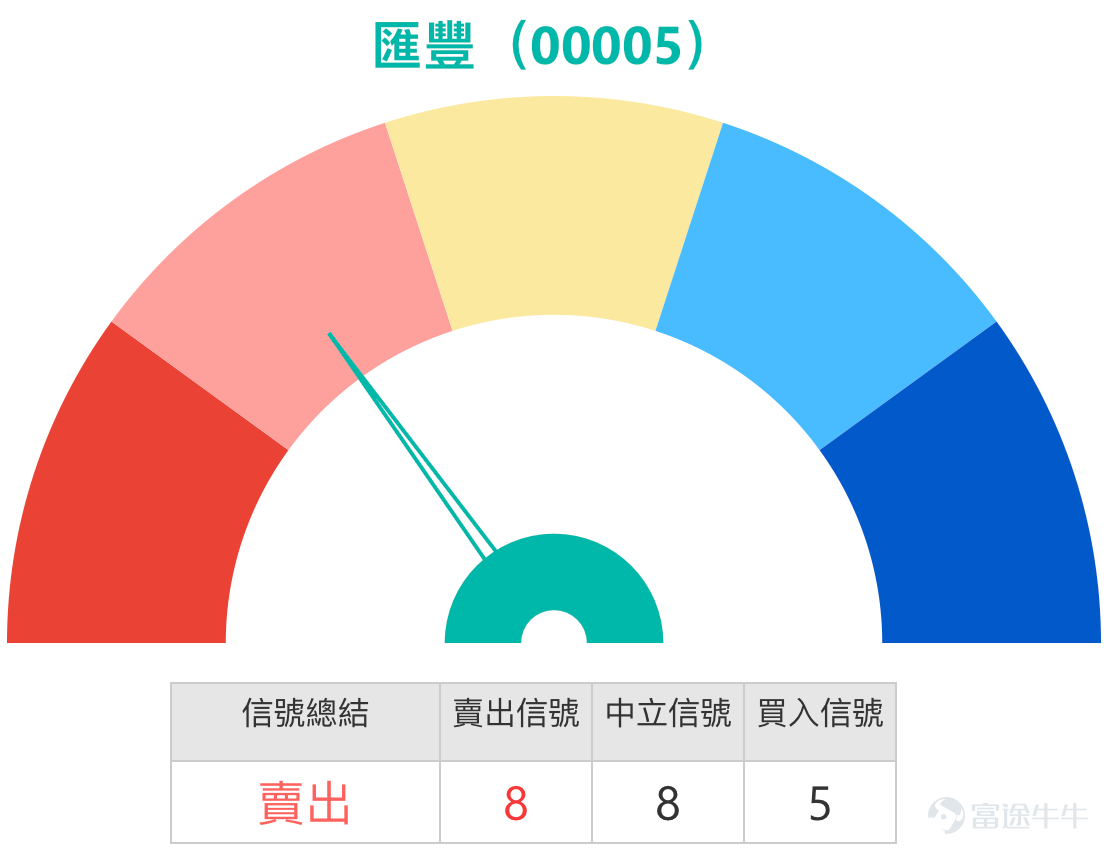
On the other hand, there are cautious voices in the short term. In a recent episode of [Hong Kong Stock Podcast], Simon commented on HSBC’s movement. After reaching a high of 129.5 HKD, HSBC’s share price pulled back. Regarding investors’ question of whether it would be suitable to add positions if the price drops to 120 HKD, Simon analyzed from a technical perspective that the current technical signals for HSBC are 'neutral', lacking clear direction; thus, chasing gains or adding positions may not be the optimal choice. He identified key support near 119.6 HKD, around the 120 HKD level, and noted that if this level is breached, the stock could further drop to the 114.8 HKD region. Meanwhile, the show also observed that some investors in the derivatives market held bull contracts with a recovery price as low as 104.8 HKD, indicating confidence among some participants in the mid-to-long term outlook, but such deep-out-of-the-money bull contracts also highlight potential risks should the short-term correction deepen.
Overall, the primary support level for HSBC shares in the short term is at 119.6 HKD. If the correction deepens, the next important support zone will be between 114.5 and 118 HKD. Above this, resistance is first seen at 128 HKD, and if broken through, it will challenge the year’s high of 129.5 HKD and then 132.1 HKD.
![$HSBC HOLDINGS (00005.HK)$ Recently, HSBC Holdings (00005) shares have retreated from their yearly high of about 129.5 HKD, entering a typical consolidation phase. According to data as of January 12, the latest stock price was 124.3 HKD, hovering around the 10-day moving average (approximately 124.56 HKD). Recently, major banks have expressed positive views on HSBC’s prospects. In a report published by DBS Bank on January 6, they raised HSBC's target price to 139.2 HKD and maintained a 'Buy' rating, based on expectations of controllable downside risks to net interest income, strong growth in non-interest income, and stable credit costs. This provides fundamental support for HSBC’s mid-to-long-term trend. [Share Link: January 9th [Hong Kong Stock Podcast] Hang Seng Index, HSBC, JD.com, Zhaogin, Kuaishou, Luoyang Molybdenum] On the other hand, there are cautious voices in the short term. In a recent episode of [Hong Kong Stock Podcast], Simon commented on HSBC’s movement. After reaching a high of 129.5 HKD, HSBC’s share price pulled back. Regarding investors’ question of whether it would be suitable to add positions if the price drops to 120 HKD, Simon analyzed from a technical perspective that the current technical signals for HSBC are 'neutral', lacking clear direction; thus, chasing gains or adding positions may not be the optimal choice. He identified key support near 119.6 HKD, around the 120 HKD level, and noted that if this level is breached, the stock could further drop to the 114.8 HKD region. Meanwhile, the show also observed the derivatives market...](https://nnqimage.futunn.com/sns_client_feed/1162342/20260112/web-1768198334810-VAdZ4WXgwc.png/big?area=1&is_public=true&imageMogr2/ignore-error/1/format/webp)
Review of recent performance of derivative instruments: Capturing opportunities during equity adjustments.
In a volatile market, the precise deployment of derivatives can effectively capture the fluctuations of the underlying stock. Reviewing the products mentioned on January 7, against the backdrop of a 1.89% decline in HSBC shares over the following two days, the relevant bearish products recorded significant increases, demonstrating the leverage effect of derivatives.
Specifically, when HSBC's share price retreated from its peak, the bearish bear certificates showed outstanding performance. For example, JPMorgan's bear certificate (67655) $JP#HSBC RP2702B.P (67655.HK)$ rose 56% in two days, while Societe Generale's bear certificate (67929) $SG#HSBC RP2701C.P (67929.HK)$ also rose by 36%. Both of these products belong to R-class bear certificates (which may be eligible for residual value), with their respective recovery prices set at HKD 130 and HKD 133.3, maintaining some distance from the share price at the time, reducing the risk of immediate forced recovery and allowing investors to more calmly capture the downward trend of the underlying stock.
At the same time, put warrants also played a role in hedging downside risks. UBS Group's put warrant (23923) $UB-HSBC@EP2609B.P (23923.HK)$ and Bank of China's put warrant (24062) $BI-HSBC@EP2609A.P (24062.HK)$ recorded gains of 14% and 13%, respectively, during the same period. Unlike bull and bear certificates, put warrants do not have a mandatory recovery mechanism; their value is mainly influenced by factors such as the underlying stock price, implied volatility, and time decay. When the underlying stock clearly declines, its intrinsic value increases, driving up the price.
![$HSBC HOLDINGS (00005.HK)$ Recently, HSBC Holdings (00005) shares have retreated from their yearly high of about 129.5 HKD, entering a typical consolidation phase. According to data as of January 12, the latest stock price was 124.3 HKD, hovering around the 10-day moving average (approximately 124.56 HKD). Recently, major banks have expressed positive views on HSBC’s prospects. In a report published by DBS Bank on January 6, they raised HSBC's target price to 139.2 HKD and maintained a 'Buy' rating, based on expectations of controllable downside risks to net interest income, strong growth in non-interest income, and stable credit costs. This provides fundamental support for HSBC’s mid-to-long-term trend. [Share Link: January 9th [Hong Kong Stock Podcast] Hang Seng Index, HSBC, JD.com, Zhaogin, Kuaishou, Luoyang Molybdenum] On the other hand, there are cautious voices in the short term. In a recent episode of [Hong Kong Stock Podcast], Simon commented on HSBC’s movement. After reaching a high of 129.5 HKD, HSBC’s share price pulled back. Regarding investors’ question of whether it would be suitable to add positions if the price drops to 120 HKD, Simon analyzed from a technical perspective that the current technical signals for HSBC are 'neutral', lacking clear direction; thus, chasing gains or adding positions may not be the optimal choice. He identified key support near 119.6 HKD, around the 120 HKD level, and noted that if this level is breached, the stock could further drop to the 114.8 HKD region. Meanwhile, the show also observed the derivatives market...](https://nnqimage.futunn.com/sns_client_feed/1162342/20260112/web-1768198355814-dOC2aKiHke.png/big?area=1&is_public=true&imageMogr2/ignore-error/1/format/webp)
Current Market Derivatives Deployment Strategies and Product Analysis
Based on the judgment that HSBC’s share price will consolidate between support and resistance levels, investors can deploy using the following products according to their expectations of future market direction. Please note that the prices of all products can rise or fall sharply, and investors may lose all their principal. Before investing, ensure you understand the product risks and refer to the relevant listing documents.
For those bullish on the breakout of the underlying stock, focus on high-leverage call warrants.
If investors believe that HSBC has completed its consolidation and is expected to resume an upward trajectory, challenging the target price of $135, they can focus on out-of-the-money call warrants.
* BOC Call Warrant (22630) $BI-HSBC@EC2609B.C (22630.HK)$ : This product has a strike price of $145.1, categorized as an out-of-the-money warrant, offering approximately 8.1 times actual leverage. Its main feature is a relatively higher leverage level among comparable products, with relatively lower implied volatility. This means its price is highly sensitive to movements in the underlying stock, yet less affected by changes in market volatility, making it suitable for investors optimistic about a significant breakout by HSBC.
* BOC Call Warrant (23691) $BI-HSBC@EC2605A.C (23691.HK)$ : This product has a strike price of $148.1, providing about 11.6 times higher actual leverage. It suits aggressive investors with a higher risk tolerance who anticipate substantial gains in HSBC.
For those expecting a pullback in the underlying stock, pay attention to high-leverage put warrants and bear contracts.
If HSBC is expected to continue testing support levels, bearish products can be deployed. Recently, the market has been cautious about upside potential for Hong Kong banks, with analysts noting that positive factors may have already been priced in, providing fundamental reference for bearish strategies.
* UBS Group Put Warrant (23923) $UB-HSBC@EP2609B.P (23923.HK)$ : The strike price is $111.78, offering approximately 6.3 times actual leverage. Its features include what is considered an ideal balance of leverage and implied volatility, making it suitable for investors expecting a moderate decline in HSBC while wanting to avoid the forced liquidation risk associated with bull-bear contracts.
![$HSBC HOLDINGS (00005.HK)$ Recently, HSBC Holdings (00005) shares have retreated from their yearly high of about 129.5 HKD, entering a typical consolidation phase. According to data as of January 12, the latest stock price was 124.3 HKD, hovering around the 10-day moving average (approximately 124.56 HKD). Recently, major banks have expressed positive views on HSBC’s prospects. In a report published by DBS Bank on January 6, they raised HSBC's target price to 139.2 HKD and maintained a 'Buy' rating, based on expectations of controllable downside risks to net interest income, strong growth in non-interest income, and stable credit costs. This provides fundamental support for HSBC’s mid-to-long-term trend. [Share Link: January 9th [Hong Kong Stock Podcast] Hang Seng Index, HSBC, JD.com, Zhaogin, Kuaishou, Luoyang Molybdenum] On the other hand, there are cautious voices in the short term. In a recent episode of [Hong Kong Stock Podcast], Simon commented on HSBC’s movement. After reaching a high of 129.5 HKD, HSBC’s share price pulled back. Regarding investors’ question of whether it would be suitable to add positions if the price drops to 120 HKD, Simon analyzed from a technical perspective that the current technical signals for HSBC are 'neutral', lacking clear direction; thus, chasing gains or adding positions may not be the optimal choice. He identified key support near 119.6 HKD, around the 120 HKD level, and noted that if this level is breached, the stock could further drop to the 114.8 HKD region. Meanwhile, the show also observed the derivatives market...](https://nnqimage.futunn.com/sns_client_feed/1162342/20260112/web-1768198402670-kUGNEHf4M7.jpeg/big?area=1&is_public=true&imageMogr2/ignore-error/1/format/webp)
Using bull-bear contracts to capture range-bound trading opportunities
For investors who expect the stock price to fluctuate within a clear range, callable bull/bear contracts (CBBCs) are a more straightforward choice because their price movements typically closely follow the underlying stock without significant time decay impact.
* Bullish view: Societe Generale bullish contract (56534): The call price is set at HKD 99.5, which is quite far from the current price, offering approximately 5.1 times actual leverage. Its key feature is the lowest premium and the highest actual leverage among similar products, making it suitable for investors who believe HSBC has strong support at the HKD 118 level and will rebound.
* Bearish choice: You may consider JPMorgan bearish contract (67655).$JP#HSBC RP2702B.P (67655.HK)$ (Call price at HKD 130, leverage around 14.8 times) or Societe Generale bearish contract (67929) (call price at HKD 133.3, leverage around 11.5 times). These are all R-type products characterized by high leverage and low premiums. It must be noted that once the underlying stock price hits the call price, the CBBC will immediately cease trading and be forcibly called back, potentially resulting in total investment loss.
![$HSBC HOLDINGS (00005.HK)$ Recently, HSBC Holdings (00005) shares have retreated from their yearly high of about 129.5 HKD, entering a typical consolidation phase. According to data as of January 12, the latest stock price was 124.3 HKD, hovering around the 10-day moving average (approximately 124.56 HKD). Recently, major banks have expressed positive views on HSBC’s prospects. In a report published by DBS Bank on January 6, they raised HSBC's target price to 139.2 HKD and maintained a 'Buy' rating, based on expectations of controllable downside risks to net interest income, strong growth in non-interest income, and stable credit costs. This provides fundamental support for HSBC’s mid-to-long-term trend. [Share Link: January 9th [Hong Kong Stock Podcast] Hang Seng Index, HSBC, JD.com, Zhaogin, Kuaishou, Luoyang Molybdenum] On the other hand, there are cautious voices in the short term. In a recent episode of [Hong Kong Stock Podcast], Simon commented on HSBC’s movement. After reaching a high of 129.5 HKD, HSBC’s share price pulled back. Regarding investors’ question of whether it would be suitable to add positions if the price drops to 120 HKD, Simon analyzed from a technical perspective that the current technical signals for HSBC are 'neutral', lacking clear direction; thus, chasing gains or adding positions may not be the optimal choice. He identified key support near 119.6 HKD, around the 120 HKD level, and noted that if this level is breached, the stock could further drop to the 114.8 HKD region. Meanwhile, the show also observed the derivatives market...](https://nnqimage.futunn.com/sns_client_feed/1162342/20260112/web-1768198408482-PdaCb0CnPb.jpeg/big?area=1&is_public=true&imageMogr2/ignore-error/1/format/webp)
Given the current technical pattern and fundamental backdrop, do you think HSBC’s stock price is more likely to first break through the resistance at HKD 129.5 to resume an upward trend, or will it first pull back to test the key support near HKD 118? What type of derivative product would you prefer to use to express your view?
For analysis on Hong Kong stock warrants and CBBCs, this is Jenny, see you again next time.
This article does not constitute any investment advice.
This article is for reference only and does not constitute any investment advice. The market data, opinions, and analysis contained herein may change at any time without prior notice. We shall not be liable for any loss or damage arising from reliance on the information in this article. Technical analysis merely indicates whether certain technical conditions are met; a comprehensive evaluation of asset performance should incorporate additional data. Trading decisions should not be based solely on the content of this article. Please note that past performance is not indicative of future results.
#HSBC Holdings #Technical Analysis #Support and Resistance Levels #Warrants #Bull and Bear Certificates #Implied Volatility #Leverage #Derivatives #Hong Kong Stock Deployment #Risk Management
Risk Disclaimer: The above content only represents the author's view. It does not represent any position or investment advice of Futu. Futu makes no representation or warranty.Read more

Comments
to post a comment
3