
Kicking off the year with a bang! Multiple sectors in Hong Kong's stock market are quietly gaining m

[Warrant Insights] Opportunities in Warrants Amid Hang Seng Index Adjustment! Review of 4 Products with Maximum 2-Day Gains of 46%
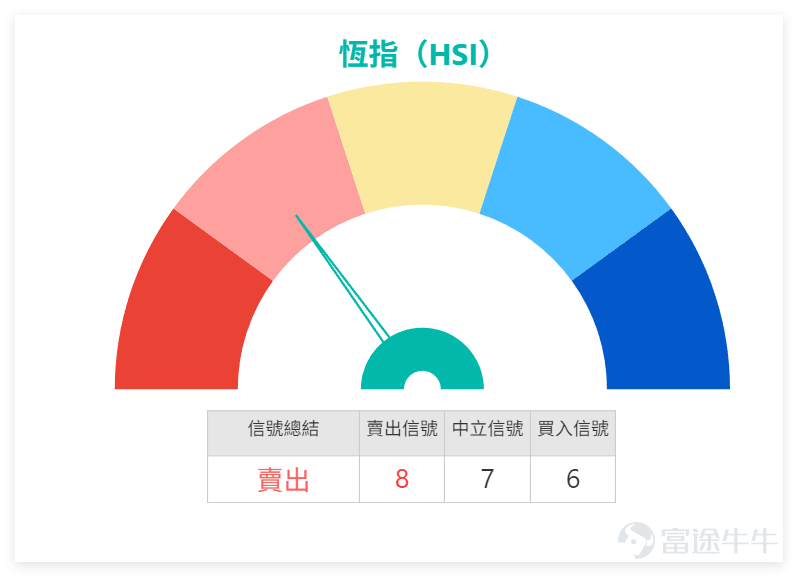
The previous day (January 8th) $Hang Seng Index (800000.HK)$ The Hang Seng Index closed at 26,149.31 points, down 1.17% in a single day with a turnover of 268.275 billion yuan. The overall technical indicator signal is 'sell' with a strength of 8. Multiple oscillation indicators remain neutral, but indicators such as MACD and Bollinger Bands show buy signals, creating a divergence between bulls and bears. Based on technical data, the current support levels for the Hang Seng Index are 25,640 points and 25,105 points, while resistance levels are at 26,628 points and 27,194 points, with the index expected to remain in an adjustment range in the short term.

In terms of sector performance, tech and financial stocks were the main drags on the index. Tencent (00700) closed at HKD 616.00, down 1.36%, with an RSI of 51 indicating a neutral overall signal; short-term moving averages faced pressure. AIA closed at HKD 83.85, down 2.44%, with the short-term moving average crossing below the long-term moving average, showing bearish technicals. Ping An (02318) had an RSI of 77, indicating severe overbought conditions with strong sell signals. In contrast, the energy sector was relatively resilient: CNOOC (00883) rose slightly by 0.10%, holding above its short-term moving average, with technical indicators signaling a buy. Overall, the Hang Seng's adjustment was primarily driven by heavyweight stocks, amid market concerns about short-term profit-taking and pullbacks in some overbought stocks, weakening the index.
Notably, the recent adjustment in the Hang Seng Index has already been reflected in advance in the warrant market. Let’s review the performance of the warrants. On January 6, 2026, early signs of adjustment emerged, with four Hang Seng Index-related warrants and bull/bear certificates experiencing significant gains over the following two days. UBS Group Put Warrant (20720) surged 41% in two days, UBS Group Bear Certificate (61242) jumped 46%, UBS Group Bear Certificate (54444) gained 45%, and even the less volatile UBS Group Put Warrant (23127) saw a 24% increase, while the Hang Seng Index itself fell by 2.10% during the same period—perfectly illustrating the leverage effect and profit logic in a bear market.
The underlying logic is not complex: when the underlying stock (or index) shows a downward trend, put warrants and bear contracts will rise accordingly, and the higher the leverage, the greater the potential increase. The strong performance of relevant put warrants and bear contracts during this adjustment in the Hang Seng Index was precisely because the market anticipated the possible correction in advance, leading to capital inflows into bearish structured products. Additionally, implied volatility played a key role—higher implied volatility gives stronger upward momentum to warrant prices, which was one of the crucial reasons these four products were able to achieve significant gains.
Based on the current market situation, we have carefully selected two of the most cost-effective products from the warrant pool for your reference:
1. UBS Group Put Warrant (20529): Leverage of 15.6x with a strike price of 24,000 points. Its core advantage lies in having the lowest premium and implied volatility. With the Hang Seng currently in an adjustment phase, if it continues downward, this product could fully capitalize on leverage gains, with low premium and low implied volatility reducing downside risk, making it more stable compared to other put warrants.
2. BOC Call Warrant (23128): Leverage of 13x with a strike price of 28,341 points and the lowest implied volatility, offering relatively high leverage. This product is suitable for investors optimistic about a Hang Seng rebound. Some indicators now show buy signals, and if a rebound occurs, this product can deliver leveraged returns with lower implied volatility costs.
A reminder here: Fellow investors who already hold call warrants should set a profit-taking level at 10% below the product's recent high. Those not yet invested should avoid blindly chasing highs; prioritizing products with low premiums and low implied volatility is a safer approach.
Risk Warning: Intraday fluctuations may result from short-term speculative trading. Without sustained volume support, warrants can experience sharp corrections at any time. Before entering, always check the warrant’s real-time premium rate and trading volume to avoid liquidity issues that may prevent timely buying or selling. Additionally, warrants are high-risk derivatives; their leverage effect amplifies both gains and losses. Investors should participate rationally based on their own risk tolerance.
How long do you think this adjustment in the Hang Seng Index will last? Should we choose put warrants to seize the short-selling opportunity, or wait for the rebound opportunity with call warrants? Feel free to share your strategy and thoughts in the comments section!
Disclaimer: This article does not constitute any investment advice.
This article is for reference only and does not constitute any investment advice. The market data, opinions, and analysis contained herein may change at any time without prior notice. We shall not be liable for any loss or damage arising from reliance on the information in this article. Technical analysis merely indicates whether certain technical conditions are met; a comprehensive evaluation of asset performance should incorporate additional data. Trading decisions should not be based solely on the content of this article. Please note that past performance is not indicative of future results.
#Hang Seng Index #Hong Kong Stock Movement #Warrants Real-time Analysis #Intraday Opportunities #Warrants Selection #Warrants Strategy #Derivatives Hedging #Hang Seng Index Adjustment #Warrants Leverage Effect
Risk Disclaimer: The above content only represents the author's view. It does not represent any position or investment advice of Futu. Futu makes no representation or warranty.Read more

Comments
to post a comment
2