
Kicking off the year with a bang! Multiple sectors in Hong Kong's stock market are quietly gaining m

Short-term observation of Hong Kong stocks: The Hang Seng Index in a tug-of-war between bulls and bears at a critical juncture
Market Review: Testing key support after retreating from highs
Entering 2026, the Hong Kong stock market experienced a sharp 'opening red' rally. The Hang Seng Index surged from a low of 25,717 points on January 2 to a high of 26,858 points on January 6 within just three trading days, accumulating an increase of 1,141 points with significantly higher trading volume. However, due to the overly rapid rise in a short period, the market underwent an anticipated technical correction on January 7 and 8. As of 15:25 on January 8, the Hang Seng Index retreated to 26,197.31 points.
Behind the market correction, the movement of funds reflects subtle changes in investor sentiment. According to observations from the [Hong Kong Stock Podcast] column, after the index hit recent highs, market divergence on future trends has significantly increased. Bullish investors continue to believe that the index can test 27,000 points and are holding bullish warrants with a call price at 25,854 points. On the other hand, bearish investors think the short-term rebound has ended, expecting the market to fall another 300-400 points, and are deploying bearish warrants with a call price at 27,300 points.
Technical Analysis: Signals and Key Price Levels During Adjustment
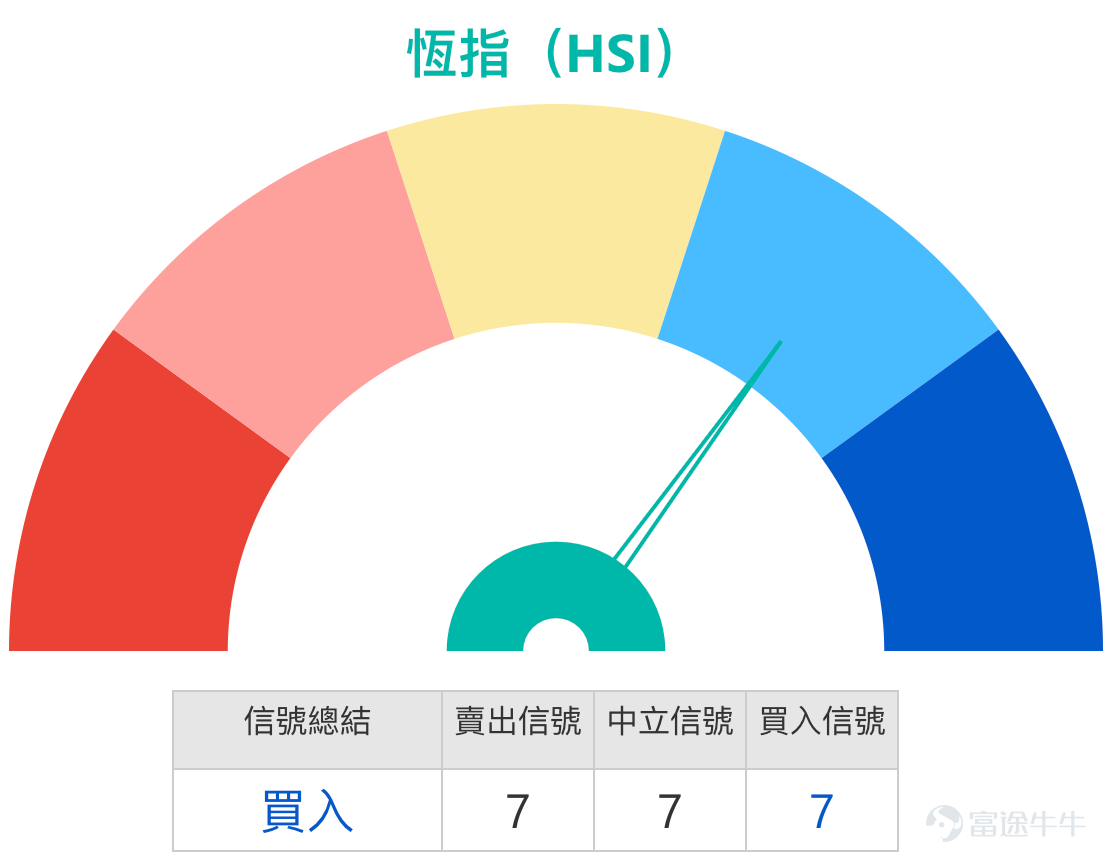
Based on the latest technical data, the Hang Seng Index is testing a series of key levels during its adjustment. The summary signal from technical indicators leans towards 'sell,' but with moderate strength, indicating that short-term momentum has weakened somewhat.
Key Support and Resistance Level Analysis:
* Upper Resistance: The primary resistance level currently stands at 26,620 points, which closely aligns with the intraday high of 26,616 points on January 7 and the resistance zone of 26,800 points mentioned in [Hong Kong Stock Podcast]. A successful breakout could lead to the next target at 27,157 points, paving the way for challenging the psychological threshold of 27,000 points.
* Lower Support: The first support level is near 25,657 points, while the more critical second support level is at 25,068 points. Market analysis indicates that the round-number support at 26,000 points and the approximately 26,037-point 10-day moving average are short-term key supports. If the Hang Seng Index can stabilize above these levels, the adjustment remains within a healthy range. Conversely, if it fails to hold, the index may further drop to lower support levels.
From a technical pattern perspective, pullbacks after recent sharp rises are normal and help absorb short-term profit-taking. As long as major support levels are not decisively broken, the market still has the potential to resume its upward trend after consolidation.
![[Share Link: January 7 [HK Stocks Podcast] Hang Seng Index, Hong Kong Exchange, Yanzhou Energy, AIA, China Mobile, Alibaba] Market Review: Testing key support after retreating from highs Entering 2026, the Hong Kong stock market experienced a sharp 'opening red' rally. The Hang Seng Index surged from a low of 25,717 points on January 2 to a high of 26,858 points on January 6 within just three trading days, accumulating an increase of 1,141 points with significantly higher trading volume. However, due to the overly rapid rise in a short period, the market underwent an anticipated technical correction on January 7 and 8. As of 15:25 on January 8, the Hang Seng Index retreated to 26,197.31 points. Behind the market adjustment, fund movements reflect subtle changes in investor sentiment. According to observations from the [Hong Kong Stocks Podcast] column, after the index touched recent highs, divergence over future market trends became noticeably wider. Bullish investors continued to anticipate that the index would test 27,000 points, holding bullish warrants with a recovery price at 25,854 points. Meanwhile, bearish investors believed the short-term rebound had ended, expecting the market to fall another 300-400 points, and deployed bearish warrants with a recovery price at 27,300 points. Technical Analysis: Signals and Key Price Levels During Adjustment Based on the latest technical data, the Hang Seng Index is testing a series of critical levels amid the adjustment. Technical indicator summary signals lean towards 'sell,' but with moderate strength, indicating weakened short-term momentum. Key Support and Resistance Level Analysis: ...](https://nnqimage.futunn.com/sns_client_feed/1162342/20260108/web-1767857173198-NEh2SdQFyK.png/big?area=1&is_public=true&imageMogr2/ignore-error/1/format/webp)
Derivatives Observation: Application of Bullish and Bearish Warrants in a Divergent Market
In the recent market conditions, derivatives, particularly bullish and bearish warrants, have provided investors with an effective avenue to express differing market views. The core advantage of these warrants lies in their highly correlated price movements with the underlying asset and the absence of time value decay, allowing investors to track short-term index fluctuations with relatively straightforward leverage.
However, as Simon, the host of [Hong Kong Stock Podcast], reminded, the choice of call price is crucial when selecting bullish or bearish warrants. Call prices too close to the current market price ('at-the-money') increase the risk of the product being forcibly called back due to normal market fluctuations. For instance, with index support near 25,657 points, choosing a bullish warrant with a call price at 25,854 points offers relatively limited safety margin. A more prudent approach is to select bullish warrants with call prices below key support levels (e.g., below 25,068 points) or bearish warrants with call prices above major resistance levels (e.g., above 27,157 points), allowing sufficient room for market volatility.
For optimistic investors,instruments in the bullish direction can be considered. J.P. Morgan call warrant (22977)$JP-HSI @EC2605A.C (22977.HK)$has a strike price of 28,200 points, and its key feature is offering the highest leverage of 12.3 times while having the lowest premium and implied volatility, combining capital efficiency with attractive pricing. BOC bull certificate (63488)$BI#HSI RC28081.C (63488.HK)$and BOC bull certificate (64016) have stop-loss levels at 25,595 points and 25,650 points, respectively, both below the key support level of 25,657 points, providing nearly 40 times high actual leverage. These instruments aim to leave room for index pullbacks, reducing the risk of premature forced liquidation.$BI#HSI RC2808E.C (64016.HK)$
![[Share Link: January 7 [HK Stocks Podcast] Hang Seng Index, Hong Kong Exchange, Yanzhou Energy, AIA, China Mobile, Alibaba] Market Review: Testing key support after retreating from highs Entering 2026, the Hong Kong stock market experienced a sharp 'opening red' rally. The Hang Seng Index surged from a low of 25,717 points on January 2 to a high of 26,858 points on January 6 within just three trading days, accumulating an increase of 1,141 points with significantly higher trading volume. However, due to the overly rapid rise in a short period, the market underwent an anticipated technical correction on January 7 and 8. As of 15:25 on January 8, the Hang Seng Index retreated to 26,197.31 points. Behind the market adjustment, fund movements reflect subtle changes in investor sentiment. According to observations from the [Hong Kong Stocks Podcast] column, after the index touched recent highs, divergence over future market trends became noticeably wider. Bullish investors continued to anticipate that the index would test 27,000 points, holding bullish warrants with a recovery price at 25,854 points. Meanwhile, bearish investors believed the short-term rebound had ended, expecting the market to fall another 300-400 points, and deployed bearish warrants with a recovery price at 27,300 points. Technical Analysis: Signals and Key Price Levels During Adjustment Based on the latest technical data, the Hang Seng Index is testing a series of critical levels amid the adjustment. Technical indicator summary signals lean towards 'sell,' but with moderate strength, indicating weakened short-term momentum. Key Support and Resistance Level Analysis: ...](https://nnqimage.futunn.com/sns_client_feed/1162342/20260108/web-1767857197215-VG9RoyTVeo.jpeg/big?area=1&is_public=true&imageMogr2/ignore-error/1/format/webp)
For cautious investors,bearish tools are available. BNP Paribas put warrant (21693) and UBS Group put warrant (20529) both have a strike price of 24,000 points, providing over 15 times leverage; among them, UBS Group put warrant (20529) has the lowest premium and implied volatility, making it an optimal choice for cost control on the bearish side. HSBC bear certificate (66705) and Morley bear certificate (64682) both have stop-loss levels at 26,630 points, slightly above the current resistance level of 26,620 points, offering more than 45 times extremely high actual leverage; Morley bear certificate (64682) also features the lowest premium. These bear certificates are suitable for betting on clear resistance-triggered pullbacks but require caution regarding the risk of being prematurely forced out due to slight price breaches above resistance.
![[Share Link: January 7 [HK Stocks Podcast] Hang Seng Index, Hong Kong Exchange, Yanzhou Energy, AIA, China Mobile, Alibaba] Market Review: Testing key support after retreating from highs Entering 2026, the Hong Kong stock market experienced a sharp 'opening red' rally. The Hang Seng Index surged from a low of 25,717 points on January 2 to a high of 26,858 points on January 6 within just three trading days, accumulating an increase of 1,141 points with significantly higher trading volume. However, due to the overly rapid rise in a short period, the market underwent an anticipated technical correction on January 7 and 8. As of 15:25 on January 8, the Hang Seng Index retreated to 26,197.31 points. Behind the market adjustment, fund movements reflect subtle changes in investor sentiment. According to observations from the [Hong Kong Stocks Podcast] column, after the index touched recent highs, divergence over future market trends became noticeably wider. Bullish investors continued to anticipate that the index would test 27,000 points, holding bullish warrants with a recovery price at 25,854 points. Meanwhile, bearish investors believed the short-term rebound had ended, expecting the market to fall another 300-400 points, and deployed bearish warrants with a recovery price at 27,300 points. Technical Analysis: Signals and Key Price Levels During Adjustment Based on the latest technical data, the Hang Seng Index is testing a series of critical levels amid the adjustment. Technical indicator summary signals lean towards 'sell,' but with moderate strength, indicating weakened short-term momentum. Key Support and Resistance Level Analysis: ...](https://nnqimage.futunn.com/sns_client_feed/1162342/20260108/web-1767857190828-lk8vS6BEd8.jpeg/big?area=1&is_public=true&imageMogr2/ignore-error/1/format/webp)
For more real-time analysis and strategy discussions on Hong Kong stock trends and derivatives, you can follow “Jenny’s Warrants and CBBCs for HK Stocks” for professional insights.
#Hang Seng Index #Technical Analysis #Support and Resistance Levels #Bull and Bear Certificates #Hong Kong Stocks #Market Divergence #Forced Liquidation Risk #Leverage Tools #Short-term Consolidation #Derivatives Strategy
This article does not constitute any investment advice.
This article is for reference only and does not constitute any investment advice. The market data, opinions, and analysis contained herein may change at any time without prior notice. We shall not be liable for any loss or damage arising from reliance on the information in this article. Technical analysis merely indicates whether certain technical conditions are met; a comprehensive evaluation of asset performance should incorporate additional data. Trading decisions should not be based solely on the content of this article. Please note that past performance is not indicative of future results.
Risk Disclaimer: The above content only represents the author's view. It does not represent any position or investment advice of Futu. Futu makes no representation or warranty.Read more

Comments
to post a comment
1