
Kicking off the year with a bang! Multiple sectors in Hong Kong's stock market are quietly gaining m

[Warrant Insight] Hang Seng Index Stands Firm Above Three Moving Averages! Low-Premium Call Warrants Seize Breakout Opportunities
Based on the closing data from January 6, $Hang Seng Index (800000.HK)$
The Hang Seng Index closed at 26,710.45 points, up 1.38% for the day, with a turnover of 291.758 billion yuan, indicating significantly active market trading. Technically, the index is now firmly above the three key moving averages: MA10 (25,960.19 points), MA30 (25,805.16 points), and MA60 (25,983.47 points). Immediate support levels are seen at 26,025 points and 25,616 points, while resistance levels are focused at 27,171 points and 27,805 points.
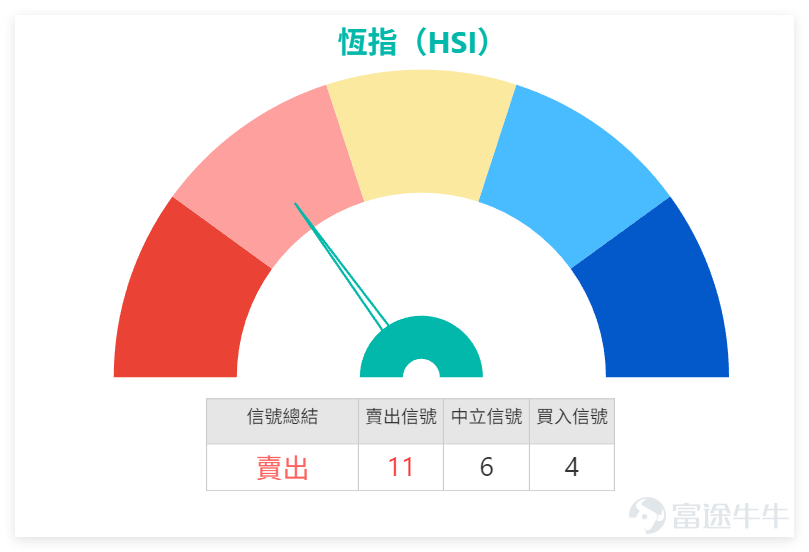
In terms of indicators, the RSI reading is 66, the Williams indicator shows an overbought condition and issues a sell signal, the stochastic oscillator also releases a sell signal, while the MACD and Bollinger Bands indicate buy signals. With multiple oscillating indicators showing divergence, the overall technical signal suggests selling, with a signal strength of 11.

The rebound of the Hang Seng Index on January 6 was mainly driven by the rotation of blue-chip sectors, with financial stocks and some tech-heavy internet stocks showing strong performance, becoming the core driving force behind the index's rise.
In the financial sector, HSBC Holdings (00005) benefited from expectations of a stable global interest rate environment, showing resilient stock performance, closing at HKD 128.8, with technical indicators signaling overbought conditions; AIA's (01299) business growth momentum in the Asian market continued, closing at HKD 86.05, with short-term technical patterns leaning towards consolidation; Ping An's (02318) insurance business demand remained steady, closing at HKD 72, with multiple moving averages showing buy signals.
In the technology sector, Tencent (00700) was boosted by optimistic progress in new game approvals, closing at HKD 632.5, with slightly overbought technical indicators but strong momentum; Meituan (03690) showed stable performance in its local services segment, closing at HKD 106.1, with its price fluctuating narrowly within a range; Alibaba (09988) faced competition in its e-commerce business, closing at HKD 150.8, with weak short-term technical trends.
In the consumer and utilities sectors, Sands China (01928) met expectations with Macau gaming revenue data, closing at HKD 19.94, with technical indicators showing buy signals; CLP Holdings (00002) attracted inflows due to its stable dividend, closing at HKD 70.55, hovering near recent highs; HKEX (00388) benefited from active market trading, closing at HKD 432.4, although technical indicators suggested overbought risks.
In the resources and domestic demand sectors, China Mobile (00941) maintained stable cash flow, closing at HKD 82.2, with a neutral technical pattern; CK Hutchison (00001) was supported by a recovery in European retail, closing at HKD 55.35, with a steady short-term technical trend.
Reviewing recent performances of popular Hang Seng Index-related warrants and bull/bear certificates, JPMorgan Chase’s call warrant (22977), listed on January 2, 2026, surged 15% two days later, compared to a 1.41% rise in the Hang Seng Index during the same period, highlighting its high delta sensitivity that effectively amplified gains from the underlying stock’s rise. On the same day, Bank of China’s call warrant (23128) gained 9% two days later, also following the Hang Seng Index rebound. For bull certificates, Bank of China’s bull certificate (61877) and another bull certificate (60819) rose 34% and 35%, respectively, two days later, demonstrating greater elasticity than call warrants primarily due to their higher leverage, which significantly expanded returns during the small Hang Seng Index rebound.
Based on the current market environment and product data, the following high cost-performance Hang Seng Index-related CBBCs (Callable Bull/Bear Contracts) and warrants are selected for your reference.
For call warrants, Bank of China’s call warrant (21318) offers 18x leverage with an exercise price of 28,743 points. Its key advantage is having the lowest implied volatility among similar products, paired with high leverage, making it suitable for investors seeking high elasticity and cost efficiency. JPMorgan Chase’s call warrant (21186) has 16.5x leverage with an exercise price of 28,600 points, offering the lowest premium with implied volatility and leverage levels within reasonable ranges, providing a good balance between risk and return, suitable for conservative call deployments.
For put warrants, Bank of China’s put warrant (20720) provides 16.3x leverage with an exercise price of 24,875 points, featuring the lowest premium and implied volatility among similar put warrants, offering excellent value for money. Another Bank of China put warrant (23127) has 11.2x leverage with the same exercise price of 24,875 points and relatively low premium, suitable for investors expecting a short-term decline in the Hang Seng Index and with relatively conservative risk tolerance.
Regarding bull and bear certificates, the BOC bull certificate (64015) offers a leverage of 25 times with a stop-loss level at 25,750 points, while the BOC bull certificate (63486) provides a leverage of 23.8 times with a stop-loss level at 25,695 points. These two bull certificates have relatively higher leverage levels, suitable for investors who are optimistic about the Hang Seng Index holding above support levels and continuing to rebound, seeking short-term gains. Meanwhile, the BOC bear certificate (54444) offers a leverage of 23.8 times with a stop-loss level at 27,738 points, and the BOC bear certificate (61242) has a leverage of 24.3 times with a stop-loss level at 27,688 points. The leverage levels are relatively high, making them suitable for investors who believe the Hang Seng Index might retreat due to overbought signals.
Risk Warning: It is crucial to focus on market volatility risks stemming from current divergences in technical indicators of the Hang Seng Index. Some highly leveraged bull and bear certificates have stop-loss levels close to the current Hang Seng Index level, which could trigger forced redemption if the market reverses. Investors should strictly control their positions when deploying these instruments. Additionally, the selected call warrants mostly have exercise prices above 28,600 points, meaning they are somewhat out-of-the-money relative to the current Hang Seng Index. Investors need to assess the likelihood of the Hang Seng Index breaking through key resistance levels, and it’s not advisable to blindly chase high premiums. Meanwhile, changes in implied volatility may affect warrant prices, so investors should continuously monitor market volatility.
The Hang Seng Index has rebounded, but there is divergence among technical indicators, and blue-chip sectors are showing mixed performance. Would you choose low-premium call warrants to seize potential rebound opportunities, or allocate put warrants as a hedge against market fluctuations? Feel free to share your strategy ideas in the comments section!
Disclaimer: This article does not constitute any investment advice.
This article is for reference only and does not constitute any investment advice. The market data, opinions, and analysis contained herein may change at any time without prior notice. We shall not be liable for any loss or damage arising from reliance on the information in this article. Technical analysis merely indicates whether certain technical conditions are met; a comprehensive evaluation of asset performance should incorporate additional data. Trading decisions should not be based solely on the content of this article. Please note that past performance is not indicative of future results.
#Hang Seng Index #Hong Kong Stocks #Real-time Analysis #Warrants Selection #Warrants Strategy #Derivatives Hedging #Blue-chip Stocks #Financial Stocks #Technical Analysis
Risk Disclaimer: The above content only represents the author's view. It does not represent any position or investment advice of Futu. Futu makes no representation or warranty.Read more
Comments
to post a comment