
Kicking off the year with a bang! Multiple sectors in Hong Kong's stock market are quietly gaining m

Trip.Com's stock price leads the tourism sector, technical breakout confirms short-term strength
Entering 2026, Hong Kong's stock market travel and tourism sector has shown strong recovery momentum. Among them, industry leader Trip.Com Group (09961) has exhibited particularly outstanding stock performance. As of January 6, Trip.Com’s share price closed at HKD 598, up 3.73%, and even touched a recent market attention high during trading. This rise is not isolated, as Hong Kong-listed travel-related stocks collectively surged, indicating widespread optimism across the industry.
I. Technical Analysis: Key Levels and Signal Dynamics After Breakout
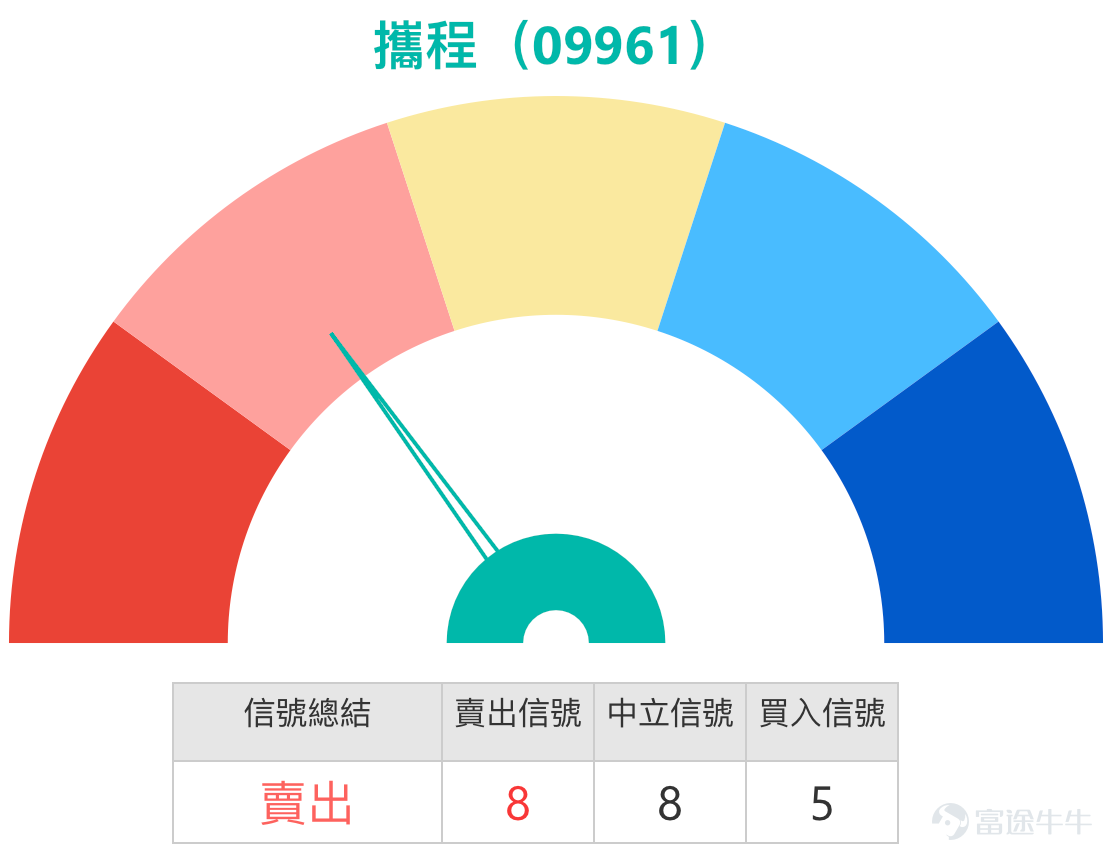
1. Trend and Momentum: The stock price has successfully broken through the previous consolidation range and is currently above all key moving averages. The 10-day line (570.7 yuan) provides immediate dynamic support for the stock price, and is far above the 30-day line (554.13 yuan) and the 60-day line (555.34 yuan). The short- and medium-term moving average systems are showing a bullish alignment, providing a technical foundation for an upward trend. However, multiple momentum indicators show that market sentiment has entered a sensitive zone. The RSI indicator rose to 67, close to the overbought range, suggesting that short-term accumulated gains may be large and could face technical adjustment pressure.
2. Support and Resistance Analysis: The current technical levels are key in determining the subsequent direction.
* Support Levels Below:
* First Support Level: 571 yuan. This position is near the 10-day moving average and serves as the first retest confirmation point after the recent breakout. If the stock price pulls back to this level, strong buying interest is expected to provide support.
* Second Support Level: 558 yuan. This position represents the neckline area of the previous 'triple bottom' pattern and overlaps with the dense zones of the 30-day and 60-day moving averages, forming a more robust mid-term defensive line.
* Resistance Levels Above:
* First Resistance Level: 615 yuan. This is the first significant barrier the stock will face after the breakout. Successfully holding above this level will lay the foundation for further upward movement.
* Second Resistance Level: 629 yuan. If the 615 yuan level is breached, the next target for the stock price will be 629 yuan, which may become the focal point of short-term contention between bulls and bears.

II. Market News and Investor Sentiment
Recently, institutions have maintained an overall positive view on Trip.Com, providing fundamental support for the stock price.
On January 6, CITIC Securities released a report, initiating coverage of Trip.Com with a 'Buy' rating and setting a target price of 660 yuan. The report noted that despite recent fluctuations in public sentiment and the international environment, these factors are expected to have limited impact on the company's long-term performance. As the leader in the online travel (OTA) industry, Trip.Com maintains a solid market share, and its overseas business, particularly Trip.com, is anticipated to continue driving high growth. This perspective alleviates some investors' concerns regarding short-term uncertainties.
Meanwhile, market sentiment has also been buoyed by seasonal factors. Year-end and the Lunar New Year traditionally represent peak travel seasons, with markets widely expecting sustained release of travel demand, providing event-driven logic for tourism stocks during this period. Observing capital flows, Trip.Com showed net active buying on January 6 during the upward price movement, indicating that incremental funds were entering the market.
3. Review of Warrants and Bull/Bear Contracts: The Leverage Effect of Derivatives
Reviewing recent performance, derivatives displayed their characteristics amid volatility in the underlying stock. For example, looking at several products mentioned on January 2, 2026, when Trip.Com’s underlying stock rose 2.32% over the following two trading days:
* Bull contract products performed strongly: HSBC bull contract (product code: 58699) surged 18%, UBS Group bull contract (68226) $UB#TRIP RC2604K.C (68226.HK)$ rose 15%. These products, due to embedded leverage and prices primarily following changes in the intrinsic value of the underlying stock, can effectively amplify gains in clear trend scenarios.
* Warrant products also increased: Morgan Li call warrant (17440) $MS-TRIP@EC2610A.C (17440.HK)$ rose 12%, Bank of China call warrant (17444) $BI-TRIP@EC2610A.C (17444.HK)$ rose 8%.

4. Current Analysis of Warrant and Bull/Bear Contract Product Selection
Based on the fact that Trip.Com's stock price has broken through a key level but there is divergence in technical indicators, investors can choose corresponding structured products according to different market expectations.
Bullish Direction Choice:
For investors who believe the breakout is valid and the stock price will continue testing upwards towards HKD 615 or even HKD 629, they may consider the following call warrants or bull contracts:
* BOC Call Warrant (17444): Exercise price at HKD 589.38, with an actual leverage of about 3.5 times. Its advantage lies in its relatively low implied volatility, meaning its price is less affected by market sentiment fluctuations (changes in implied volatility) and tracks the underlying stock more closely. Currently, the stock price (HKD 596.5) is slightly higher than its exercise price, making it slightly in-the-money, with time value erosion being relatively slow.
* Morgan Call Warrant (17440) $MS-TRIP@EC2610A.C (17440.HK)$: Exercise price also at HKD 589.38, with an actual leverage of about 3.9 times. Its advantage is that both the premium and implied volatility are the lowest among similar products, optimizing investment cost, making it suitable for investors who expect short-term upside continuation.
* UBS Group Bull Contract (68002) $UB#TRIP RC2604E.C (68002.HK)$: Recovery price at HKD 530, with an actual leverage of about 7.7 times. Its advantage is the lowest premium. In relation to technical levels: its recovery price (HKD 530) is far below the current stock price and second support level (HKD 558), providing a relatively high safety margin. The risk of forced recovery at current prices is relatively low, making it suitable for investors with slightly higher risk tolerance who are optimistic about medium-term trends.

Bearish or hedging direction choice:
For investors who believe the stock price is overbought in the short term and may pull back to test support levels, they may consider the following put warrants or bear contracts:
JPMorgan Put Warrant (20311) $JP-TRIP@EP2612A.P (20311.HK)$and UBS Group Put Warrant (20220) $UB-TRIP@EP2612A.P (20220.HK)$: The strike prices are both at HKD 499.8, with an actual leverage of approximately 2.8x. Their advantage lies in the highest leverage among similar products and the lowest implied volatility. In relation to technical levels: their strike price is below the second support level (HKD 558), making them deep out-of-the-money options. This indicates a more aggressive bearish or hedging choice, where significant profits are only likely if a substantial pullback in share price is anticipated.
UBS Bear Certificate (60485) $UB#TRIP RP2805A.P (60485.HK)$and HSBC Bear Certificate (61573): The forced recovery prices are HKD 688 and HKD 690 respectively, with actual leverages of 6.6x and 6x. Their advantages lie in low premiums and relatively high actual leverage. Regarding technical positions: the forced recovery prices are set significantly above the second resistance level (HKD 629), providing substantial upward buffer for the underlying stock. This lowers the risk of being easily triggered during volatile upward trends, making them suitable for hedging upside risks or positioning for cyclical pullbacks.

Interactive Discussion:
Given that Trip.Com’s share price has broken through key levels but technical indicators show divergence, what do you think its short-term movement will most likely be?
1. Pushing forward strongly, successfully breaking through the HKD 615 resistance and challenging HKD 629?
2. Or undergoing a technical pullback first to consolidate support near HKD 571?
When deploying derivatives while considering potential high volatility, would you prefer choosing warrants, which are more affected by implied volatility, or bull/bear certificates, which have simpler terms but require strict monitoring of forced recovery risks?
For more real-time data analysis and professional strategy insights on Hong Kong stock warrants and bull/bear certificates, stay tuned to #港股窩輪Jenny's market observations.
Disclaimer: This article does not constitute any investment advice.
This article is for reference only and does not constitute any investment advice. Market data, opinions, and analyses contained herein are subject to change without notice. We assume no liability for any losses or damages arising from reliance on the information provided in this article. Technical analysis merely indicates whether certain technical conditions are met; a comprehensive evaluation of asset performance should incorporate additional data and should not rely solely on this article for trading decisions. Please note that past performance is not indicative of future results.
#Trip.Com #TechnicalAnalysis #SupportResistanceLevels #CBBC #ImpliedVolatility #ForcedRecoveryRisk #TravelStocks #ShortTermTrading #DerivativesStrategy #HKStocksCBBC
Risk Disclaimer: The above content only represents the author's view. It does not represent any position or investment advice of Futu. Futu makes no representation or warranty.Read more

Comments
to post a comment
1
1