
"Grey hair economy" is near. What investment opportunities have you sensed?

Making Trusts Simpler and More Accessible — Dialogue Between Yuyi Lao, Chairperson of Cai Hua She Group, and the CEO of Futu Trust
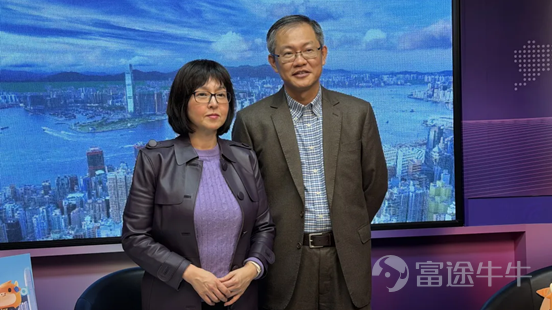
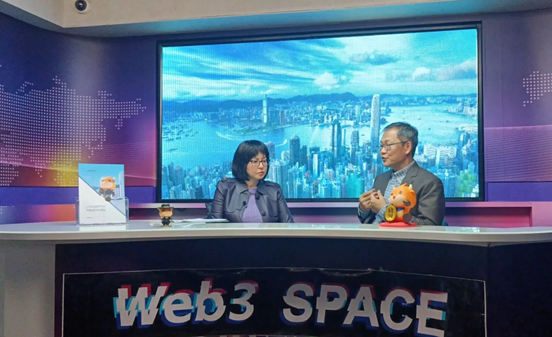
On November 19, 2025, Ms. Kitty Lo, Chairwoman of the Hong Kong Financial News Group, invited Mr. Ben Lin, CEO of Futu Trust, to the studio for an in-depth discussion on the history and development of Futu Trust. Below is a transcript of their conversation.
Hong Kong Financial News Kitty: Hello, Ben.
Futu Trust Ben: Hello, Chairwoman Lo.
Kitty Lo of the财华社 (Cai Hua She):It is a great honor to have you here today. I always thought that Futu only engaged in securities business, but I didn’t expect that you are also involved in the trust sector. As the CEO responsible for the trust division, your presence here today will surely interest many netizens who may not be familiar with, or might not have even heard of, Futu’s involvement in the trust industry. Could you explain why Futu decided to enter this new area of trust services?
Futu Trust Ben:During our business expansion, we noticed that beyond corporate-level management needs, many major and minority shareholders of pre-IPO companies sought family trust services to hold pre-IPO company shares via overseas family trusts. Additionally, executives of listed companies who had liquidated their shares expressed needs for wealth succession and asset protection, often opting for family trusts. As such demand increased, we expanded from corporate trusts into family trust services. We obtained a trust license in Singapore, possibly becoming one of the few, if not the only, internet-based companies with a Singaporean trust license — out of the seventy-plus trust licenses issued in Singapore. With international expansion, our clients, who often hold multiple nationalities or reside overseas in places like Singapore, the U.S., Canada, and Australia, presented more complex requirements, such as compliance with U.S. tax reporting rules or adherence to laws in jurisdictions like Jersey. Consequently, we partnered with numerous lawyers, tax advisors, and local trust companies abroad to offer global family trust solutions. Moving forward, we further extended our services to include family office offerings. A few years ago, Singapore led Hong Kong slightly in family office services, but after comparing the two, we found that Hong Kong has since gained advantages in regulatory environment, tax policies, and investment flexibility. Now, some family office clients from Singapore are relocating to Hong Kong. Therefore, our developmental trajectory evolved from corporate trusts to family trusts, family offices, and eventually global trust solutions, which have been our key focus areas in recent years.
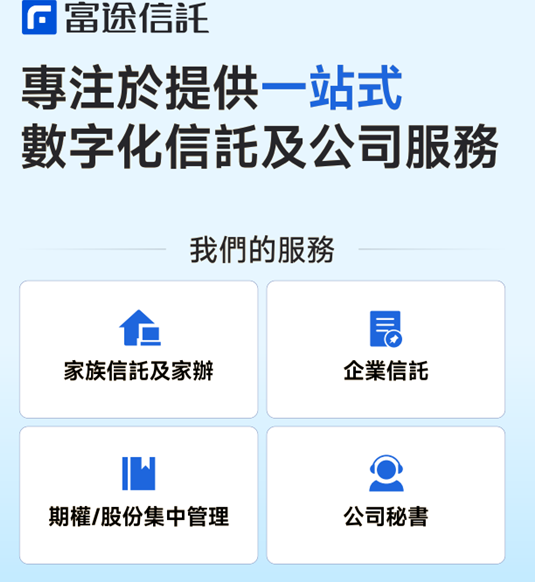
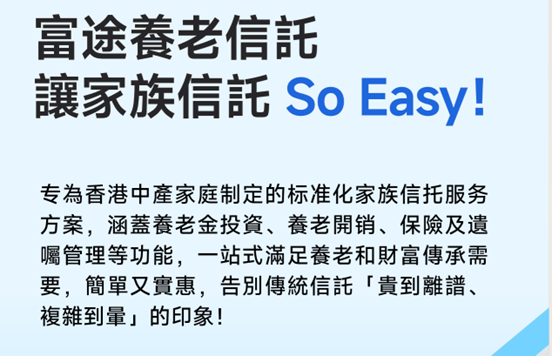
Indeed, and we have even bigger aspirations. As idealists, my first dream is to enable Hong Kong's middle-class families to enjoy trust services previously accessible only to ultra-high-net-worth individuals; my second dream is to address planning issues related to aging. The global trend toward aging populations and declining birth rates is evident, yet many people remain unprepared for old age. Existing safeguards in Hong Kong, such as the Mandatory Provident Fund (MPF), have contribution caps and age limits, making it insufficient for achieving high-quality retirement, especially as centenarians will become increasingly common. Individuals struggle with self-discipline in retirement planning, often diverting pension funds for housing, investments, or entrepreneurship. Thus, we introduced pension trusts, which lower the threshold to make them affordable for middle-class families while helping them plan effectively for quality retirement and wealth succession.
Kitty Lo of the财华社 (Cai Hua She):That was fascinating! Without your explanation, few would have known that Futu has extended its securities business into trust services akin to private banking. Futu Trust was registered in 2017 and officially launched operations in 2018. It has been nearly seven years, during which your services have expanded globally, forming partnerships worldwide. Watching Futu grow from a smaller company into a globally recognized enterprise has not been easy. Your determination is impressive, and I believe that once you set out to do something, you ensure its success. You already have tens of millions of retail users registered. Will you screen these retail clients based on their financial capacity and needs to promote trust services? How do you inform clients about and encourage them to adopt your trust services, building on your securities business?
Futu Trust Ben:Our mission aligns with that of Futu Securities. Founder Leaf has always emphasized that technology should make investing 'simpler and less lonely'—this is our company’s slogan. Take Futu Securities as an example. We believed traditional securities investment involved too many intermediaries, high fees, limited investment options, and expensive access to information—including paid market data. Our founder wondered why we couldn’t reduce intermediary steps through technology. Why can’t customers trade not just Hong Kong stocks, but also US, Japanese stocks, or even cryptocurrencies? Why is accessing information so difficult, and why can’t it be provided for free? Futu Securities optimized the high-cost, suboptimal securities trading experience using technology. Currently, Futubull has 28 million registered users globally. The same principle applies to Futu Trust. Traditional trust services were exclusively tailored for ultra-high-net-worth individuals like yourself, serving purposes such as wealth succession, asset protection, tax optimization, and estate planning. The processes were highly complex, requiring input from numerous lawyers, bankers, and consultants to devise intricate solutions.
Kitty Lo of the财华社 (Cai Hua She):Moreover, the trustee cannot directly participate in the management of the assets themselves.
Futu Trust Ben:Yes, it is also necessary to find a trustworthy third party, which is actually not easy. Sometimes the management costs are high and the model is inflexible. We have identified a significant pain point: there are too many manual and offline processes in the entire trust business. For example, if I want to check the real-time performance of my assets now, there is no APP that allows me to do so in real time—I can only wait for monthly or annual reports, which suffer from serious delays. Additionally, many documents require physical signatures from clients and must be sent back and forth via mail. If there are urgent matters related to listed companies that need immediate attention, the timeline simply cannot keep up. We have spoken with many owners of listed companies who complain the most about the poor timeliness and user experience of traditional trusts: Why can’t we handle matters by simply opening an app on our phones? Why does everything have to be communicated via email? Sometimes you can’t even find someone to liaise with! Therefore, when I joined Futu in 2021, my boss gave me the mission of rejecting the offline business processing models used by traditional trust companies. He wanted me to build a digital trust platform, moving as many offline tasks as possible online—unless legally required, such as the requirement under Hong Kong’s trust deed for offline signing. All other processes needed to be simplified, made more affordable, and expedited. My boss also said: “First, I am your first client—you need to ensure the service experience is excellent, and then you can serve other clients.”
Kitty Lo of the财华社 (Cai Hua She):Your ability to accurately identify these pain points and provide solutions likely wouldn’t be possible without the technological support of the Web3 era. You’ve made so many commitments to your clients, transforming what was once a luxury service into an everyday utility. Thanks to the Web3 era, your APP and blockchain infrastructure allow operations like stock trading to be conducted flexibly. It would have been unimaginable in the past to manage all assets in a trust through an independently operable APP while freely achieving market allocation. You’ve addressed each of these pain points.
Futu Trust Ben:To be honest, we initially considered setting the threshold at 8 million Hong Kong dollars. However, our founder later questioned whether clients with assets between 3 million and 30 million Hong Kong dollars — particularly those with 3 million — should be excluded from trust services. To lower the threshold, we needed to enhance service efficiency and reduce costs, which required leveraging digital technologies, supported heavily by Futu Group’s IT team. Over five years, we invested nearly 50 million Hong Kong dollars to develop a proprietary family trust service system. This system comprises six modules: a trust management module, securities investment module, insurance policy management module, will management and estate execution module, AI service module, and blockchain infrastructure co-developed with Tencent. Next, we will apply blockchain technology to encrypt, authenticate, and verify wills, with plans to extend blockchain encryption to the entire process of trust document management. By utilizing blockchain’s immutable and timestamped features, along with client identity verification and lawyer certification, we aim to make trust legal documents more reliable and prevent disputes over inheritance distribution.
Kitty Lo of the财华社 (Cai Hua She):You’ve answered many of my questions, but I still wonder about the thresholds. When you mentioned popularizing this among middle-class families, what is the asset threshold? Is it HKD 5 million or HKD 10 million? Which groups of people can access this ‘non-luxury’ trust service?
Futu Trust Ben:Thank you, Chairperson Lo, for your trust and support in Futu Trust!
Kitty Lo of the财华社 (Cai Hua She):This is highly innovative! The hallmark of blockchain is its ability to make all content transparent. In the future, descendants won’t have to fight over inheritance or waste money on legal fees. You’ve accomplished such a significant industry reform with just HKD 50 million. Mr. Hua Li truly has remarkable foresight, accurately identifying the pain points of the industry and the needs of clients. Many in Hong Kong did not anticipate such reforms. Traditionally, wealthy individuals rely on large banks and law firms for asset management, but the perspectives of future generations may differ from those of their predecessors. Even if proper estate preservation measures are taken, family disputes could still arise. Your service is indeed a great benefit to many families.
Futu Trust Ben:Thank you for your recognition. I have spent considerable time researching the legal challenges related to wealth succession and retirement, such as the Enduring Power of Attorney (EPA) in Hong Kong, which is designed for individuals to authorize others to manage their assets before they become incapacitated due to old age or dementia.
Kitty Lo of the财华社 (Cai Hua She):Many elderly individuals fall into this trap. After granting authorization to nurses, friends, or relatives around them, their assets are often embezzled, leaving them without even enough money to enter a nursing home.
Futu Trust Ben:We have seen numerous cases where elderly individuals were defrauded. What concerns us most is that while they are still alive, they lose the ability to manage their own affairs and cannot find suitable people to assist them. Initially, we considered addressing this issue through the Enduring Power of Attorney, but the legal process is cumbersome, and the responsibilities involved are significant. Many older adults worry that if they lose mental capacity, they will not be able to find someone trustworthy to manage their assets. Later, we discovered that family trusts offer a more lightweight solution—although they do not provide the comprehensive authority of an EPA, they can address core issues like payment of expenses, such as nursing home fees and medical bills, which can be directly handled by the trust company, thereby protecting the elderly from manipulation by others.
Kitty Lo of the财华社 (Cai Hua She):This also eliminates moral hazards.
Futu Trust Ben:That's correct. In the face of money, many relationships become difficult to balance as circumstances change. Another pain point is will management: Hong Kong law only recognizes paper wills, which can easily be lost, damaged, tampered with, or may not have the latest version available. With increasingly advanced forgery techniques, altering dates, signatures, or beneficiary lists has become relatively easy, making it difficult to ensure the authenticity of a will. Many clients store their wills in safes, bank safety deposit boxes, or entrust them to friends, but issues like heirs being unaware of the will’s existence or lacking access codes may arise, leading to inheritance disputes. Our testamentary trust service addresses this issue — clients can designate part of their assets to be placed into a trust via their will and appoint the trust company as the estate executor while entrusting the will to the trust company for safekeeping. To verify the authenticity of the will, we generate an online version along with a hash value password, stored on Tencent’s blockchain. Any alteration to the document changes the hash value, allowing its authenticity to be verified in court by comparing hash values. We hope that through new technologies, we can authenticate all documents in the future.
Kitty Lo of the财华社 (Cai Hua She):From your introduction, it seems your products can almost cover an individual’s wealth management needs from age 30 through to their later years and even extend to the next generation, acting like a neutral, credible digital steward for every family, executing strictly according to the settlor’s wishes without emotional interference in decision-making. Humans are emotional beings who may prioritize personal interests when making decisions; however, this digital steward can manage family wealth properly and ensure the next generation inherits wealth exactly as the settlor intended.
Futu Trust Ben:That understanding is indeed accurate. Traditional family stewards might alter decisions based on personal preferences or self-interest, but as a trust company, we exercise discretion strictly according to the settlor’s letter of wishes. Moreover, compared to relatives or friends, who may lose their ability to manage affairs as they age, trust companies, as 'century-old institutions,' possess greater operational stability. Unlike lawyers, who may leave their firms, causing no one to follow up on trust plans, trust companies provide continuity.
Kitty Lo of the财华社 (Cai Hua She):In fact, traditional trust companies are not necessarily absolutely reliable either. In the pre-Web3 era, management might resign, leaving many wills unmanaged and creating numerous regrets, which conceals many underlying issues.
Futu Trust Ben:You've actually raised an important research direction for the industry's future: integrating Web3 intelligence into trust management. Ironically, humans can often be the least reliable factor, necessitating robust mechanisms to ensure reliability. First, at the legal level, Hong Kong trust law mandates that a trust company’s proprietary assets and client assets must be managed separately, with each client having an independent account where asset status is transparent and verifiable. Second, when selecting a trust company, clients should prioritize reputable, well-established, regulated institutions with strong track records. Additionally, clients retain the right to replace trustees. If dissatisfied with the current trustee’s services or aware of significant negative information about them, clients can switch to a more trustworthy 'steward.'
Kitty Lo of the财华社 (Cai Hua She):In the future, could we see 'robot trustees' managing trusts fully automatically through smart contracts?
Futu Trust Ben: We are not at that level yet; currently, human labor remains dominant with machine assistance playing a secondary role. However, with the development of Web3, blockchain, and AI technologies, smart contracts will be more integrated into trust management in the future. But not all assets can be tokenized at this stage, such as antiques or physical collectibles. Therefore, we are still in the early stages, with significant room for future development.
Hong Kong Financial News Kitty: I noticed that most of your products revolve around retirement planning, which I think is an excellent direction. While people are still mentally sharp, they can manage their assets independently. However, as they grow older, they increasingly need the help of trusts.
Futu Trust Ben:Retirement planning requires a long-term perspective; it cannot start only when one retires—without the compounding effect over time, it is difficult to accumulate sufficient retirement funds. Moreover, individuals often lack discipline in retirement planning and may easily divert retirement funds for other purposes. Our retirement trust differs from Mandatory Provident Fund (MPF) schemes in that it allows investment in the full range of Futu Securities’ products since our API is integrated with Futu Securities; whereas MPF schemes typically limit choices to open-ended funds. We first conduct risk assessments for clients: clients with low risk tolerance are restricted to investing in government bonds, bond funds, money market funds, and bank deposits; clients with medium-to-high risk tolerance have broader investment options. We also collaborate with top-tier asset management firms like BNY Mellon, which provide global ETF portfolios and dynamic rebalancing suggestions suitable for clients who either prefer minimal involvement in asset management or lack investment experience. For clients with strong investment capabilities who prefer managing their own portfolios, they can handpick stocks, funds, and other products. Initially, when designing the retirement trust, I limited investments to open-ended funds, government bonds, and bank deposits, believing retirement should focus on low-risk products. However, after conducting research, I found that many Futu Securities clients are accustomed to stock trading and enjoy high-risk challenges. Thus, we ultimately decided to respect our clients' preferences while providing appropriate risk warnings and encouraging diversified asset allocation. Additionally, following the 2013 revision of Hong Kong's Trust Law, a new provision was introduced allowing 'retention of investment rights'—trust settlors can act as investment representatives to make buy-and-sell decisions regarding trust assets but cannot transfer funds; fund transfers still require processing by the trustee. This model is very popular in places like Hong Kong and Singapore, especially among Asia’s high-net-worth clients, who wish to retain control over trust investments.
Kitty Lo of the财华社 (Cai Hua She):Your concierge services are anything but pushy—they respect clients' autonomy, charge low fees, and have relatively low client thresholds, making them accessible to clients with assets of HKD 3 million, 8 million, or 10 million. With Futu having 28 million registered users, even if only 10% convert to trust clients, the scale would be quite substantial. Do you have any goals for popularizing this project?
Futu Trust Ben:In fact, the goal is not that ambitious. Although Futu's platform has a large customer base and collaborates with many insurance companies and asset management institutions, and despite the broad prospects of the trust market, achieving excellence is not easy. First, our services need continuous optimization and upgrading, gradually improving from 60 points to 70 points, then to 80 points.
Kitty Lo of the财华社 (Cai Hua She):Just like how Futu Securities has continuously iterated and upgraded over the past decade.
Futu Trust Ben:Exactly. Secondly, clients' understanding and awareness of family trusts require time, as does building brand reputation. Just as Futu Securities gradually grew into Hong Kong’s largest retail securities company, Futu Trust also needs to build its reputation step by step. However, we are confident that we will not only enhance our own services but also drive the entire industry. By leveraging technology, we aim to transition the traditional trust model—characterized by high costs and heavy reliance on manual processes—to an online-based system. To borrow a phrase from our CEO, 'Make investing simpler and less lonely.' We hope to 'make trusts simpler and less lonely.'
Kitty Lo of the财华社 (Cai Hua She):I completely agree! The Web3 era indeed provides you with the technological support to realize your vision. In the past, this kind of digital trust would have been impossible to achieve. I’ve witnessed many industry transformations, and your model represents true innovation and revolution, which is highly meaningful.
Futu Trust Ben:Kitty Lo
Guest Introductions
Chairperson of Finet Group
Chairman of the board of directors of China Finance Press Group
Ms. Lao Yuyi, Founder of the Hong Kong Stock 100 Strong Research Center, Chairperson of the Hong Kong Financial News Agency Group (8317.HK), Founder of Web3Space.HK, and President of FINMETA. Ms. Lao has over two decades of experience in private equity funds, specializing in biotechnology, financial technology, financial media, and Web 3.0 fields. Under her leadership, the Hong Kong Financial News Agency has become a well-known cross-border financial information service provider. The "Hong Kong Stock 100 Strong" selection she initiated has become a benchmark for the Hong Kong capital market, actively promoting economic and trade cooperation between Hong Kong and mainland China as well as the development of the Web 3.0 industry, making significant contributions to society. Ms. Lao also serves as a member of the Shandong Provincial Committee of the Chinese People's Political Consultative Conference, an initiating member of the Hong Kong Re-Start Alliance, Vice Chairperson of the National Academy of Governance (Hong Kong) Business and Professional Alumni Association, Vice President of the Shenzhen Chamber of Commerce, Honorary President of the Hong Kong Blockchain Association, and Advisor to the Hong Kong Globalization Center, among other roles.
Lin Weibin, Ben Lin
Chief Executive Officer of Futu Trust
Holds a Master of Business Administration and a Bachelor of Laws degree, is an honorary member of the Society of Trust and Estate Practitioners (STEP) with the TEP designation, and is a Certified Financial Planner (CFP). With nearly 30 years of experience in cross-border wealth management and trust services, he has held positions such as Deputy Director of Trust Services at a multinational banking group, as well as General Manager of Retail Banking and Product Planning divisions.
Possesses extensive experience in equity incentives, family trusts, charitable funds, private equity funds, and family offices. He has provided equity incentive services to multiple companies listed in Hong Kong and the United States and offered family trust and fund-related services to high-net-worth clients.
Risk Disclaimer: The above content only represents the author's view. It does not represent any position or investment advice of Futu. Futu makes no representation or warranty.Read more


Comments
to post a comment
8
10