
From Pink Sheets to Main Board: Is Luckin's Second IPO Worth Investing In?
Introduction:This is one of the most tumultuous and dramatic turnaround stories in the history of Chinese consumer stocks.。

On November 2, 2025, at an ordinary government event in Xiamen, Luckin Coffee CEO Guo Jinyi casually made a statement that instantly set off a firestorm across the Chinese stock community: 'We are actively advancing our efforts to relist on the Nasdaq main board.'
Five years and five months ago, Luckin was considered the biggest joke on Wall Street. On April 2, 2020, the company admitted to falsifying RMB 2.2 billion in financial reports, causing its stock price to plummet from a high of USD 51 to USD 1.38. The founder was permanently banned from the market, wiping out over 90% of its market value, and it was mercilessly delisted by Nasdaq, ultimately relegated to the OTC Pink Sheets market.
Today, Luckin operates more than 26,000 stores in China, firmly holding the top position among coffee chain operators. Its latest market capitalization stands at USD 11.7 billion, with its stock price rebounding to USD 36.4, representing a 26-fold surge from its lowest point.
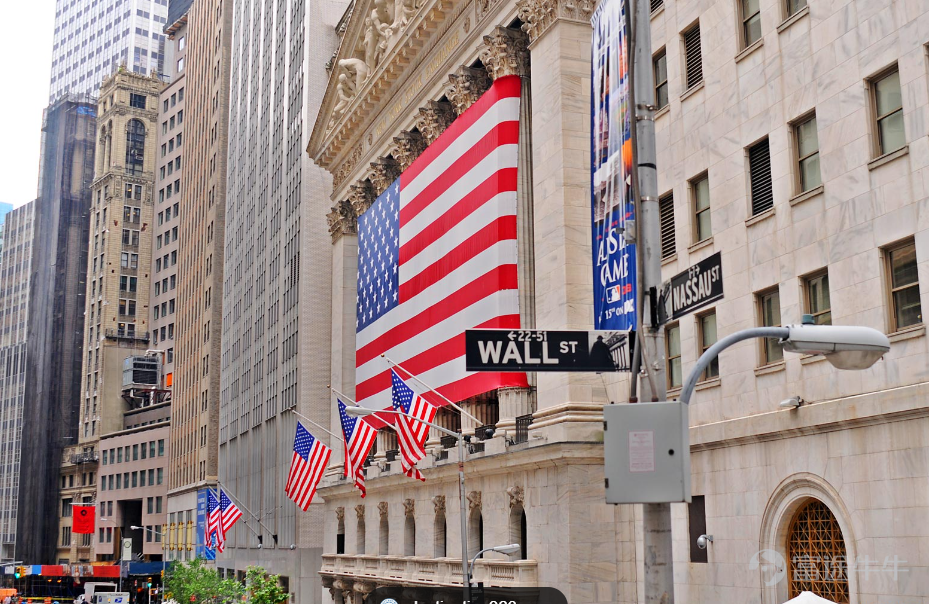
Now, the company is attempting to knock on Nasdaq's door again, carrying with it the stain of its past record. This is one of the most tumultuous and dramatic turnaround stories in the history of Chinese consumer stocks.
Death sentence, reprieve, parole
Over the past five years, Luckin's journey has resembled a prolonged 'financial version' of serving a prison sentence.
In October 2017, the first Luckin store opened in Beijing's Galaxy SOHO. In just 18 months, the number of stores surpassed Starbucks, making it the largest in China. In May 2019, it went public on Nasdaq and quickly became known as the 'Starbucks killer of China' in Wall Street’s eyes, with its market cap once nearing USD 12 billion.
But its moment of glory lasted less than a year. In April 2020, Muddy Waters published a short-selling report, and Luckin subsequently admitted to fabricating RMB 2.2 billion in revenue. Within two months, it was forcibly delisted, sending its stock price into a freefall.
At that time, almost everyone believed that Luckin Coffee had no chance of recovery. But it survived.
In February 2022, Luckin Coffee reached a $180 million settlement with the U.S. Securities and Exchange Commission (SEC) while completing its bankruptcy restructuring; in October 2023, it repaid all its debts ahead of schedule; in 2024, it became one of the first Chinese companies listed in the U.S. to pass the PCAOB on-site audit; and in June 2025, it opened two stores in Manhattan, New York, officially planting its flag in Starbucks' home turf.
It was not until Guo Jinyi’s statement of 'actively advancing' that everyone realized: Luckin Coffee is really coming back.
The final stretch is no longer distant.
To return to the main board, the most difficult steps have almost been completed by Luckin Coffee.
Replacing the old auditing firm, it hired the more reputable BDO; submitted three years of complete annual reports; paid an astronomical fine; fulfilled the audit regulatory requirements of both China and the U.S.; and completely reshuffled its senior management team, with nearly all executives from the previous era stepping down.
Now, only one final step remains before returning to the main board: submitting the Form 10 registration document.
Under the most optimistic timeline, Luckin Coffee could have the opportunity to return to Nasdaq in the first half of 2026.
Of course, uncertainties still exist. With nearly a year since Trump took office at the White House, although the Sino-U.S. audit agreement has not been terminated and the PCAOB continues to conduct on-site inspections as usual, the real risk now lies with the U.S. Congress: a proposal is being drafted to merge the PCAOB into the SEC, or even dissolve it entirely.
If this proposal is implemented in 2026, China may refuse to cooperate citing 'data sovereignty,' potentially causing Luckin Coffee's listing plans to be shelved once again. However, as of November 2025, the proposal remains stalled in the Senate, with the market generally believing that the likelihood of it passing in the short term is low.
Unlocking liquidity, with significant room for valuation expansion.
The biggest issue with the Pink Sheets market is 'liquidity suffocation.' The average daily trading volume is only a few million US dollars, making it inaccessible for most U.S. equity funds and ETFs. There is also a lack of options markets and margin trading mechanisms.
Historical experience shows that once a Pink Sheet stock successfully moves to the main board, both liquidity and valuation typically rise simultaneously. Currently, Luckin Coffee’s price-to-earnings ratio (PE) is approximately 10x, compared to Starbucks at 20x and Coca-Cola at 23x. Once it returns to the main board, analysts generally expect its reasonable PE to increase to between 18x and 22x, translating to a share price range of $55–$70, representing a potential upside of 50% to nearly 100% from current levels.
United States: A lifeline, but also a noose
The Chinese market is showing signs of saturation. In the third quarter of 2025, Luckin Coffee's same-store sales growth was only 6.8%, a record low. The price war of 9.9 RMB has become the norm, with gross margins falling from 18% in 2023 to 15.3%. By the end of the year, the total number of stores is expected to exceed 32,000, leaving limited room for further large-scale expansion.
The main battleground for future growth can only be overseas. However, the cost of 'going global' is substantial.
The cost of overseas expansion far exceeds expectations: as of mid-2024, the cumulative nine-month revenue of 45 stores in Singapore reached 91.4 million RMB, while operating expenses during the same period amounted to 167.7 million RMB, resulting in a net loss exceeding 76%. The pressure in the U.S. market is even greater, with single-store rents in Manhattan, New York, being 8–10 times higher than those in China’s first-tier cities, labor costs about six times higher, and compliance with local regulations requiring cash payments significantly undermining Luckin Coffee's fully digital operational efficiency, which had been key to its early success.
Daily sales per store at the New York pilot locations range between $1,000 and $3,000 (approximately 7,000–21,000 RMB), lower than the average in China (50,000–60,000 RMB). However, initial traction among Chinese communities, international students, and Generation Z has emerged, drawn by the combination of being an internet sensation and affordability.
More importantly, the super baking factory located in Kunshan, Jiangsu Province, has an annual production capacity of 30,000 tons and is now capable of directly supplying the North American market, significantly reducing supply chain costs. If the U.S. business can achieve break-even by 2028, Luckin Coffee’s globalization narrative will reach a pivotal turning point.
If break-even can be achieved in the U.S. by 2028, Luckin Coffee’s globalization story will truly reach an inflection point.
Has Luckin Coffee truly reformed?
This is the biggest question in every investor's mind. The answer is: the old Luckin Coffee is gone.
The founders, Zhiya Qian and Zhengyao Lu, who were banned due to financial fraud, have long exited the company, and their former associates have been thoroughly removed. Current Chairman Wu Gang and CEO Guo Jinyi control nearly 38% of the voting rights through Centurium Capital. Independent directors now make up over 50% of the board, and the audit committee is entirely composed of independent directors.
In Wall Street terms: this is a new Luckin Coffee with a governance structure that is 'fully compliant.'
Three Possible Futures
Optimistic Scenario(40%): A successful IPO by the first half of 2026, achieving breakeven in the U.S. market by 2028, with the stock price rising to $70 and market capitalization surpassing $20 billion.
Neutral Scenario(50%): The IPO timeline is delayed until the end of 2026 or 2027; the U.S. operations are still burning cash but not fatally so, with the stock price remaining in the range of $50–55.
Pessimistic scenario(10%): Deterioration of U.S.-China relations, expanded losses in U.S. operations, shelved IPO, and stock price retreats to around $20.
So,Is Luckin Coffee at $36 a good buy?
If you believe that the cash flow from its 26,000 stores in China can sustain overseas cash burn, that it has proven its reform over the past five years, that the U.S.-China audit agreement will not collapse in the short term, and that the valuation ceiling for consumer growth stocks always depends on 'liquidity' rather than a 'perfect story':
Thus, Luckin Coffee at USD 36 represents one of the cheapest consumer growth stocks of the past decade.
The sound of the second bell is drawing ever closer.
Risk Disclaimer: The above content only represents the author's view. It does not represent any position or investment advice of Futu. Futu makes no representation or warranty.Read more
Comments
to post a comment
2