
[Rewards] FCN: Earning Rental Income in a Volatile Market – Share Your Insights and Win 66 Points!

How to invest in popular stocks amid market volatility? Allocate FCNs like major investors.
Recently, market volatility has caused many investors' portfolios to experience fluctuations akin to a "roller coaster," with profits wiped out by sharp adjustments before they could exit. Particularly amid the ongoing tariff negotiations between China and the U.S., coupled with uncertainty surrounding the Federal Reserve's interest rate cuts, previously leading stocks have experienced pullbacks... Many fellow investors are torn between fear of missing out on bargain-buying opportunities and concerns that stock prices may not have bottomed out yet.
How can we navigate this situation? Perhaps adopting a diversified allocation strategy could help us mitigate volatility and overcome FOMO (fear of missing out). Today, Futubull Classroom will introduce a new investment tool—FCN, as a structured product, combines the investment characteristics of "fixed coupon payments and purchasing at lower levels." It satisfies the need for bargain hunting while ensuring steady income through fixed interest payments.
So, is FCN difficult to operate? What is the underlying profit logic? What are the associated investment risks? This article provides a detailed analysis.
A new approach to investing: using FCN to secure stable income and purchase at lower levels.
Experienced fellow investors may know that FCN has traditionally been an investment product exclusively for high-net-worth individuals, with only PI users eligible to participate. However, Futubull has now lowered the minimum investment threshold for FCN to 100,000 Hong Kong dollars, meaning retail investors can also readily adopt strategies previously reserved for major investors.
What makes FCN’s investment strategy so appealing? The key lies in these two investment scenarios:
1. Steady income: Cash flow in volatile markets
Fellow investors may be familiar with this experience: after finally deciding to purchase a desired stock, market fluctuations suddenly occur, causing the share price to fluctuate repeatedly, wiping out accumulated gains or even resulting in losses. After reluctantly cutting losses, the share price rebounds unexpectedly—should one chase the stock or miss the opportunity?
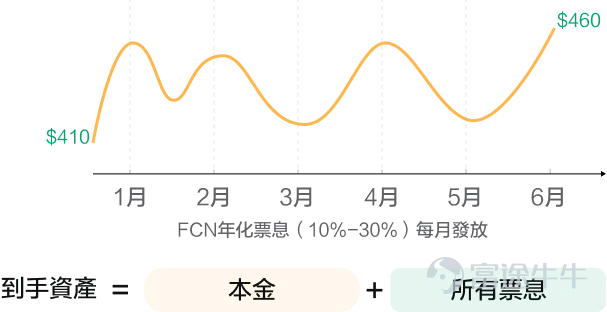
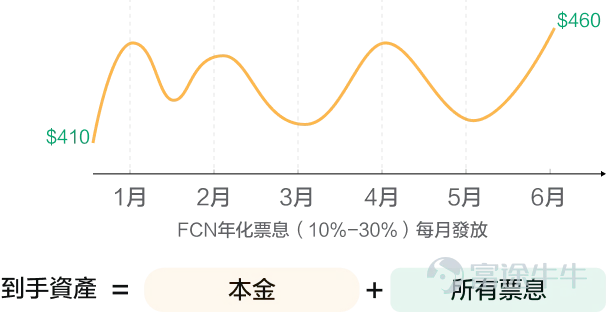
If we had purchased an FCN, half of these concerns would be alleviated! If the linked stock does not reach the knock-out price before maturity, we can recover our principal while receiving all the coupon payments. Typically, the coupon rate ranges from 10% to 30%, which may not exceed equity returns but ensures steady cash flow regardless of market conditions.
2. Buying at low prices: Eliminating FOMO (fear of missing out) sentiment.
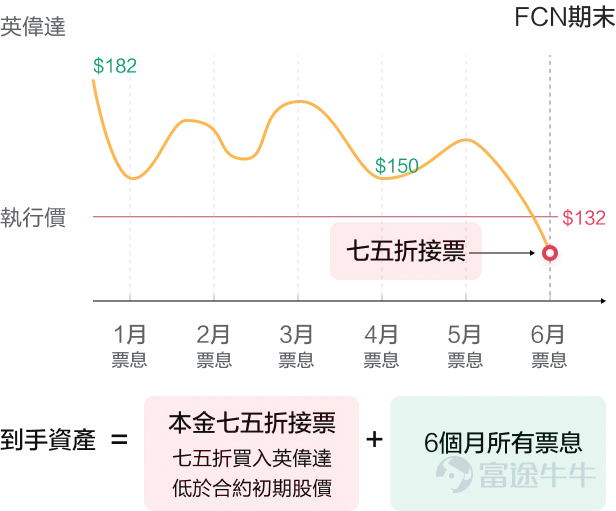
Another scenario arises when we are optimistic about a popular stock over the long term and are waiting for an opportunity to buy at a low price! For example, NVIDIA—while worrying about missing the entry point, there is also fear of catching a falling knife, such as purchasing at a high of USD 182. In this case, if we allocate funds into an FCN with a strike price of USD 132.75, we can recover our principal and collect interest if the stock price does not fall to that level; if the stock price falls below that level, we can collect interest and purchase the stock at a 25% discount.
Isn’t this a great deal? Not only is there an opportunity to earn income, but there is also the possibility of purchasing at a lower price, avoiding the erosion of investment confidence caused by FOMO.
In-depth Understanding of the 'Settlement Mechanism' in FCNs
From the above investment case, it is evident that investing in FCNs is not as simple as earning interest. The key lies in the risk points associated with settlement, which can be the main factor leading to potential losses. Therefore, gaining a thorough understanding of the settlement mechanism in FCNs is crucial!
Simply put, an FCN (Fixed Coupon Note) is essentially a combination ofFixed Income + Options.
When we purchase an FCN, the principal is divided into two parts: the majority is allocated to low-risk assets (e.g., bonds) for capital protection and to provide a base yield through fixed interest payments; a smaller portion is used to sell options, giving up potential gains from extreme upward movements in the underlying asset in exchange for additional enhanced returns, which form the primary source of the high fixed coupon.
At the product’s maturity, the decision to receive the principal or purchase the underlying asset depends on its performance. This is a critical point, and we can understand its operational logic through three scenarios.
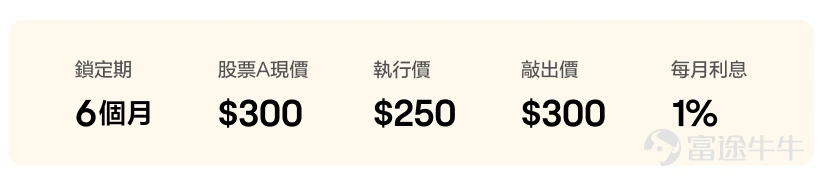
Case Study: Suppose an investor purchases an FCN linked to Stock A with $200,000. The relevant basic information is as follows:⬇️
Scenario One: If the product triggers the knock-out price during its term, it will be redeemed early.
Within six months, assuming that on the observation date of the third month, the closing price of Stock A is ≥ $300 (i.e., triggering the knock-out price), a knock-out event occurs. The FCN will mature early, allowing investors to immediately settle the note, recover the principal, and receive three months of coupon payments. The return is calculated as follows:
Accumulated accrued coupon = $200,000 × 1% × 3 = $6,000
Redeemed principal = $200,000
Investor's return = Principal + Accumulated accrued coupon - 100% Principal = $200,000 + $6,000 - $200,000 = $6,000
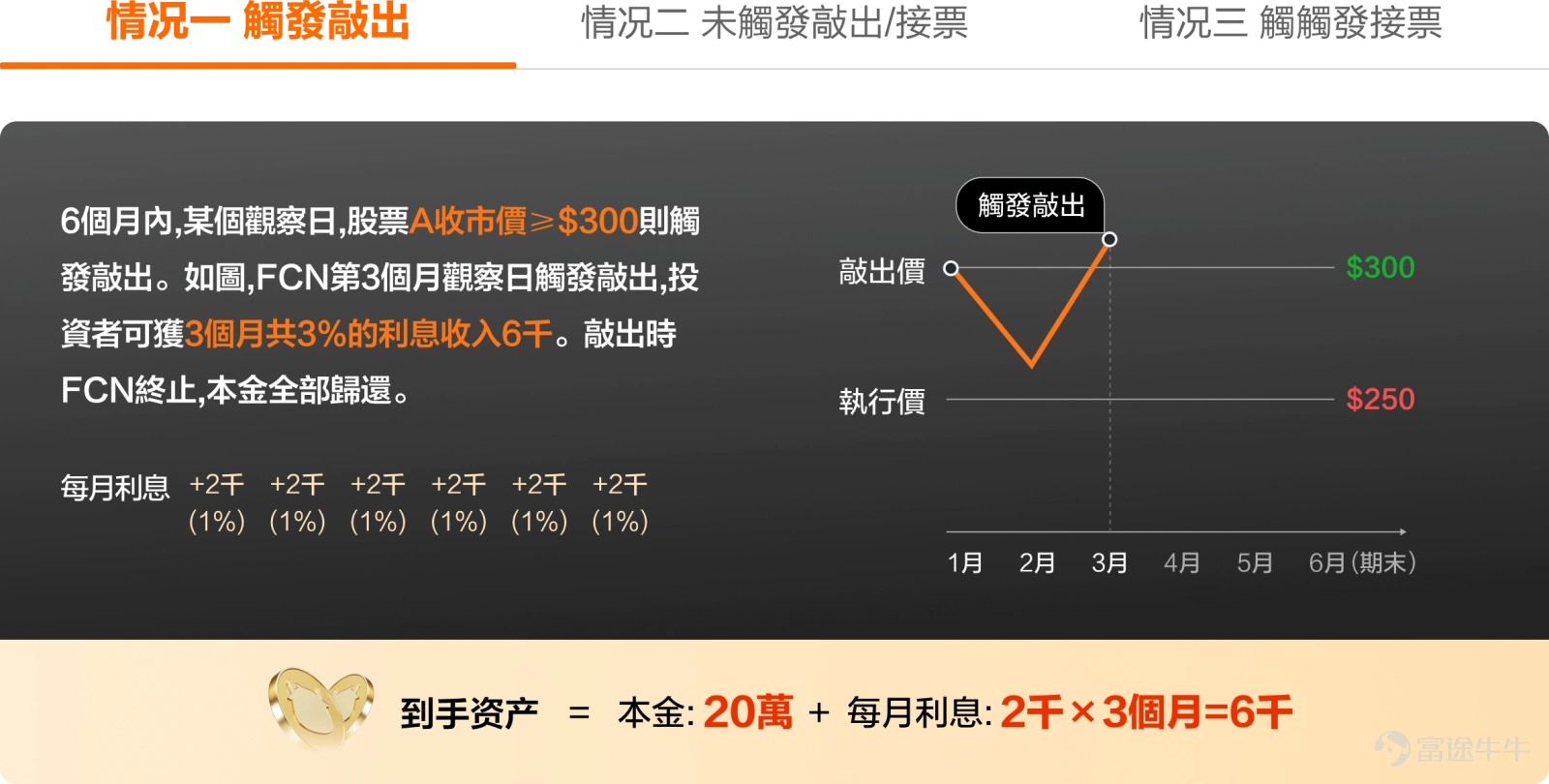
Scenario Two: At maturity, if the closing price of Stock A is below the knock-out price but ≥ the strike price.
Within six months, assuming that the daily closing price of Stock A has always been lower than the knock-out price (i.e., no knock-out event occurred) and at maturity the stock price did not fall below the strike price. In this case, investors can recover the principal and receive all six months of coupon payments.
Accumulated accrued coupon = $200,000 × 1% × 6 = $12,000
Redeemed principal = $200,000
Investor's return = Principal + Accumulated accrued coupon - 100% Principal = $200,000 + $12,000 - $200,000 = $12,000
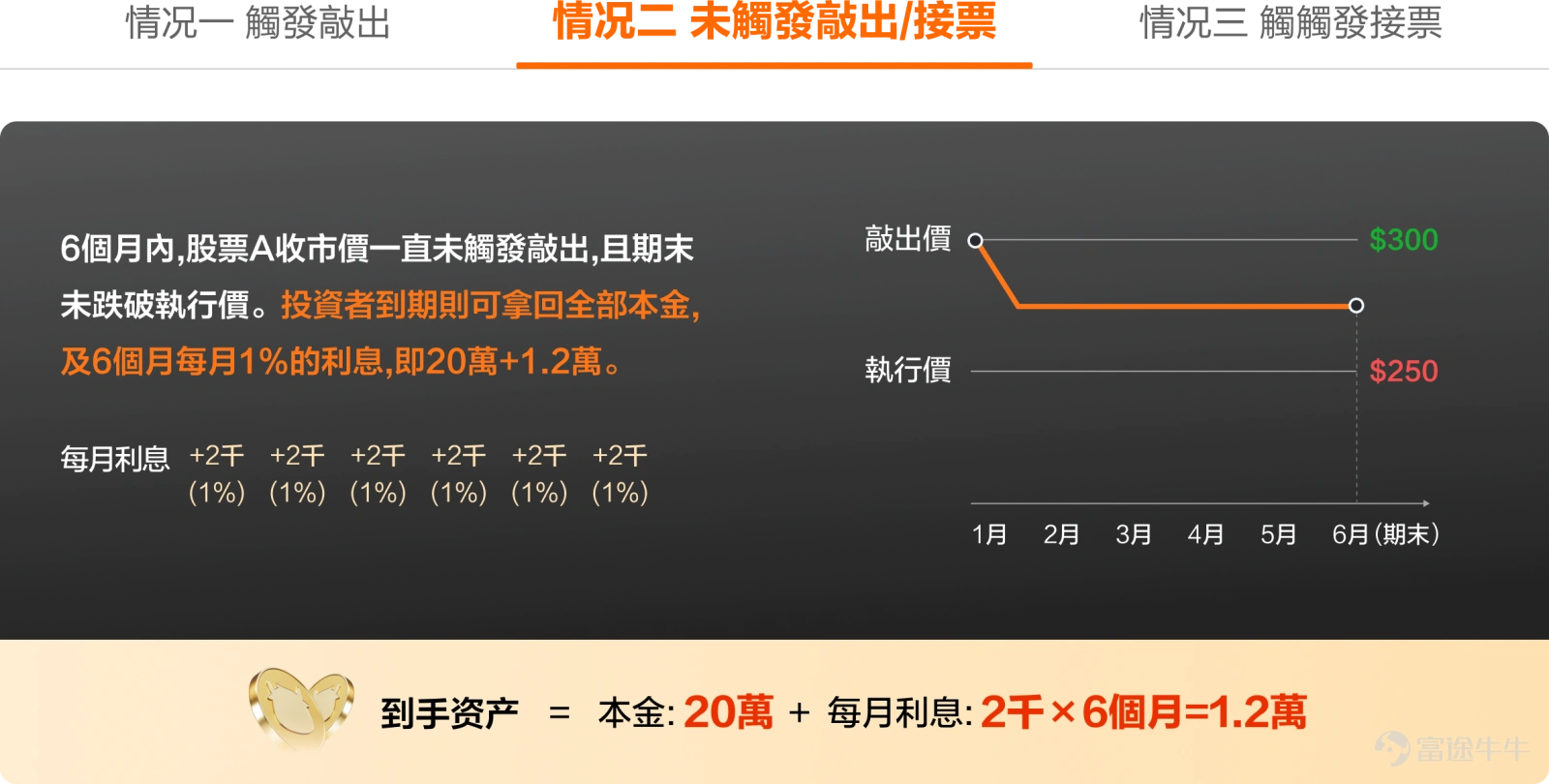
Scenario Three: Upon maturity redemption, the closing price of Stock A is below the knock-out price and also below the strike price.
Within six months, the closing price of Stock A never exceeded the knock-out price of $300, meaning no knock-out event occurred. At maturity, the price of Stock A fell below the strike price of $250. In this case, investors receive six months of coupon payments but are required to take delivery of Stock A at the strike price.
Accumulated accrued coupon = $200,000 × 1% × 6 = $12,000
Stock settlement: Number of shares = $200,000 / strike price of $250 = 800 shares. Assuming the current market price of Stock A is $200, the corresponding market value = $160,000.
Investor's return = stock settlement amount + accumulated coupon earned - 100% principal = $160,000 + $12,000 - $200,000 = -$28,000.
*Key Point: Since the stock price is below the strike price, investors are required to take delivery at the strike price, which may result in a loss of principal.
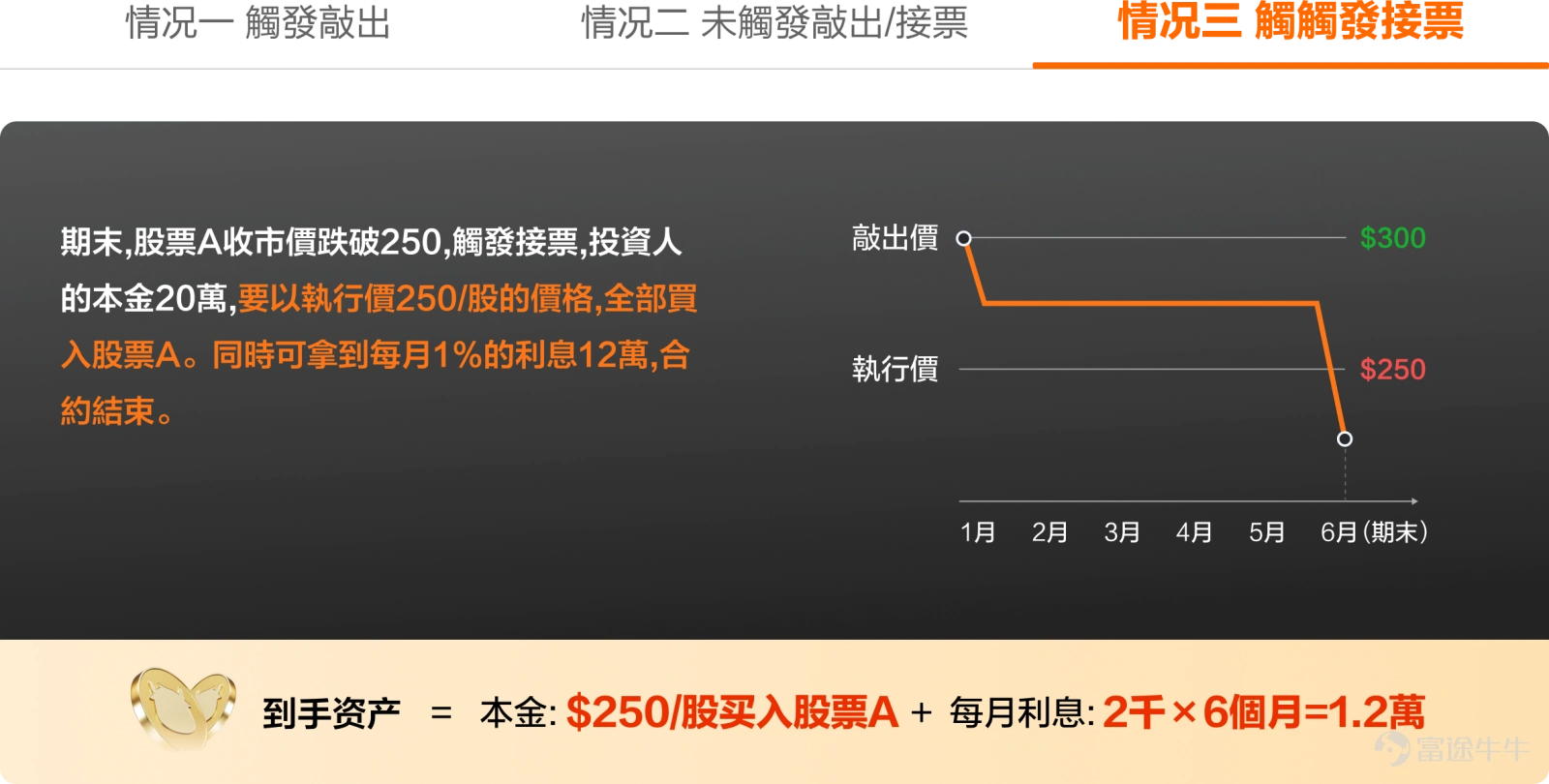
How to build an FCN investment defense?
After reviewing the above three return scenarios, we believe everyone has gained a deeper understanding of FCNs.
However, fellow investors may still have such concerns: while investing in FCNs offers high coupon returns, it also entails the risk of holding stocks, which could lead to temporary paper losses. The ultimate return on this investment depends on the future performance of the stock.Given this, what market conditions are suitable for investing in FCNs, and how should one choose them?
Step 1: First, clarify investment expectations.
– If you believe that the underlying asset will experience fluctuations or slight increases over a period of time, directly holding stocks may subject you to repeated volatility. In contrast, FCNs can provide stable cash flow and enhance returns.
– If you are optimistic about the long-term trend of the underlying stock, you may be willing to purchase the stock at a relatively lower price for long-term positioning.
Step 2: Carefully select the underlying asset.
– Before investing in FCNs, it is essential to thoroughly research the basket of stocks linked to the product. Investing in FCN products tied to stocks you do not understand or are not confident about exposes you to significant risks.
Step 3: Fully comprehend the product prospectus.
– Investors must clearly understand key elements before purchasing FCNs, including the underlying assets, principal, duration, annualized coupon, strike price, knock-out price, observation dates, etc. Calculate potential returns in advance and assess whether you can bear the associated risks.
– Evaluate the issuer's creditworthiness. The essence of an FCN is a contract between the investor and the issuing institution. Choosing reputable and well-established large institutions is more reliable.
A step-by-step guide to operating FCNs
By this point in the learning process, fellow investors may feel eager to get started. Next, Sir Niu will walk you through a real-world product example, teaching you how to operate FCNs step by step.
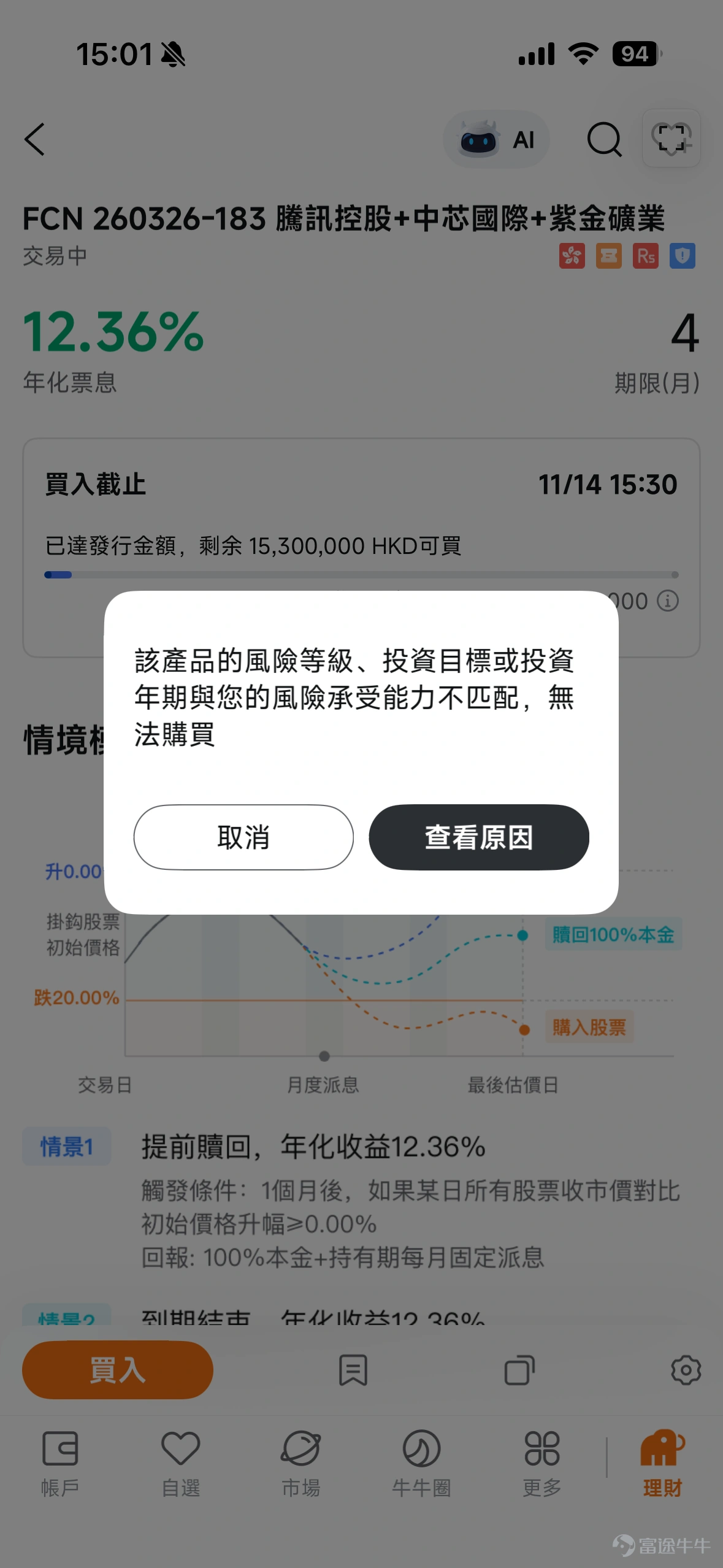
Operation Path: Open the Futubull APP - "Discover" - "Wealth Management" - "Structured Products" - "FCN"。Fellow investors who are interested can also click on the image below to go directly to the product page >>

Using the above image as an example, suppose we choose to link toTencent + SMIC + Zijin Miningthe FCN. First, let’s understand its key information:
Product term: 4 months
Underlying assets: Tencent + SMIC + Zijin Mining
Annualized coupon rate: 12.36%, meaning that holding this FCN yields an annualized interest rate of 12.36%
Exercise level: 80%, indicating a 20% stock price decline buffer before triggering a conversion into physical shares if breached.
Knock-out level: 100%, meaning if the stock price rises more than 0% relative to the initial price, early redemption of principal and interest will occur.
Knock-out type: Daily observation
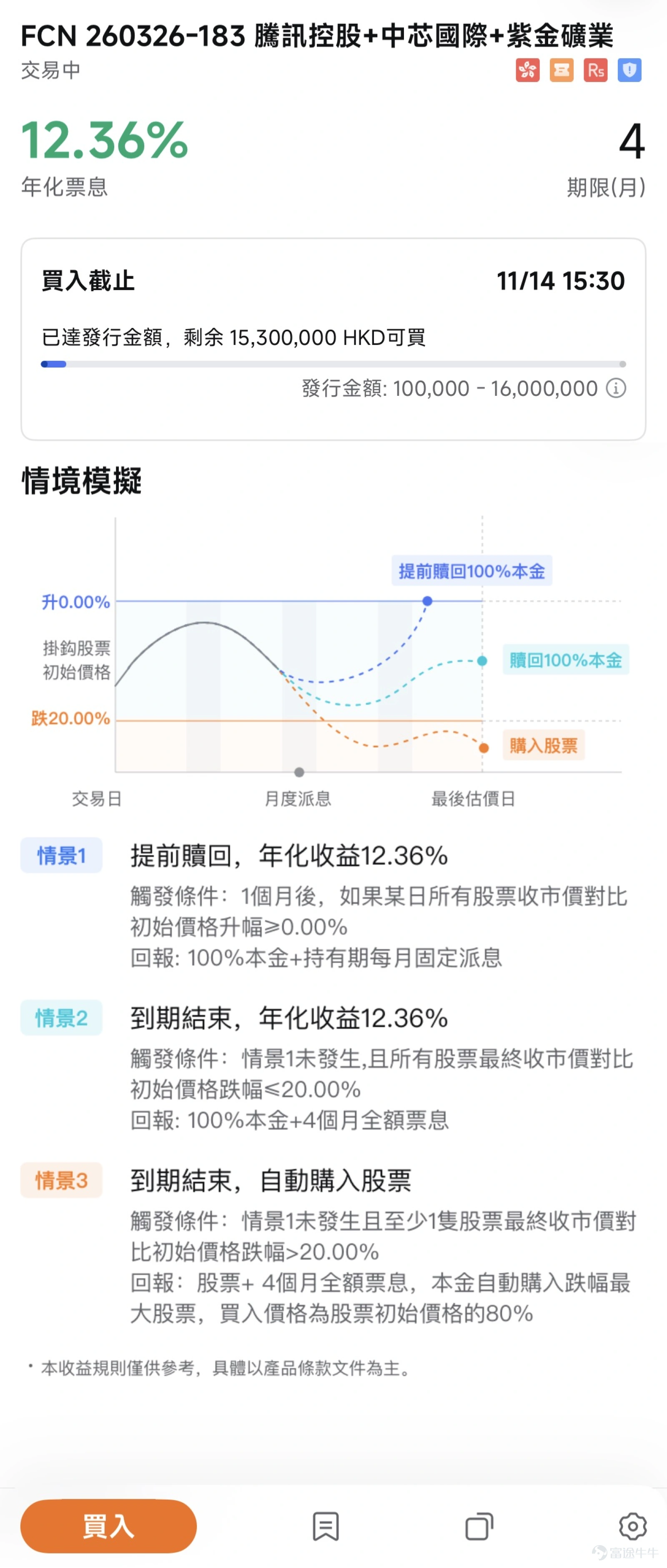
The following analyzes three investment scenarios for this FCN:
Scenario One: Early redemption with an annualized return of 12.36%
One month later, during daily observation, if the closing price of any of the three stocks rises more than 0% compared to the initial price on any given day, early redemption will be triggered. Investors will receive 100% of their principal plus fixed monthly dividends during the holding period.
Scenario Two: Expiry with an annualized return of 12.36%
If early redemption does not occur and the final closing price of all stocks falls by no more than 20% compared to the initial price, investors will receive 100% of their principal plus accumulated dividends over four months.
Scenario Three: Expiry with automatic stock purchase
If early redemption does not occur and at maturity,at least one stock (Tencent, SMIC, or Zijin Mining)The final closing price fell more than 20% compared to the initial price. For example, at maturity, the prices are as follows:
Tencent: 105% of the initial price (a 5% increase)
SMIC: 70% of the initial price (a 30% decrease)
Zijin Mining: 90% of the initial price (a 10% decrease)
In addition to receiving the full coupon for six months,the investor's principal will automatically be used to purchase the stock with the largest decline (e.g., SMIC in this hypothetical case).The purchase price will be 80% of the stock’s initial price.
Investment Threshold Information
For first-time investors in FCN products, if a suitability assessment has not been conducted, it will be necessary to complete the relevant evaluation. Upon meeting the specified requirements, participation in the investment will be permitted.
Interested fellow investors can click on the image below to jump directly to the FCN product page and immediately select your preferred product >>
 If you have any questions during the investment process, feel free to leave a comment in the comment section, and Mr. Niu will respond promptly upon seeing it.
Disclaimer: This content does not constitute an offer, solicitation, recommendation, opinion, or any guarantee regarding any securities, financial products, or instruments. This content is issued by Futu Securities International (Hong Kong) Limited or its group companies, compiled and published by Futu Securities, and has not been reviewed by the Hong Kong Securities and Futures Commission. Investing in structured investment products is not equivalent to investing in their underlying assets. Investors are exposed to the credit risk and insolvency risk of the issuer, guarantor, and/or other identified counterparties (as applicable). Investors should also note that the issuer may terminate the investment prematurely. Investment involves risks, and investors should proceed with caution and understand that they may lose the entire investment amount. Before making any investment decisions, investors should carefully read and fully understand the sales documents and terms and conditions of the relevant investment product (including the risk disclosures contained therein), and should not rely solely on this content when deciding to invest in structured investment products. Where necessary, appropriate professional advice should be sought.
Risk Disclaimer: The above content only represents the author's view. It does not represent any position or investment advice of Futu. Futu makes no representation or warranty.Read more


Comments (178)
to post a comment
251
115