
2,999 yuan per injection: 'Youth' has become more affordable
"Finally, there's a童颜针 that I can afford." At the end of last month, Beijing white-collar worker Yu Xinyue (pseudonym) thought when she saw the launch of the "Miracle童颜3.0" product on Xinyang for 2999 yuan.
It is important to know that the童颜针, which prominently features significant and natural anti-aging effects, is generally priced above 10,000 yuan. However, the童颜针 customized by Xinyang in collaboration with Xihong Biotechnology has directly brought the price down to within 3,000 yuan.
With the sudden drop in prices, discussions quickly became polarized. Some are delighted, exclaiming that the era of anti-aging equality has finally arrived; however, others who are more cautious express concerns: Is such a low-priced treatment reliable?

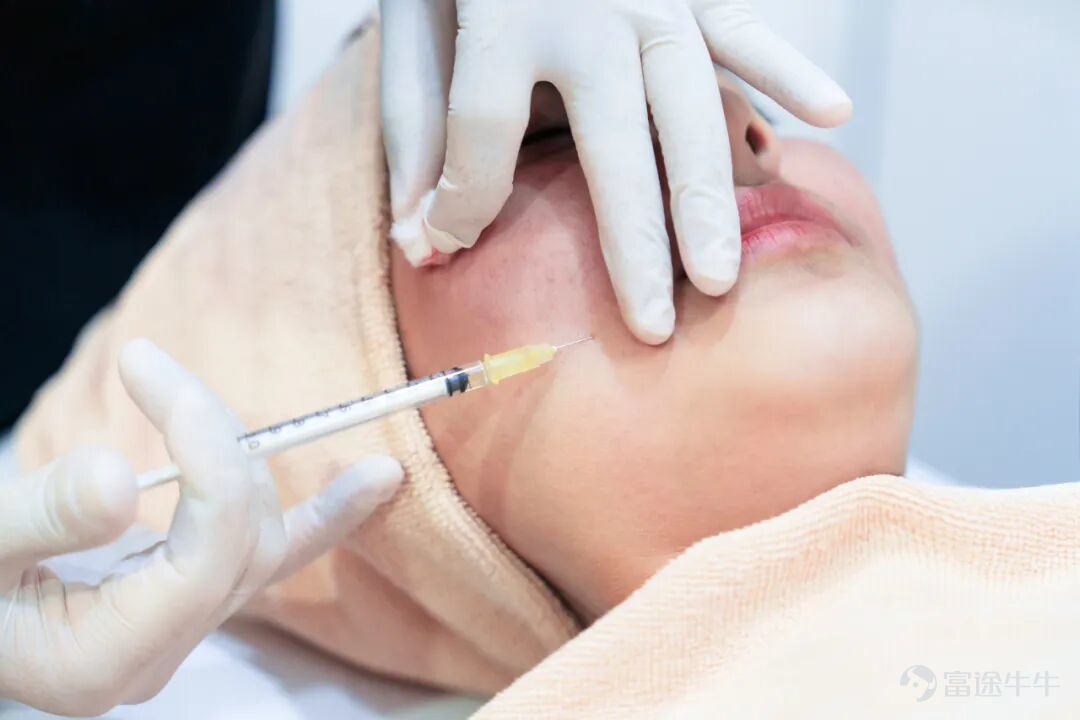
Photo/Creativity of Tuchong
"Lowest price in history"
In recent years, the "baby face needle" has undoubtedly been one of the buzzwords in the medical beauty industry.
The popularity partly stems from the growing consumer demand for youth. According to Meituan's data from last year, about 84% of the demand for medical beauty is concentrated on maintenance and anti-aging projects.
On the other hand, in principle,童颜针 (youth-giving injections) whose core components are poly-L-lactic acid (PLLA) or poly-DL-lactic acid (PDLLA), belong to medical aesthetic regenerative injectables. They achieve facial tightening and filling effects by stimulating the regeneration of autologous collagen.
Compared with hyaluronic acid, which achieves physical filling, 童颜针 (youth-giving injections) are regarded by the industry as a longer-lasting and more natural anti-aging product, making them increasingly favored by consumers.
Data from Arterial Network shows that, calculated at ex-factory prices, the market size for the first domestically approved youth-giving injection in 2021 was just over RMB 100 million; last year, this figure was estimated to exceed RMB 3 billion, and it is expected to reach tens of billions within the next five years.
Of course, the cost of using 童颜针 (youth-giving injections) to maintain youthful appearances is not cheap. Taking Aivi Long, which holds the first Class III medical device registration certificate for 童颜针 (youth-giving injections) in China, as an example, leveraging its initial market exclusivity and first-mover advantage, the manufacturer Changchun Shengboma has maintained its official recommended price at RMB 18,800 per vial.
Even after subsequent approvals and launches of products such as Aimedic's Runbai Angel, Jiangsu WuZhong's agency product Ellansé, Galderma's Pluryal, Puliyan’s Puriel, Four Rings Medicine's Sifuyan, and Xihong Bio's Lizhenran, the price of 童颜针 (youth-giving injections) remained consistently above RMB 10,000.
This time, So-young International’s announcement of the historically lowest price of RMB 2,999 is not the first attempt to lower the price of 童颜针 (youth-giving injections).
Public reports show that in 2023, So-young launched "Miracle Youth 1.0" using Puriel, but the price of RMB 4,999 was less than a fraction of Puriel's official recommended price of RMB 16,800; last year, So-young introduced "Miracle Youth 2.0" using Aivi Long, compressing the manufacturer-controlled price of RMB 18,800 down to RMB 5,999. Both rounds of these low-price attempts provoked dissatisfaction from manufacturers, with Puriel and Shengboma successively issuing letters to So-young demanding product removals and halting supplies.
Perhaps precisely because of this, at the September 23 launch event for "Miracle Youth 3.0", So-young CEO Jin Xing emphasized that this was a customized youth-giving injection product developed in collaboration with Xihong Bio, and the latter does not interfere with pricing at the institutional end.
This "customization + autonomous pricing" model has not only brought the price of 童颜针 (youth-giving injections) to its historical low, but also caused significant shockwaves within the industry.
Is it reliable?
After all, behind this matter lies the deep博弈 (game) between upstream manufacturers and midstream platforms and institutions in the medical aesthetics industry.
Wu Zupeng, co-founder of consumer healthcare SaaS service provider Lan Shi Technology, pointed out that the core of So-young International's actions is to deconstruct the discourse power of upstream manufacturers over the entire medical aesthetics value chain. “For a long time, upstream manufacturers have taken away most of the profits in the medical aesthetics industry, while the midstream (medical aesthetics institutions) and downstream (customer acquisition channels) have only managed to scrape by with meager profits. Upstream controls the pricing power, and end consumers can only reluctantly accept the prices.”
Taking the light medical aesthetics track to which Sculptra belongs as an example, data from Qianzhan Industry Research Institute shows that the net profit margin of upstream manufacturers is around 30%, while the net profit margins for the midstream and downstream are 10% or even lower. Wu Zupeng stated that So-young, through offering Sculptra at a low price, is attempting to break this situation and bring the market back to a reasonable range.
“The market has long suffered under the dominance of upstream players, and I always felt someone needed to rise up against it.” Jin Xing also did not shy away from expressing his determination to challenge upstream manufacturers during a media interview.
However, a key question remains: Is the price of 2,999 yuan reliable?
To answer this, we must first examine the cost structure of Sculptra.
Lin Xianping, associate professor at City College of Zhejiang University and standing deputy secretary-general of the Expert Think Tank Committee of China City Experts, stated that the costs of Sculptra mainly include raw materials, R&D, production processes, certification approvals, marketing, and channel expenses. According to his understanding, raw material costs account for 10%-20%, R&D and clinical testing account for 15%-25%, production processes and quality control account for 20%-30%, medical device certification and approval fees account for 10%-15%, and marketing and channel expenses account for 30%-40%.
Furthermore, according to Zhan Junhao, founder of Fujian Huace Brand Positioning Consulting, for Sculptra products priced at tens of thousands of yuan on the market, brand premium and channel profits may account for more than 70%.
This means that there is indeed some level of artificial inflation in the current market price of Sculptra.
However, Wu Zupeng stated that although the production cost of Sculptra is not high, its R&D costs and market expenses, especially the cost of obtaining a Class III medical device registration certificate, are extremely high, costing between 15 million and 30 million yuan for this process alone. “After the product is launched, manufacturers will certainly need cash flow recovery and profit demands, and considering the product lifecycle, a higher unit price is set to achieve these objectives.”
By comparison, as a midstream player, So-young International faces less cost pressure related to research and development and compliance compared to upstream manufacturers. Meanwhile, by adopting a direct procurement model that bypasses multi-tiered agency networks, the platform is able to pass on the intermediary price differential, thus achieving lower prices.
Additionally, Wang Peng, associate researcher at the Beijing Academy of Social Sciences, further noted that So-young International may leverage its low-priced Fairy Needle product to attract traffic, promoting the expansion of its self-operated clinics and forming a closed-loop system from low-cost customer acquisition to value-added services, which could create economies of scale to offset base costs.
From this perspective, So-young International's low-priced Fairy Needle appears more like a platform-level pricing experiment. However, its sustainability and market acceptance still require time to evaluate.
The market remains far from full competition.
In any case, this price fluctuation has already sparked broader ripple effects.
In Zhan Junhao’s view, the RMB 2,999 product can help promote the popularization of Fairy Needle treatments, allowing more consumers to experience the product and lowering the threshold for medical aesthetics consumption.
For both consumers and institutions, this will mean more choices.
However, behind the price reduction lies latent concern.
On one hand, the hidden risks faced by consumers may be underestimated. Zhan Junhao expressed concerns that under the guise of low-priced Fairy Needle products, some medical aesthetic institutions might cut costs in procedural aspects to maintain profitability—such as reducing doctor training or simplifying operational processes—or impose hidden charges through pre-procedure consultation fees or post-procedure recovery packages.
On the other hand, the restructuring of profit distribution may exacerbate industry polarization. When platforms disrupt the monopoly of upstream brands and channels through subsidies, profits begin to shift towards terminal institutions and doctors. While this might attract high-quality medical resources and drive technological democratization in the short term, in the long run, leading medical aesthetic institutions with scale and standardized operations will capture more traffic, while numerous small- and medium-sized clinics may be forced into price wars, further squeezing their survival space.
A deeper risk lies in the compromise of quality and safety standards.
As at least nine collagen-stimulating injection products have been approved for market entry, with more still under review, the increasing supply will inevitably intensify competition. Wu Zupeng stated, “In order to survive and develop, manufacturers will inevitably choose a ‘price-for-volume’ strategy, making continuous price reductions an inevitable trend.”
Wang Peng warned that if the market becomes trapped in an irrational price war, it could lead to issues such as reduced raw material purity or simplified production processes. A practitioner from the upstream aesthetic medicine industry also admitted, “Profit compression strategies may affect product quality stability and the industry’s innovation momentum, posing potential risks to consumer rights and the healthy development of the sector.”
The market may need to strike a new balance between premium pricing and affordability. In the future, after further validation by consumers, a tiered and stratified brand landscape may emerge, with the high-end market dominated by brands like Ellansé, while the mid-to-low-end market may see more cost-effective options like So-young International custom models.
“Ultimately, collagen-stimulating injections will become consumer goods, similar to skincare products,” Wu Zupeng predicted. “Only when the market is fully competitive will consumers be able to enjoy real benefits.”
Author: Shi Hanxu
Source: China Newsweek
Risk Disclaimer: The above content only represents the author's view. It does not represent any position or investment advice of Futu. Futu makes no representation or warranty.Read more

Comments
to post a comment
1