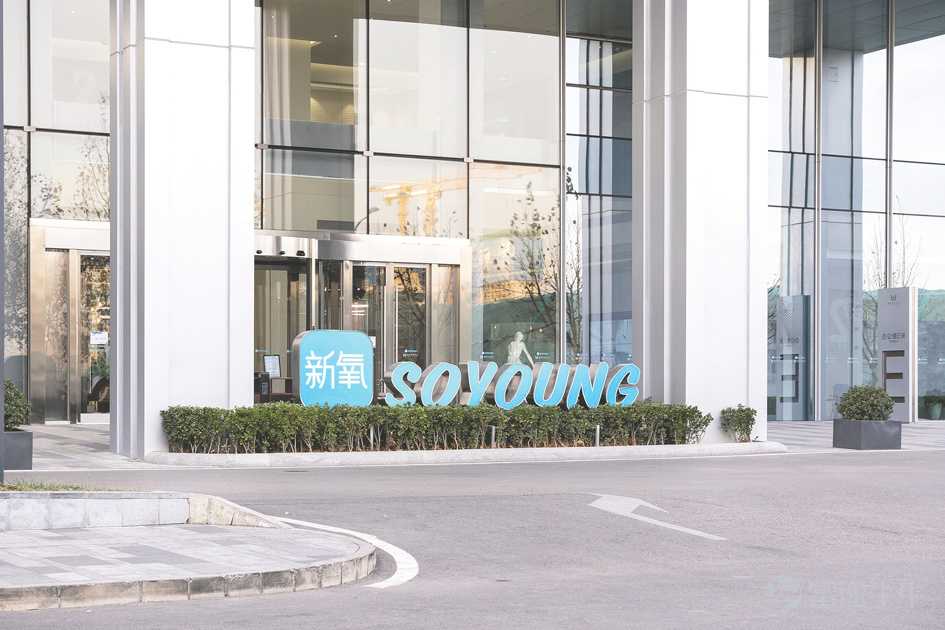

The "price war" in medical aesthetics has begun, with New Oxygen launching the 2999 yuan "youthful facial injection."
The "price war" has begun in China's medical beauty market.
On September 23, the internet medical beauty platform Xinyang (Nasdaq: SY, stock price $3.900, market value $387 million) officially launched the new generation of "Miracle Youth Injection 3.0," directly lowering the price of the youth injection to 2999 yuan, setting a new historical low in the industry. Previously, the average market price of "youth injections" in mainland China was generally above 10,000 yuan.
The significant price reduction this time is behind New Oxygen's attempt to break the long-standing high-price "vicious cycle" in the medical beauty industry with a low-price strategy, promoting the industry to shift from a "seller's market" to "mass consumption" through self-operated chain clinics and customized supply chains.
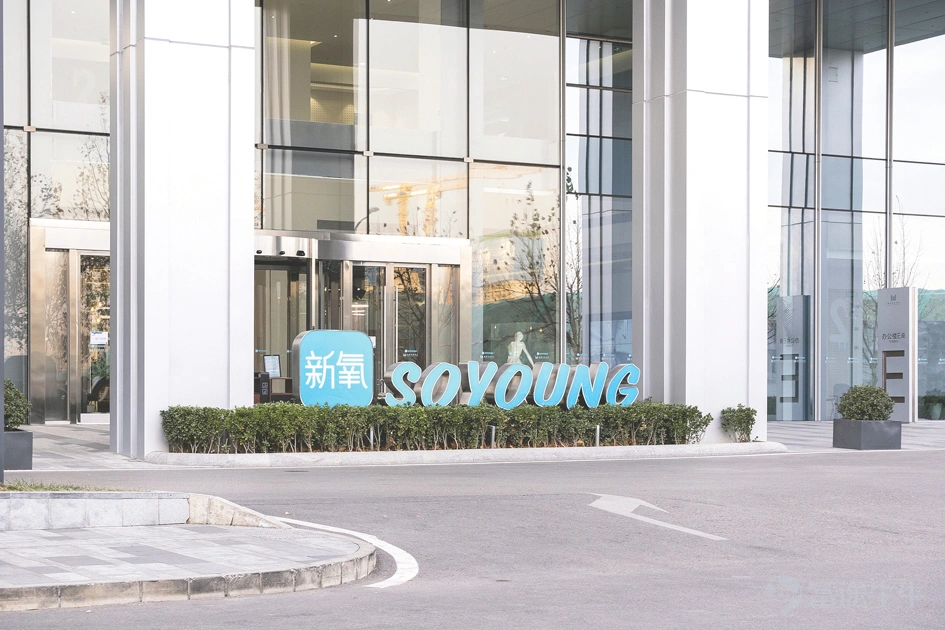
Visual China
In the view of Jin Xing, the founder and CEO of Xinyang, a low-price strategy is also the key to breaking the dilemma in the medical beauty industry. He stated bluntly, "If we want to completely eliminate 'black medical beauty' in the Chinese market, we can only make the prices of compliant medical beauty accessible to consumers."
However, reporters from the Economic Daily noticed that at the time of launching this strategy, So-young International is under performance pressure. In Q2 2025, So-young’s total revenue decreased by 7% year-on-year, with a net loss of RMB 36 million, turning from profit to loss. So-young’s CFO Zhao Hui stated during the earnings call that the main reason for the decline in performance was the decrease in the number of healthcare service providers subscribing to the platform’s information services.
Can So-young International's offline chain business, which is still in the investment phase, shoulder the responsibility of driving performance after the transformation? Whether the low-price strategy can support its ambition to disrupt the industry landscape remains to be seen.
In order to reduce supply chain dependency
As a regenerative anti-aging medical aesthetics project, the core principle of the “Baby Face Needle” lies in stimulating the body’s own collagen regeneration to achieve shaping and firming effects.
In recent years, the “Baby Face Needle” has become one of the fastest-growing sectors in China’s medical aesthetics market. According to data published by So-young, the B-end market size of the “Baby Face Needle” is expected to reach RMB 4.2 billion in 2025. When the “Baby Face Needle” first entered the Chinese market in 2021, its scale was only RMB 500 million, and the market is currently in a stage of rapid expansion.
Apart from market potential, So-young’s decision to focus on the “Baby Face Needle” is also due to its clear treatment principles and definitive results. Jin Xing pointed out in an interview with media including reporters from the Economic Daily: “In our view, the Baby Face Water Glow may become an evergreen and increasingly significant sector.”
However, the launch process of the “Miracle Baby Face” series has not been smooth sailing, with ongoing friction between So-young and upstream manufacturers.
Jin Xing revealed that versions 1.0 and 2.0 of the “Miracle Baby Face” used Puriyan and Shengboma’s Aivilun products, respectively, with manufacturer price controls set at RMB 16,800 per vial and RMB 18,800 per vial, while So-young’s pricing was just RMB 4,999 per vial and RMB 5,999 per vial. These two attempts at low pricing both triggered strong backlash from the manufacturers, with Puriyan and Shengboma successively sending letters to So-young to cut off supplies and demand the removal of related products.
To reduce supply chain dependency, So-young eventually partnered with Xihong Bio to customize the “Miracle Baby Face 3.0,” specifically designed for the water glow method, bringing the price of the “Baby Face Needle” down directly to RMB 2,999 per vial.
How does So-young ensure service quality under its low-price strategy? Jin Xing explained that So-young’s low pricing is achieved through economies of scale and a low-margin strategy. “We achieve price reductions by compressing customer acquisition costs and reducing costs unrelated to treatment.”
In the second quarter of 2025, the gross profit margin of So-young International's chain clinics was 24.3%. Jin Xing stated that the gross profit margin in the medical aesthetics industry generally exceeds 50%. So-young International’s adoption of a low gross profit margin strategy aims to promote the entire industry towards a virtuous cycle. 'We also hope to inspire the industry. In fact, the medical aesthetics industry does not necessarily have to be highly profitable or charge exorbitant prices to maintain a healthy business model.'
Offline Business Becomes New Growth Engine
In November 2024, So-young International announced the launch of its new lightweight medical aesthetics chain brand, 'So-young Youth Clinics.' As of September 2025, the company has opened 37 stores, with 15 more under preparation, and expects to exceed 50 stores by the end of the year, covering 16 cities.
Reporters from the National Business Daily noted that the chain clinic business did not disappoint, becoming a new growth engine for So-young International’s performance. In the second quarter of 2025, So-young International’s offline business revenue surged 426.1% year-on-year to RMB 144 million, surpassing online business for the first time and becoming the company’s largest source of revenue.
However, this aggressive transformation also brought significant challenges. Due to the accelerated contraction of its traditional platform information services business, So-young International’s total revenue in the second quarter of 2025 decreased by 7% year-on-year to RMB 379 million, resulting in a net loss of RMB 36 million. Jin Xing once candidly admitted in a media interview: 'The old and new businesses are offsetting each other, which is reflected in the financial statements, and this is currently the most difficult stage.'
According to Jin Xing, some leading business groups on the platform have fully withdrawn cooperation due to So-young International's establishment of self-operated clinics. However, regarding the necessity of the transformation, Jin Xing remained resolute: 'Although the new business impacts the old business, only the new business can ensure greater survival and development space for the company in the future.'
In this interview, Jin Xing also stated that the current chain business, due to bearing mid- and back-office costs, remains in an overall loss-making phase. However, individual stores have already achieved monthly profitability, and it is expected that an overall profitability inflection point will be reached as the scale expands.
Notably, it is not difficult to observe from the rapid iteration of 'baby face needles' that So-young International still appears relatively passive when facing upstream supply chain challenges as it ventures into the chain clinic brand sector.
To take the initiative, So-young International has begun strategic deployments at the supply chain level. On one hand, through acquisitions and agency agreements, it secures key equipment and product resources; on the other hand, when asked whether it would develop its own branded medical aesthetics products, Jin Xing clearly stated: 'Yes, for internal use, while also selling to other institutions.'
Essentially, So-young International is fighting an 'ecosystem battle.' By cutting prices, opening stores, and deploying the supply chain, So-young International is attempting to explore a sustainable mass-market path for China's medical aesthetics industry. Nevertheless, this transformative journey remains fraught with challenges, and before fully establishing competitiveness, So-young International will continue to face dual pressures from the supply chain and costs.
Medical aesthetics industry trapped in a vicious cycle
In the view of Jin Xing, China's medical aesthetics industry is currently caught in a 'vicious cycle.'
High upstream finished product costs force institutions to raise prices to cover expenses, while consumers, deterred by high prices, turn to unlicensed medical aesthetics services or seek treatment overseas. This ultimately leads to declining industry trust, rising customer acquisition costs, and further price hikes borne by consumers.
Jin Xing pointed out that the persistent existence of China's 'unlicensed medical aesthetics' fundamentally stems from excessively high domestic prices for medical aesthetic procedures. 'Licensed products are too expensive, forcing many consumers to resort to unlicensed alternatives.'
To push the industry into a virtuous cycle, economies of scale across the entire industry are necessary. Jin Xing stated that when medical aesthetics prices decrease, penetration rates will rise, leading to a larger consumer base, increased treatment volumes, higher product usage, reduced production costs, and further price reductions at the consumer level, thereby attracting even more customers and fostering a positive feedback loop.
Currently, the demographics and consumption habits of medical aesthetics customers are undergoing noticeable changes. Jin Xing revealed that high-end consumers account for 10% of the medical aesthetics market but contribute half of total sales revenue; the other half comes from working women and middle-income females, who make up 90% of the market and represent the fastest-growing segment.
According to the '2025 Medical Aesthetics Industry White Paper' jointly released by Roland Berger and Meituan Medical Aesthetics, China’s medical aesthetics consumer base exhibits a trend of being 'youth-led with middle-to-high age groups following closely,' as the market transitions from rapid growth to high-quality development. 'Light medical aesthetics,' characterized by minimally invasive procedures, quick recovery, and natural results, will become the core driver of industry growth, significantly lowering the barrier for consumer trials, with its share expected to rise from 50% in 2020 to 64% by 2030.
According to observations by reporters from The Economic Daily, since 2025, many large internet companies have been ramping up their investments in medical aesthetics. On July 14, the first offline medical aesthetics clinic operated by JD Health opened in Yizhuang, Beijing, followed by a second outlet in Guomao. Meanwhile, Meituan continues to deepen its platform business, with prices for many medical aesthetic procedures becoming more transparent and further reduced.
The entry of more major platforms will undoubtedly trigger a new round of market competition. In Jin Xing’s view, consumers are witnessing an evolution between traditional medical aesthetics and emerging light medical aesthetics chains. 'We are actually pleased to see more competitors entering the market, driving the development and expansion of this new business model in medical aesthetics chains.'
Source: NBD (National Business Daily)
Author: Li Yutong, reporter from National Business Daily | Editor: Wei Wenyi, National Business Daily
Risk Disclaimer: The above content only represents the author's view. It does not represent any position or investment advice of Futu. Futu makes no representation or warranty.Read more

Comments
to post a comment
1