
[A Good Book for You] What exactly are we talking about when we discuss fairness?
Chongyang Speaking
Mr. Charlie Munger has a famous saying: "In my life, I have never seen anyone who is wise without reading. Not one. Warren (Buffett)'s reading volume may astonish you. I am like him. My kids joke that I am a book with two legs."
Friends familiar with Chongyang surely know that reading has always been a highly regarded path for growth.
Now, we hope to persist in reading together with you.
In each column, we will continue to discuss books, which may include book reviews, reading lists, or excerpts.
Each issue will have a communication topic, and we hope you will interact with us through comments.
We select high-quality books and will randomly send them out based on the quality of the comments.
The world is vast, and time is desolate; reading generates the power of thought. May you feel that your thoughts have depth and direction, opening up everywhere, allowing you to wander freely.
Notice: The content published by this public account is for reference only and does not constitute any investment advice or sales offer. If you are interested in Chongyang products, feel free to inquire.
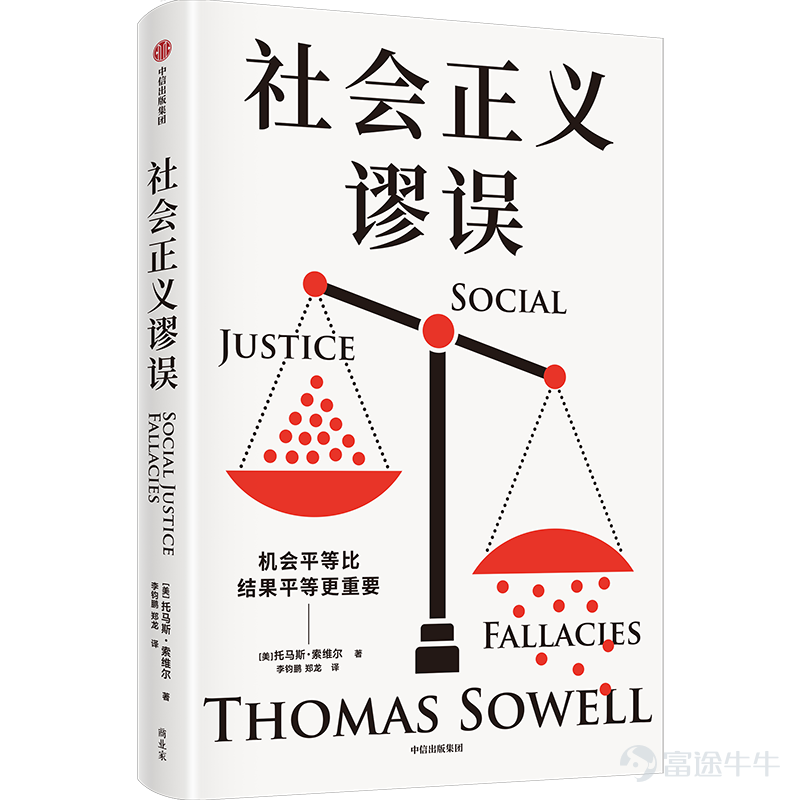
【Good Book】 Issue 301: "The Fallacy of Social Justice"
![Chongyang Speaking Mr. Charlie Munger has a famous saying: "In my life, I have never seen anyone who is wise without reading. Not one. Warren (Buffett)'s reading volume may astonish you. I am like him. My kids joke that I am a book with two legs." Friends familiar with Chongyang surely know that reading has always been a highly regarded path for growth. Now, we hope to persist in reading together with you. In each column, we will continue to discuss books, which may include book reviews, reading lists, or excerpts. Each issue will have a communication topic, and we hope you will interact with us through comments. We select high-quality books and will randomly send them out based on the quality of the comments. The world is vast, and time is desolate; reading generates the power of thought. May you feel that your thoughts have depth and direction, opening up everywhere, allowing you to wander freely. Notice: The content published by this public account is for reference only and does not constitute any investment advice or sales offer. If you are interested in Chongyang products, feel free to inquire. 【Good Book】 Issue 301: "The Fallacy of Social Justice" [U.S.] Thomas Sowell, Author Li Junpeng, Zheng Long, Translators CITIC Publishing Group Recommender: Marketing Editor Zhang Yue August 2025 Interactive Topic: In relation to this book, please share your views on "What is true fairness and justice." Comment period: September 10, 2024 - September 17, 2025 (鼓...](https://nnqimage.futunn.com/32735900/d35fb462348a3e270b73f969806daff0.png/big?imageMogr2/ignore-error/1/format/webp)
[U.S.] Thomas Sowell, Author
Li Junpeng, Zheng Long, Translators
CITIC Publishing Group
Recommender: Marketing Editor Zhang Yue
August 2025
Interactive Topic:
In relation to this book, please share your views on "What is true fairness and justice."
Comment period: September 10, 2024 - September 17, 2025
(Encouraging originality, as long as your content is excellent enough, there's a chance of being selected every time.)
Screening and sending of books (single copies): After September 18, 2025
(If selected, a private message will be sent to provide the delivery address. Failure to submit or incomplete information after the deadline will be regarded as a forfeiture. During the participation period, try not to change your profile picture and nickname to avoid missing opportunities.)
When we talk about fairness,
what exactly are we discussing?
Author/CITIC Publishing Excerpted from CITIC Publishing Group's "The Fallacy of Social Justice"
"Equality" has become a hot topic. Whether in education, employment, or resource allocation, "equal opportunity" is often hailed as the golden rule for achieving social justice. We tend to measure the fairness of an organization, an industry, or even a country using "representation ratios"—if the proportion of women in the tech industry is low, it must be gender discrimination; if certain races are underrepresented in senior positions, systemic bias must be at play.
However, does this seemingly irrefutable logic really hold up?
In "The Fallacy of Social Justice," author Thomas Sowell attempts to debunk this myth, using a wealth of historical facts, statistical data, and cross-cultural comparisons to point out that even under conditions of complete equal opportunity, human outcomes are nearly impossible to equalize. The reason lies not in discrimination or bias, but in the myriad differences in environment, history, culture, geography, and even climate.
If we uncritically pursue "equality" in terms of outcomes, we may inadvertently sacrifice genuine fairness and efficiency.
01, "Equal opportunity" does not equate to "equal outcomes".
Even if a society can provide equal opportunities, meaning it can evaluate each individual by the same standards, people from different backgrounds may not necessarily aspire to do the same things, let alone invest time and effort to develop similar skills and talents.
This is a simple yet often overlooked fact. Even if everyone starts at the same starting line, the directions they wish to run in, the effort they are willing to exert, and the resources they can rely on are vastly different. For example, in American professional sports, African American athletes make up a significant portion in basketball, while ice hockey is dominated by Canadians and Swedes. This is not because the NBA discriminates against Swedes or the NHL discriminates against Californians, but rather because skating skills are more easily developed in colder regions, whereas basketball is more readily accessible in urban poverty areas.
The key point here is that, under conditions that may appear very similar, specific industries may exhibit significantly different histories, cultures, and outcomes. It is an objective fact that certain groups possess specific skills in certain industries, a reality observed in various countries around the world over centuries. Even if two ethnic groups happen to live in identical perceptible environments at this moment, how likely is it that they have experienced the same environmental influences over thousands of years in the past?
Just as the French are famously known for their wine, the Scots are renowned globally for their high-quality whisky. However, the Scots find it difficult to match the former in winemaking because grapes do not thrive well in the colder climate of Scotland. Therefore, expecting the Scots to produce wine at levels comparable to the French is as unreasonable as expecting them to compete with the Germans in beer production.
In explaining such forms of mutual inequality, attributing it to racial causes or racism, or any other form of discrimination, is unnecessary. Those who take it for granted that discriminatory biases can explain disparities in outcomes are unable to identify a country or region with a proportionate population representation based on their own established standards.
Similarly, the outstanding performance of Germans in beer brewing—observed not only in the United States but also in China, Argentina, and Australia—does not stem from 'German superiority,' but rather from the millennia of skill and culture they have cultivated in this field.
We cannot expect the Scots to produce wine of the same caliber as the French, just as we cannot expect people from tropical regions to develop a tradition of ice hockey. Factors such as geography, climate, and historical legacy have long predetermined different possibilities before human choices ever came into play.
02, "Mutual inequality" among groups is the norm rather than the exception.
Equality among groups within the same industry is by no means a universal phenomenon; rather, the mutual inequality among different groups across various industries is the most common occurrence.
We often fall into a cognitive trap: if a certain group performs poorly in area A, we assume they are "at a disadvantage." However, they may excel in areas B, C, and D.
Groups with a lack of educational background may lag in industries requiring higher education, but they can shine in sports, entertainment, arts, and other fields. Irish, Black, and Southern White individuals have achieved social mobility through these "non-traditional avenues" in their escape from poverty.
Even groups that are often behind in achievements across many fields frequently excel and persevere in certain specific endeavors. For example, while groups lacking educational backgrounds may find themselves disadvantaged in many education-dependent sectors, these groups, which often struggle in most contexts, tend to perform exceptionally well in other fields that prioritize personal talent and dedication. For American groups working to escape poverty, such as Irish, Black, and Southern White individuals, various sports and entertainment activities have consistently been avenues for remarkable achievements.
Although it is challenging to find equality among groups in terms of income or capability, it is not difficult to identify that a large social group, such as an ethnic group, may possess certain specialties. Even in the absence of equality, mutual inequalities are prevalent. In the United States, we have observed that different ethnic groups tend to dominate different sports. One consequence of this is that the overall level of representational inequality in American sports is not as severe as that within individual sports. Due to this "mutual inequality," similar principles apply to various other fields under analogous circumstances.
Looking back at historically wealthy and renowned figures in industry and commerce, one finds that there are many more Jewish leaders in retail, finance, and clothing manufacturing than in the steel, automotive, or coal mining industries. The same applies to the realm of experts: while certain groups indeed display similar representational patterns across the broader expert domain, their representation can vary significantly within specific professional areas such as engineering, medicine, or law. Asian American experts may not necessarily concentrate in the same fields as Irish American experts.
In other words, inequality is mutual. If we focus solely on one dimension (such as income, position, or education), we risk overlooking the diversity and complexity of human achievement.
03. The "Apple and Orange" Trap in Education and Career Choices
"When the professional choices of men and women differ so significantly, comparing the statistical representation of both genders in the aforementioned professions is akin to comparing apples and oranges."
Silicon Valley technology companies are often accused of gender discrimination due to their low percentage of female employees. However, few people question: why are there inherently fewer women choosing engineering majors?
In the United States, women account for less than 30% of engineering degree holders, while men make up only about 20% in the field of education. Is this discrimination? Or do inherent differences exist in the professional choices made by men and women?
When the professional choices of men and women differ significantly, comparing the statistical representation of both genders in the aforementioned professions is akin to comparing apples and oranges. Decisions regarding educational specialization are typically made by men or women several years before they contact employers and embark on their career paths.
When the earnings of all women are compared to those of all men, a more generalized issue arises. This comparison overlooks many specific differences in the life patterns of women and men. One rather fundamental difference is that women are significantly fewer than men in the full-time, year-round working population. Data from the U.S. Census Bureau shows that in 2019, there were 15 million more men than women working full-time year-round. Women's work patterns involve more part-time work; at times, women may even leave the labor force entirely due to the need to care for young children at home.
If we consider these and other differences in work patterns, the income gap between men and women could actually narrow sharply, and in some cases, even reverse. As early as 1971, the income of single women in their thirties who had been continuously employed since graduation slightly exceeded that of men in the same age group.
If we disregard these pre-existing differences and directly compare employment outcomes, we fall into the trap of 'apple and orange' comparisons. True equal opportunity should be measured against the same standards after individuals make free choices—not force everyone down the same path.
04. The Overlooked Roots of Inequality
"We do not live in the past, but the past continues to shape us."
The environment of inequality begins in the "womb." Existing research indicates that nutritional disparities among pregnant women manifest in future differences in the intelligence quotient of their children. The various substances ingested by mothers can have positive or negative effects on their children's IQ and overall health.
For instance, one study found that among the finalists of the National Merit Scholarship in the United States, more than half were the first-born children in their families, regardless of whether they came from families with five children or those with two, three, or four children. In other words, the likelihood of being a finalist is greater for the first child in a five-child family than for the total of the four younger siblings combined. Other assessments of educational or career achievements have also indicated that in both the U.S. and other surveyed countries, the proportion of first-born and only children is quite high among distinguished individuals in various fields. First-borns and only children typically receive the full attention of their parents during the crucial initial stages of development, which is clearly something that younger siblings do not receive. Conversely, many studies have found that children raised by single parents face a higher probability of social problems—once again, this is evident in both the U.S. and Europe.
Further research indicates that boys raised by single mothers make up a disproportionately high percentage of groups engaging in truancy, homicide, and other aberrant behaviors.
The current state of humanity is shaped by centuries of history, geography, and culture. For example: Europe has a winding coastline and numerous natural ports, fostering maritime trade; Africa has a straight coastline, few ports, and extremely high transportation costs inland; prior to Columbus' arrival, the Western Hemisphere lacked wheels, draft animals, and large ships, thereby limiting economic scale; East Asia was long leading Europe, but gradually fell behind in modern times…
A case study by the Harvard University Center for International Development found that temperate regions with fertile soil and within 100 kilometers of the sea account for only 8% of the world’s habitable land area. However, these areas are home to 23% of the world’s population and generate 53% of the world’s GDP (Gross Domestic Product). The global disparity in per capita income between these regions and the rest of the world highlights the issue.
Whether appealing to geographical factors or other natural aspects, we should not assume that human outcomes are equal or random. Human economies and societies have evolved over thousands of years, influenced by numerous factors, making it difficult to expect them to be 'equal', let alone 'consistently' equal. Of course, these disparities are not 'anyone’s fault' but rather a result of the asymmetric allocation of nature and history. As the book states: 'Nature, like life, is not fair.'
05. Honesty, Trust, and Cultural Capital: The Invisible Competitiveness
'The level of honesty or fraud in a society is a primary factor determining the economic condition of that society.'
In addition to skills and knowledge, there is a more fundamental form of 'human capital': honesty. Many factors cannot be assumed to be equally distributed across all places or individuals, and 'honesty' is one of them. Empirical evidence also indicates that both this factor and many others are not distributed equally. In a simple test designed to assess the honesty levels of different populations and regions, one of the test items was to deliberately drop wallets containing cash and personal identification in public places across various cities worldwide.
A test conducted in 2013 involved dropping 12 wallets in each selected city, with the highest number of wallets returned being in Helsinki (Finland), where 11 were returned, and the lowest in Lisbon (Portugal), where only 1 was returned. More importantly, the single returned wallet in Lisbon was by a couple visiting from the Netherlands; no Portuguese returned even one wallet. An earlier test found that in Norway, the likelihood of retrieving a lost wallet was 100%, while in the United States, it was 67%, and in Mexico, it was 21%.
Another five-year study on honesty examined how United Nations diplomats, who are immune from prosecution, paid for parking violations in New York City. The result showed that Egypt, with 24 diplomats, held thousands of unpaid parking tickets. In contrast, Canada, also with 24 diplomats, along with the UK (31 diplomats) and Japan (47 diplomats), had no unpaid parking tickets at all.
This difference in honesty directly impacts economic development. Investors are more inclined to place their money in countries with reliable legal systems and high social trust. Conversely, in societies with low trust, certain groups (such as the Marwaris in India and the Chinese in Southeast Asia) leverage internal networks with high trust to gain competitive advantages in international trade.
Regardless of whether a society has a high or low level of honesty, there is no reason to expect that existing disparities in these areas will persist indefinitely, considering that numerous changes have occurred over the millennia. However, at any point in time, 'honesty' remains one of the many factors that contribute to differences and hinder equal opportunities for all. Equal opportunity does not equate to equal capability, equivalent honesty, or identical cultural capital.
06. What Kind of Equality Do We Really Want?
Are we hoping that well-trained scholars capable of conducting advanced medical research can represent the overall population structure, or do we want any scholar, regardless of their personal background, to focus on academic research in order to discover methods for curing cancer? This is a sharp yet necessary question. When we get lost in the ideology of 'proportional representation,' do we overlook the truly important goals: such as curing diseases, ensuring flight safety, driving technological innovation, and fostering economic development?
Equal opportunity is worth pursuing, but it does not equate to equal outcomes. Forcibly pursuing outcome equality may require us to sacrifice efficiency, freedom, and even truth. True fairness is not about having everyone run on the same track, but rather allowing everyone to find the track that suits them and treating them fairly within it.
If we can accept 'mutual inequality', perhaps we can come closer to genuine social justice.
Content summary
Why are the first children of only-child families and families with multiple children more likely to succeed?
Why is the graduation rate of minority students admitted to prestigious universities declining?
Do those who possess more knowledge have the right to make decisions for others?
Would the world really become more equitable without the intervention of bias?
……
This book focuses on the topic of social justice, refuting widely circulated fallacies regarding equal opportunity, racism, policy-making, income distribution, and notions of knowledge, based on data and historical facts. It points out that, no matter how appealing the vision of social justice may be, the key issue remains whether this vision can be realized. Additionally, the author discusses the motivations of social justice advocates themselves and their impact on society, criticizing the elite class for disregarding reality in their pursuit of social justice and warning of the dangers associated with such behavior.
Author Introduction
[U.S.] Thomas Sowell
An American economist and social commentator, a senior fellow at the Hoover Institution at Stanford University, and one of the representative figures of the Chicago School of Economics. He has taught economics at institutions such as Cornell University, the University of California, Los Angeles, and Amherst College, and has held positions in various enterprises and think tanks. He has authored dozens of works including "A Personal History of American Racial Politics," "Basic Economics," and "Discrimination and Disparities," and has published a substantial number of articles in media outlets such as Forbes, Fortune, Newsweek, Time, and The Washington Post. He has received honors including the Boyle Prize, the National Humanities Medal, and the Bradley Prize.
Past Issues Review
▲ Swipe up to continue reading [Disclaimer]
The text and images in this material are copyrighted by the original party or original author. Shanghai Chongyang Investment Management Co., Ltd. (referred to as "Chongyang Investment") has obtained authorization to reprint articles from the original party or original author.
The content of this material only represents the analysis, speculation, and judgment of the original party or author. It is published here solely for the purpose of conveying information and educating investors, and does not imply that Chongyang Investment agrees with its views or confirms its descriptions, nor does it represent any agency or cooperative relationship between Chongyang Investment and the original party or author. Chongyang Investment makes no explicit or implicit statements or guarantees regarding the authenticity, completeness, or timeliness of this article and its entire or partial content, and assumes no direct or indirect responsibility for the transmission of information. The relevant information is for reference only and does not constitute an advertisement, sales offer, or advice for trading any securities, funds, or investment products. Any entities, brands, products, etc. cited in this material do not represent the actual operations of Chongyang Investment. Due to various factors such as investment restrictions of fund products, portfolio adjustments, and transaction costs, the actual operations of Chongyang Investment may differ from the conclusions drawn in this material.
This material does not take into account any specific investment needs, investment objectives, or risk tolerance of the reader. Before investing, readers should carefully read the product's legal documents and risk disclosure statements, fully understand the risk-return characteristics and features of the product, and consider their own risk tolerance, making rational judgments and cautious investment decisions.
If you are interested in Chongyang products, feel free to inquire.
The public account has changed the push notification rules.
Our articles may get lost in the vast information flow.
A part of you,Share, Like, 'Looking',
can bring us a step closer,
for a better encounter,
star mark pinnedis also excellent.
Chongyang Investment is always with you.
Risk Disclaimer: The above content only represents the author's view. It does not represent any position or investment advice of Futu. Futu makes no representation or warranty.Read more
Comments
to post a comment